In 1982, the Japanese Forest Agency began promoting ‘forest therapy’ as a form of preventative medicine. Shinrin Yoko as the practice came to be known means Forest Bathing and the idea is that spending unstructured, unhurried time in forest, temple and park spaces could contribute to positive health outcomes.
In the 1990s, peer reviewed studies seemed to corroborate these findings. Walking in forests increases immune system function, lowers blood pressure and lowers stress hormones. There is a positive impact on symptoms of PTSD, stress, focus and general wellbeing.[i]
These findings are well documented and while they are not necessarily conclusively causative, they are absolutely resonant with increasing our health through lifestyle choices and time away from screens. However, some spokespeople for forests and forest bathing such as Diana Beresford Kroeger, an Irish-Canadian who has a bold vision of reforestation, can speak of the benefits hyperbolically. For example, during an interview on the Wisconsin Public Radio program To the Best of our Knowledge, Diana claimed that just touching certain leaves or plants could prevent leukemia or certain types of cancers.[ii] For example, she claims that by simply touching the green fruits of Black Walnut trees the ellagic acid absorbed through the sweat glands will protect children from leukemia. I couldn’t find anything close to proof of this, so it seems dubious.
In North American, a growing number of organizations are offering trainings to become “certified” Forest Therapy Guides. These trainings typically cost anywhere from $3000-$4000 for a six month program that often includes an in person immersion. When I learned about this practice, I was very interested. But the more I thought about it the more concerned I became. Despite a danger of over-exaggerating the benefits of walking in the woods, what worries me about the increasingly popular phenomenon of Forest Bathing in North America is its flagrant exoticism and the monetization of certification programs.
The first point. It seems that whenever eco-spiritual seeker types get ahold of a concept from “The East”, we immediately read into it a sort of ancient, ecological wisdom. Japan does indeed have a strong sense of identity connected to trees and forests. They have one of the highest rates of forest cover of any nation. Shinto shrines are often located among sacred groves, some of which can be quite ancient. However, Shinrin Yoku as a concept only started in the 1980s. Why is it that despite a massive cannon of poets, naturalists and forest walkers in the Western European and Transcendentalist tradition, many of my fellow Westerners of European descent feel the need to appropriate a modern Japanese practice in order to lend legitimacy to a practice they are eager to monetize?
This brings me to my second question. Why do we need Forest Therapy Guides? Why not just offer a one hour training in Forest Bathing and invite people to do it in small groups that are self-facilitated? Why turn an open source skill into a product? Why charge money to become a certified mediator of the forest space? This seems like it crosses a line.
So maybe folks who are invested in this movement could share their experience. I know plenty of wonderful folks who are Guides, so this critique is not a personal attack. It’s a serious concern and a question that has been building in me for a while. Let me know what you think.
Post Script: While it seems that Japan does have specific trainings for Forest Therapy programs, I am doubtful that these are standalone programs apart from other essential healthcare services. I would be happy to speak with someone who knows more about the movement in Japan. Are Forest Therapy programs in Japan similar to the ones in North America? I know that there are certification schemes for forests and walking trails in Japan, but I am not sure what the training system looks like for anyone who would be the equivalent to a “Guide” in North America.
[i] Li, Qing. “Effect of forest bathing (shinrin-yoku) on human health: A review of the literature”, Santé Publique, vol. no. HS1, 2019, pp. 135-143.
I have a very cool job. I get to teach a mix of environmental studies and humanities courses at Simon Fraser University, in beautiful British Columbia, Canada. This includes courses from ‘World Religions’, to ‘Environmental Ethics’, and ‘Religion and Ecology’ to ‘Forest Ecosystem Management’. When I tell students that I studied forestry and theology in graduate school, I get looks that range from skepticism to amazement. This spring I taught, what to me, was a dream course. It was entitled ‘Sacred Groves: Trees, Forests and the Human Imagination’. The curriculum explored the entanglement between human cultures and forest ecosystems through readings in anthropology, ecology, ethics and sacred texts. The students were from many different faculties and backgrounds, and by the end of the course it was clear to me that we had just scratched the surface of the intersections and material in this interdisciplinary field.
During this time, the so-called War in the Woods had heated up in a remote old growth forest on Vancouver Island. Activists were defending road blocks from a court injunction that gave Teal Jones the right to log several areas of forest identified by activists as old growth in the Fairy Creek Watershed within unceded Pacheedaht First Nation territory. News outlets recycled familiar tropes about jobs versus ecological integrity, and we have witnessed numerous videos of RCMP officers aggressively extracting activists from precarious tripods or underground arm holds and enforcing illegal exclusion zones near cut blocks.
This skirmish was happening in the wake of the Province of British Columbia having revealed an official timeline for enacting a so-called “paradigm shift” in the way forestry is done. The Province has even endorsed all fourteen recommendations from the most recent Old Growth review panel. The report is entitled “A New Future for Old Growth: A Strategic Review of How British Columbia Manages for Old Forests Within its Ancient Ecosystems” written by long time foresters Garry Merkel and Al Gorely.[1] The report includes yet another call for the province to shift toward “ecosystem-based management” that includes protecting some of the Province’s remaining old growth forests, especially in the most productive site classes within the Coastal Western Hemlock (CWH) biogeoclimatic zone which covers some 10.8 million hectares of BC (11.4%).[2] The recommendations even includes recognizing forests “intrinsic value for living things.” The term intrinsic value being a term that is typically only heard in environmental ethics courses, or invoked to critique the mechanistic, utilitarian approach to forestry embodied by industrial logging.
On June 17, 2021, during the peak of media coverage of the Fairy Creek blockades, Narwhal journalist Sarah Cox interviewed co-author of the Old Growth Strategic Review, Garry Merkel. The conversation was entitled “What are the real solutions to old-growth logging?” Throughout his comments Merkel continually returned to the fact that a successful paradigm shift in forestry would not be achieved only through advocating for top down policy changes. His thesis was essentially that only when we can start to think differently will we be able to act differently. And then the clincher:
A paradigm shift is a fundamental shift in thinking. It’s essentially a revolution in thinking…Think about it in your own life. For those of you who might have a certain religious orientation. Change your religion tomorrow and think like that. That’s what a paradigm shift is. It’s not easy. It takes a lot of work to help people work through that (43:10).[3]
It is not often that forestry and religion are discussed together, so Merkel’s comments lit up both parts of my brain. Merkel’s comments also resonated with historian Lynn White Jr.’s criticism of the anthropocentric wing of the Abrahamic faiths, in which the emphasis on a transcendent God at a distance from creation enabled Western civilization to think of the world as so much material given to humanity for our flourishing which has correlated with (if not precipitated) our current ecological crises.[4]
Political theorists may find fault with Merkel’s paradigm shift approach because of its emphasis on the importance of ideas and thinking over structures of power and economic pressures. This is a valid critique, but I fundamentally agree with Merkel’s view that our approach to old growth is as much about worldview as it is about money or jobs. The War in the Woods is not just about territory and power any more, it is also about ideas. It is largely a continuation of a culture war that has been waged for many decades.
In this essay, I will outline the context and complexities of the most recent skirmish in the battle to protect old growth forests in British Columbia at Fairy Creek. I will make the case for the quasi-religious nature of this conflict and assess Garry Merkel’s suggestions around orchestrating a Province wide paradigm shift. I argue that the essentially religious dimensions to the current old growth conflict mean that any kind of paradigm shift toward more ecosystem-based management will need to incorporate elements of the various conflicting worldviews to succeed.
Holy Wars
The most famous battle of the War of the Woods was fought in the late 1990s when activists blockaded access to a timber license on Meres Island near the town of Tofino on Vancouver Island in British Columbia. This protest resulted in over 900 arrests, the largest act of civil disobedience in Canadian history (until Fairy Creek Protestors surpassed this record in 2021). Counter protests, called Ucluelet Rendezvous, attracted thousands of people as well, and vocalized frustration with the protests and support for the industry that continues to provide for over 60,000 livelihoods in BC.
Eventually the timber company MacMillan Bloedel agreed not to log the forests and First Nations’ forestry companies took over the major timber licenses in the area. In 2000 the area was designated as a Biosphere Reserve by UNESCO, but much of the bioregion remains without Provincial protected status despite the good faith agreements between First Nations logging companies and environmentalists. Emerging First Nations land management programs are re-embedding traditional and spiritual values into their land use plans.
In August of 2020 activists began to quietly blockade several access points to the Fairy Creek Watershed, just north of Port Renfrew, Vancouver Island. Then, in May of 2021, the BC courts issued an injunction against the blockade giving logging company Teal Jones the right to access and harvest trees in the timber license area. Teal Jones was founded in 1946 by Jack Jones as a cedar shingle mill in New Westminster, BC and the company owns mills in the United States and Canada. Some activists have targeted the company and organized protests outside their current headquarters in Surrey, BC. Teal Jones responded by giving away tree saplings to the protestors as a token of their view that the industry is a leader in environmental sustainability.
The group primarily responsible for leading the protests and blockades is called the Rainforest Flying Squad. A Go Fund Me campaign associated with the group has raised over $700,000.[5] Theirs is a deep devotion to protecting one of the few remaining unlogged watersheds in southern Vancouver Island. A quick Google Maps search reveals just how unique the site is to the surrounding patch work of clear cut harvests in various stages of recovery, which appears as an ovate shaped valley of continuous green.
In the meantime, the leaderships of the Huu-ay-aht, Pacheedaht and Ditidaht First Nations have issued statements requesting that activists respect their territories and essentially pack up and leave. Each of the tribes has been devastated by colonialism, and standard procedure has been for logging companies to enter their territories, which are officially designated as “Crown Land”, and extract timber for the open market. However, in the new era of truth and reconciliation, rights and title, and treaty commissions, First Nations are winning more and more battles for greater control over how land is managed within their territories. The Pacheedaht and Ditidaht First Nations are negotiating a treaty with the Province together, as on-reserve populations are comparatively small. They are also slowly gaining more economic ground by purchasing local businesses such as a resort and a gas station. Forest tenure agreements, which enable third parties to harvest timber from Crown Land are also being rearranged to ensure tribes get a fair share of timber revenues. The Pacheedaht have even opened up a local saw mill that processes old growth cedar trees for specialty products.[6] The Huu-ay-aht leadership has also been vocal about the importance of forestry to their local economy, and do not see ecotourism as a viable alternative (though perhaps a supplement) to forest harvesting.
However, not all the members of these nations agree with their leadership. For example, Pacheedaht elder Bill Jones has been a vocal defender of the Fairy Creek old growth forests, saying that activists are his guests. He has even stated publically that Frank Jones who claims to be the Pacheedaht hereditary chief was not officially passed that title by his father, making hereditary leadership contested among the Pacheedaht. Jones emphasizes that disease and colonial violence disrupted their traditional governance which included decisions over natural resource management. The Canadian Indian Act, which mandated democratically elected councils to be the nations’ official representation to the state were designed to disrupt systems of kinship and usufruct rights. This means that communities are often divided with respect to the legitimate leadership of their interests, and as in any community hold diverse views on controversial environmental issues.
Media portrayals of the War in the Woods in the 90s as now, often frame the debate about old growth as one between jobs and preservation, economic growth and ecological integrity. Even academic treatments trace these familiar songlines through the landscape. Geographer Bruce Braun wrote an analysis of the conflict in his book The Intemperate Rainforest (2002). In it Braun argues along social constructionist lines that the forest is a contested space. Nature’s impenetrable otherness absorbs our socio-political projections. In this case loggers and environmentalists clash over the contested meaning of forests as zones of ecological integrity versus resource extraction. Caught in the middle were the Nuu-chah-nulth peoples who had dwelt in the Clayoquot Sound by their own reckoning since time immemorial.[7] Braun assesses the forests through a political ecology lens that might be accused of erasing the agency, materiality and objectivity of the forest. Nevertheless, his argument shows how deeply contested a forest can be within a contemporary pluralist society.
In their own public relations materials, timber and forestry organizations boast BC’s high environmental standards and regulations, tree planting practices and the carbon sequestration potential of wood products used in buildings and furniture. Environmentalists argue that old growth have intrinsic value and harbor unique biodiversity. Old forests are also massive sinks of carbon and therefore provide a rich array of ecosystem services which makes them “worth more standing”, a common slogan among activists. Indigenous peoples and their relationships to forests are often marginalized from these dominant storylines, and have expressed resistance to both. At Fairy Creek, we are once again trapped between divergent views of what forests are for, and who gets to decide how we manage them. Yet social science and media portrayals miss altogether the deeply seated quasi-religious commitments of the various interested parties. In the next sections I will explore at least three of these commitments.
The Gospel of Efficiency
In forestry school, we learned that the succession of a forest begins with a phase called “Stand Initiation.” This could of course get going through natural disturbances such as fire or windstorms, but in a commercial forestry setting, this means planting trees in a harvested area.[8] In BC we plant somewhere in the neighborhood of 200-300 million seedlings each year on around 190,000 hectares of harvested area. Learning forestry, it always felt as though this first phase had a somewhat biblically Ex Nihilio—out of nothing—ring to it. Just as the Abrahamic god had created the world through words, benevolent foresters re-create the forest through an act of Stand Initiation—harvesting and re-planting. ‘In the beginning there was a perfectly spaced stand of commercially valuable trees…’
As historian James C. Scott has written in his book Seeing Like a State, the history of industrial forestry in Europe and North America is rooted in the rise of capitalist efficiency and the royal pronouncements of the 16th and 17th centuries.[9] As European wood supply began to dwindle with the rise of the industrial revolution, kingdoms and then secular governments sought ways to more efficiently manage trees and forests for a steady stream of an increasingly narrower range of commodities, primarily timber.
German forestry especially turned vast networks of medieval forest commons into agricultural cropland. Through the application of the sciences, they sought to simplify the forest community to maximize the growth of desirable species and to eradicate the presence of so-called pests and non-economic trees and shrubs. Mathematical equations were developed to calculate the volume of standing trees in a given stand, and estimate the trees’ growth rate. This of course enabled a predicable model of the steady flow of timber resources, and therefore cash. This worked out well enough for 1-2 rotations, but then the soil began to exhaust. Fertilization was often needed, and the forest had to be protected from fire. Bark beetles and other boring and defoliating insects were also more likely to swell in population due to the even-aged character of the forests, which essentially provided a vast arboreal buffet. Some areas after harvest didn’t recover well on their own so nurseries and replanting were needed to supplement natural regeneration. Forest commons were gradually converted into plantations, managed as intensively as any agricultural crop.
In North America, forests were ravaged by waves of agrarian settler colonists (many who were refugees from Europe) and timber operations. With an impending timber famine, forestry in the United States became institutionalized through the political muscle of Theodore Roosevelt. In 1898, Roosevelt appointed Gifford Pinchot, a Europe-educated forester, to lead the Division of Forestry. In 1900 Pinchot was instrumental in establishing the first forestry school in North America at Yale. Pinchot was later appointed the first head of the US Forest Service. Pinchot’s approach to forestry and conservation in general had a major impact on the development of the forestry profession in North America.
In Canada, the first forestry school was established in Toronto in 1907, but the University of British Columbia did not open its forestry school until 1921. What began in BC as a corrupt and unregulated industry, was eventually tamed into the provincial timber tenure system still in place today. A major milestone in this process came in 1909 when Fred Fulton published his “Royal Commission Report on Timber and Forestry” known as the Fulton Commission. The recommendations for this report were institutionalized in the 1912 Forest Act.[10]
Rather than a focus on what we would now call conservation, early forestry legislation in BC was primarily aimed at ensuring the efficient harvesting of timber, the prevention of fire, and the ability to generate public revenues. Instead of allowing for the extraction of only the largest trees, tenure holders were required to harvest all available timber over a certain diameter.
Even the creation of forest reserves which eventually became the Provinces system of protected areas, was not initially about preserving forest ecosystems, rather, it was about ensuring economic sustainability and a supply of timber to future generations. From a functional linguistic standpoint, ‘ecosystems’ did not really exist yet and forests were seen as an inexhaustibly renewable resource that should be managed according to rational scientific principles. Forests did not exist for their own sake, but for ours. Yes, the National Park systems were getting going, but these were primarily about the beauty of Nature, and allowing those who could afford it access to experiences of the Sublime and Transcendent a la John Muir. Which, as we will see in the next section, are the roots of the quasi-religious views of contemporary ecological activists.
However, it is not the case that this scientific approach to forest management was the opposite of a more spiritual, preservationist perspective that was emerging. Economist Robert H. Nelson convincingly argues that in fact the industrial approach too can be characterized as quasi-religious. While there are many narrower definitions of religion in the field of Religious Studies which restrict religion to its institutional or identitarian expressions, Nelson defines religion broadly as a “comprehensive worldview” or moral vision that is basically understood as true, or how the world works.[11]
Nelson argues that 19th century conservationists sought the fair distribution and utilization of resources for their “highest good” as a way to provide the most amount of benefit to society. This utilitarian view holds that using resources efficiently will maximize the benefits to the greatest amount of people through jobs and economic growth and using forestry techniques to meticulously measure and grade the forests ensures that a certain amount of timber volume will be available indefinitely.[12] The highest good therefore is the benefit of society. The vision of utilitarian conservation became the dominant framework for interpreting the forests of North America and guided legislation and management strategies that focused on the efficient use of timber.[13] Nelson dubs this utilitarian view the ‘Gospel of Efficiency’ as being a quasi-religious devotion to enlightenment rationality and a firm faith in the infinite abilities of humanist Science.
Nineteenth century progressives such as Gifford Pinchot and Fred Fulton saw forestry as a correction to the wasteful and plundering style of colonialism, and efficient use of the earth’s bounty as a sacred duty. They wanted to use science to effectively measure and manage the forests and pass laws that protected them in perpetuity for the use of future generations. Therefore it is essential to make a good account of the quantity of our forest resources and manage them efficiently for the good of the whole society.
For a forester or logger trained in traditional silviculture, an ancient forest may be beautiful, but from a management perspective, it is ‘decadent’, past its prime. It has entered into what is perceived to be a stagnant phase of growth where the trees are no longer growing vertically, secondary growth has slowed to nearly zero, and root and heart rots threaten the quality of the tree’s wood and structural stability. Certainly temperate old forests are places with high biodiversity, but they are not necessarily the places with the world’s or even the region’s highest biodiversity. Nor do old forests represent the full range of habitats of an intact forest ecosystem which would typically include stands at all stages of growth depending on the ecosystem’s disturbance regime, fire return interval, or Indigenous land management practices.[14] An old forest is not in itself an isolated ecosystem, but part of the wider ecological landscape.
In other words, according to the Gospel of Efficiency, cutting down old forests outside of protected areas in not a sacrilege, it is a duty. It is part of full cycle good stewardship of the land. It is the final phase that allows the whole forest’s growth to start over again (Ex nihilo). If efficient use of resources is your modus operandi, leaving those trees to rot and fall over (as they see it) is the real sacrilege. As loggers and foresters are often heard to say: trees grow back! Thus, for many rooted in this paradigm, rather than shifting the forestry sector toward wholesale ecosystem management, the system should continue to fine tune the constraints on forestry practices in order to account for previously unaccounted values, leaving old growth management to flourish in designated protected areas. Riparian buffers, proper drainage and culvert placement and replanting trees ensure harvesting does not impact salmon or biodiversity. With these forestry practices in place, and in some cases third party certification to ensure these practices are followed, it is believed that the forest industry can continue to provide wide ranging benefits to society as a whole.
Gaian Devotees
As a young forest grows, trees compete for light. After “Stand Initiation”, the forest passes through a phase of growth called “Stem Exclusion” in which the trees race to capture available growing space. The canopy becomes dense and the understory becomes dark with hardly any other plants able to grow. Eventually, some of the trees are out-competed and the forest begins to self-thin, which passes the forest into the “Understory Reinitiation” phase. Dead trees lose their needles or fall over during high winds and light begins to filter through the canopy. Eventually, there is enough light to support a vibrant understory of small trees, shrubs and ground cover. In the Pacific West, even long lived trees like Douglas fir (Pseudotsuga Menziesii) begin to lose space within the canopy because they cannot regenerate in the lush shady understory they have helped create. More shade tolerant trees such as Western Red Cedar (Thuja plicata) and Western Hemlock (Tsuga Heterophylla), which have been hanging around in the understory begin to fill in the gaps. But their seeds are able germinate amidst the mossy duff and fallen logs. After the last Ice Age as plants recolonized the Pacific West, what is now classified as the Coastal Western Hemlock Biogeoclimatic Zone reached its current ecological complexity about 15,000-12,000 years ago. The slow maturing of a coastal forest can last hundreds or even thousands of years before a fire comes along and opens up enough new growing space for less shade tolerant species such as Douglas fir, Shore Pine (Pinus contorta var. contorta) or Red Alder (Alnus rubra) to recapture a site.
This story of how trees grow understands trees as primarily individual organisms in competition with each other. It was the dominant view during my time in forestry school, inherited from Gifford Pinchot and the Gospel of Efficiency. This approach was a conscious and empirically founded alignment with a view of trees that favored silvicultural treatments. In fact, during my forest succession courses, views that hinted at the special status of old growth trees, or forests as interconnected biomes were not so subtly mocked as so much sentimental nonsense.
Starting as early as the 19th century, the scientific silvicultural views advocated by conservationists such as Pinchot, came into conflict with what were we might now call preservationist views which valued aesthetics and wild nature. These understandings were classically embodied by John Muir’s movement to protect Hetch Hetchy Valley from being dammed to supply San Francisco with water. In fact, initially allies, John Muir and Gifford Pinchot had a very public falling out over the fate of Hetch Hetchy. Muir wrote of the plan:
That anyone would try to destroy [Hetch Hetchy Valley] seems; incredible; but sad experience shows that there are people good enough and bad enough for anything. The proponents of the dam scheme bring forward a lot of bad arguments to prove that the only righteous thing to do with the people’s parks is to destroy them bit by bit as they are able. Their arguments are curiously like those of the devil, devised for the destruction of the first garden. . . .
These temple destroyers, devotees of ravaging commercialism, seem to have a perfect contempt for Nature, and, instead of lifting their eyes to the God of the mountains, lift them to the Almighty Dollar.
Dam Hetch Hetchy! As well dam for water-tanks the people’s cathedrals and churches, for no holier temple has ever been consecrated by the heart of man.[15]
Muir’s religious allusions are clear and were meant to stir up the imaginations of American Transcendentalists and Christians alike. By setting his own affinity for Nature against the idolatry of Capitalism he delineated not progress as sacred by the world as a place of encounter with the Divine. He also makes reference to what I am calling the Gospel of Efficiency who propose that the utility of the parks is their highest good. While Muir’s recent reputation has been stained by his overt racism against Indigenous peoples, his ecological spirituality inspired generations of environmental activists who have come to see forests as sacred space, whose primary value is intrinsic rather than instrumental.
The preservationist view was influenced by the transcendental writings of Margaret Fuller, Henry David Thoreau and Ralph Waldo Emerson. In that view, Nature was maintained as a domain distinct from Culture, but was invested with sacredness as a foil to the anxiety-inducing drudgery of the industrial city. In contrast to the utilitarian view which saw a sacred role for humans in managing the forest, the Transcendentalist vision, elevated the experience of an imagined untouched Nature as a potential encounter with the Sublime qualities of the Divine. Said another way, in the utilitarian view wilderness needs redeeming, and in the Transcendentalist view wilderness does the redeeming.
Among Muir’s disciples in the west, old growth forests were valued primarily for their sacred quality, and the majestic size of their trees. John Muir’s advocacy for the Mariposa Grove and the Save the Redwoods League, worked to preserve these groves from the ax and saw. Many more activists across the world have done similar work as a labor of love in service of something greater than themselves, a common religious virtue.
Paradigms of Ecological Succession as Myth
Before we can discuss Muir’s contemporary successors in old growth preservation activism, I need to make a short detour through one of the most contentious debates in the biological sciences: Ecological Succession. The sides of this debate make up the cultural DNA so to speak of the current conflict. The debate revolved around the question of how ecosystems evolve over time. The term ecosystem, an abstract word describing the relationships between “organisms and their abiotic environments” was coined by Sir Arthur G. Tansley in 1935.[16] The main contenders in the debate regarding how ecosystems develop were ecologist Henry A. Gleason (1882-1975) and Frederick Clements (1874-1945). Gleason saw plants as essentially individual organisms thrown together at random by evolution and making their way through their unique adaptations. The Clementsian view was that forests were in fact climate-determined super-organisms, who moved through phases of growth much like our bodies. This meant that disturbances like fire or logging were outside forces to the delicately balanced climax ecosystem. A climax ecosystem was the state that could hypothetically be sustained indefinitely without a disturbance. After World War II, as the Western world debated the merits of capitalism and socialism, Clement’s views fell out of favor in North America, both due to sufficient empirical evidence to support it within the existing academy, but perhaps also because it did not align with the individualistic, market-based civil religion of the era which was bogged down in Cold War with China and the Soviet Union.[17]
Among silvicultural and commercial forestry circles, Gleason’s view has essentially won out. However, environmentalists, and even many conservation biologists embrace the Clementsian view, which takes for granted the intimate, individual-blurring interconnectedness of forest ecosystems. During the first battles of the War in the Woods, ecologists enlisted this interconnected, super-organismic language to advocate for setting more old growth forests aside, arguing that species like the Spotted Owl (Strix occidentalis) and the Marbled Murrelet (Brachyramphus marmoratus) depended on these “climax” (late successional) forests to survive. In the late 1990s, some ten million hectares in California, Oregon and Washington were set aside from commercial harvest as part of the Northwest Forest Plan, which drastically reduced logging in publicly owned forests and shifted official policy toward ecosystem health.[18]
Despite the dominance of the utilitarian vision of forestry that overwhelmingly shapes forestry on crown lands in BC, the so-called Biogeoclimatic Ecological Classification System (BEC) which is used to categorize these lands is rooted in a Clementsian view of ecosystems. This means that the names given to forest types with this classification system enlist climax species as the climatic token of the forest type. My own forest ecosystem is the Coastal Western Hemlock because Western Hemlock is the shade tolerant species that persists through the late successional phase of forest growth, and barring disturbance would maintain dominance in the canopy in perpetuity. Yet, despite this classification, the region is dominated by mostly planted Douglas fir forests that will never reach their late successional old growth phase.
The more organismic understanding of forests embodied in the Clementsian view has been bolstered by Lynn Margulis and James Lovelocks Gaian Theory (sometimes referred to as merely a hypothesis), which, starting in the 1970s affirmed that the earth’s complex interlocking lifeforms act as a sort of single self-regulating organism through a complex web of positive and negative feedback loops which maintain the conditions which are optimal for life.[19] The Greek myth of Gaia is used to bolster the contemporary science-based myth (story) of the earth as organism, or the forest as commune.
Scholar Bron Taylor has classified those who have translated Gaia Theory into spiritual terms, as a subset of adherents to what he classifies as “Dark Green Religion”, the way of life that affirms that nature, life itself, has intrinsic value and is therefore sacred.[20] For Taylor, this is a legitimate religious position outside of organized or institutionalized religion, but religion nonetheless.[21] Religion that enlists ‘bricolage’, the melding of spiritual and scientific understandings of the world into a meaningful worldview and praxis. Environmentalists in this camp have been consistently accused by conservation-oriented foresters of being neo-pagan nature worshippers. If the world is alive, if forests are complex ancient living creatures, then to destroy them is sacrilege. Gaian ethics would assert that we do not just live on planet earth, we are within and among the earth and their myriad creatures.[22]
In recent years, a slew of new studies in plant behavior and ecological science has affirmed the mythos that ecosystems are deeply interconnected.[23] The work of forest ecologist Suzanne Simmard for example, has become enormously popular. Through her rigorous and novel experimental methods, Simmard has documented loquacious tree communication networks that are facilitated through aerosols and most often through mycorrhizae, or fungi who form mutualistic relationships with plant roots of all sorts.[24] A real life ‘Avatar’, forests have been shown to be intimately connected with each other through these webs of fungi that Simard calls the Wood Wide Web. Popular writers and TED Talk manifestoes by Peter Wohlleben and Monica Gagliano have also echoed these messages, which mix science and storytelling.[25]
Activists who have adopted the Gaian stance are putting their bodies at risk to save large, old trees in the Fairy Creek watershed, understand their mission with the zealous urgency of crusaders defending a holy land from infidels. Just as sacred sites are more than just a collection of buildings, or strategic locales but rather places imbued with holiness, an old growth forest is not simply a unit of marketable timber, or even primarily a provider of human valued ecosystem services. Forests are unique and sacred places to those who have come to cherish them, even without having visited. With climate change advancing faster than many worst case scenario models, 1,900 species at risk in BC alone, and shrinking stands of easily accessible ancient coastal rainforest, activists can’t be blamed for their desire to take direct action while provincial leadership engages in what feels like so much “talk and log” tactics—commissioning another study, or employing an independent oversight body, while timber licensing continues unaffected.
Despite the economic value of large trees, and the sacred quality of old groves, there is controversy surrounding just how much old growth forests are left in BC. The Province’s data shows that nearly 23 per cent of BC’s 60 million hectares of forestlands belong to their definition of old growth which is defined by a standard age class cut off: 250 years old on the coast and 150 years old in the interior. However, conservation organizations such as the Ancient Forest Alliance and Sierra Club suggest that only 3 per cent of the remaining primary forests fit the age and structural qualities associated with this old growth phase. This is because forests in BC are stratified by site quality or productivity, which is ranked by measuring the average tree height at 50 years old on a given site. Thus forests that are both old and that contain large trees make up a very low percentage of the remaining primary highest productivity sites in our resource management area.[26]
Interestingly however, it would seem that activists are not merely interested in identifying and preserving old trees or intact ecosystems per se. There are many old trees in the interior or in more inaccessible areas like ridge tops or vast tracks of stunted boreal forests. But these trees do not grow to the same impressive size and girth as the coastal productive forests and are thus less valuable to both loggers and environmentalists. However we define old growth, there is enough volume left in these uncut stands that Garry Merkel admits that with current legal contracts and economic forecasts in place, the timber industry cannot survive without cutting at least some of the remaining coastal and interior old growth trees. To give you an idea of why, one well-formed, relatively rot-free ancient Western Red Cedar can bring in over $30,000. This economic irresistibility, and the kind of devotion these trees kindle from Gaian activists means there will almost certainly be more battles in the War of the Woods on the horizon.
Whereas the efficient management of forests is primary within the Gospel of Efficiency, and cutting old trees is a public good, in the Gaian mythos of many activists, cutting an old forest would be akin to tearing down a cathedral for its stones. The value of old trees and forests is inherent, and the ability to experience what is understood as an intact, integral ecosystem that is free of human tinkering is sacrosanct and our birthright as citizens. They are sanctuaries, and are upheld as a foil to the urban, industrialized places many of these non-indigenous activists hail from.
Sacred Relations
The Western Red Cedar (Thuja plicata) is revered as the Tree of Life by many Coast Salish peoples. According to some publically available tellings, Cedar used to be a generous man, who was always giving people gifts. The Transformer Being turned the man into Cedar so he could continue to give gifts. Cedar is at the heart of many Coast Salish cultures and provides both material and imaginal resources.
If loggers and environmentalists represent two extremes in the poles of old growth religion, the religiosity of First Peoples stands out as a unique third way that neither commoditizes old trees nor fetishizes them into sacrosanct precincts/objects. Rather, First Peoples on the West Coast of Vancouver Island, as I understand their publicly available teachings and statements, view old trees as non-metaphorical kin whose relationship is held in a tight reciprocity among peoples, non-human and human.
In Western environmental ethics we often speak in terms of forests being valued either for their intrinsic value, in and of themselves, or for their instrumental value, the value they have for human’s which for the last 200 years has typically been measured in board feet of timber, but can include aesthetical or ecological values important to humans as well. First Peoples, who are often caught between this binary, hold to their own sacred principles which could be said to include aspects of both intrinsic valuation and instrumental use. This has been referred to as a kind of Relational Value.[27] This means that trees and forests can simultaneously be intrinsically and instrumentally valued. A Western Red Cedar can be a person and a resource when embedded in a social relationship of gift giving, exchange and reciprocity. This mixing of subject/object categories has been inherently difficult for Western resource managers and activists to wrap their arms around. In English speaking venues, one can often hear advocates of First Nations’ management techniques fluidly moving between the language of kinship and natural resources as they attempt to break down their relational worldview for outsiders.
First Peoples have not embraced the narrow view of forests as merely timber resources, but they do not view old growth forests as pristine wilderness. The forest is a place of abundant gifts, taken with gratitude and reciprocated with good feelings, prayer and offerings. First Nations revere the Cedar as a relative, and yet they also depend on Cedar as a source of fiber, timber and totem poles. The prayerful, elder-directed selective logging of some Nations looks very little like industrial forestry, though there are many Nations who are developing more revenue-oriented forest operations constrained by their own sacred teachings. And while preservation activists tend to use terms such as ‘virgin’ or ‘pristine’ rainforest to bolster their claims that the groves are untouched, intact, untrammeled and sacred, the groves they are advocating for often have a long history of anthropogenic influence and care. Reflecting this ontological disconnect, long time Tla-o-qui-aht activist Gisele Maria Martin said speaking of old growth forests, “We don’t have a word for ‘wilderness’ in Nuu-chah-nulth languages…The closest translation is ‘home.’”[28] This means that many places which have been advocated for using words like pristine, untouched and wild, are in fact often former resource gathering sites.
This is because as archeologists are now recognizing, thousands of so-called Culturally Modified Trees (CMT) up and down the coast have been intensively managed for their gifts. Many are Western Red Cedar that have been managed for cedar bark or cedar plank harvesting. Many of the old growth forests that remain such as those in Pacific Rim National Park, were once intensively managed ‘orchards’ of Cedar whose bark, wood, roots and leaves were harvested for a variety of uses. Some trees were left to grow to very large sizes so they could later be harvested as totem poles, canoes or long house beams.[29] This does not mean these trees were valued merely as commodities, nor does it allow for the view that Indigenous land management systems were a kind of proto-wilderness protection system. And as Nations reclaim sovereignty over their territories through the treaty process, activists seeking to lock up remaining old growth trees in expanded traditional wilderness areas will have few enthusiastic supporters among a major contingent of Coast Salish Indigenous peoples.
Ritual Protest and Reconciliation
In an era of reconciliation, the widely successful strategy of building public pressure on a primary resource management agency through both lobbying and direct action is getting complicated. There is a ritual dimension to these strategies which focuses on the symbolic re-creation of the forces of darkness versus the forces of light, in which the supporter and activists are stand in for cultural hero. I do not say this cynically, but descriptively. The bravery of activists is admirable and the optics are undeniably favorable to their cause.
For many years activists have used these urgent public awareness campaigns to pressure and shame leaders into actions with success. The most recent campaign at Fairy Creek is often called “The Last Stand” and evokes the urgency of protecting old growth forests as non-renewable sacred sites with ecotourism, climate change and biodiversity enhancing perks. As in past campaigns they have enlisted petitions, call in scripts, and celebrity endorsements. In recent years, social media has allowed vivid daily reports that include photographs, videos and tallies of arrests with far reaching calls for action across a wide network of supporters and sympathizers. As I mentioned above a Go Fund Me Campaign associated with the blockades at Fairy Creek has raised over half a million dollars.
Activists are calling on Premier John Horgan to immediately defer old growth logging, and to permanently fund the protection of all remaining coastal stands. However, Horgan has said that in a time of reconciliation, the Ministry of Forests cannot simply make this decision without consulting with First Nations, a politically correct, but convenient dodge indeed. And yet, the Pacheedaht leadership have asked activists to leave their territory. They have also asked that the province defer cutting in yet unprotected cut blocks in and around Fairy Creek so that they can write their own resource management plan. Activists have not headed the call to leave their encampments, and the Province has agreed to defer some areas while others have still gotten the go ahead. Even after the deferral of some 2,000 hectares of cut blocks that include old trees, activists remain stationed at several blockades around the Fairy Creek watershed as of this writing. In fact, it appears that arrests are set to exceed the history making civil disobedience of the Clayoquot Sound protests of the 1990s.
After the deferral of the 2,000 hectares, the leaderships of the Huu-ay-aht, Pacheedaht and Ditidaht First Nations released the Hišuk ma c̕awak Declaration which can be read online. The document celebrates the Nations’ sovereign right to manage their lands according to their own three sacred principles: ʔiisaak (utmost respect), ʔuuʔałuk (taking care of), and Hišuk ma c̕awak (everything is one). While the media has often portrayed the conflict as primarily between the timber industry and environmentalists, First Peoples at the heart of the conflict are often enlisted by the different sides to support their positions as is the case with activists siding with Pacheedaht Bill Jones or Teal Jones pointing to the Hišuk ma c̕awak Declaration as a justification for their own extractive form of logging.
First Peoples on the West Coast of Vancouver Island are not monolithic, yet the leadership has tired of settler colonialists from both sides assuming they know what is in First Peoples’ interest. In a long piece for the Narwhal, Sara Cox asked Huu-ay-aht Chief Robert Dennis what he thought about the blockade’s messaging. He said,
For years we’ve been subject to colonial policy…Some outside force — mainly the federal government — comes onto our land and says ‘we’re going to take care of you and we’re going to do things better than you’ve been doing.
Now I’m seeing some outside force saying, ‘oh you know what, we want to halt old-growth logging. And when we do that we want to halt the First Nations’ rights to harvest cedar for cultural purposes … we want to infringe on their Treaty Rights … I’m seeing systemic racism continuing. ‘You Indians don’t have the ability to carry yourselves, so we’re going to fight for you and we’re going to protect the old-growth whether you like it or not.’ That’s what they’re doing, that’s what they’re saying. [30]
This is not to negate the tremendous harm that colonial resource management, which views forests through the lens of the Gospel of Efficiency, has effected on First Peoples. But mostly white, Western, and predominantly urban activists can sometimes simply invert the binary by asserting their own Gaian view of forests that don’t actually harmonize with the more relational land ethic of First Peoples.
In this way, the performative, purposeful campaigns of Fairy Creek, while they present inspiring optics are oriented around a political tactic that was born within the colonial system. More Fairy Creeks are likely to occur in coming years, and activists, who claim to be on the side of decolonizing everything, will have to be more diplomatic with their messaging and tactics, and where possible play a supporting role to Indigenous led protest, blockade and campaign.
Will the ‘New Age’ of Forestry Ever Arrive?
For now it looks as though the Province’s NDP government and public opinion are moving toward broadening the values that shape forest management in the province. It is not clear however if this will be a continuation of an essentially industrial forestry model with restraints, or a more totalizing transition toward a primarily ecosystem-based management. The Province has committed to implementing all of the recommendations of the Old Growth Strategic Review panel, but this is easier publicized than done. Despite the momentum, and major public support in urban centers along the southern border, there are still many thousands of people who work for and depend on the forest industry especially in the Province’s east and north. These communities rely on organizing forests around a more rapid harvest rotation which does not typically see forests develop into the old growth phase outside of protected or other specially designated areas.
During the webinar with Sarah Cox, Gary Merkel suggested that the most difficult task ahead lie not just in getting top town legislation passed, but in getting buy-in from people who don’t want to see the Province change the way we do forestry too radically. In essence, Merkel seems to suggest that to accomplish this, what is needed is a kind of ecosystem-based evangelization campaign. Merkel recommends a three-pronged strategy:
1. Build understanding of the new ecosystem management paradigm by ingraining the paradigm shift and management strategies into local knowledge, experience and livelihoods.
2. Build structures that reflect the new thinking, and document examples of where the emergent management strategies are being implemented successfully.
3. Take time to recognize the progress that has been made. Come together to relish in the art and culture inspired by the new thinking about forests, come together to share experiences, and celebrate (and I would add grieve what we have lost).
In addition to pressure for better legislation and funding for protection, Merkel envisions ending the War in the Woods by engaging in a war of ideas and building a network of institutions and events dedicated to the ecosystem-based vision of forestry. Yet, as Merkel admitted above, converting people to a new religion is hard work. Merkel is essentially arguing for an intergenerational struggle to marginalize the ideas of industrial forestry and the Gospel of Efficiency and embrace the integral ecosystems paradigm, which though not explicitly Gaian, lends scientific credibility to the Dark Green character of Old Growth Religion.
With the three perspectives discussed here all seeking to maintain or implement their visions of forestry, it is interesting to me that “A New Future for Old Forests” recommends shifting toward a three-zone management scheme for forests that roughly accounts for these three approaches. The first is protected areas, where forests are managed primarily as ecosystems and their associated biodiversity. The second is intensively managed timber zones, where productive forests and rural communities can continue to sustain a rapid rotation approach to forestry. The third, is less clearly delimited, and is defined as areas where some resource harvesting could happen, but with a much lighter footprint. This could include watershed lands, special biodiversity protection zones, community forests and Indigenous co-management or newly acquired harvesting licenses or agreements within traditional territories. It may well be that the future simply looks like a demarcated tentative co-existence between the three quasi-religious approaches to forest management, rather an full system conversion to ecosystem-based management, at least in the near and medium term.
For now it seems that top down political proclamations are not going to fully resolve this conflict no matter how well aligned the Provincial government becomes with ecosystem-based management. As Merkel has suggested, we will most likely need broader conversations about the nature of our worlds, “Inter-faith” style dialogues which seek for mutual understanding and common ground.
[11] Robert H Nelson, ‘Multiple-use forest management versus ecosystem forest management: A religious question?’ Forest Policy and Economics 35 (2013): 9-20.
[12] Nelson, ‘Multiple-use forest management versus ecosystem forest management’.
[13] Nelson, ‘Multiple-use forest management versus ecosystem forest management’.
[15] John Muir, The Yosemite (New York: Century, 1912), 255–257, 260–262. Reprinted in Roderick Nash, The American Environment: Readings in The History of Conservation (Addison-Wesley Publishing Company, 1968).
[16] Donald Worster, Nature’s Economy: A History of Ecological Ideas. (Cambridge University Press, 1994). .
[17] Michael G. Barbour, “American Ecology and American Culture in the 1950s: Who led whom?” Bulletin of the Ecological Society of America 77, no. 1 (1996): 44-51.
[18] Spies, Thomas A., Jonathan W. Long, Susan Charnley, Paul F. Hessburg, Bruce G. Marcot, Gordon H. Reeves, Damon B. Lesmeister et al. “Twenty‐five years of the Northwest Forest Plan: what have we learned?.” Frontiers in Ecology and the Environment 17, no. 9 (2019): 511-520. https://esajournals.onlinelibrary.wiley.com/doi/full/10.1002/fee.2101 Accessed Nov. 29, 2021.
[19] James Lovelock. Gaia: A New Look at Life on Earth. (Oxford University Press, 2000).
[20] Taylor, Bron. Dark Green Religion: Nature, Spirituality and the Planetary Future. (University of California Press, 2009).
[23] Matthew Hall, Plants as Persons: A Philosophical Botany. (Suny Press, 2011).
[24] Suzanne Simmard, The Mother Tree: Discovering the Wisdom of the Forest. (Allen Lane, 2021).
[25] Peter Wohlleben, The hidden life of trees: What they feel, how they communicate—Discoveries from a secret world. (Greystone Books, 2016).See also: Monica Gagliano, Thus Spoke the Plant: A Remarkable Journey of Groundbreaking Scientific Discoveries and Personal Encounters with Plants. (North Atlantic Books, 2018).
[27] Kai Chan, Patricia Balvanera, Karina Benessaiah, Mollie Chapman, Sandra Díaz, Erik Gómez-Baggethun, Rachelle Gould, ‘Opinion: Why protect nature? Rethinking values and the environment.’ Proceedings of the National Academy of Sciences 113, no. 6 (2016): 1462-1465. https://www.pnas.org/content/113/6/1462
I want life to teach me to become better acquainted with death.
During the more strict days of quarantine, I would go for a walk every day in the Mountain View Cemetery. I watched the cherry blossoms bloom and then fade.
I watched the tulips, irises and lilies blossom and then fade. But this undeniable beauty was foregrounded by deep anxiety and fear about the ravages of COVID-19.
There are some headstones in the Mountain View Cemetery with a name and a birth date. The date of death is still not etched into the stone.
This got me thinking.
What if when we were born we received a grave stone and a plot in the cemetery? What if every year on our birthdays we took a pilgrimage to our graves? Would we learn something? Would we be better prepared for death when it came?
A tree in the forest is born and dies in the very same place.
REVIEW OF: Brad Lyons and Bruce Barkhauer America’s Holy Ground: 61 Faithful Reflections on our National Parks (Saint Louis: Chalice Press, 2019).
Written by journalist Brad Lyons and Disciples of Christ Minister Bruce Barkhauer, America’s Holy Ground is something of a Holyscapes guide book. The authors are rooted in the Christian tradition, and present readers with 61 meditations on US National Parks through. Founded in 1916, the National Park Service began as a way of preserving some of the US’s most beautiful places. Recently celebrating its 100th anniversary, the National Park Service has since shifted its focus from making beautiful places accessible, to caring for the ecological health of some of North America’s most complex and biodiverse ecosystems.
America’s Holy Ground makes an excellent companion to any bird, tree, geology or insect guide book. At 256 pages it is a slender volume, with durable (but not weather proof) pages. It is packed with full color images, and easy to use alphabetical entries. There is also a resources section in the back and blank journal pages for writing notes while you are out on the trail or at a sit spot.
The book begins with an Invocation and ends with a Benediction, each of which contain an eclectic mix of scripture passages and quotations. A few of my favorites:
Consider the lilies of the field, how they grow; they neither toil nor spin, yet I tell you, even Solomon in all his glory was not clothed like one of these. (Matthew 6:28-29, NRSV)
Let the heavens be glad, and let the earth rejoice;
Let the sea roar, and all that fills it;
Let the field exult, and everything in it.
Then shall all the trees of the forest sing for joy before the Lord. (Psalms 96:11-13, NRSV)
Those who contemplate the beauty of the earth find reserves of strength that will endure as long as life lasts. There is something healing in the repeated refrains of nature—the assurance that dawn comes after night, and spring after winter. (Rachel Carson, Silent Spring)
The purpose of the book is to explore the connection between theology, spirituality and the natural world as experienced in the National Parks. It is premised on the Christian notion that to contemplate beauty is to enter into the presence of God. That to be fully present to a Creature is to be present to the Creator. To listen to the symphony of crickets and frogs is to invoke the voices of angels. To enter a grove of towering redwoods is to enter a cathedral. To be in the presence of something wild, is to be in the presence of our wild God. To experience the seasons of life, death and resurrection, is to enter into the paschal mystery. That to be fully alive is to grasp our vocation as Imago Dei. And that to look up into a night sky in its full velvet darkness, away from the blingy obscurity of city lights, is to ask the only question worth asking: Why all this?
The guidebook is best used as a kind of devotional, read before and after one has experienced a given park. It is a kind of supplement to a lectio divina of the land, stimulating questions, themes and resonances with scripture. It can also be a means of guiding a group discussion or Bible study.
The anatomy of each passage is quite simple. The park is named, located and dated to its founding. The park is associated with a spiritual theme such as Beginnings, Endings, Life, Signs, Community, Language, Reflection, Movement, Adaptation, Faithfulness, Grandeur, etc. Then, each theme is elaborated by a short passage from the Bible related to the theme, and the park and theme are woven together in an entry that ranges from 1-4 pages.
I have many fond memories from childhood camping trips in Yosemite and Yellowstone National Parks. I have spent time in Colorado, Utah and New Mexico’s National Parks and public lands. But the National Park closest to my home is North Cascades National Park, located in Northern Washington and founded in 1968. The theme of the chapter is ‘Place.’ The scripture reference is from Psalms 104:18: “The high mountains are for the wild goats; the rocks are a refuge for the rock badgers.” The passage and entry reflect on the biblical notion that the world appears to be arranged in an ordered way, poetically attributed to the creating power of God. It asks the reader: What does it mean to be in the right place? Of course, evolutionarily we know that the world did not come into existence all at once, even Genesis 1 poetically expresses creation as process. Yet to our tiny lives embedded in the eternity of geological deep time, the world seems to be stable, eternal, and balanced. The National Parks were founded as monuments to this stability, this grandeur. They are the Sacred Groves of a kind of Nationalist Paganism, where Nature capital ‘N’ is stand in for the Transcendent God of the Bible.
Sermon delivered on March 22, 2020, shortly after the church I was interning at at the time went online.
Readings
1 Sam 16:1-13; Ps 23; Eph 5:8-14; Jn 9:1-41
Dear friends, welcome to spring! But what an unprecedented and devastating way to start the season of resurrection. I hope you are breathing deeply, and loving even more deeply. Please take care of yourselves and let me know if there is anything I can do.
Yesterday during the Quiet Day, I talked about the Desert as a symbol of the spiritual journey. Desert spirituality is a call to strip down our lives to the essentials. To sink into the mysterious presence of God. One of the early Church Fathers, Jerome said: “The Desert Loves to Strip Bare.” I love that! And spiritually speaking, that is what Lent is for. The Desert Ammas and Abbas believed they could find paradise through the harsh realities of the desert. It seems we are entering in a civilizational Lent. A dark night of the soul. A desert.
The very nature of our gathering [Zoom broadcast] speaks to the unspeakable strangeness of this global crisis. We are living through a devastating global pandemic that threatens the lives of millions, especially the most vulnerable among us. COVID-19 has “hijacked” our need for social connection. Only a demonic force could cause us cancel the Eucharist! In today’s Gospel reading we hear a chilling echo, of the question we are all asking at some level. “Rabbi, who sinned, this man or his parents, that he was born blind? ”Why is this happening?
In theological terms we are grappling with our own Theodicy. Reconciling the Goodness of God with natural and human suffering, pain, death and injustice. Perhaps some might say that famine, disease and war are signs of divine displeasure. Most human cultures have taken some version of this view. Bad things happen because Celestial agencies are displeased with humans, or simply being capricious. Yahweh sent 10 plagues as punishment of the Egyptians for oppressing the Hebrews. I read about one American Pastor who blamed Marriage Equality for COVID-19. There is an alluring but horrifying simplicity to this reasoning.
Or, perhaps we prefer to see God as a distant watch maker, who gets the universe going, and then steps back to allow natural laws to take their course. A pandemic is just the grit of the grinding gear box of evolution. In this view, COVID-19 is the product of a cold indifferent Nature. Slowly working its endless purposeless course. Our fate is sealed.
A more Gnostic view, might say that illness, sickness and death are the work of evil forces. These exist in themselves, in opposition to GOD and goodness. There is a cosmic battle between good and evil, and we must choose sides.
Perhaps you see this crisis as an invitation to reflect on the incompatibilities of our civilization with the flourishing of life? You may be seeing references to the “Revenge of Gaia.” Or “Ecological Karma?” The earth’s natural immune system is rejecting US. The earth has sent us to our rooms, to think about what we’ve done… (as one meme said). We certainly cannot deny the ecological benefits of mass physical isolation. I am seeing stories of pollution clearing, CO2 levels plummeting, and birds and dolphins exploring the canals of Venice.
To be clear, I personally would never want to justify human suffering in this way, no matter what the ecological benefits. But some of our greatest nature writers have grappled with the stark fact that great beauty and immense suffering inevitably coexist in the natural world. Death and life are intimately woven together. Death is natural. Not to be feared. How else can change, evolution, growth happen? God works through evolution to bring about greater complexity, beauty. Earthquakes, tsunamis and disease are the inevitable byproduct of a living earth. In Annie Dillard’s Holy the Firm and ThePilgrim at Tinker Creek, she unflinchingly examines the horror of death and suffering, a world that is so richly charged with God’s grandeur. Dillard writes in Pilgrim at Tinker Creek:
“I am a frayed and nibbled survivor in a fallen world, and I am getting along. I am aging and eaten and have done my share of eating too. I am not washed and beautiful, in control of a shining world in which everything fits, but instead am wondering awed about on a splintered wreck I’ve come to care for, whose gnawed trees breathe a delicate air, whose bloodied and scarred creatures are my dearest companions, and whose beauty bats and shines not in its imperfections but overwhelmingly in spite of them…”
Horrifying as it may be there is ultimately an evolutionary meaning behind death and suffering. God wraps their arms around both the beauty and pain of life. Life and death are part of a grand mysterious whole.
For some this is perhaps a favored view of the crisis. That as bad as it is, there is some opportunity hidden behind the chaos. If God doesn’t cause evil directly, God permits evil in order to bring about a greater good. For example, in 1665, Isaac Newton developed his theories of optics, gravity and calculus while in self isolation during an outbreak of Bubonic plague. Of course, this is not to say that God causes evil to bring about good. Many of us are talking about how this crisis has enabled the possibility of stillness. We are being called to a kind of global retreat. I was recently reminded of this quotation from Philosopher Blaise Pascal: “All of humanity’s problems stem from [our] inability to sit quietly in a room alone.” And perhaps this is the scariest part of the crisis for some!
There is much merit in these latter views. I often find myself fascinated with the ecological dimensions of death and dying. It is however, more of a Pagan view than an authentically Christian one. A theology of evil, a theodicy, in the Christian tradition, does embrace the beauty and pain of the world. Evil is not a thing that exists in itself, as in the Gnostic view. Nor is God a distant watch maker. God is goodness itself, not the whole that comprehends good and evil. Evil in this view is a deprivation of the Good. A negative space that does not exist on its own. In David Bentley Hart’s book, The Doors of the Sea, he writes that death and suffering represent a sort of world within a world. He writes:
“The Christian should see two realities at once, one world (as it were) within another: one the world as we all know it, in all its beauty and terror, grandeur and dreariness, delight and anguish; and the other world in its first and ultimate truth, not simply “nature” but “creation,” an endless sea of glory, radiant with the beauty of God in every part, innocent of all violence. To see in this way is to rejoice and mourn at once, to regard the world as a mirror of infinite beauty, but as glimpsed through the veil of death; it is to see creation in chains, but beautiful as in the beginning of days.” (60-61)
In Jesus, we have hope that God has ultimately defeated suffering and death. How far away that reality seems sometimes! How dark is the glass through which we see! So, while I laud efforts to find meaning, to make the best of this crisis, might I also suggest that during this time of Civilizational Lent, this Desert time, that we stay a while longer at the foot of the cross. Don’t look away. This crisis is going to get worse before it gets better. Why should we do this? Because as Richard Rohr has recently put it, “for God to reach us, we have to allow suffering to wound us….Real solidarity needs to be felt and suffered.” The suffering of others is not just an opportunity for retreat. It is an opportunity to allow suffering to wound us so that God can reach us. And then we might be able to muster the courage to live out of a place of love. Jesus came to make the blind see and those that see to become blind. Who have we been blind to? Who are being pushed even further to the margins? We might be devastated to be fasting from the Eucharist. But as a theologian named Brian Flanagan writes, “In this time in which we are not able to encounter Christ in the assembly or the Eucharist, we always have the opportunity to encounter Christ in the vulnerable.”
God does not cause suffering, but draws goodness out it that the “works of God might be revealed.” What deeper reality are we being called to discover in the heart of suffering and pain? Let us not jump too quickly to Resurrection Sunday. To quaint contemplative purposes in the midst of global suffering. Let us seek to be God’s hands and heart in the world by serving, loving and even suffering. Com-Passion, means to suffer with. Let us not look away. Let us stay close to the Cross.
I recently saw filmmaker Taika Watiti’s Jojo Rabbit. The premise is based on Christine Leunens’s book Caging Skies. The film has received some negative reviews for its lighthearted nature; but the film was picked by the National Board of Review and the American Film Institute as one of the ten best films of the year in 2019. It has also received six Oscar nominations.
The controversy surrounding the film arises from its parody of Adolf Hitler as the imaginary friend of Johanes (Jojo) Betzler, a young member of the Hitler Youth. Jojo attends a summer camp where he learns how to be a good Nazi (which includes burning books). At one point, after being humiliated by some older kids for not being willing to kill a rabbit by snapping her neck, Jojo earns the nickname Rabbit. Emboldened by a pep talk with his imaginary friend Hitler, Jojo rushes into a grenade throwing drill, grabs a grenade from Wehrmacht Captain Klenzendorf and throws it with gusto. The grenade bounces off a tree and blow up in his face.
After a short but painful convalescence, Jojo returns to work as an errand boy for Captain Klenzendorf. One day after returning from work, he hears a noise upstairs and discovers that his mother, who is overtly anti-Nazi throughout, has been hiding a young Jewish woman named Elsa Korr in the crawl space of the room of Jojo’s deceased sister Inge. Jojo, a dedicated Nazi is horrified, but reaches an agreement with Elsa that will keep he and his mother out of trouble. In the meantime he decides to learn all he can about the Jews so he can write a book, in service of the Reich, that will expose the insidious ways of the Jewish race. As you might expect, in the process, in his conversations with Elsa, he falls in love with her. Hitler is of course concerned, but Jo Jo convinces him that he is using reverse psychology on her to get her secrets. When the Gestapo unexpectedly shows up at Jojo’s house, Elsa pretends to be Inge, and Jojo is visually upset and worried that she will be found out. She narrowly escapes detection, and Hitler is furious that Jojo didn’t turn her in.
The surprising twist, comes when Rosie, who has been active in the resistance, is seen hanging from a scaffold in the public square. She has been hung for treason. Jojo is crushed and even tries to stab Elsa, but collapses in grief. After a fierce last stand, the war is lost, and Jojo and Elsa walk outside into the new world.
The film obviously seeks to straddle comedy and tragedy, but does this humorous portrayal minimize the seriousness of the Holocaust? This is a question critics have levelled at the film. In my view, the film is a brilliant achievement. The film wraps its arms around the beauty and pain of life. The horror and mundane of war.
Specifically, the parody of Hitler works for several reasons. First, the film shows how a hateful ideology can be shattered through an encounter with the other. Second, our stereotype of Hitler as an unalloyed evil is challenged by his apparent lightness and his friendliness is underlain by a deeply insidious uncompromising ideology of hatred. The imaginary Hitler is as absurd in his whimsy as the real Hitler was in his brutally hateful ideology. In the final encounter between Jojo and Hitler, and in a nod to Quinton Terentino’s cathartic alternate histories, a post-suicide Hitler is triumphantly kicked out of the window by a Jojo who has finally learned the lesson that Hitler’s ideology is deeply destructive.
However, it is the character of Rosie, Jojo’s mother, who supplies the pathway for Jojo’s transformation. Rosie is fully alive, passionate and resistant to injustice. She dances, lovingly teases Jo Jo, dresses in bright clothes and red lipstick, and drinks wine at news of the imminent end of the war. At one point she even dresses up as her absent husband to comfort Jojo during a tense argument about Nazism. She is, throughout the film giving of herself in the care of Jojo, and putting herself at risk in sheltering Elsa. She is killed by Nazism, but her son is eventually transformed, born again, by her act of love and his encounter with Elsa.
In the final scene, as Jojo and Elsa emerge into the post-battle city, a sunny sky illuminates the quaint town, and people are trashing Nazi paraphernalia. Jo Jo asks Esla what they should do, they lock eyes and begin to dance.
Homily delivered on Jan. 26, 2020 at St. Mary’s Anglican Church
Readings
Holy Eucharist: Propers 350; Is 9:1-4; Ps 27:1, 5-13; 1 Cor 1:10-18; Mt 4:12-23; Preface of the Lord’s Day
When I was a child, I would beg God to give me a sign! I remember lying in bed late one night and asking ‘God if you are there, turn on the lights!’ In today’s readings we hear Isaiah predicting that very thing.When God comes to dwell with his people, he will turn on the lights!
Isaiah is looking through the darkness of his present to the bright future of a restored Israel. Zebulon and Naphtali, referred to in the readings, where of course sons of the patriarch Jacob and tribes of Israel. Their territories were on the margins of Israel’s historic kingdom and often took the brunt of invading empires, until their utter collapse under the Assyrian invasion in the 8th century BCE. Their ruin and oppression would someday be undone says Isaiah. The tribes would once again be gathered.
Saint Matthew in this passage and throughout his Gospel, is trying to show his readers that Isaiah’s prophecies had come true in the person of Jesus. Jesus had been baptized by John and called God’s beloved son. In the previous verses of Ch. 4, he has just returned from his 40 days in the desert-wilderness. Jesus proclaims that the kingdom of God has come near. By teaching the word of God, forgiving sin, and healing people Jesus was acting in the very person of God.
And, by calling his 12 disciples, Jesus is beginning the gathering of the lost tribes, as was promised. The long night of absence was over. The land was filling with the light of the Son! The play of light and darkness is a powerful image throughout scripture. Today we read:
The people who sat in darkness
have seen a great light,
and for those who sat in the region and shadow of death
light has dawned.
We hear an echo of Psalm 23 don’t we: Though I walk through the valley of the shadow of death. Light is a powerful symbol of God’s presence, power and mercy. One of my favorite Prayers in the Bible, The Canticle of Zachariah, or Benedictus (Luke 1:68-79) Zachariah says:
In the tender compassion of our God
the dawn from on high shall break upon us,
to shine on those who dwell in darkness and the shadow of death,
and to guide our feet into the way of peace.
The ministry of John and Jesus alike were great lights shining in the dark. Now working with light and dark can be a very helpful analogy. Light is a symbol of wisdom, understanding, science. The Sun was often deified for ancient pagans. The Greek philosopher Plato used the analogy of light and shadow in his allegory of the cave to illustrate his theory of the Forms. Of course Jesus uses it himself when he says ‘I am the Light of the World.’ And as Franciscan teacher Richard Rohr suggests, “At the resurrection, Jesus was revealed as the eternal and deathless Christ…morphed into ubiquitous Light.” It is very common among the first Christians to be called the children of the light. Paul especially loves this analogy. The EnLIGHTenment was a cultural movement that sought to do away with the darkness of ignorance, and elevated human reason as a source of knowledge. We talk about The Light of Reason; or getting a bright idea.
For some of the Gnostic Christians of the second century, light and dark were in cosmic opposition. Good and evil played out in dramatic terms. I worry that we sometimes hold this (heretical) Gnostic view of light and dark, and neglect the spiritual depth of a view of light and darkness as complementary.
Psalm 139:12: Darkness is not dark for you, and night shines as the day. Darkness and light are but one. On Mount Sinai, Moses encounters God in a thick cloud. In Deuteronomy, after revealing the Ten Commandments, Moses says to a gathered Israel: “These are the commandments the Lord proclaimed in a loud voice to your whole assembly there on the mountain from out of the fire, the cloud and the deep darkness.” For the 6th century monk Pseudo-Dionysius the Areopagite, darkness was just as useful an analogy for God as light. Rather than seeking the light of illumination, he taught to seek the Cloud of Unknowing. Meaning, all our language, ideas and theology about God is ultimately pointing to a dark mystery beyond our understanding.
In Benedictine and Trappist monasteries, the entire day of chanting and prayer is organized around what the monks call the HINGES OF THE DAY. Morning and evening. Just as in the first chapter of Genesis, the narrator says it was Evening and it was morning the 1st day…” Day and night are complementary. They each speak of God in their own ways. The glorious light of a summer day, and the flourishing of the good earth. The muted tones of dormant winter, and the subterranean fecundity of the soil. Each season has its own unique beauty, purpose and spirituality. Jesus was the light of the world. But he also relished in darkness. For example, the parables were a kind of dark teaching. They were spoken so that some would see but not perceive. They were shadow material.
Saint John of the Cross, a 16th century Carmelite mystic believed that much of the spiritual journey is a noche oscura, or dark night. In the popular idiom, a Dark Night of the Soul is a hard time, a trial period. But it’s also so much more than that! For John, the spiritual life is about light, it’s about loving God, and deepening our awareness of God’s presence in our lives. And, along the way we get encouragement through graces, blessings, charity. What John calls Consolations. The spiritual life is also inevitably punctuated by periods of what John called Desolations. Times of trial, suffering, spiritual dryness, or even despair. But for John, these nights were signposts of progress on our path toward union with God. For John, the Dark Night is the quiet inflow of God into the soul. But the tricky thing is that the dark night might not feel like Presence.
We often feel the opposite, the apparent withdrawal of God’s presence. This is where we might be tempted to give up, lose interest or grow bitter. In her book When the Heart Waits (1990) novelist and spiritual writer Sue Monk Kidd suggests however, that most living things incubate, or gestate in darkness; whether it’s a seed in the ground or a fetus in the womb, biological organisms tend to mature in the dark.
The 17th century French Jesuit Jean-Pierre De Caussade has one of the most powerful images of this dark fertility: He writes:
“Do You [God] not give fecundity to the root hidden underground, and can You not, if You so will, make this darkness in which You are pleased to keep me, fruitful? Live then, little root of my heart, in the deep invisible heart of God; and by its power send forth branches, leaves, flowers and fruits…”
If we can learn to wrap our arms around both the light and the dark, we will be so much more equipped to enable the inflow of Grace into our lives.
In New Seeds of Contemplation, Thomas Merton writes of our impulse for impatience: “[we] will run away from the darkness, and do the best [we] can to dope [ourselves] with the first light that comes along.” We are addicted to light: On our phone, in our cities, in our homes, and in our spiritual lives.In Mary Oliver’s poem The Uses of Sorrow she writes: “Someone I loved once gave me a box full of darkness. It took me years to understand that this, too, was a gift.”
Now in case you are wondering, I am NOT saying that darkness is the purpose of spirituality. The play between light and dark is the process by which God enters more fully into our soul. Desolation in itself is not good, but its fruits can be. It is when we chose to love God through our spiritual desolations, through the dark nights that we are able to make progress. This spirituality echoes and reverberates with the Paschal mystery of Christ’s life, death and resurrection.
Night leads to day, and through Christ, death leads to resurrection. Gerard Manley Hopkins’s poem, ‘Wreck of the Deutschland’ points to this play between light and dark beautifully, he writes:
“Let [Christ] easter in us, be a dayspring to the dimness of us, be a crimson-crested east.”
I love how Hopkins uses the word Easter as a verb. He points to the slow process of death and rebirth that is somehow the only way to God. We must be born again, Jesus says to Nicodemus. We look to the east for the rising of the Sun. Jesus is the light of the world but to get to the light we must pass through the darkness of the tomb. And we bring our bodies to this mystery every time we take the Eucharist, and celebrate Easter. And even the resurrection of Jesus showed that a body could be both glorified, filled with light, and wounded at the same time. Light and darkness are not in opposition, they are in cahoots!
As a child I hoped that God would turn on the lights as a sign of God’s reality and presence. I didn’t realize that God was already with me, even there in the dark night.
[Homily delivered at Eucharist for Vancouver School of Theology]
Gospel Reading
Luke 21:25-36
There will be signs in the sun, the moon, and the stars, and on the earth distress among nations confused by the roaring of the sea and the waves.
A recent headline: “South Florida scientists say we must act now on sea level rise.” According to the IPCC at warming of 2 degrees Celsius, sea level rise could be expected to reach a global average of 4 meters, affecting millions of people. Is Christ coming soon?
People will faint from fear and foreboding of what is coming upon the world, for the powers of the heavens will be shaken.
Another recent headline: “Ecological grief among mental health effects of climate change in Canada.” There is mounting grief at the loss of habitat and species, the rise in carbon in the heavens, if you will, and ecological refugees. There is anxiety about the future, or, Solastalgia, a neologism coined to describe the mental distress of a rapidly changing environment. Is the Parousia near?
Now when these things begin to take place, stand up and raise your heads, because your redemption is drawing near.
Despite current events, predicting the literal second coming of Christ is a losing enterprise. Many Christians have attempted to do so, and all have been wrong. Even Paul and the early Church were wrong about a literal earthly return. In today’s Gradual Psalm we sense what the Church must have felt after their humiliation at the crucifixion:
1 To you, O Lord, I lift up my soul.
2 O my God, in you I trust;
do not let me be put to shame;
do not let my enemies exult over me.
3 Do not let those who wait for you be put to shame;
let them be ashamed who are wantonly treacherous.
They no doubt believed that Christ’s return was imminent—within a generation it was said. That Christ would humiliate their enemies and carry the faithful up into God’s kingdom perched at the pinnacle of the dome of the flat-earth’s heaven. Things didn’t quite turn out as they expected, but who could deny the sincerity of their hope as they watched the Romans mercilessly massacre and punish the community at Jerusalem. Jewish rebels held the city for nearly five years. And at the end of it, the temple was destroyed and nearly 30,000 zealots and Jewish civilians died in the siege of the city. The tiny Church must have looked to the sky until their necks ached. And yet, Christ did not descend in a cloud in power and glory.
Look at the fig tree and all the trees; as soon as they sprout leaves you can see for yourselves and know that summer is already near. So also, when you see these things taking place, you know that the kingdom of God is near.
What is God’s power anyway? A cross. What is God’s Glory anyhow? Creation. During the season of Advent, we marvel that while God’s power and glory are eventually headed for the throne of the cross, they are first on display in a helpless infant lying in a manger.
When is the kingdom of God near? When there were stars to observe, and trouble in the world. Always. Earth and heaven are always connected. Our current ecological crises and their effects on the earth point to the coming of God’s Kingdom because they reflect our civilization’s brokenness. The kingdom of God is near, because the Kingdom of God is a topsy-turvy kingdom of outcasts and sinners, lilies and sparrows. Jesus said, the Kingdom is like a mustard seed, it is like cooking yeast. The Kingdom of God is within; it fits within the bounds of a single human heart.
And even in a world that is always on the brink, we can find that Kingdom in unlikeliest of places: the bud break of a fig tree. When everything around us seems to be falling to pieces, with Jesus, we look to the trees. Silent givers of life, they announce the Kingdom of God with their own silent liturgy, vested in the colors of the earth. Yet, summer leaves also point to winter branches. In the Kingdom of God there is room for growth and decay, joy and pain. God’s Kingdom, at least here on earth, is always filled with both.
It should not strike us as strange then that at the beginning of Advent, at the beginning of the Church year, we are reading about the end things. Before the story begins, we are reading its conclusion. But in the topsy-turvy Kingdom, the beginning is the end; incarnation is salvation. Growing up, I always found the term “Second Coming” to be curious. Like a sequel to a classic film. But there can be no numeration to the Advent of the Word of God, who is eternally birthed from the Womb of the Father. He is always here, yet always on his way.
Be on guard so that your hearts are not weighed down with dissipation and drunkenness and the worries of this life, and that day does not catch you unexpectedly, like a trap.
The term Holy Waiting is paradoxical, because we are always waiting, and Christ’s Kingdom is always already here. But our liturgical seasons are the life of the Mystical Body of Christ. They are the inhaling and exhaling of the Church. The summer foliage, and the winter branches. Advent is a season of inhaling. A season of pruning. Of letting leaves die. Of waiting for green shoots. Advent is a season of asceticism and spiritual training. A time to refocus. A time for stillness. A time for quiet. A time for sinking into the dark night of the soul. In a world that threatens so much pain, whether or not we win should not be the factor that determines our commitment to right action. We must continue to live lives of beauty and hope even through the dark seasons of civilization. That is why there are dark seasons in the liturgy. We must not look away from the world. We must look to the trees, especially that tree that is both an instrument of torture and a tree of life. A tree whose seed was planted not in power and great glory, but in the humble soil of the Judean countryside.
May the Lord, when he comes, find us watching and waiting. Amen.
One of my favorite things to witness is a seed sprouting. As a sometimes hobby, I have sprouted many seeds and acorns over the years, oaks and maples and even oranges. Sometimes I will save my apple and avocado seeds from the grocery store and sprout them in the window just to watch the miracle of life unfold. It is truly a wonder how something that seems dead can become a flourishing, striving and beautiful creature.https://d8cd9a86bf315c7362fdf88055adb73a.safeframe.googlesyndication.com/safeframe/1-0-37/html/container.html
Every time I watch a seed sprout, or see a tree leafing out for first time in spring, I am reminded of grace. Growing up, I did not understand grace very well. It wasn’t until much later in my life as a Christian that the wonder of grace really sunk in. In our readings today, I think we find an abundance of God’s grace, and can see how grace, like a seed, is always patiently waiting for the right conditions to germinate.
In the first reading, from 1 Kings, we read about the call of the Prophet Elisha, who was chosen by God to be the successor of Elijah. Elijah as you may recall, was suffering from deep loneliness and depression over his encounter with Ahab and Jezebel and the Priests of Baal. So God invited him into friendship. As far as we know, Elisha didn’t do anything special to deserve God’s call. He also appeared to be quite well off (he had 12 oxen to slaughter). But Elisha gave everything away to follow God (after an enormous BBQ.) Each of us is called into relationship with God, through the scripture, through prayer, through the sacraments and through service.
In his letter to the Galatians, Paul insists that the fledgling churches follow the Gospel as he has preached it, and not capitulate with those early branches preaching adherence to the Law of Moses as a pre-requisite to accepting Jesus as the Messiah. It is in this letter that we get Paul at his most fierce. Paul even recounts calling the Apostle Peter out to his face for hypocrisy.
Believe it or not, I would say that Paul’s fierceness comes from his experience of grace. This grace is what prompted Paul to preach a Kingdom which was germinated by Jesus through his death on the cross and resurrection, included both Jews and Gentiles. The comfortable, enclosed seed coating of law and tradition had been broken wide open, and something new was growing.
Paul is a master of paradox. So in his letter, he is insisting on Gentile inclusion, but he is not saying that the rules no longer apply to Christians. Rather than pointing toward a new purity code, Paul’s ‘Works of the Flesh’ in Galatians 5 are a way of calling out the Christian community from the world and into God’s Kingdom. These Works are the ways in which we routinely block out the light of Christ from shining into our lives.
In my own life as a Christian, for many years I looked to the Works of the Flesh as ‘the rules.’ Do not misuse sex, keep your thoughts pure, be honest, don’t abuse substances, do not manipulate people to get what you want, control your anger, do not fight, resolve conflict. Knowing the rules and attempting to keep them meant that God would love me and bless me. I assumed grace was like a reward for good behavior, or a band aid to be applied to the wound of sin after it had been committed. In this mindset, it was all too easy for me to start to believe that if I sinned too much, I didn’t deserve God’s love. That my wounds were too deep for a band aid to heal.https://d8cd9a86bf315c7362fdf88055adb73a.safeframe.googlesyndication.com/safeframe/1-0-37/html/container.html
That was a lie I have believed far too often in my life.
In Dante’s portrayal of Satan in the Divine Comedy, he is a massive, winged demon. But he is not surrounded by fire, rather, he is completely immobilized, frozen to the waist in ice. He is so self-absorbed that he no longer even notices the world around him. This is where Paul’s Works of the Flesh lead. They are how we get in our own way on our inevitable path toward the New World of God’s loving Kingdom. They are things that we try to substitute for God.
Paul insists that Christians are called to freedom. But how can a letter about freedom include a list of rules? This is where, as always, Paul returns to the Cross. Saint Thomas Aquinas mused that the beatitudes and the noblest human virtues were embodied on the Cross. The crucified Jesus was the icon of a free and happy man. But how can that be? Look at this cross. That is anything but freedom, he cannot move. That is anything but happiness, he is filled with sorrow. That is anything but pleasure, he is in excruciating pain. And yet, that is what fully surrendering to God looks like.[1]
The Works of the Flesh are not just broke rules, they are great obstacles that shade out the light of Christ. This is why Paul then goes on to name one by one, the green shoots that inevitably emerge from letting go of our sin, vice and self-absorption. The Fruits of the Spirit: Love, kindness, peace, goodness, self-control. These are the inevitable fruits when we allow grace to germinate in our lives. These are the harvest when we give our whole selves over to God. These are the fruits, and the seed is grace.
In the Gospel reading, we hear some very good excuses for not following the way of Jesus, for keeping the seeds of grace from touching the soil of our hearts. The Samaritans reject him based on past ethnic strife, others have more pressing matters to attend to, even very important matters such as attending to a funeral. We all have our own “well, first let me…”
One of those pithy one-liners of Jesus captures the pervasiveness of how sin gets in the way of our relationship with God. He says to the man who asks permission to bury his father before he would follows Jesus: “Let the dead bury their dead.” This curious phrase resonates well with what I think Paul is getting at in Galatians with his contrast between the works of the flesh and the fruits of the spirit. Like Satan in Dante’s hell, sin is a kind of spiritual death, stagnation and complete self-absorption.
Like the motif of the sudden call in scripture, there is no better time to follow Christ into deeper communion than right now. But like any seed, grace needs favorable soil to grow in, it needs light from the sun, and it needs nourishment. A life of daily prayer, attending to the sacraments are not merits we are saving up. Avoiding sin is not just ‘keeping the rules.’ The Christian life is the life of a humble gardener, preparing the soil of our hearts for the seed of grace. We cannot germinate the seed ourselves; but grace patiently waits. Like Elisha, like the Apostles, like the disciples who left everything to follow Jesus, all we can do is say yes to God’s call in each moment, and then watch in wonder as grace transforms the rocky soil of our hearts into the garden of God.
[1] I am indebted to Bishop Robert Barron’s work for this analysis of Paul and Aquinas.
What do Advent and the Dark Night of the Soul have in common? From the Latin Adventus, Advent refers to the arrival, the coming of the Incarnation as a child. During Advent, we also reflect on the coming of Christ at the end of time and in our hearts.
Christians are an Advent people, but human beings are a now species. We want the light right away. Advent teaches us about the holiness of waiting. St. Augustine’s famous refrain that ‘Our hearts are restless until they rest in you, oh God’ is echoed by the Advent call: Come, Lord Jesus!
Yet, there is another, perhaps deeper, meaning to Advent, the Latin verb Advenio means to develop. Thus Advent is also the slow ripening of God in each of our lives, even during times of apparent absence. For some time now, especially since my pilgrimage to Santiago de Compostela, I have wondered how a spirituality of darkness can contribute to our spiritual development. Our ability to trust times of spiritual dryness, or even trials to open us to God’s mysterious grace at work within our lives.
Darkness in the Liturgy
Darkness and light are also important aspects of the Daily Office, or Liturgy of the Hours. The prayers we say in the morning, afternoon and evening all mark time. The daily office plays with the hinges of the day, and the interplay between light and darkness. Physical darkness can be unnerving, or make it difficult to read, but it can have profound effects on our prayer life if we let it.
Another example from the liturgy of the Eucharist, why do many traditional churches orient along an east west axis? We face eastward during mass to anticipate God’s coming, Adventus. Mini-Advents each day, mini-Easters each week. The rising of the sun and its setting are essential sacramental signs of Gods promises. God comes to us in the Eucharist, and we anticipate Christ’s coming at the end of time. When we adore the Eucharist, we bask in the sun of Christ’s presence, and when we reserve the host, we dwell on his mysterious but hidden presence among us.
In the Northern Hemisphere, Advent is the liturgical season of darkness. But during Easter too, we play with light and dark as we enact the death and resurrection of Christ on Holy Saturday, light candles and stand vigil at the tomb of Christ awaiting his resurrection. The liturgy of the church is like a deep breath. Advent is an in breath. We are holding our breath for the coming of Christ. The Hero of the story arrives at the darkest hour of the year.
Darkness in the Scriptures
Darkness is commonly and clearly a symbol for folly and sin, and I do not dispute this. 1 Thessalonians 5:5 states, “For you are all children of light, children of the day. We are not of the night or of the darkness.” In the Canticle of Zechariah, or Benedictus prayer said during Morning Prayer, (Luke 1:68-79) we read:
In the tender compassion of our God
the dawn from on high shall break upon us,
to shine on those who dwell in darkness and the shadow of death,
and to guide our feet into the way of peace.
Yes, light is a powerful metaphor for knowledge, understanding, presence, grace, wisdom and spiritual growth. And darkness can represent ignorance, sin, helplessness, evil and vice. So how can we possibly develop a spirituality of darkness? First, it is important to remember that metaphors are just that. And metaphors or whiteness and lightness have been used to devalue people of color. So there’s that. But there is also a deeper meaning to darkness than meets the eye.
Darkness and Knowing God
Because God is beyond human understanding, it can be said that God dwells in darkness. This will become very much evident when we look to the mystics, but it is also present in the scriptures. In Psalm 97:1-2 we read:
The Lord reigns, let the earth be glad;
let the distant shores rejoice.
Clouds and thick darkness surround him;
righteousness and justice are the foundation of his throne.
Yahweh was often imagined as a cloud rider, and he dwelt among the clouds, enshrouded in mist. On Mount Sinai, Moses encounters God in a thick cloud. In Deuteronomy 5:22 Moses is speaking after he has recited the Ten Commandments. He says:
These are the commandments the Lord proclaimed in a loud voice to your whole assembly there on the mountain from out of the fire, the cloud and the deep darkness; and he added nothing more. Then he wrote them on two stone tablets and gave them to me.
God delivered the law to the people of Israel shrouded in a cloud on top of a mountain. Of course, the mystics got a hold of these references and began to notice how they gave words to their experience of God as mystery beyond human knowing. Both clouds and mountains are powerful analogies for mystical encounter, contemplation and the spiritual life as a whole.
Pseudo-Dionysius the Areopagite (5th or 6th century) was a major proponent for what we call Negative Theology. When all names are negated, “divine silence, darkness, and unknowing” will follow. Walter Hilton (14th Century) a British Augustinian monk, spoke of entering the ‘spiritual night’ on one’s path to God. And of course, the author of the Cloud of Unknowing (14th Century, Anonymous monk) developed his method of Christian meditation with the cloud of darkness at the center of his paradoxical understanding of what it meant to encounter God.
For when I say darkness I mean a lack of knowing: as all that thing that you know not, or else that you have forgotten, it is dark to you; for you see it not with your spiritual eye. And for this reason it is not called a cloud of the air, but a cloud of unknowing, that is between you and your God. (The end of Ch. 4.)
Nicholas of Cusa (15th Century), a German theologian spoke of mysticism as a learned ignorance. In his book The Vision of God, he often uses the metaphor of Divine sight and wrote that “Thou in Thy goodness dost let the blind speak of Thy Light” (XV).
The Dark Night of the Soul
When you hear the term Dark Night of the Soul, what comes to mind? In the popular idiom, a Dark Night of the Soul is a hard time, a trial period. But it’s so much more than that. The spiritual life is about light, it’s about loving God, and deepening our awareness of God’s presence in our lives. Along the way we get encouragement through graces, blessings and charity. These are what we might call consolations, signs of God’s presence. But we will inevitably pass through times where we also feel God’s apparent absence. These are called periods of desolation. It is what we decide to do with these times of spiritual dryness or darkness that determines whether or not the Dark Night of the Soul will benefit us spiritually or not. However, to be clear, I am not talking about God putting us through endurance trials, causing suffering, or punishing us for our sins.
The term dark night (noche oscura) comes to us from the exquisite poetry of San Juan de la Cruz, Saint John of the Cross (16th century). Juan was a reformer of the Carmelite Order who was enlisted by the brilliant Teresa of Avila. His fellow friars didn’t like the reforms, and tried to suppress them. Juan was brutally imprisoned and tortured by his confreres and kept in solitude in a dark room for many months. It was during this time of imprisonment that he penned the words his famous mystical poem, The Dark Night, which makes no mention of God of Jesus Christ, yet is packed with theological significance.
Juan has a reputation for being obtuse and austere. But Juan’s poetry is packed with sensuality and love for creation. He can also come across as dualistic, seeing the body as less than the soul. However, read in its proper anthropology, Juan sees the body and the soul deeply connected with God. He wrote: “The center of the soul is God.” And before we go on, let me quote the poem in full through John Frederick Nims’ translation.
Once in the dark of night
when love burned bright with yearning, I arose
(O windfall of delight!)
and how I left none knows—
dead to the world my house in deep repose;
in the dark, where all goes right,
thanks to the ladder, other clothes,
(O windfall of delight!)
in the dark, enwrapped in those—
dead to the world my house in deep repose.
There in the lucky dark,
none to observe me, darkness far and wide;
no sign for me to mark,
no other light, no guide
except for my heart—the fire, the fire inside!
That led me on
true as the very noon is—truer too!—
to where there waited one
I knew—how well I knew!—
in a place where no one was in view.
O dark of night, my guide!
night dearer than anything all your dawns discover!
O night drawing side to side
the loved and the lover—
she that the lover loves, lost in the lover!
Upon my flowering breast,
kept for his pleasure garden, his alone,
the lover was sunk in rest;
I cherished him—my own!—
there in air from the plumes of the cedar blown.
In air from the castle wall
as my hand in his hair moved lovingly at play,
he let cool fingers fall
–and the fire there where they lay!—
all senses in oblivion drift away.
I stayed, not minding me;
my forehead on the lover I reclined.
Earth ending, I went free,
Left all my care behind
among the lilies falling and out of mind.
The Poems of Saint John of the Cross, 1989, Translated by John Frederick Nims.
For Juan and so many others, we were created from love for love, and created with a longing for God. But we get bogged down by addition, distraction, habits, vice, sin and ignorance. Or, we become attached to our consolations, our ideas about God. The Noche Oscura is then the process by which we are reunited with God through our progression along the spiritual path.
There are two stops on the way to union with God: Purgation and Illumination. They are not necessarily definitive, or final. It is a process of deepening. The Dark Night is the inflow of God into the soul. In the active mode we strive to purify our hearts, and detach ourselves from the vices and passions. In the Illuminative phase we receive wisdom, insight, consolations. As we advance in virtue, we might even get attached to our own rightness. Even our attachment to ideas about God, cane become idols.
Thus, during the Illuminative phase, we also see two kinds of ‘Dark Nights:’ the dark night of the senses and the dark night of the soul. These dark nights are characterized by spiritual dryness or a sense of God’s absence in spiritual matters. They are not simply feeling depressed or sad, but reflect our attitude toward holy things.
These two dark nights are not necessarily a type of test, but a type of purification of the heart. After receiving the consolations of a pure heart, and an active prayer life, we need to learn how to love God for God’s sake, not for heaven, or warm fuzziness, or blessings. Loving God without reward is a way of purification that deepens our sense of God’s presence, love and grace. Both nights are about purification; both are about God’s grace.
But the tricky thing is that a dark night might not feel like grace. We often feel the apparent withdrawal of God’s presence. This is where we often give up, lose interest or grow bitter. But if we push through the darkness, we will feel more deeply his presence and grow into new ways of being. We are guided by God, even in times of apparent absence. We realize that we cannot do it alone. That we are in God’s hands.
Surrendering to the dark night of the soul, the dark night of faith, allows God’s grace to work in us, regardless of how well we think we are doing in the spiritual life. Desolation in and of itself doesn’t do anything. It’s choosing to love God in that desolation.
As Gerald G. May, a psychologist and spiritual writer argues in The Dark Night of the Soul, the process of our slow transformation happens in the dark because we are so adept at sabotaging our own growth and development. May writes, “Sometimes the only way we can enter the deeper dimensions of the journey is by being unable to see where we’re going” (72).
Again, I am not talking about indulging our sin, or ignorance or romanticizing depression, which many people struggle with. John and Teresa make a helpful distinction between oscuridad and tinieblas (both mean darkness). The noche oscura seeks to liberate us from spiritual tinieblas, the darkness associated with our rejection of God’s will and grace.
In many periods of my life I have simply given in to the tinieblas, to attachment, to stories about myself, to depression, to what Sue Monk Kidd calls our neurotic suffering rather than creative suffering. As I have recounted elsewhere, my Pilgrimage on the Camino de Santiago was among other things, a sort of dark night of the soul.
This is why I think Advent and the Dark Night of the Soul have such resonance. We really do feel something different between God’s absence and presence and we make it felt during the liturgy, but even the darkness God is present. One of the monks of Guadalupe Trappist Abbey spoke eloquently on the liturgical seasons and the dark night of the soul during my dissertation research; he said:
And that’s the lovely part of when you experience the cycle of the seasons, because you get to experience that, and you begin to more deeply understand when you talk about the ‘dark night of the soul’ what we’re talking about is appearance; because, see it appears that everything is so dark, it appears that Jesus is not with us, but he is. So the seasons to me are so representative, not just of life but of spiritual life, not just of bodily life but of the spiritual life, because in the spirit we’re never static. You go up or down that ladder you don’t stand on the rung. You have your spring, everything is so absolutely beautiful, and you come to your summer which is nice and it starts kind of drying out, but then you have the aging beauty of the autumn, and then you have the death of winter. But it’s not over, it’s not over, that’s not the end, there’s a spring that comes after.
In the Chronicles of Narnia, Aslan the Lion, is not always easily seen by the characters. And some characters are too self-absorbed to see him at all. In A Horse and His Boy Shasta walking up hill alone after warning the king of an impending invasion of the Calormenes. Adam Walker paraphrases this scene well:
And being very tired and having nothing inside him, (Shasta) felt so sorry for himself that the tears rolled down his cheeks.
What put a stop to all of this was a sudden fright. Shasta discovered that someone or somebody was walking beside him. It was pitch dark and he could see nothing. And the Thing (or Person) was going so quietly that he could hardly hear any footfalls….
…The Thing (unless it was a person) went on beside him so very quietly that Shasta began to hope that he had only imagined it….
…So he went on at a walking pace and the unseen companion walked and breathed beside him. At last he could bear it no longer.
“Who are you?” he said, barely above a whisper.
“One who has waited long for you to speak,” said the Thing. Its voice was not loud, but very large and deep… (Paraphrased by Adam Walker)
In what felt like Shasta’s darkest hour, Aslan was felt before he was seen.
Lastly, we must of course mention Saint Teresa of Calcutta who has been called the Saint of Darkness because of her experience with an intense dark night of the soul. Thérèse of Lisieux, Teresa namesake, called her experiences of the dark night ‘nights of nothingness.’ However, Teresa of Calcutta’s dark night was extreme in that it lasted for nearly 50 years with only brief periods of respite. She wrote of this experience in her letters to her spiritual director, which only came to light after her death:
The longing for God is terribly painful and yet the darkness is becoming greater. What contradiction there is in my soul.—The pain within is so great…Please ask Our Lady to be my Mother in this darkness. The place of God in my soul is blank—There is no God in me. In the darkness…Lord, my God, who am I that You should forsake me?… The one You have thrown away as unwanted—unloved. I call, I cling, I want—and there is no One to answer—no One on Whom I can cling—no, No One. Alone. The darkness is so dark—and I am alone. Before I used to get such help & consolation from spiritual direction—from the time the work has started— nothing.
The Fecundity of Darkness
As I stated at the opening, another image that is quite appropriate to Advent, is the Advenio, the root of Adventus, to develop. In her book When the Heart Waits (1990) novelist and spiritual writer Sue Monk Kidd suggests that in addition to purification or preparation of our hearts to love God, the dark night can be likened to a kind of incubation. In fact, as she points out, most living things incubate, or gestate in darkness.
In the New Seeds of Contemplation, Thomas Merton writes of our impulse for impatience: “[we] will run away from the darkness, and do the best [we] can to dope [ourselves] with the first light that comes along” (New Seeds, 37, Kidd, 146).
Passing through a particularly harrowing dark night of the soul, Kidd suggests that we need to learn to live the questions and hold the tensions a little better. Learning to settle into the darkness just a bit more. Not as a kind of masochism, but as a kind of spiritual gestation.
This image of gestation is also evident in the scriptures. John 1:18 says that Christ was in the bosom of God from all eternity. This has also been read as the womb of the Father by many eastern Christians. In John 3 Jesus speaks of how must be born again:
3 Jesus replied, “Very truly I tell you, no one can see the kingdom of God unless they are born again.”
4 “How can someone be born when they are old?” Nicodemus asked. “Surely they cannot enter a second time into their mother’s womb to be born!”
5 Jesus answered, “Very truly I tell you, no one can enter the kingdom of God unless they are born of water and the Spirit.
All our lives we are called to give birth to our true selves, to realize our true nature, to accomplish our purpose in life. The dark night of waiting, is also the dark night of gestation. Romans 8:22-23 speaks of the whole of creation gestating Christ.
We know that the whole creation has been groaning as in the pains of childbirth right up to the present time. Not only so, but we ourselves, who have the firstfruits of the Spirit, groan inwardly as we wait eagerly for our adoption to sonship, the redemption of our bodies.
Eckhart von Hochheim, OP (13th Century) or Meister Eckhart spoke of becoming mothers of God ourselves.
We are all meant to be mothers of God. What good is it to me if this eternal birth of the divine Son takes place unceasingly, but does not take place within myself? And, what good is it to me if Mary is full of grace if I am not also full of grace? What good is it to me for the Creator to give birth to his Son if I do not also give birth to him in my time and my culture? This, then, is the fullness of time: When the Son of Man is begotten in us” (Original source uncertain).
The French Jesuit Jean-Pierre De Caussade, SJ (17th Century) writes of allowing ourselves to sink into what he calls the “sacrament of the present moment.” And he has one of the most powerful images of the fecundity of darkness (because it’s about trees). He writes:
Do You not give fecundity to the root hidden underground, and can You not, if You so will, make this darkness in which You are pleased to keep me, fruitful? Live then, little root of my heart, in the deep invisible heart of God; and by its power send forth branches, leaves, flowers and fruits, which, although invisible to yourself, are a pure joy and nourishment to others (54).
Darkness and Resurrection
Darkness is not the end of spirituality, but the process by which God enters the soul. Desolations in itself is not good. It is when we chose to love God through our spiritual desolations, through our dark nights of the soul that we are able to make progress. This process of birth, growth, death and resurrection is at the heart of the dark night of the soul, and it is at the heart of the Pascal Mystery. In Gerard Manley Hopkins poem ‘Wreck of the Deutschland’ he writes of the death of some Franciscan Sisters in a shipwreck, and uses Easter as a verb. He writes: “Let him easter in us, be a dayspring to the dimness of us, be a crimson-crested east.” Christ is coming; Resurrection is coming. Advent is about the three-fold arrival of Christ: As a child, at the end of time, and into our lives. The Sign of Jonah, who spent three dark days in the belly of a whale, was the sign of Christ’s resurrection and points to our own every day resurrections. (Matthew 12:38–41). Kelly Postle McLellan a Christian Yogi blogger wrote this Advent that “Our God does not look past, or avoid, dark and messy places. It is in those exact circumstances that God chooses for his Love to be born in the world.”
Lastly, I want to end with this hopeful yet challenging quote from Thomas Merton, in a Letter to Czeslaw Milosz. Merton was deeply concerned about the Viet Nam war, about nuclear weapons, and about the surge in racism and violence in the United States. In our own days, as we pass through what feels like a Dark Night of Civilization, A Dark Age, we can look to Advent and Easter for the long arc of history toward justice and life.
Life is on our side.
The silence and the Cross of which we know are forces that cannot be defeated.
In silence and suffering,
In the heartbreaking effort to be honest
In the midst of dishonesty (most of all our own dishonesty),
In all these is victory.
It is Christ in us who drives us through darkness
To a light of which we have no conception
And which can only be found by passing through apparent despair.
Everything has to be tested.
All relationships have to be tried.
All loyalties have to pass through the fire.
Much as to be lost.
Much in us has to be killed,
Even much that is best in us.
But Victory is certain.
The resurrection is the only light,
And with that light there is no error.
(Thomas Merton: Essential Writings, Pg. 187).
Advent and Easter of deeply interconnected. They are the same Feast. Incarnation is Salvation. The Dark Night of the Soul is ultimately about light.
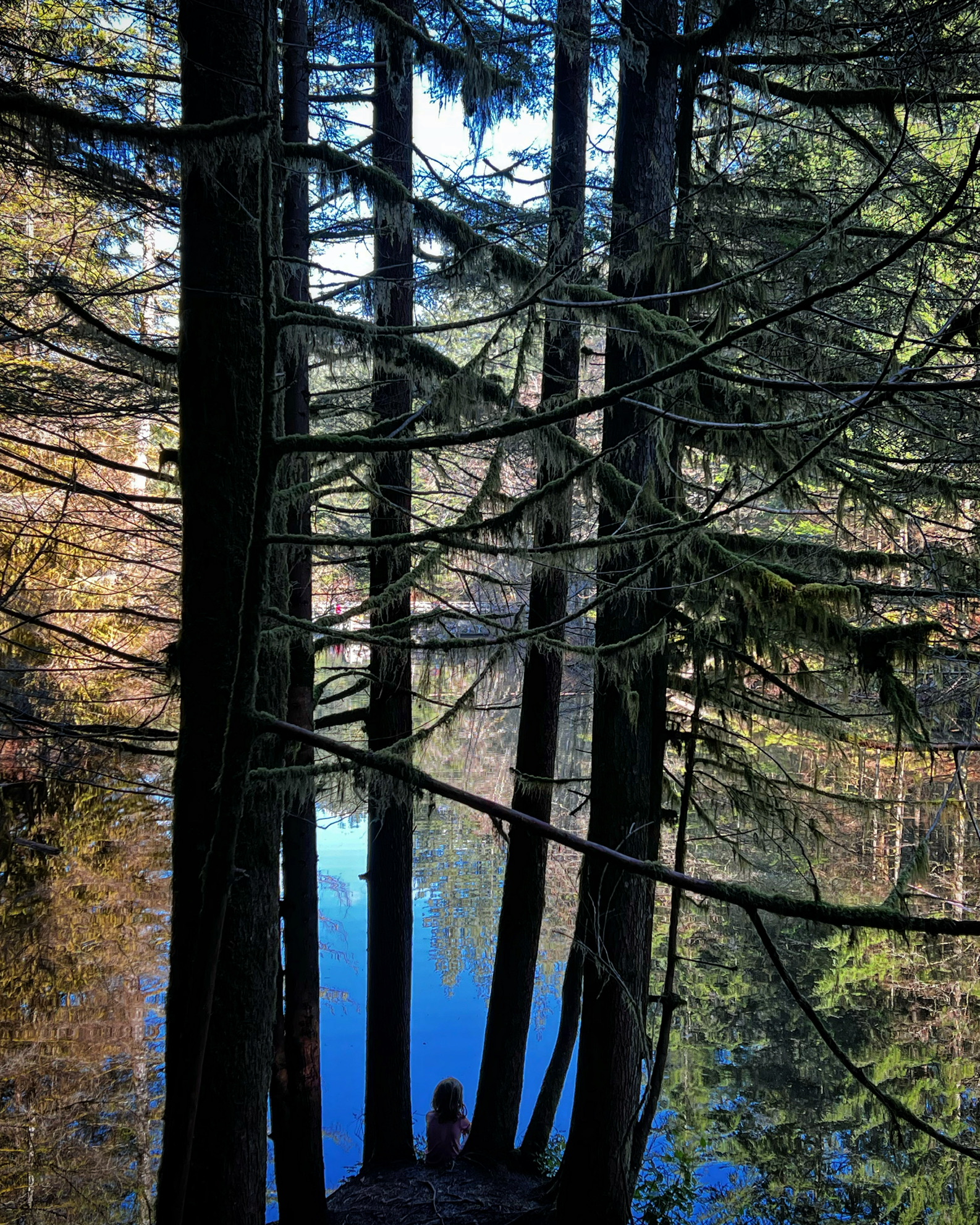

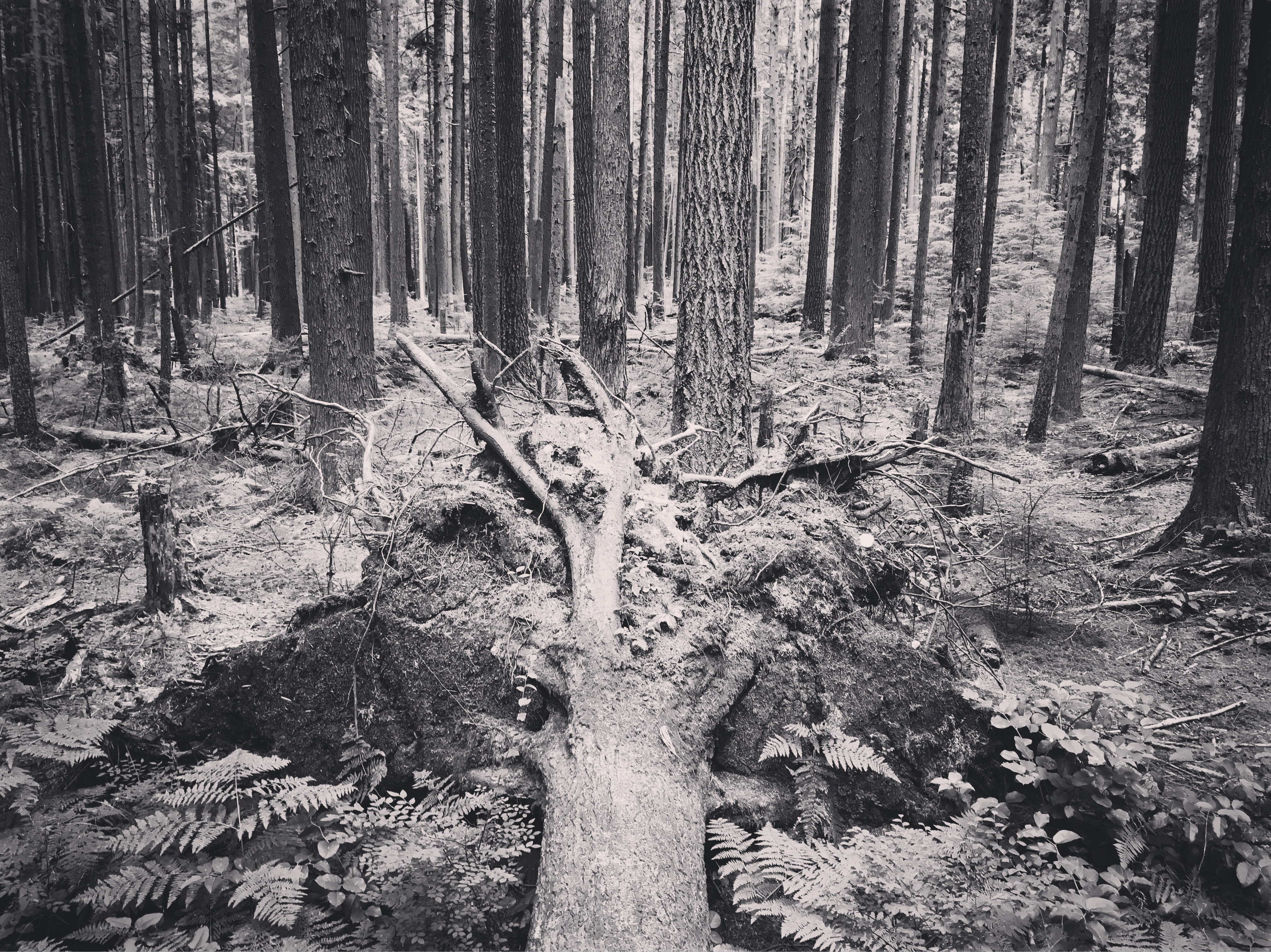

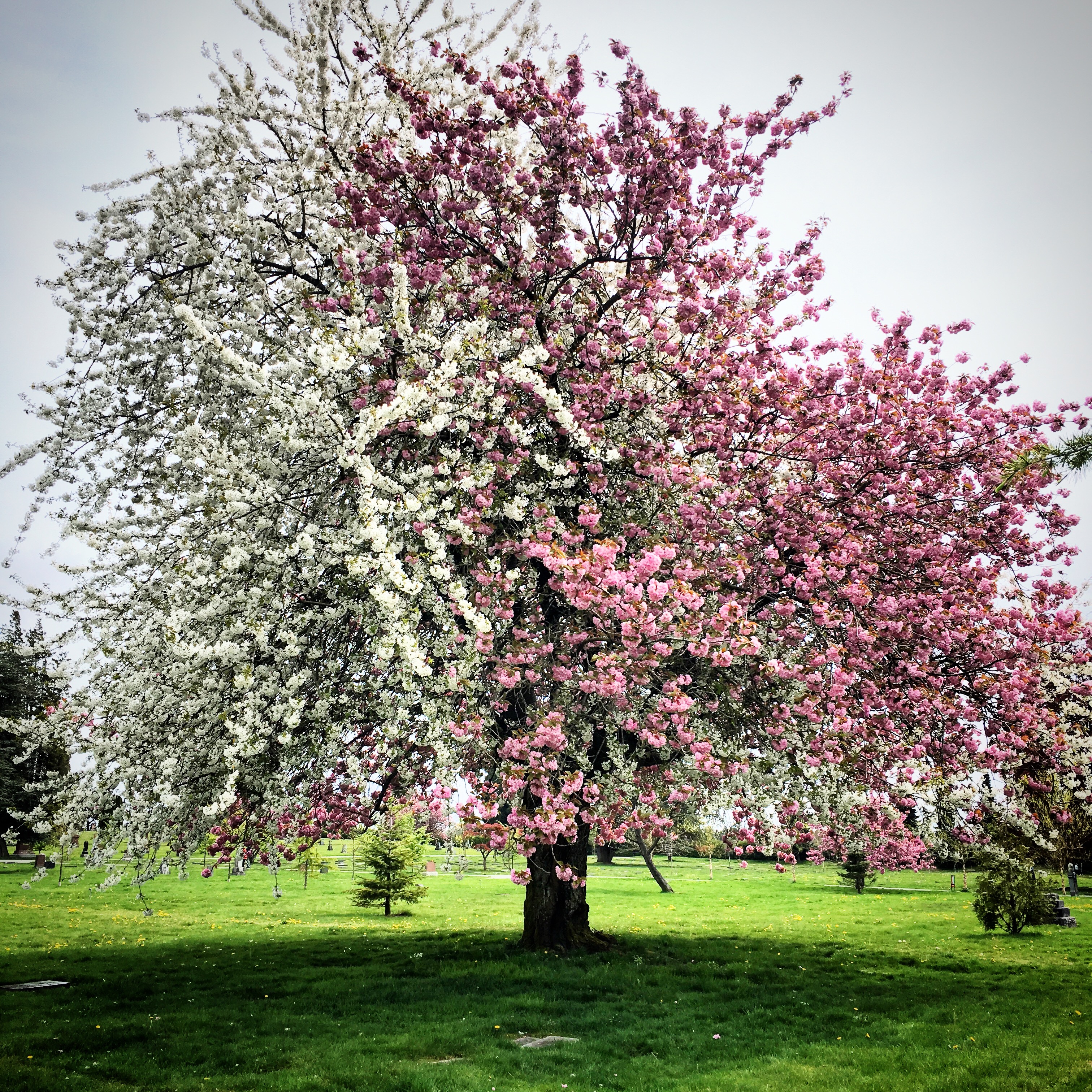

 holyscapes