In Part I, I wrote about my visit to a small religious community called the Doukhobors. Those who remain of this fascinating religious movement live mostly in the Kootenays region of British Columbia. I enjoyed visiting the Doukhobor service and getting to know a few of them. But I left feeling a mix of peace, sadness and a familiar longing. In this short piece, I want to put words to these emotions, even if just to work through them for myself.
I have always felt that there is something beautiful about group religious worship and identity. There is such a strong sense that those in the room know who they are, where they are, and why they are. I still appreciate this when I attend a religious service, visit temples, monasteries, or gurdwaras. I even appreciate this when I return to a Mormon meetinghouse with my family during the holidays. Though I have long since stopped identifying and practicing the religion of my upbringing, the familiar hymns, the inflection of prayer, the smell of a church, and everyone dressed in their Sunday best, tap into my longing for be-longing.
The sadness is harder to articulate. I think is has to do with a mixture of spiritual and existential loneliness. Though the Mormon / LDS tradition never espoused as radical an approach to Christianity as the Doukhobors, like many restorationist movements in the 19th century, they were certainly committed to living out Christianity in what they saw as an authentic and radical way. And I would even say that Mormonism’s roots were what led me to my exploration of radical politics.
At the Mormon university I attended, I really struggled with how overwhelmingly partisan Mormon culture can be, especially in the so-called Book of Mormon belt. By that I mean intentionally aligning itself with the US Republican Party. As if Jesus or Joseph Smith were teaching modern conservative talking points. I had always seen religion differently, and I soon found a community of more left-learning and radical Mormons, many soon to be ex-Mormons, and I felt very seen and understood in my leanings and struggles.
As I wrestled and read, I sympathized with more radical formulations of Christianity by authors like Leo Tolstoy, and non-religious writers Peter Kropotkin and Murray Bookchin. I even wrote an article about the first convert to Mormonism in Mexico, the Greek radical Plotino Constantino Rhodakanaty (1828-1890). Like him I saw something powerful at the heart of the early Mormon relationship to land, place and social organization. The Mormons attempted to create The United Order as a cooperative social-economic system. It was never fully realized. Like Rhodakanaty, I was eventually disillusioned with Mormonism’s assimilation of the American capitalist religion, though I tried for years to find my own sort of Mormon radicalism. I wrote several articles for a Catholic Worker inspired newspaper called The Mormon Worker. That was a long time ago.
I also felt sad because the Doukhobors are dwindling, and their tradition cannot live as they envisioned. As I chatted with my new Doukhobor friends, they related to me how the community gets along today, and how it has had to adapt with the times, and how from their peak in the early 20th century, only about 1,675 identify Doukhobor as their religion, according to the 2021 Canadian census. The Doukhobors work through a legal nonprofit structure, they do not own land communally, and many don’t bother observing vegetarianism anymore. I understand, but in addition to the existential loneliness of longing for belonging, seeing a tradition with such a beautiful way of live dwindling is a bit tragic.
And it’s not as though I would want to be Mormon again or become a Doukhobor, even if they were more radical. But there is a nameless love that is hidden inside the feeling I got sitting with the Doukhobors and listening to them sing together. After the visit, back on the road, I was marketed to by countless fruit stands, new distilleries, luxury retreats and resorts and excursions. The warm summer world seemed to be buckling under the weight of us ravenous experience-seeking tourists. This is a landscape of leisure, of make believe, of Air BnB rentals, cabins and resorts for the religion of consumerism. It feels like the opposite of that nameless longing. It feels like the contours of a spiritual wasteland of sorts. Always seeking, never finding, we wander around hungry for meaning and experiences. Why is this “religion” flourishing while the Doukhobors languish? I don’t know. But I want to keep finding places where I feel that feeling and keep trying to name that nameless love that is hiding within it.
On Monday the Trump administration rescinded a 2001 Clinton era roadless rule that affects 59 million acres of National Forest land. This move reveals not just an economic and political strategy, but a theology that has been at the heart of industrial forestry since its inception. Secretary of Agriculture Brooke Rollins said this about the decision:
“Once again, President Trump is removing absurd obstacles to common sense management of our natural resources by rescinding the overly restrictive roadless rule, … It is abundantly clear that properly managing our forests preserves them from devastating fires and allows future generations of Americans to enjoy and reap the benefits of this great land,”[1]
This rule affects over 30% of the National Forest System, but 90% of Alaska’s Tongass National Forest, in addition to major swaths of National Forest lands in Montana and Utah. The Trump administration’s philosophy of government revolves around deregulation in line with his Executive Order 14192, Unleashing Prosperity Through Deregulation. The order aims to reduce the barriers to extractive industries in order to stimulate the economy.
President Trump has made numerous comments to the effect that America is already a beautiful place and that the rules governing ecological health are excessive. While some want healthy ecosystems, Trump want’s a healthy economy, and sees regulations as a feature of the “swamp” in need of draining. This agricultural metaphor is apt, as it speaks to the central agrarian story at the heart of Western civilization: the natural world needs improvement through the application of technology.
In my essay “Give Me That Old Growth Religion: Finding Common Ground in the War in the Woods” I lay out three major perspectives on North American forestry: Industrial, Wilderness, and Relational. These perspectives are rooted in the worldviews shaping forestry decisions. The Industrial theology is primarily aimed at maximizing profit and social benefits in the form of economic growth, Wilderness focuses on preservation of rare and fragile ecosystems, and the Relational theology represents the approaches taken by people to live and work with a deep cultural connection to the forests they harvest from.
What seems clear from Monday’s announcement, is that each of these approaches to forest management reflects the wider worldview of its defenders. With protestant theologian Paul Tillich I think a theology is not just a belief system, butreflects one’s “Ultimate Concern”[2], something toward which one is completely oriented. In this sense an Industrial worldview that is oriented toward maximizing human flourishing is not just a policy but a theology.
The rescinding of the roadless rule reflects this theology. Opening more forests to roads is common sense because forests are a material resource for humans to manage, and a healthy economy is highest good. This approach didn’t begin with Trump or even George W. Bush. Rather, it goes back to figures like Gifford Pinchot, the famed American conservationist, who defended forests against boom-and-bust exploitation so that they would be used prudently for the benefit of the whole society. But the forest reserves he created were not ecological reserves, they were economic ones. Pinchot the conservationist had a falling out with wilderness preservationist John Muir over his view that protected areas should be “temples” where we worship rather than resources that we manage.
Despite his erratic and idiosyncratic style of governance, President Trump has merely followed along with the mainstream of the industrial forestry approach. Roads allow us to manage fires more effectively the argument goes, and to generate some wealth in the meantime. In keeping with the Industrial theology, President Trump would point to massive wildfires as evidence of poor management that has failed to maximize the forests’ economic potential. This is California’s original sin.
Unfortunately, President Trump has also consistently shown very little confidence in climate science, which should be considered when discussing forest management and the increasing severity of fires in recent years. In 2020 President Trump chided California officials in the midst of the Mcclellen Park fire claiming that sure the climate might change, but that maybe it would get cooler. When Governor Newsom insisted that climate change was a factor, Trump dismissed him saying, “Well I don’t think science knows, actually.”[3] Trump continues to ignore the repeated and consistent IPCC reports that state with the highest possible confidence that climate change is a real existential threat and a factor in increasingly catastrophic wildfires.
Despite this willful ignorance, what President Trump has fixated on is rooted in a partial truth. Much of the conservation efforts of the 1980s and 1990s promoted a hands-off management strategy that looked at the massive clear cuts of that era and proposed their opposite. This “wilderness ethic” preached that nature knows best. Thus, California’s fire adapted ecosystems were often managed to exclude fire, and as a result many state and federally managed forests became very dense with trees. Historic photos from the 19th century show massive increases in tree density for example. This density is historically mitigated by natural fires, intentional fires embedded in Indigenous food systems, and forestry.
The public facing justification for the new rollback of the roadless rule is that 28 million acres of these roadless areas are at high risk of wildfire, and allowing roads will allow management prescriptions that decrease the risk of catastrophic, stand replacing fires. The hope is that this will protect people and allow for modest harvests that will benefit the economy.
However, roadless areas are frequently far from human settlements. And in recent decades, fires in remote areas, have been allowed to burn to enable these ecologies to develop a more historically consistent fire return interval. A more frequent fire return interval results in lower intensity fires. Thus, the dense forests that burn with such high intensity have been fueled by both management decisions and climate change.
President Trump, and perhaps wilderness advocates too, refuse to accept that both things can be true and than management needs to focus on local conditions informed by local knowledge. Yet both camps are devoutly committed to their theologies of forestry: More cutting on the one hand, and less intervention on the other.
What’s more, Alaska’s Tongass National Forest, where 92% of its forests will be affected by the rollback of the roadless rule, is a sopping wet temperate rainforest. The fire risk in Southern Alaska is never zero, but it’s not a high risk. Rather, it seems clear that rescinding the roadless rule is the latest attempt by timber companies and their Industrial theology to get at the old growth forests in Alaska it has been drooling over for decades. To make an economic impact, management interventions, likely large clear cuts, will negatively impact dozens of species, including bears, salmon and whales, which are also intimately connected to the economy of Southern Alaska.
Unfortunately, the loudest voices about the implications for the Tongass National Forest will be the Industrial theology who frame the development as a major boon for jobs and industry, and the Wilderness theology who lament this as a desecration of sacred old growth wilderness. Nuanced rural and Indigenous voices will likely be marginalized by these two dominant theologies.
Yet, if we would just look to Indigenous and rural communities, we would see that a healthy economy and healthy ecosystems do not have to be mutually exclusive. They only require a Relational theology that is more committed to the places we are managing than to ecological purity or corporate profits. Forests are not just sacred sanctuaries for weary urbanites, and they are not just crops for absentee corporate landlords. They are places with names, and there are people who love them. Perhaps instead of the tired back and forth posturing over jobs versus the environment, its time to return to a theology that sees people whose lives are tied to the places they manage as the best way to ensure that the earth community, including us humans, prosper.
I used this list in my last module when teaching Environmental Ethics between 2018-2022. They are not doctrines but principles that I think are worth thinking about in relation to environmental action.
No single narrative or movement will save us; but we must each find a deep sense of meaning and purpose in this world and act from there.
There is no time for despair, but there is plenty of room for it.
Supremacy is not the same as primacy. We are not separate from the earth, but we do have unique capabilities and responsibilities to the rest of our earth community.
There will always be markets in society; but we should avoid ending up with a market-society.
Technology is not the enemy nor ours savior, therefore it must be expressed and harnessed by an ever ethically vigilant people.
In light of new ideas and propositions, we should embody the Precautionary Principle without being reactionary.
Wonder is a virtue that we should cultivate, just as dogmatism is a vice that we should avoid.
Everything we do matters. But nothing we do matters a great deal more than what others propose we do.
We need all hands on deck: Top down and bottom up; deontology and utility; religion and science; politics and personalism; technology and simplicity.
The dragon of capitalism is at fault for the global ecological crisis; but we will have a better chance of making change if we can tame the dragon, rather than try to kill it (for now).
Is it time grieve the imminent extinction of the Northern Spotted Owl?
NOTE: While writing a draft of this essay, the following New York Time op-ed was published! This one written by philosophers in Oregon. I support their skepticism but do doubt some of their empirical claims. Here I add my own philosophical and spiritual questions to the conversation.
In my environmental ethics and humanities classes, we cover many different subjects from pollution to consumerism to climate change. One of the most important topics in the age of extinction is the question of value. At what scale are we willing to invest intrinsic worth? (value that is inherent, and not oriented toward some greater purpose). The individual organism? The species? The ecosystem? The biosphere? Clearly a holistic ethic considers the relationships between these interacting agents and contexts, but in some case studies we must decide what is more valuable in the long run, and what criteria to use to assess this value judgement and the decisions and consequences that flow from it.
For example, the emerging strategy of conservation organizations in the Pacific Northwest of the US and southwestern Canada to cull Barred Owls (Strix varia) on an ongoing and apparently indefinite basis so that the Northern Spotted Owl (Strix occidentaliscaurina) might not go extinct is a case where the existence value of the subspecies Northern Spotted Owl has been valued above the suffering and death of thousands of individual Barred Owls. This is a heart-rending decision for many conservationists I am sure, and I sympathise with the intent, and for me it illustrates the strangeness of one thread of contemporary nativist ecological dogma.
Northern Spotted Owls are a subspecies Strix occidentalis which has two other subspecies: California and Mexican. The ecological importance of these owls is not as a keystone species, but more as one indicator among many of ecosystem health. The idea is that when Northern Spotted Owls are healthy, so are a range of other old growth forest inhabitants such as marbled murrelet, salamanders, flying squirrels and species of forest voles and mice.
Surprisingly, the Northern Spotted Owl is not listed as endangered in the United States but as threatened. There are an estimated 3,000-5,000 individuals left in the US. In British Columbia, the owl has been put on the red list, which is the most endangered category of risk before extirpation. Historically, there were likely no more than 1,000 Northern Spotted Owls in BC, which touches the northern extent of their range. In 2022, it was reported that there was literally only one wild born Northern Spotted Owl left in BC. Since then the Province has been goaded to initiate a recovery plan mostly through a captive breeding program.[1] The Canadian Spotted Owl Recovery Team has also been monitoring populations of both species in some 300,000 hectares of protected area, some of which is located in deferred old growth logging concessions, for recovery of wild breeding pairs. They have also attempted to relocate Barred Owls when they are encountered near known Spotted Owl nests.
Some conservationists have devoted their whole careers to saving this beautiful being. And during the 1990s, the Northern Spotted Owl became a flash point for public conflicts related to old growth conservation. The Jobs vs. Owls debate was framed narrowly as a culture war between hard working loggers, truckers and millworkers and the environmental movement.
Billions of dollars were spent, and thousands of jobs were lost when the Northwest Forest Plan, presided over by President Clinton, was implemented in 1994. The plan is currently being updated by federal officials under President Biden. The Plan spanned some 17 federal forests and protected over tenmillion acres across a landscape that spans some twenty-five million acres. In recent years, British Columbia has gearing up for a major paradigm shift in old growth phased forest conservation which has resulted in the protection and deferral of some 6.4 million acres.
Despite these gradual changes, many in the conservation movement are feeling like with the Barred Owl in play, it is critical to save the Spotted Owl by any means necessary. Anything less would mean the whole enterprise was a failure. In a Guardian piece from 2023, Susan Jane Brown (no relation), a lawyer for the Western Environmental Law Center said, “I think the spotted owl is going to go extinct in my lifetime. For someone who has spent their entire career trying to conserve the species, that’s a failure.”[2] She sees the extinction of the owl as a failure of the movement, despite the major wins in terms of acreage protected.
This line of thinking has led to the justification for plans to cull the Barred Owl as a regrettable but necessary solution. Journalist Jim Robbins recently explored the US’s strategy to cull Barred Owls amid news that the US Federal Government is renewing funding for Barred Owl killings throughout California, Oregon and Washington States. The plan will kill 15,000 owls per year starting in 2024, including any hybrid “Sparred” owls they find. Previous pilot projects as early as 2010 in the region have already killed thousands of Barred Owls, and test plots show that where Barred Owls are killed, Spotted Owl populations can stabilize and may recover.
This species-centric view understands habitat as the backdrop for the main event: Species. So, to succeed, you must ensure that the species sticks around as it has been taxonomized and understood in its historical ecology. We are acting out an analogy of preserving a painting and a museum. A historic baseline determines which species belong and which do not.
As far as we know, Barred Owls have the longest history in eastern North America. Our best guess is that they were able to slowly migrate west through the suburbs and urban forests of the Midwest. They did this on their own, without any direct assistance from humans, except that we like trees and plant them wherever we go. The owl didn’t arrive in the Pacific Northwest until the 1970s, right when the Spotted Owl was in steep decline due to the voracious rate of old growth logging in the region.
Geneticists have identified two clades within the Barred Owl species that run latitudinally (north to south) and correspond to pre-Pleistocene refugia populations. The current distribution is longitudinally broader, and not predictive of this ice age bottle neck. Claims in the NYT Op-Ed that the Barred Owl has been in the Pacific West for longer than the conventional story seems to be picking up on this major taxonomic fork, but there doesn’t seem to be evidence that the Owl was in the Pacific West before the 20th century.[3]
The trouble with their arrival, is that because the Barred Owl is more versatile than the Spotted Owl in both preferred habitats, hunting and prey, they have adapted well to the urban wildland interface habitat that humans have co-created. They also appear to be outcompeting Spotted Owls in old growth phase forests, sometimes preying on them, but also sometimes mating with them. In addition to major declines in preferred habitat, the Spotted Owl has had to deal with a new competitor.
I feel that the decision to cull Barred Owls is not made lightly or with malice by federal agencies and that conservationists feel that by killing one owl they are saving two. But I have also observed a kind of crusader’s enthusiasm among some ecologists against any species they deem to be out of place, exotic, or part of an invasive scenario.[4] A student related to me that one of her biology professors once gloated about drowning grey squirrels which many conservationists have labeled as an invasive species, which implies a duty to eradicate them for the good of the whole, a troubling ethos that I need not elaborate on.
Animal rights and welfare organizations have voiced opposition to the killing of Barred Owls because their approach to intrinsic value is focused on the level of the sentient organism. The species Barred Owl cannot suffer, only individual owls can suffer. Therefore, intentionally kill thousands of owls a year is a breach of an ethic that believes that regardless of how the owls arrived, they deserve to be treated with dignity and have a right not to be subjected to undue suffering.
This ethical objection has led to an approach to the control of aggressive species called compassionate conservation which seeks to save species without causing the undue suffering of non-native species who are only doing what organisms do. From rats and mice to cats and goats, compassionate conservation believes that ends and means matter, and saving a species should not unfold in the wake of mass shooting, painful time delayed poisoning or limb breaking traps. In the case of Spotted Owls, the relocation of Barred Owls from Spotted Owl nesting zones, as has been tested in British Columbia, would be the preferred option rather than culling. There are other options if we want to both reduce suffering and give Spotted Owls a chance as recovery.[5] Emma Marris’s book Wild Souls: Freedom and Flourishing in the Non-Human World (2021) is an excellent exploration of the nuances and limitations of these approaches.
I have never seen a Spotted Owl in the wild, but I have seen dozens of Barred Owls. And they are a magical site to see. Their existence is just as worthy and beautiful as the Spotted Owl, even if their prowess is displacing their spotty cousins. So, what I want to say is that I don’t like the idea of Spotted Owls going extinct; and I feel visceral horror at the plan to slaughter Barred Owls. I think we should do what we can to save the Spotted Owl but not at the cost of thousands of dead Barred Owls.
I also find it interesting that one of the definitions of species is the ability to interbreed. More than 10 per cent of birds can mate across species, but still, I find it a fascinating twist in this story. One interesting fact is that the genetics of Sparred Owls often come from female Barred Owls and male Spotted Owls.[6] Typical Owl courtship involves calling and offerings of food by the male and then mutual preening within pairs. It appears that female Barred Owls, the more aggressive species, are accepting courtship displays from male Spotted Owls. This might sound silly, but are these owls trying to adapt to local conditions? Is this integration rather than colonization? If that were the case, wouldn’t we expect to see the most dominant and aggressive Barred Owl males occasionally mating with female Spotted Owls? Again, I might be stretching my social science of owls here, but it strikes me as interesting. More specifically, what it makes me think is that evolutionary ecology has surprised us before. And evolution is always a dance between confluence and conflict, and we need to think harder about how to relate to these intermingling choreographies.
From my perspective, it seems that continuing to protect and steward resilient ecosystems is the best use of our time and resources. Ensuring that there are large swaths of old growth phase forest for Spotted Owls considers both the intrinsic value of this majestic bird and its relationship to its wider ecology.
It also seems to me that the current conservation paradigm’s approach suffers from a primal denial: the denial of death. The anthropologist Ernst Becker argued that the belief in immortality in the world’s cultures has its roots in this primordial human consciousness of our own deaths and our anxiety about its implications.
Becker argues that our species’ immortality stories and heroes’ journeys are ways of projecting ourselves onto the stars and into the future so that something of ourselves might live forever. Human consciousness longs for stability and eternity. And our era of human rights has affirmed this infinite and intrinsic worth. No human being needs to justify its existence. Our inherent dignity comes from who we are, not what we do.
Recognizing the intrinsic value of a species, was a powerful step beyond an imagined human supremacy and into a more ecologically oriented ethic. A species has a right to exist not because it provides us with some service, but because it is a unique and precious incarnation of the unfolding wonder of evolution and plays an important role in evolving ecosystems.
But it feels like draconian culls are the result of a denial of the reality of ecological death. When a loved one dies, we must grieve their death. When a species goes extinct, we must accept that it is gone. Spotted Owl extinction would be an irreplaceable loss from an ecology that has resisted much of the onslaught of European colonial expansion and ecocide.
Yet, the Spotted Owl is dying, and that death is an inevitable part of life. To seek to restore ecosystems, to fund captive breeding programs, to relocate Barred Owls from known Spotted Owl nesting sites are heroic efforts to preserve the Spotted Owl’s fingerprint in the sacred body of our ecologies.
But by attempting to do this by slaughtering thousands of Barred Owls is to somehow cross a moral threshold. It is to believe that immortality for the species is the only outcome we will accept, rather than preparing to grieve the loss of a species even as we are working within our value system to protect it. And then, if we fail, feeling the full weight of that failure and continuing to work to protect the ecological conditions under which new species, including hybrid Sparred Owls will emerge. To insist on preserving the Spotted Owl as we imagine it to have been, and to do so at the cost of the suffering of thousands of Barred Owls feels like losing faith in the creative and generative potential of evolution and ecology.
I sympathize with compassionate conservation on this issue, not because I think we can prevent all suffering in the natural world, or because I do not consider species or ecosystems as possessing intrinsic value. I object to culls and sympathize with more compassionate measures in this case because not only do the means and ends align, but because I recognize that even where ecosystems have been protected, captive breeding programs have been funded, relocation efforts have been tried, and Barred Owls continue to spread, what is truly needed is grief not guns.
[3] Barrowclough, George F., Jeff G. Groth, Karan J. Odom, and Jonas E. Lai. “Phylogeography of the barred owl (Strix varia): species limits, multiple refugia, and range expansion.” The Auk 128, no. 4 (2011): 696-706.
[4] I do not call any species ‘Invasive’. Invasion is never a direct trait of a species, invasion scenarios always play out as an interplay of aggressive species, exacerbated by human-caused disturbances, and are dependent on the novel ecological conditions and the lack of potential predators in early phases of range expansion.
[5] I am not speaking here to other examples of culling on small islands where rats, cats or goats have decimated populations of ground nesting birds. These present a range of other questions, and I have sympathy for those working on these projects which are crucial for saving some island bound species from extinction.
[6] Haig, Susan M., Thomas D. Mullins, Eric D. Forsman, Pepper W. Trail, and L. I. V. Wennerberg. “Genetic identification of spotted owls, barred owls, and their hybrids: legal implications of hybrid identity.” Conservation Biology 18, no. 5 (2004): 1347-1357. https://conbio.onlinelibrary.wiley.com/doi/10.1111/j.1523-1739.2004.00206.x
In the same week that Pope Francis went to hospital, Silvio Berlusconi, Italy’s former Prime Minister, Ted Kaczynski, the unibomber, and famed American writer Cormac McCarthy died.
What a strange collage of legacies. I don’t know much about Berlusconi, but when I was on an 8th grade field trip to Washington DC I got the news that my uncle, who was a timber industry lobbyist in northern California, had been killed by a bomb addressed to his boss. Ted Kaczynski, an anarchist/primitivist living in a remote cabin was terrorizing the forces of ecological evil. He was arrested in 1996 and spent the rest of his live in prison.
I remember hearing about Cormac McCarthy in university. He had just published The Road (2006). He was beginning to be known as one of the greatest living American writers.
I didn’t get around to reading McCarthy until a few years ago, when I finally picked up The Road I couldn’t put it down. His stainless steel prose and the exploration of human purpose stripped to its most elemental struck a deep chord. The book is heartbreaking and horrific. But it somehow still touched something like the holy in me. Perhaps that is a predictable response from a privileged first worlder to post-apocalyptic simplicity, but still.
Last year, while teaching a course on death, disease and disaster in the humanities, McCarthy’s novel seemed an obvious choice for exploring the possible ruin of earth the coming age of the so-called Anthropocene may bring. At the end of the novel he writes:
“Once there were brook trout in the streams in the mountains. You could see them standing in the amber current where the white edges of their fins wimpled softly in the flow. They smelled of moss in your hand. Polished and muscular and torsional. On their backs were vermiculate patterns that were maps of the world in its becoming. Maps and mazes. Of a thing which could not be put back. Not be made right again. In the deep glens where they lived all things were older than man and they hummed of mystery.” (Pg. 287).
The Road makes clear that we have a lot to lose, and that enduring that loss may cost more than some of us can muster.
I have read most of McCarthy’s major works. I can’t say I love it all, but something that keeps coming up in my experience of McCarthy is an abiding encounter with the holy, or to put it another way, grace. By grace in this instance I mean an unspoken wholeness that seems to be shot through it all, or as poet Gerard Manley Hopkins put it “the dearest freshness deep down things.”
Now don’t get me wrong, McCarthy’s stories, characters and plots don’t directly speak to this. McCarthy’s world is a world of fallen, wounded, and downright evil human beings. McCarthy liked to show humanity at its worst. But each story is set in a richly alive world bursting with fecundity. In his first novel, the Orchard Keeper (1965), a hermit figure lives deep in the Tennessee woods. He is a kind of Appalachian Adam, before the fall that surely comes.
“Curled in a low peach limb the old man watched the midmorning sun blinding on the squat metal tank that topped the mountain. He had found some peaches, although the orchard went to ruin twenty years before when the fruit had come so thick and no one to pick it that at night the overborne branches cracking sounded in the valley like distant storms raging. The old man remembered it that way, for he was a lover of storms.” (pg. 51).
Lush prose for a lush landscape.
In Blood Meridian (1985), where the huge, pale, erudite and depraved “Judge” seems to be a personification of a simultaneously civilizing and terrorizing Manifest Destiny, the pools of blood and monstrosity are somehow poulticed by the beauty of McCarthy’s language and vast western landscapes.
“He woke in the nave of a ruinous church, blinking up at the vaulted ceiling and the tall swagged walls with their faded frescoes. The floor of the church was deep in dried guano and the droppings of cattle and sheep. Pigeons flapped through the piers of dusty light and three buzzards hobbled about on the picked bone carcass of some animal dead in the chancel.” (pg. 27-28).
“Dust stanched the wet and naked heads of the scalped who with the fringe of hair below their wounds and tonsured to the bone now lay like maimed and naked monks in the bloodslaked dust and everywhere the dying groaned and gibbered and horses lay screaming.” (pg. 57).
“It grew cold in the night and it blew stormy with wind and rain and soon all the wild menagerie of that country grew mute. A horse put its long wet face in at the door and Glanton looked up and spoke to it and it lifted its head and curled its lip and withdrew into the rain and the night.” (pg. 124).
McCarthy’s landscape is not moral, enchanted or invested in his characters’ lives. But somehow the spaciousness of the land allows for the possibility that another path might have been chosen. And that for all the terror, small moments of peace are never to be squandered.
I am not a literary critic, so maybe some has already said all this, but in my experience, there is something holy about a beauty that includes darkness. McCarthy doesn’t try to persuade the reader to see the beauty in bad things, he simply zooms out far enough so that even humanity’s most sinister acts are humbled by a grandeur not of our own making.
The Catholic novelist Flannery O’Connor has been credited with writing to a similar effect—invoking a sense of grace through stories of violence. Her two novels and many short stories contain characters blinded by their own selfishness, greed and hatred. There is supposed to be a kind of path not chosen in O’Connor that points toward grace.
I have read many of O’Connor’s stories and her novels with this in mind. But personally, I just don’t experience it. I find O’Connor’s characters’ evil deeds so sticky and unflinchingly proximate that I never get to see another path or a bigger world. I leave the reading feeling closed in on and the wider world cut off. There doesn’t seem to be any cosmos, just dark, eccentric human foibles on colorful display like wax models in a museum. The trouble being that no matter how lifelike the museum pieces, their backdrops are only a hasty two dimensional painting under dim lighting.
O’Connor’s first novel Wise Blood (1952) in particular felt this way. Hazel Motes, an ex-army man, starts to preach the Church of Christ without Christ. The philosophical premise is promising but the delivery is a string of nasty interactions that left me feeling sad and existentially disappointed. Displaced even.
Again, McCarthy’s characters are not better people, they don’t come around. But somehow when I read McCarthy, a dull melancholy throb transfigures into grace, not disappointment.
So the Catholic writer (O’Connor) feels more like a nihilist than whatever McCarthy might be called in his raw portrayals of human evil and the yawning void of an apathetic cosmos. Personally, over and over as I have read and reread McCarthy, I was surprised by grace. Thank you, rest in peace.
A short review of Adam Miller’s excellent book Original Grace: An Experiment in Restoration Thinking.
Prelude
The Church of Jesus Christ of Latter-day Saints (LDS) seems to have a grace problem. Like almost all Christian denominations in North America and Europe, the LDS Church has struggled in recent years to retain young people and progressives. Though the LDS Church’s support for conservative social issues will continue to be a point of tension for many, LDS philosopher Adam Miller’s Original Grace is an attempt to experiment with “Restoration Thinking” in order to affirm a core Christian doctrine to LDS spiritual practice: Grace. His research question: What happens when Justice and Grace are not seen as oppositional? His hypothesis: It changes everything.
Raised in the LDS church, but leaving in my late 20s, I have had my eye on Miller’s Zen-infused prose for a while. This is because Miller has wrestled with one of the issues that led me away from LDS practice and toward a more contemplative expression of Christianity. As an LDS person there was a grace-shaped hole in my life that I didn’t even know was there, but after suffering through deep depression during my mission years, mostly because of my own feelings of unworthiness, grace found me, and I began to believe that my status as a creature of God came before my actions or behaviors. In his boldly titled Future Mormon (2016), Miller’s essay ‘A General Theory of Grace’ simply states: “Grace is Original.” In this short review, I want to commend Adam Miller for his book length elaboration on that sentence and raise some questions for his ongoing experiment with a doctrine that has yet to find a comfortable place at the table of LDS spiritual practice.
Miller’s Radical Justice
Original Grace is a touching tribute to Miller’s late father, a disciple of Christ whose strongest theological proof of God’s existence was the self-giving love he felt all around him. For Miller, his father taught him that Justice and Mercy were always on the same team.
Central to Adam Miller’s claim is that the doctrine of Original Sin, a doctrine that the LDS church has negated since its ‘13 Articles of Faith’ were published in 1842, has nonetheless tainted the way LDS people live their understanding of the Gospel.
Despite LDS religious culture’s rejection of the austere Calvinist doctrine of “total depravity”, and its dismissal of Sola Fide (faith alone) soteriology, faithful LDS have nevertheless absorbed the idea that true justice justifies, at least in theory, the necessity of punishment for sin. That falling short of the Gospel merits our feelings of guilt and shame and that only by redoubling our efforts to be righteous will we come to our salvation.
LDS have often seen justice as a kind of divinely anointed karma: They, along with some other Christian lineages, intuitively believe the proposition that humans suffer because we deserve it. The Old Testament’s admonition of an eye for an eye is often described as a bridle for vengeance within a proportional tit for tat. The Hebrew imagination saw justice as restoring right relation among peoples, castes, land and God, and this certainly included God’s punishment of Israel’s enemies or those who strayed from Torah. Diseases, plagues and natural disasters were often interpreted as God’s justice playing out in the world (See 1 Chronicles 21:14).
Miller doesn’t negate the goodness of the law, but with LDS Apostle Dallin H. Oaks claims that Christ offers a better way. Miller asserts that this better way is to align justice with grace by returning not only good for good but also good for evil. This is a play taken directly from Jesus of Nazareth’s Sermon on the Mount. For Miller, in a Christian cosmos, suffering can never be deserved, only learned from and wrestled with.
Miller shares that as a missionary he constantly fought feelings of inadequacy and unworthiness. That is until he picked up Stephen Robinson’s 1992 Believing Christ. Robinson diagnoses the problem in his own spouse, who after working hard to be the perfect LDS woman collapses into a pile of defeat and despair. She accepted that her efforts would never be enough to merit the full measure of LDS salvation. Robinson takes the whole of the church to task on her behalf for refusing to believe that Christ means what he says and did what he did.
Robinson’s theory of the atonement is not so much of substitution, Jesus suffers on our behalf, but of being saved “after all you can do” (See 2 Nephi 25:23). To illustrate this Robinson shares ‘The Parable of the Bicycle’ wherein a little girl scrimps and saves for a bicycle for weeks, but still falls short, even after all her hard work. The loving father steps in and pays the rest. Grace, after all we can do.
Miller lauds Robinson’s first step, but argues that this “after thought” or “backup plan” soteriology still does not fully grasp the radical claim grace has upon us. When grace and justice are aligned, they ask not what we deserve, but what we need. Sin in this understanding is not a law broken, but grace rejected. Miller writes, “The problem isn’t that God is unwilling to offer the grace I need. The problem is that I’m unwilling to receive the grace God is giving” (14).
LDS tend to think that salvation is the highest reward for living a righteous life, rather than seeing righteousness as the fruit of our embrace of the saving (salving) love of God. The commonly quoted LDS scripture Doctrine and Covenants section 82 reads: “I, the Lord, am bound when ye do what I say” is an underlying motivation for an LDS version of the prosperity Gospel, an esoteric incantation that extracts blessings from a God of justice. It is Max Weber’s Protestant Work Ethic liberated from Calvin’s total depravity. Strange bed fellows indeed.
Miller admonishes LDS that salvation is better sought and understood as a present-tense reality. “A shared life lived in Christ’s presence is the end. It is salvation” (20). Christian virtues like charity are what grace looks like in human clothing, not what Christians do to impress God, whose grace is the very air we breathe (37-38). He writes, “If we take Jesus’s Sermon on the Mount as our guide, the logic of justice is the logic of grace” (37). Thus, no instance of a karmic approach to justice in scripture can dissuade Miller from seeing justice as an expression of how to arrive at what human beings need rather than what we deserve. The Bible is not after all a story of justice executed judiciously in each case, it is a story about a thousand broken promises met by a God who loves us as a nursing child at his breast.
Grace and Nature
Perhaps because the book is tailored to a general audience, and went through the editing filters of Deseret Book, the LDS publishing house, I found myself wanting Adam to weave in threads of the “Traditional Christianity” he is partly polemicizing against. I found the lack of historical context for Original Sin or Grace for that matter a weakness of the initial chapters, even if the book is aimed to keep folks from slogging through the theological mud. In addition, I found that his work of aligning justice with grace was more successful than his case against Original Sin. A brief discussion of what I mean.
First, a bit of background on the doctrine of Original Sin: This core doctrine is found at the heart of all Christian communions: Oriental Orthodox, Eastern Orthodox, Roman Catholic, Anglican, Lutheran, Calvinist, Anabaptist, Pentecostal and Evangelical. The theology claims that our mortality entails a proclivity to sin by nature.
This theology is primarily absorbed from the second account of Adam and Even in the Garden found in Genesis 3, wherein eating of the fruit of the Tree of Knowledge of Good and Evil results in the couple being expelled from the Garden of Eden. However, the doctrine also draws from the poetry of Psalm 51 where the poet writes, “Behold, I was shapen in iniquity; and in sin did my mother conceive me” (KJV). In the letter of Paul to the Romans (Ch. 5), he claims that if death came to humanity through one person (Adam), salvation most certainly could as well (Jesus).
However, Original Sin does not appear in Jewish theology. It was Saint Augustine of Hippo (354–430) an early Church Father who really solidified the doctrine. Augustine had a sudden and unexpected conversion to Christianity at the age of 31. His own riotous past convinced him that human beings are utterly dependent on God’s grace.
Miller’s only mention of non-Mormon theology is his mention of the theology of John Calvin, the 16th century French reformer whose understanding of faith meant that unlike the sacramental approach of the Catholic and Orthodox communions, no rite, ritual or sacrament was effective in ensuring our salvation. Not even an act of faith could save us. Our natures are totally depraved of the good, we are utterly and completely dependent on God’s grace. Our election is only made known to us through our desires to live a Christian life, or through the fruits of that life. The Westminster Confession, the current articles of faith of the American Presbyterians, continues to affirm that humans are: “Wholly defiled in all the parts and faculties of soul and body.” [1] Original Sin indeed. Interestingly, the Catechism of the Catholic Church reads:
“It is a sin which will be transmitted by propagation to all mankind, that is, by the transmission of a human nature deprived of original holiness and justice. And that is why original sin is called “sin” only in an analogical sense: it is a sin ‘contracted’ and not ‘committed’—a state and not an act.”[2]
In other words, human nature is wounded, but not totally depraved. The notion of an LDS human nature (which tends to be more optimistic) is never fully resolved by Miller who writes:
Christ’s atonement directly addresses a problem internal to my own nature as a sinner, not a problem internal to God’s nature. He bridges a gap caused by my rebellion against justice and grace, not a gap between God’s justice and God’s grace (59).
In all Christian readings, even LDS, my nature as a sinner comes through contraction, I have inherited my nature as a sinner. LDS do not appear to believe that our nature as sinners goes all the way back into the LDS pre-existence. Another option is that sin comes into the world only when we chose to sin. There is no pre-existing conditions, only a long string of spiritual lifestyle choices that our natures are vulnerable to slipping into.
When Miller says that his nature is as a sinner, he seems to be implying then that our sinful nature is contracted through our humanity and understood through the myth of Adam and Eve as the parents of our humanity. While this theory of sin feeds the logic of karmic justice Miller critiques, it is also at the center of his theology of grace, which does not presume to merit God’s grace, only strives to be a receptive vessel for it.
The LDS Church’s Palagian Problem
This leads to another bit of historical context. The rejection of Original Sin in the Christian tradition has tended to be by those who embrace the idea that we can earn our salvation. For example, Pelagius (c. 355 – c. 420 AD) a British monk, asserted that Original Sin did not taint our nature because our nature was synonymous with being, and being is sacred. Pelagius was one of the early Christians who demanded strict moral obedience for all Christians, especially priests. Pelagius’s view was quite popular in the 5th century, before Augustine’s Original Sin rose to the status of dogma. His notion of free will (free agency) suggested that God would not command us to be perfect (Matthew 5:48) if it were not possible. And God didn’t create anyone to be evil, this was a Manichean (dualist, gnostic) doctrine. However, after a public run in with Augustine, Pelagius’s ideas were condemned primarily at the councils of Carthage between 411–418 CE.
Miller’s challenge going forward is that Mormonism’s rejection of Original Sin is in my view primarily a Palagian move. This is evidenced, not just in many LDS’ embrace of the Prosperity Gospel, but in the persistence of certain folk theologies that come from Joseph Smith Jr.’s later revelations. For example, Miller uses the word “Creation” in the book but does not clarify whether he also rejects the Ex Nihilio (out of nothing) Creation of “traditional Christianity”. LDS tend to talk about creation as an activity of organization overseen by a certain Celestial precinct’s God, in earth’s case Jesus Christ out of existing matter. Many LDS believe that our pre-mortal selves participated in that organization, a beautiful thought for some, but also a move that steals something of the grace at the heart of what it means to be a Creature. These two rejections: Ex Nihilo and Original Sin seem to leave the possibility of embracing grace less likely. Rather, embracing the strong contingency of my existence that ex nihilo creation asserts, and my nature as a sinner that original sin canonizes, leaves me prone to the radical beauty of God’s grace.
Other Braids in the Estuary of Grace
Before I conclude, I would like to point readers to several other worthy explorations of grace-centered Christianity which flow in the same direction as Miller’s.
1) The Franciscan Alternative Orthodoxy
The Franciscan Order, founded in 1209, has since the writings of Duns Scotus (1265/66-1308), asserted a minority position on the Incarnation (the doctrine that God took on a human form/nature). Since Scotus, Franciscans have asserted that rather than a ransom, or substitutionary approach to salvation, which is predicated on the inevitability of sin, Franciscans assert that Incarnation has been part of God’s plan from the beginning. Contemporary Franciscan teacher Richard Rohr likes to say that God becomes what he saves, and the Incarnation was not just a single event in Jesus of Nazareth, but an ongoing event from the beginning (See John 1).
2) Matthew Fox’s Original Blessing
In 1997, Dominican Friar Matthew Fox wrote a book entitled Original Blessing. His book proves that Roman Catholicism has just as deep a wound related to Original Sin as the LDS Church. The book got him excommunicated by Cardinal Ratzinger. In the book, Fox emphasizes the many affirmations of the goodness of creation in Genesis 1 that preceded the sin of Adam and Eve that saw them exiled from the garden. While I don’t find Fox’s scholarship all that impressive or well-disciplined, his assertion that the interpretation of Original Sin needs a complete overhaul, was well received with progressive Christians, especially those interested in ecological theology.
3) The Neo-Celtic Christianity of John Phillip Newell
A former pastor in the Church of Scotland, John Phillip Newell has sought to amplify the teachings of the Church in the British Isles before the Roman standardizations of the 6th century. While he calls his Christianity Celtic, it is more accurately classified as a kind of Neo-Celtic Christianity, which infuses pre-Roman Christianity with contemporary concern for equality, spirituality, feminism and environmental stewardship. Newell negates the Virgin birth and believes that Creation was not effected out of nothing, but out of God. He boldly claims that holding an infant is the best argument against the doctrine of Original Sin, a doctrine that he simplistically explains as primarily about imperial control and oppression of the masses. For Newell, Original Sin is psychologically damaging and makes up the core wound of Western Civilization, which leads to so much shame and self-loathing.
Conclusion
There are perhaps many more examples, but these writers sketch out the basic topography of the Christian interlocutors that Miller is in conversation with. Each of them emphasizes the primacy of grace as a bewildering gift, not a post mortal rewards package. I commend the razor-sharp prose of Adam Miller’s excellent book. Any discussion of grace is a balm to the common affliction of shame and guilt that justice-oriented approaches to religion too often take. And as Miller says, the LDS Restoration it isn’t finished.
Over the next few weeks, I will post a series of sketches of some ideas I have kicking around in my head. With luck, they might become longer essays or full length books! Apologies in advance for grammar and spelling errors…
Living in Vancouver I have always felt a bit lonely in my Christianity. I love the catholic tradition, but I have serious hesitations about a full-throated enthusiasm for being part of the Roman Catholic Church. Recently, I learned that two men I admire converted (or in one case reverted) to Christianity. This has made me feel a bit less lonely and pointed to something I see happening among some spiritual but not religious ecological types. Paul Kingsnorth and then Martin Shaw, both British, and both frequent speakers on podcast and YouTube circuits, converted to Christianity in 2021. Paul converted directly into Eastern Orthodoxy, and Martin, after being baptized by an Anglican priest, has entered catechesis with a local Orthodox church in Exeter.
Shaw grew up in the Baptist tradition, with a preacher as a father, but in his teens became a musician and eventually left the church (very familiar to my own story). He was raised not just with theology but the telling of fairytales and myths. Now in his late 40s, at the end of a 101-night vigil in the forest, Shaw saw a multicolored star-like aura of light moving toward him which pierced the ground like an arrow. He heard a voice that said “Inhabit the time in Genesis of your original home.” He says he felt the presence of “the mossy face of Christ.” Thereafter, entering the lockdowns of COVID-19, he had series of dreams in which a clear message was conveyed. Podcasters Mark Vernon and then Justin Brierley have observed that many in the West are seeking for deeper meaning beyond the fuzzy post-Christian spiritual but not religious landscape of the liberal and progressive West. They have cautiously suggested that Christianity is entering a new phase.
Paul is a talented novelist, who for many years, was a front lines environmental activist. He always had a spiritual side and spent time in Buddhism and Wicca as an unapologetic Deep Ecologist and critique of industrial civilization. His book Confessions of a Recovering Environmentalist was a public break with his career in the mainstream environmental movement and a manifesto of slowing down, staying put and giving up on the “carbon game.” His response to environmentalism, and his lavish praise for writers like Wendell Berry always sounded to me quasi-monastic. His decision to move to a small farm in Ireland sealed that impression. Kingsnorth continues to rail against “the machine” but he is now doing so within a consciously English, even Celtic, Christianity that shares very little of the New Age trappings of the Neo-Celtic visions of folks like Matthew Fox or John Phillip Newell.
In both of their Substack threads Kingsnorth and Shaw have been thinking out loud about their newfound Christian practice. One thread of Shaw’s is entitled “A Liturgy of the Wild” and in it Shaw curates several wonder stories and archetypal hero journeys that are accompanying him as he learns the rhythms of the Christian liturgical calendar. I have always admired both men, and I feel a deeper kinship with their stories. I don’t always agree with Kingsnorth’s politics, but I certainly have taken heart in my own lonely journey with the catholic contemplative tradition.
My pilgrimage into catholic Christianity began when I stumbled onto the writings of Thomas Merton, the Trappist writer-monk who spent much of life writing about contemplative spirituality from his monastery in Kentucky. When I attended my first Easter Vigil (Saturday evening service before Easter Sunday), I felt the power of the liturgy through the candle-lit depth of anticipated resurrection. It was a powerful, aesthetic, and affective experience. As the warmth of the liturgy sank in over the days and weeks thereafter, I realized that for me the power of the Christian tradition lay not just in creeds and atonement for sin, but in an ability to invite us into a participation with the cruciform nature of the cosmos. By this I mean that through a liturgy that aligns with the seasons of the Norther Hemisphere’s waxing and waning and the earth’s own resurrection, we bring our own bodies to the pascal mystery: birth, death, and resurrection. Coming to believe in the resurrection of Christ was made possible for me by experiencing first a real attention to the resurrection of the earth. Thereafter, the resurrection of Jesus was not an exercise in intellectual ascent to the proposed truthfulness of an enchanted version of History, but to the reality of resurrection that spoke out of every flower and tree and my own circadian pilgrimage through the year. Jesus distilled and recapitulated that rhythm with his life.
I recount this here because what I am observing and learning from Kingsnorth and Shaw is that to a large extent they too were drawn to the archetypal, storied mysterious depth of the tradition. Their hearts were caught in the fisher’s net, and they have lived to tell the tale. Like the mystics, who classically emphasize direct experience, they are speaking from their own bewildered walk with a wild Christ. Not the buddy Christ of contemporary mainstream Christians, but a dark figure who broods in the wildlands and rails against convention.
Shaw for example specifically states that he was drawn back to Christianity because of the strangeness and wildness of Christ and the story. He calls Christianity “the last great mystery”. And now he is a on a mission to reclaim the contemplative, wild, ecologically rich texture of the faith. Whereas many converts to Orthodoxy I have read about tend to emphasize coming to some ascent to its authenticity in relation to some imagined original or continuous Christianity, what I hear Kingsnorth and Shaw doing, is, walking in the tracks of the mystics, drawing close to the warm glow of the power of Christianity’s stories and liturgies.
They are in short espousing what I want to call a Christian Mythodoxy. Mythos: from a root that comes from mouth, myths are not untruths to be busted, but the stories and deep human truths in which we see ourselves participating; not just moral lesson or entertainment. Doxy: meaning praise is our orientation toward the Divine, how do we soak up the rays of the Divine? It constitutes our spiritual practices, our liturgy and worship.
In the wider orbit of ecological spirituality, there are a lot of wonderful conversations that are trying to reconnect with the earth’s rhythms, place, archetypes, myths and even astrology. Adaya’s ecological spirituality courses, the School of Mythopoetics, the now defunct Seminary of the Wild, and many more. Yet while many of these courses can feel quite hostile to Christianity (speaking from personal experience), several renegade threads have been seeking to rewild the Christian lifeway.
For example, Franciscan Ilia Delio has showed that Catholic, from the Greek Kata-holon, according to the whole, must catch up with the facts of evolution and the implications of the discoveries of quantum physics regarding matter-energy as a continuous reality. Others like philosopher John D. Caputo have talked about post-modern Christianity as an exercise not in theology as science, but as a kind of Theo-poetics. As I often tell my students, religion done well is poetry about a mystery, meaning that theology for the most part is not meant to be an exercise certainty, proofs and evidence, but one of awe, wonder, praise and sometimes lament. Others such as writers Bayo Akomolafe and Sophie Strand are doing fascinating things with the possibilities of a wilder, earthier, porous Christianity. These two seem to be more on the outside margins of the tradition, but they speak eloquently about the wild origins of Jesus’s teachings, parables, and connections to the natural world in first century Palestine. Brie Stoner’s podcast Unknowing has also been the grounds for some interesting conversations about what comes after a rigid, denominational Christian identity at the dawn of the Anthropocene.
What I see happening more and more in these discoveries or reimaginings of Christianity does not fit into any denominational category. It is rather a kind of diffuse gesture, posture or dare I say (leaderless) movement. A Christian Mythodoxy seems to be one possible green shoot germinating out of the compost pile of a religion in decline (at least in the West). Stoner’s series on composting Christianity, and Sophie Strand have used that wonderful metaphor to talk about living on the edge of something that feels like both a death rattle and a birth pang (Romans 8). The so-called Anthropocene is bringing about great harm but is also opening space for something new.
What I am experiencing and observing is the idea that to be a Christian is not just to ascent to a platform of beliefs and then check one’s life against it. Rather, beyond theology (not in opposition to it), there lies a move toward a mythic praise, a mytho-doxy, grounded in the body and grounded in the cycles of the earth, that is the tangled fabric of our messy faith, which is always, already embedded in the liturgy of the cosmos, the good earth, and the breathtaking beauty of the pascal mystery.
“Indeed the Eucharist is itself an act of cosmic love: Yes, cosmic! Because even when it is celebrated on the humble altar of a country church, the Eucharist is always in some way celebrated on the altar of the world. The Eucharist joins heaven and earth; it embraces and penetrates all creation. The world which came forth from God’s hands returns to him in blessed and undivided adoration: in the bread of the Eucharist, creation is projected towards divinization, towards the holy wedding feast, towards unification with the Creator himself.”
–Pope Francis, Laudato Si, #236 (several quotation marks excluded)
People sometimes ask me why I like to attend Mass. So many have grown up under the obligation of going to church and when they reach adulthood breathe a sigh of relief when they are no longer required to go. Like a strange or creepy partner, many of my friends don’t understand what I see in this seemingly archaic and painfully boring rite. The Mass is essentially the exact same words, interchanging seasonal flourishes and lectionary readings. On top of that some priests (all too many it seems) have spiritually checked out and are often clearly coasting on autopilot through the rote prayers and recycled surface level sermons.
But just as a water strider (Gerridae) is able to glide along the surface of a pond due to water’s properties of maintaining surface tension, there is a kind of spiritual surface tension to the Mass. It is pretty easy to stay on the surface, and many Anglicans and Catholics (especially if it appears they are there for someone else) do. In order to sink more deeply into the Eucharist, I find that it is easier to simply relax into the flow of liturgical waters rather than try to extract relevant meaning from the spoken words or sermon by an extra effort of attention.
In fact, I don’t really go for the scripture readings, the singing, the community or the sermons. I go for the Eucharist. I love the Eucharist, as I will try to describe here, because it is an act of practicing God’s presence in something as humble and unassuming as a wafer of bread. This practice of presence helps me to find that presence more readily in myself, other people, mother earth and our vast evolving cosmos.
When talking about the Eucharist in Christian circles, it is common to take one of two views: First, that the Eucharist (sometimes spoken of as Communion) is symbolic of the sacrifice of Jesus, and the common communion of his followers. Second, is the Catholic dogma of the Real Presence, which states that by speaking the words of Jesus in the New Testament during the Last Supper, the celebrating Priest effects a change in the substance (true essence) of the bread and wine whose accidents (appearances) remain the same.
Generally speaking, modernity has attempted to demystify the world; to rid the world of superstition, ghosts and animating spirits. The material world is governed by predictable laws that govern the world, and God has been banished to a sort of cosmic Turner-of-the-Ignition.
After the Protestant reformation, the Eucharist took a more symbolic meaning for many Christians as scientific materialism became mainstream, viewing the Real Presence as a kind of superstitious magical thinking.
Even those who profess a Roman Catholic identity tend to see the Eucharist through a strictly realist metaphysics that straightforwardly affirms that the bread and wine are transformed into the body and blood of Jesus during the consecration. Interestingly, this has led to a rise in reports of Eucharistic miracles wherein host bread mysteriously transforms into what appears to be sinew and flesh (morbid, I know).
While the doctrine of the Real Presence does affirm that Jesus is really, truly and substantially present in the Eucharist, the accidents do not change in any way that is perceivable by our senses. Thus Eucharistic miracles that affirm a material basis to the theology of the Real Presence appeal to the predominant modernist mind which is hungry for visible proof, substantial evidence and explanation of religious belief that can be used to counter incredulous atheist claims of superstition.
This seems to be an unfortunate foray away from the power of the rite. As I pilgrim’d into the catholic tradition, I struggled with the strongly literal emphasis on the dogma of the Real Presence in the Eucharist. I was trying to wrap my head around the doctrine of Real Presence with a sort of concentration that sought to shift my mental perception of the host. I seemed to be trying to get my mind to accept that the Real Presence was true with my mind rather than perceive it as real with my heart. It was like trying to taste salt with my finger. However, I have found that just as the Mass requires a different kind of attention in order to enjoy, experiencing God’s presence in the Eucharist is more about a practice than a perception.
Many years ago, before I was catholic, I was living in West Jordan, Utah. One day, I walked past a field of wheat that had not yet been converted into single family dwellings. The sun was hitting the short stalks of maturing grain like the teeth of a comb and I stopped to watch as they strummed and swayed. As a Mormon I had participated in the weekly Sacrament Meeting for most of my life, wherein bread and water were reverently passed to the sitting congregation by young men in white shirts and ties. Each week we saw this bare bones ritual as a means of renewing our baptismal covenants. We would take the bread and bow our heads in prayer while the young men finished passing the trays throughout the quiet bare-walled chapel. This was a time for grateful reflection and hopeful prayer.
Standing over the field of wheat, intuiting a sacramental theology of the Real Presence that I would later embrace, I felt that for most of my life, the primary emblems of the sacrament (for Mormons as small torn pieces of bread and water) were eclipsed by my rush to symbolize them. The bread was quickly chewed and swallowed and I moved on to prayer. Forgotten was bread’s iconic participation in the Divine by being an element of creation. By this I mean that the bread is inextricably inter-connectedness with sun, air, water, insects, worms, fungus, bacteria, soil and human labor. By reducing the bread to a symbol that marked an inward spiritual exercise, I was neglecting the ways in which the bread was inviting me into a deeper sense of an expansive cosmic mystery. This is what a more catholic, sacramental approach has done for me in the Eucharist.
As Zen Master Thich Nhat Hanh writes beautifully of the Eucharist in his book Living Buddha, Living Christ, “The Eucharistic rite encourages us to be fully aware so that we can touch the body of reality in us. Bread and wine are not symbols. They contain the reality, just as we do.”[i] Nhat Hanh’s theology of Inter-being develops a classical Buddhist doctrine called Dependent Origination. Devoid of a discrete soul, the self emerges in relation with many aspects of Reality. There is no thing called a flower, only an interconnected web of non-flower phenomenon that converge like a wave in a vast ocean and eventually fold back into the cosmic waters from which they emerged. Surely, if creation can be experienced in a morsel of bread, God can be as well.
Thich Nhat Hanh’s Buddhism of differs from a Christian theology of the soul, the True Self that is deeply connected with the Source of Being we call God. However, learning of the doctrine of the Real Presence, Nhat Hanh couldn’t help but connect it to this fundamental property of the Buddhist cosmos.
Thus Buddhists who meditate speak of their spirituality as a practice. This is because they are practicing being fully present to that interconnected, emergent, always changing Reality in every moment. Zen/Chan Buddhists in particular have honed this skill of mindful awareness by doing all sorts of other things as well, from archery to washing the dishes to sweeping floors.
Starting with my experience near the wheat field, continuing through my reading in Buddhism, and my eventual conflicted conversion to Catholicism, I began to see the Eucharist as a practice of the presence of God. The more attuned I was to God’s sacramental presence in the world, the easier it was to perceive the Real Presence in the Eucharist and vice versa.
In the quotation at the beginning of this essay, Pope Francis speaks of the Eucharist as an emblem of Divinization. The Eucharist is not as some place marker for an eventual eschaton but as an icon of a mystery that is always, already at our feet. As Gerard Manley Hopkins writes in a much celebrated poem: “The world is charged with the grandeur of God.” The Eucharist, hitched as it is to everything else in the cosmos, shows that in Nature “There lives the dearest freshness deep down things.”
When I sit attentive to the Real Presence of God in a wafer of bread, it becomes easier to discern that presence everywhere else. Participating in the Eucharist or sitting before the Blessed Sacrament ensconced in a monstrance is an invitation to practice God’s presence is something as humble as a morsel of bread. We then take that attention with us as we consume the body and blood of Christ through our mouths and into bodies and then go forth (the Latin meaning of Mass) into the world as a tabernacle of God’s presence; an invitation as Saint Teresa of Avila wrote to be God’s hands and feet in the world.
Sometimes, I watch as people approach the altar for the Eucharist. They reverently bow and take the Eucharist into their outstretched hand or open mouth from the Priest or server. Often, that same person will, out of habit, continue to genuflect or bow to the tabernacle behind the altar as they return to their seat. This is of course a common act of piety when crossing in front of the altar or tabernacle. However, to my mind it seems to demonstrate that they have not fully internalized the implications of the Real Presence: YOU are now the tabernacle. Live accordingly.
I have participated in my share of circles where Western folks like me are seeking deeper spiritual connection outside of their Christian or Abrahamic roots. Many of us have come from more rigid religious backgrounds that felt moralistic and spiritually anemic. In addition, the unfortunate legacy of violence, toxic patriarchy, intentional genocide and overt structural racism within the cultures that huddle under the umbrella of Western civilization has led to an understandable longing for the “Not-West”. As a result many of us have mixed, dabbled, converted, or fawned over traditions generally labelled as Eastern, Indigenous, Pagan, Celtic, Pre-modern or non-Western.
We say things like “Christianity is dualistic” or “Western civilization is patriarchal”, “colonialism is violence”, “this land was stolen”. We feel ashamed of our history and seek to extract ourselves from tainted, offending identities by talking about the need to move toward anything but the “West.” The general belief seems to be that unlike our civilizations, Indigenous cultures and Eastern philosophies are generally speaking animistic, more spiritual, and more egalitarian.
This disillusion with the entirety of one’s own culture/civilization can be quite distressing. One may, as many of us have, descend into an internalized self-loathing rooted in a self-imposed cultural exile. We feel lost, uncertain, despairing. The egregious sins of Western civilizations compels us to seek atonement through our lifestyles as post-Western, post-Christian, or what have you.
However, sometimes it feels like there is an unhealthy polarity in this longing for the not-West. By this I mean that our longing seems to reflect an instinct implanted in us by the very cultures we critique. This is a logic expressed by either/or thinking, by dichotomies. Because we have come to reject the framework of the West, we seek alternatives in cultures perceived to be outside of the West. For example, disillusioned Christians will sympathize with a vague sort of Buddhism, which is imagined to be less moralistic, focused on individual spirituality and closer to nature. This view conveniently ignores the fact that Western Buddhisms have mostly found a social niche within Western individualism. Rarely is it acknowledged that historical and global Buddhisms are quite capable of their own versions of patriarchal sexism, violent Nationalisms or a strict, even suffocating, socially constricted moralizing.
In light of a flood of individuals embracing non-Western spirituality and identities, some social justice advocates have rightfully raised the question of cultural appropriation. This is generally defined as: “the use of objects or elements of a non-dominant culture in a way that reinforces stereotypes or contributes to oppression and doesn’t respect their original meaning or give credit to their source.”[1] This critical gaze is generally cast toward those in the Neo-Shamanic, Neo-Pagan, New Animist, Entheogenic, or the ever evolving New Age traditions. It is sometimes levelled against Western Yogis who teach Yoga that has been stripped of its Tantrism/Hinduism, or Mindfulness meditation stripped of its Buddhism.
I sometimes find that the critics of cultural appropriation are too rigid in their boundary policing and fail to discern between spiritual eclecticism and harmful exploitation. It can be difficult to tell the difference. The practices associated with cultural appropriation that I find most harmful or offensive are not the ones that adopt practices into one’s own spiritual path, but those which twist the practices into something entirely contrary to their original intent.
For example, non-Western cultures which carry a kind of cache or alluring exoticism are easily appropriated as yet another marketing icon in the religion of consumerist self-worship. Late capitalism’s fetishism of brands and consumer goods is unequivocally religious in nature and believe it or not, most of us are members of the Church of the Consumer.
A contrast: Perhaps the use of Yoga primarily as a means to physical fitness with some positive mental and spiritual side effects would be a slight misuse of the practice’s original intent, but certainly not necessarily the kind of repugnant cultural appropriation that is worth denouncing. Rather, appropriation is the intentional distortion and exploitation of the allure of Yoga’s exotic imagery for profit or in service of the exalted, self-realized, human being. Once a yearning for a particular type of life, value, or habit gains any semblance of social cohesion, focus-group-high-priests are there to sell it back to us as a means to self-fulfillment. Your spirituality, your zero waste lifestyle, your veganism, your social justice activism are already being sold back to you in a thousand different ways.
In my view, this twisting is worthy of public denunciation and avoidance by those who care enough to think about it. However, another danger that lurks behind the adoption of non-Western forms of spirituality is that it can enable what has been termed spiritual bypassing: avoiding the necessary healing of one’s own cultural traditions or the reclaiming of one’s own culture’s symbols and archetypes. The term spiritual bypassing was coined by psychiatrist John Welwood who defines it as a “tendency to use spiritual ideas and practices to sidestep or avoid facing unresolved emotional issues, psychological wounds, and unfinished developmental tasks.”[2] So, for example, rather than working through our issues with the Divine Masculine, we opt to focus on the Divine Feminine. Harnessing the momentum from legitimate grievances against our own cultures, we ping to the mirror image of a polemical spiritual binary, rather than seeking to re-integrate a broken and abused dimension of the whole. Again, I am not against authentic conversion, or responsible syncretisms, but I think this caution is not often heeded before starting on the journey out of the traditions of own upbringing (if we in fact have had them).
My Own Situation
All of the world’s spiritual and religious traditions formed from some level of improvisational spiritual jazz. I was raised in the Mormon tradition which borrows from Judaism, Masonic rites, folk magic, and Puritan capitalism. Gradually however, I found myself drawn toward the contemplative catholic tradition with a strong emphasis on the natural world as a means of communing with the Divine. I identify very much with the pluralist impulses at the heart of the Perennial Tradition, Western mysticism and esotericism. So, I converted. Catholicism is an open-invitation tradition, all are invited to join and participate in the forms of Catholicism. It is also within the same religious family as Mormonism, Christianity (as Mormons themselves claim).
In my personal spirituality I practice Centering Prayer as a method of meditation. This is a silent meditation practice developed by Catholic monks in the Christian contemplative tradition. It is not borrowed from Buddhism or Hinduism, but shares certain qualities and characteristics. However, even if I chose to participate in a Zen community for example, the spiritual goals, though very different, are in some ways compatible. So, even though I would feel justified borrowing and mixing from Buddhist practices, I don’t really need to, as the resources are available within my own tradition. Rather, I am able to admire the Chan/Zen/Dao traditions of China and Japan and sometimes cross reference the theologies of the Bhagavad Gita and Upanishads because they are resonant with my own catholic pan(en)theistic pluralism. I do this inter-spiritual work rooted in my contemplative Christianity.
However, Western contemplative practice is notoriously Neo-Platonist, meaning it often elevates the mental/spiritual over the bodily/earthly. In my own practice I have really struggled with ways to engage in a more embodied contemplative prayer practice. Christianity, as far as I know, has not developed a rich tradition of ‘body prayer’ except for perhaps pilgrimage, which I have embraced as a practice in my daily walking and in my travels to Spain and Italy. Yet, I have still felt drawn to experimenting with other forms of embodied contemplative spirituality. For example, I have begun to learn more about the basics of spiritual Qigong. I am fascinated by the cosmological depth of Chinese spirituality, and it’s reflection in the human body. Certainly Western forms of astrology attempt this, but do not have forms of body prayer practices that have been developed beyond prayer postures such as genuflection and prostration. So, I have experimented with a few rudimentary forms of this practice. I have incorporated Qigong into my own spiritual goals, goals that certainly resonate with the various religious traditions they come from, but not exactly. Unlike the forms of economic cultural appropriation discussed above I would characterize this use as within the bounds of an ethical appreciation and adoption (spiritual jazz).
However, I am curious to hear your thoughts on the difference between appropriation and appreciation. I wonder if those of us who were raised with a particular tradition should spend more time seeking out and understanding the jewels in our own traditions before we begin to bridge and bricolage with others. This not only honors our ancestors, but builds up a strong point of reference when seeking alternative expressions for specific spiritual goals. Here are a few questions to ask yourself when thinking through the question of cultural appropriation versus cultural creativity:
How would you feel about charging money to teach a specific and known practice from a tradition that has a history of suppression from your own lineage/group?
Was the practice you are engaging with looked down on with skepticism or seen as superstition by previous generations? What historical injustices took place as a result of this?
Were you trained in your practice by a member of your own culture or the practice’s originating culture(s)? Does that bother you? Did your teachers have a reverence for their lineage?
Did they have the blessing of someone in that lineage to use the practice as a source of livelihood?
Have you listened to traditional practitioners of this practice? How do they feel about you practicing it? Promoting it?
Have traditional practitioners made repeated and public efforts to discourage the use of a certain or set of practices?
Are you participating in a practice that has become athleticized yet retains certain vocabulary and concepts that have been repurposed toward general wellness or individualism, the dominant religion of capitalist humanism?
Are sacred symbols or statuary that are often associated with sacred rites being used as aesthetical objects or décor?
Does your practice feel like it is being used as a weapon in your own rejection of the dominant culture?
To the post-Christians out there, if broadly speaking, Buddhism and Christianity are equally capable of being awful, why is the Eastern foil so consistently sympathized with and apologized for? Why not spend that energy re-claiming, healing and transforming Christianity?
I have a very cool job. I get to teach a mix of environmental studies and humanities courses at Simon Fraser University, in beautiful British Columbia, Canada. This includes courses from ‘World Religions’, to ‘Environmental Ethics’, and ‘Religion and Ecology’ to ‘Forest Ecosystem Management’. When I tell students that I studied forestry and theology in graduate school, I get looks that range from skepticism to amazement. This spring I taught, what to me, was a dream course. It was entitled ‘Sacred Groves: Trees, Forests and the Human Imagination’. The curriculum explored the entanglement between human cultures and forest ecosystems through readings in anthropology, ecology, ethics and sacred texts. The students were from many different faculties and backgrounds, and by the end of the course it was clear to me that we had just scratched the surface of the intersections and material in this interdisciplinary field.
During this time, the so-called War in the Woods had heated up in a remote old growth forest on Vancouver Island. Activists were defending road blocks from a court injunction that gave Teal Jones the right to log several areas of forest identified by activists as old growth in the Fairy Creek Watershed within unceded Pacheedaht First Nation territory. News outlets recycled familiar tropes about jobs versus ecological integrity, and we have witnessed numerous videos of RCMP officers aggressively extracting activists from precarious tripods or underground arm holds and enforcing illegal exclusion zones near cut blocks.
This skirmish was happening in the wake of the Province of British Columbia having revealed an official timeline for enacting a so-called “paradigm shift” in the way forestry is done. The Province has even endorsed all fourteen recommendations from the most recent Old Growth review panel. The report is entitled “A New Future for Old Growth: A Strategic Review of How British Columbia Manages for Old Forests Within its Ancient Ecosystems” written by long time foresters Garry Merkel and Al Gorely.[1] The report includes yet another call for the province to shift toward “ecosystem-based management” that includes protecting some of the Province’s remaining old growth forests, especially in the most productive site classes within the Coastal Western Hemlock (CWH) biogeoclimatic zone which covers some 10.8 million hectares of BC (11.4%).[2] The recommendations even includes recognizing forests “intrinsic value for living things.” The term intrinsic value being a term that is typically only heard in environmental ethics courses, or invoked to critique the mechanistic, utilitarian approach to forestry embodied by industrial logging.
On June 17, 2021, during the peak of media coverage of the Fairy Creek blockades, Narwhal journalist Sarah Cox interviewed co-author of the Old Growth Strategic Review, Garry Merkel. The conversation was entitled “What are the real solutions to old-growth logging?” Throughout his comments Merkel continually returned to the fact that a successful paradigm shift in forestry would not be achieved only through advocating for top down policy changes. His thesis was essentially that only when we can start to think differently will we be able to act differently. And then the clincher:
A paradigm shift is a fundamental shift in thinking. It’s essentially a revolution in thinking…Think about it in your own life. For those of you who might have a certain religious orientation. Change your religion tomorrow and think like that. That’s what a paradigm shift is. It’s not easy. It takes a lot of work to help people work through that (43:10).[3]
It is not often that forestry and religion are discussed together, so Merkel’s comments lit up both parts of my brain. Merkel’s comments also resonated with historian Lynn White Jr.’s criticism of the anthropocentric wing of the Abrahamic faiths, in which the emphasis on a transcendent God at a distance from creation enabled Western civilization to think of the world as so much material given to humanity for our flourishing which has correlated with (if not precipitated) our current ecological crises.[4]
Political theorists may find fault with Merkel’s paradigm shift approach because of its emphasis on the importance of ideas and thinking over structures of power and economic pressures. This is a valid critique, but I fundamentally agree with Merkel’s view that our approach to old growth is as much about worldview as it is about money or jobs. The War in the Woods is not just about territory and power any more, it is also about ideas. It is largely a continuation of a culture war that has been waged for many decades.
In this essay, I will outline the context and complexities of the most recent skirmish in the battle to protect old growth forests in British Columbia at Fairy Creek. I will make the case for the quasi-religious nature of this conflict and assess Garry Merkel’s suggestions around orchestrating a Province wide paradigm shift. I argue that the essentially religious dimensions to the current old growth conflict mean that any kind of paradigm shift toward more ecosystem-based management will need to incorporate elements of the various conflicting worldviews to succeed.
Holy Wars
The most famous battle of the War of the Woods was fought in the late 1990s when activists blockaded access to a timber license on Meres Island near the town of Tofino on Vancouver Island in British Columbia. This protest resulted in over 900 arrests, the largest act of civil disobedience in Canadian history (until Fairy Creek Protestors surpassed this record in 2021). Counter protests, called Ucluelet Rendezvous, attracted thousands of people as well, and vocalized frustration with the protests and support for the industry that continues to provide for over 60,000 livelihoods in BC.
Eventually the timber company MacMillan Bloedel agreed not to log the forests and First Nations’ forestry companies took over the major timber licenses in the area. In 2000 the area was designated as a Biosphere Reserve by UNESCO, but much of the bioregion remains without Provincial protected status despite the good faith agreements between First Nations logging companies and environmentalists. Emerging First Nations land management programs are re-embedding traditional and spiritual values into their land use plans.
In August of 2020 activists began to quietly blockade several access points to the Fairy Creek Watershed, just north of Port Renfrew, Vancouver Island. Then, in May of 2021, the BC courts issued an injunction against the blockade giving logging company Teal Jones the right to access and harvest trees in the timber license area. Teal Jones was founded in 1946 by Jack Jones as a cedar shingle mill in New Westminster, BC and the company owns mills in the United States and Canada. Some activists have targeted the company and organized protests outside their current headquarters in Surrey, BC. Teal Jones responded by giving away tree saplings to the protestors as a token of their view that the industry is a leader in environmental sustainability.
The group primarily responsible for leading the protests and blockades is called the Rainforest Flying Squad. A Go Fund Me campaign associated with the group has raised over $700,000.[5] Theirs is a deep devotion to protecting one of the few remaining unlogged watersheds in southern Vancouver Island. A quick Google Maps search reveals just how unique the site is to the surrounding patch work of clear cut harvests in various stages of recovery, which appears as an ovate shaped valley of continuous green.
In the meantime, the leaderships of the Huu-ay-aht, Pacheedaht and Ditidaht First Nations have issued statements requesting that activists respect their territories and essentially pack up and leave. Each of the tribes has been devastated by colonialism, and standard procedure has been for logging companies to enter their territories, which are officially designated as “Crown Land”, and extract timber for the open market. However, in the new era of truth and reconciliation, rights and title, and treaty commissions, First Nations are winning more and more battles for greater control over how land is managed within their territories. The Pacheedaht and Ditidaht First Nations are negotiating a treaty with the Province together, as on-reserve populations are comparatively small. They are also slowly gaining more economic ground by purchasing local businesses such as a resort and a gas station. Forest tenure agreements, which enable third parties to harvest timber from Crown Land are also being rearranged to ensure tribes get a fair share of timber revenues. The Pacheedaht have even opened up a local saw mill that processes old growth cedar trees for specialty products.[6] The Huu-ay-aht leadership has also been vocal about the importance of forestry to their local economy, and do not see ecotourism as a viable alternative (though perhaps a supplement) to forest harvesting.
However, not all the members of these nations agree with their leadership. For example, Pacheedaht elder Bill Jones has been a vocal defender of the Fairy Creek old growth forests, saying that activists are his guests. He has even stated publically that Frank Jones who claims to be the Pacheedaht hereditary chief was not officially passed that title by his father, making hereditary leadership contested among the Pacheedaht. Jones emphasizes that disease and colonial violence disrupted their traditional governance which included decisions over natural resource management. The Canadian Indian Act, which mandated democratically elected councils to be the nations’ official representation to the state were designed to disrupt systems of kinship and usufruct rights. This means that communities are often divided with respect to the legitimate leadership of their interests, and as in any community hold diverse views on controversial environmental issues.
Media portrayals of the War in the Woods in the 90s as now, often frame the debate about old growth as one between jobs and preservation, economic growth and ecological integrity. Even academic treatments trace these familiar songlines through the landscape. Geographer Bruce Braun wrote an analysis of the conflict in his book The Intemperate Rainforest (2002). In it Braun argues along social constructionist lines that the forest is a contested space. Nature’s impenetrable otherness absorbs our socio-political projections. In this case loggers and environmentalists clash over the contested meaning of forests as zones of ecological integrity versus resource extraction. Caught in the middle were the Nuu-chah-nulth peoples who had dwelt in the Clayoquot Sound by their own reckoning since time immemorial.[7] Braun assesses the forests through a political ecology lens that might be accused of erasing the agency, materiality and objectivity of the forest. Nevertheless, his argument shows how deeply contested a forest can be within a contemporary pluralist society.
In their own public relations materials, timber and forestry organizations boast BC’s high environmental standards and regulations, tree planting practices and the carbon sequestration potential of wood products used in buildings and furniture. Environmentalists argue that old growth have intrinsic value and harbor unique biodiversity. Old forests are also massive sinks of carbon and therefore provide a rich array of ecosystem services which makes them “worth more standing”, a common slogan among activists. Indigenous peoples and their relationships to forests are often marginalized from these dominant storylines, and have expressed resistance to both. At Fairy Creek, we are once again trapped between divergent views of what forests are for, and who gets to decide how we manage them. Yet social science and media portrayals miss altogether the deeply seated quasi-religious commitments of the various interested parties. In the next sections I will explore at least three of these commitments.
The Gospel of Efficiency
In forestry school, we learned that the succession of a forest begins with a phase called “Stand Initiation.” This could of course get going through natural disturbances such as fire or windstorms, but in a commercial forestry setting, this means planting trees in a harvested area.[8] In BC we plant somewhere in the neighborhood of 200-300 million seedlings each year on around 190,000 hectares of harvested area. Learning forestry, it always felt as though this first phase had a somewhat biblically Ex Nihilio—out of nothing—ring to it. Just as the Abrahamic god had created the world through words, benevolent foresters re-create the forest through an act of Stand Initiation—harvesting and re-planting. ‘In the beginning there was a perfectly spaced stand of commercially valuable trees…’
As historian James C. Scott has written in his book Seeing Like a State, the history of industrial forestry in Europe and North America is rooted in the rise of capitalist efficiency and the royal pronouncements of the 16th and 17th centuries.[9] As European wood supply began to dwindle with the rise of the industrial revolution, kingdoms and then secular governments sought ways to more efficiently manage trees and forests for a steady stream of an increasingly narrower range of commodities, primarily timber.
German forestry especially turned vast networks of medieval forest commons into agricultural cropland. Through the application of the sciences, they sought to simplify the forest community to maximize the growth of desirable species and to eradicate the presence of so-called pests and non-economic trees and shrubs. Mathematical equations were developed to calculate the volume of standing trees in a given stand, and estimate the trees’ growth rate. This of course enabled a predicable model of the steady flow of timber resources, and therefore cash. This worked out well enough for 1-2 rotations, but then the soil began to exhaust. Fertilization was often needed, and the forest had to be protected from fire. Bark beetles and other boring and defoliating insects were also more likely to swell in population due to the even-aged character of the forests, which essentially provided a vast arboreal buffet. Some areas after harvest didn’t recover well on their own so nurseries and replanting were needed to supplement natural regeneration. Forest commons were gradually converted into plantations, managed as intensively as any agricultural crop.
In North America, forests were ravaged by waves of agrarian settler colonists (many who were refugees from Europe) and timber operations. With an impending timber famine, forestry in the United States became institutionalized through the political muscle of Theodore Roosevelt. In 1898, Roosevelt appointed Gifford Pinchot, a Europe-educated forester, to lead the Division of Forestry. In 1900 Pinchot was instrumental in establishing the first forestry school in North America at Yale. Pinchot was later appointed the first head of the US Forest Service. Pinchot’s approach to forestry and conservation in general had a major impact on the development of the forestry profession in North America.
In Canada, the first forestry school was established in Toronto in 1907, but the University of British Columbia did not open its forestry school until 1921. What began in BC as a corrupt and unregulated industry, was eventually tamed into the provincial timber tenure system still in place today. A major milestone in this process came in 1909 when Fred Fulton published his “Royal Commission Report on Timber and Forestry” known as the Fulton Commission. The recommendations for this report were institutionalized in the 1912 Forest Act.[10]
Rather than a focus on what we would now call conservation, early forestry legislation in BC was primarily aimed at ensuring the efficient harvesting of timber, the prevention of fire, and the ability to generate public revenues. Instead of allowing for the extraction of only the largest trees, tenure holders were required to harvest all available timber over a certain diameter.
Even the creation of forest reserves which eventually became the Provinces system of protected areas, was not initially about preserving forest ecosystems, rather, it was about ensuring economic sustainability and a supply of timber to future generations. From a functional linguistic standpoint, ‘ecosystems’ did not really exist yet and forests were seen as an inexhaustibly renewable resource that should be managed according to rational scientific principles. Forests did not exist for their own sake, but for ours. Yes, the National Park systems were getting going, but these were primarily about the beauty of Nature, and allowing those who could afford it access to experiences of the Sublime and Transcendent a la John Muir. Which, as we will see in the next section, are the roots of the quasi-religious views of contemporary ecological activists.
However, it is not the case that this scientific approach to forest management was the opposite of a more spiritual, preservationist perspective that was emerging. Economist Robert H. Nelson convincingly argues that in fact the industrial approach too can be characterized as quasi-religious. While there are many narrower definitions of religion in the field of Religious Studies which restrict religion to its institutional or identitarian expressions, Nelson defines religion broadly as a “comprehensive worldview” or moral vision that is basically understood as true, or how the world works.[11]
Nelson argues that 19th century conservationists sought the fair distribution and utilization of resources for their “highest good” as a way to provide the most amount of benefit to society. This utilitarian view holds that using resources efficiently will maximize the benefits to the greatest amount of people through jobs and economic growth and using forestry techniques to meticulously measure and grade the forests ensures that a certain amount of timber volume will be available indefinitely.[12] The highest good therefore is the benefit of society. The vision of utilitarian conservation became the dominant framework for interpreting the forests of North America and guided legislation and management strategies that focused on the efficient use of timber.[13] Nelson dubs this utilitarian view the ‘Gospel of Efficiency’ as being a quasi-religious devotion to enlightenment rationality and a firm faith in the infinite abilities of humanist Science.
Nineteenth century progressives such as Gifford Pinchot and Fred Fulton saw forestry as a correction to the wasteful and plundering style of colonialism, and efficient use of the earth’s bounty as a sacred duty. They wanted to use science to effectively measure and manage the forests and pass laws that protected them in perpetuity for the use of future generations. Therefore it is essential to make a good account of the quantity of our forest resources and manage them efficiently for the good of the whole society.
For a forester or logger trained in traditional silviculture, an ancient forest may be beautiful, but from a management perspective, it is ‘decadent’, past its prime. It has entered into what is perceived to be a stagnant phase of growth where the trees are no longer growing vertically, secondary growth has slowed to nearly zero, and root and heart rots threaten the quality of the tree’s wood and structural stability. Certainly temperate old forests are places with high biodiversity, but they are not necessarily the places with the world’s or even the region’s highest biodiversity. Nor do old forests represent the full range of habitats of an intact forest ecosystem which would typically include stands at all stages of growth depending on the ecosystem’s disturbance regime, fire return interval, or Indigenous land management practices.[14] An old forest is not in itself an isolated ecosystem, but part of the wider ecological landscape.
In other words, according to the Gospel of Efficiency, cutting down old forests outside of protected areas in not a sacrilege, it is a duty. It is part of full cycle good stewardship of the land. It is the final phase that allows the whole forest’s growth to start over again (Ex nihilo). If efficient use of resources is your modus operandi, leaving those trees to rot and fall over (as they see it) is the real sacrilege. As loggers and foresters are often heard to say: trees grow back! Thus, for many rooted in this paradigm, rather than shifting the forestry sector toward wholesale ecosystem management, the system should continue to fine tune the constraints on forestry practices in order to account for previously unaccounted values, leaving old growth management to flourish in designated protected areas. Riparian buffers, proper drainage and culvert placement and replanting trees ensure harvesting does not impact salmon or biodiversity. With these forestry practices in place, and in some cases third party certification to ensure these practices are followed, it is believed that the forest industry can continue to provide wide ranging benefits to society as a whole.
Gaian Devotees
As a young forest grows, trees compete for light. After “Stand Initiation”, the forest passes through a phase of growth called “Stem Exclusion” in which the trees race to capture available growing space. The canopy becomes dense and the understory becomes dark with hardly any other plants able to grow. Eventually, some of the trees are out-competed and the forest begins to self-thin, which passes the forest into the “Understory Reinitiation” phase. Dead trees lose their needles or fall over during high winds and light begins to filter through the canopy. Eventually, there is enough light to support a vibrant understory of small trees, shrubs and ground cover. In the Pacific West, even long lived trees like Douglas fir (Pseudotsuga Menziesii) begin to lose space within the canopy because they cannot regenerate in the lush shady understory they have helped create. More shade tolerant trees such as Western Red Cedar (Thuja plicata) and Western Hemlock (Tsuga Heterophylla), which have been hanging around in the understory begin to fill in the gaps. But their seeds are able germinate amidst the mossy duff and fallen logs. After the last Ice Age as plants recolonized the Pacific West, what is now classified as the Coastal Western Hemlock Biogeoclimatic Zone reached its current ecological complexity about 15,000-12,000 years ago. The slow maturing of a coastal forest can last hundreds or even thousands of years before a fire comes along and opens up enough new growing space for less shade tolerant species such as Douglas fir, Shore Pine (Pinus contorta var. contorta) or Red Alder (Alnus rubra) to recapture a site.
This story of how trees grow understands trees as primarily individual organisms in competition with each other. It was the dominant view during my time in forestry school, inherited from Gifford Pinchot and the Gospel of Efficiency. This approach was a conscious and empirically founded alignment with a view of trees that favored silvicultural treatments. In fact, during my forest succession courses, views that hinted at the special status of old growth trees, or forests as interconnected biomes were not so subtly mocked as so much sentimental nonsense.
Starting as early as the 19th century, the scientific silvicultural views advocated by conservationists such as Pinchot, came into conflict with what were we might now call preservationist views which valued aesthetics and wild nature. These understandings were classically embodied by John Muir’s movement to protect Hetch Hetchy Valley from being dammed to supply San Francisco with water. In fact, initially allies, John Muir and Gifford Pinchot had a very public falling out over the fate of Hetch Hetchy. Muir wrote of the plan:
That anyone would try to destroy [Hetch Hetchy Valley] seems; incredible; but sad experience shows that there are people good enough and bad enough for anything. The proponents of the dam scheme bring forward a lot of bad arguments to prove that the only righteous thing to do with the people’s parks is to destroy them bit by bit as they are able. Their arguments are curiously like those of the devil, devised for the destruction of the first garden. . . .
These temple destroyers, devotees of ravaging commercialism, seem to have a perfect contempt for Nature, and, instead of lifting their eyes to the God of the mountains, lift them to the Almighty Dollar.
Dam Hetch Hetchy! As well dam for water-tanks the people’s cathedrals and churches, for no holier temple has ever been consecrated by the heart of man.[15]
Muir’s religious allusions are clear and were meant to stir up the imaginations of American Transcendentalists and Christians alike. By setting his own affinity for Nature against the idolatry of Capitalism he delineated not progress as sacred by the world as a place of encounter with the Divine. He also makes reference to what I am calling the Gospel of Efficiency who propose that the utility of the parks is their highest good. While Muir’s recent reputation has been stained by his overt racism against Indigenous peoples, his ecological spirituality inspired generations of environmental activists who have come to see forests as sacred space, whose primary value is intrinsic rather than instrumental.
The preservationist view was influenced by the transcendental writings of Margaret Fuller, Henry David Thoreau and Ralph Waldo Emerson. In that view, Nature was maintained as a domain distinct from Culture, but was invested with sacredness as a foil to the anxiety-inducing drudgery of the industrial city. In contrast to the utilitarian view which saw a sacred role for humans in managing the forest, the Transcendentalist vision, elevated the experience of an imagined untouched Nature as a potential encounter with the Sublime qualities of the Divine. Said another way, in the utilitarian view wilderness needs redeeming, and in the Transcendentalist view wilderness does the redeeming.
Among Muir’s disciples in the west, old growth forests were valued primarily for their sacred quality, and the majestic size of their trees. John Muir’s advocacy for the Mariposa Grove and the Save the Redwoods League, worked to preserve these groves from the ax and saw. Many more activists across the world have done similar work as a labor of love in service of something greater than themselves, a common religious virtue.
Paradigms of Ecological Succession as Myth
Before we can discuss Muir’s contemporary successors in old growth preservation activism, I need to make a short detour through one of the most contentious debates in the biological sciences: Ecological Succession. The sides of this debate make up the cultural DNA so to speak of the current conflict. The debate revolved around the question of how ecosystems evolve over time. The term ecosystem, an abstract word describing the relationships between “organisms and their abiotic environments” was coined by Sir Arthur G. Tansley in 1935.[16] The main contenders in the debate regarding how ecosystems develop were ecologist Henry A. Gleason (1882-1975) and Frederick Clements (1874-1945). Gleason saw plants as essentially individual organisms thrown together at random by evolution and making their way through their unique adaptations. The Clementsian view was that forests were in fact climate-determined super-organisms, who moved through phases of growth much like our bodies. This meant that disturbances like fire or logging were outside forces to the delicately balanced climax ecosystem. A climax ecosystem was the state that could hypothetically be sustained indefinitely without a disturbance. After World War II, as the Western world debated the merits of capitalism and socialism, Clement’s views fell out of favor in North America, both due to sufficient empirical evidence to support it within the existing academy, but perhaps also because it did not align with the individualistic, market-based civil religion of the era which was bogged down in Cold War with China and the Soviet Union.[17]
Among silvicultural and commercial forestry circles, Gleason’s view has essentially won out. However, environmentalists, and even many conservation biologists embrace the Clementsian view, which takes for granted the intimate, individual-blurring interconnectedness of forest ecosystems. During the first battles of the War in the Woods, ecologists enlisted this interconnected, super-organismic language to advocate for setting more old growth forests aside, arguing that species like the Spotted Owl (Strix occidentalis) and the Marbled Murrelet (Brachyramphus marmoratus) depended on these “climax” (late successional) forests to survive. In the late 1990s, some ten million hectares in California, Oregon and Washington were set aside from commercial harvest as part of the Northwest Forest Plan, which drastically reduced logging in publicly owned forests and shifted official policy toward ecosystem health.[18]
Despite the dominance of the utilitarian vision of forestry that overwhelmingly shapes forestry on crown lands in BC, the so-called Biogeoclimatic Ecological Classification System (BEC) which is used to categorize these lands is rooted in a Clementsian view of ecosystems. This means that the names given to forest types with this classification system enlist climax species as the climatic token of the forest type. My own forest ecosystem is the Coastal Western Hemlock because Western Hemlock is the shade tolerant species that persists through the late successional phase of forest growth, and barring disturbance would maintain dominance in the canopy in perpetuity. Yet, despite this classification, the region is dominated by mostly planted Douglas fir forests that will never reach their late successional old growth phase.
The more organismic understanding of forests embodied in the Clementsian view has been bolstered by Lynn Margulis and James Lovelocks Gaian Theory (sometimes referred to as merely a hypothesis), which, starting in the 1970s affirmed that the earth’s complex interlocking lifeforms act as a sort of single self-regulating organism through a complex web of positive and negative feedback loops which maintain the conditions which are optimal for life.[19] The Greek myth of Gaia is used to bolster the contemporary science-based myth (story) of the earth as organism, or the forest as commune.
Scholar Bron Taylor has classified those who have translated Gaia Theory into spiritual terms, as a subset of adherents to what he classifies as “Dark Green Religion”, the way of life that affirms that nature, life itself, has intrinsic value and is therefore sacred.[20] For Taylor, this is a legitimate religious position outside of organized or institutionalized religion, but religion nonetheless.[21] Religion that enlists ‘bricolage’, the melding of spiritual and scientific understandings of the world into a meaningful worldview and praxis. Environmentalists in this camp have been consistently accused by conservation-oriented foresters of being neo-pagan nature worshippers. If the world is alive, if forests are complex ancient living creatures, then to destroy them is sacrilege. Gaian ethics would assert that we do not just live on planet earth, we are within and among the earth and their myriad creatures.[22]
In recent years, a slew of new studies in plant behavior and ecological science has affirmed the mythos that ecosystems are deeply interconnected.[23] The work of forest ecologist Suzanne Simmard for example, has become enormously popular. Through her rigorous and novel experimental methods, Simmard has documented loquacious tree communication networks that are facilitated through aerosols and most often through mycorrhizae, or fungi who form mutualistic relationships with plant roots of all sorts.[24] A real life ‘Avatar’, forests have been shown to be intimately connected with each other through these webs of fungi that Simard calls the Wood Wide Web. Popular writers and TED Talk manifestoes by Peter Wohlleben and Monica Gagliano have also echoed these messages, which mix science and storytelling.[25]
Activists who have adopted the Gaian stance are putting their bodies at risk to save large, old trees in the Fairy Creek watershed, understand their mission with the zealous urgency of crusaders defending a holy land from infidels. Just as sacred sites are more than just a collection of buildings, or strategic locales but rather places imbued with holiness, an old growth forest is not simply a unit of marketable timber, or even primarily a provider of human valued ecosystem services. Forests are unique and sacred places to those who have come to cherish them, even without having visited. With climate change advancing faster than many worst case scenario models, 1,900 species at risk in BC alone, and shrinking stands of easily accessible ancient coastal rainforest, activists can’t be blamed for their desire to take direct action while provincial leadership engages in what feels like so much “talk and log” tactics—commissioning another study, or employing an independent oversight body, while timber licensing continues unaffected.
Despite the economic value of large trees, and the sacred quality of old groves, there is controversy surrounding just how much old growth forests are left in BC. The Province’s data shows that nearly 23 per cent of BC’s 60 million hectares of forestlands belong to their definition of old growth which is defined by a standard age class cut off: 250 years old on the coast and 150 years old in the interior. However, conservation organizations such as the Ancient Forest Alliance and Sierra Club suggest that only 3 per cent of the remaining primary forests fit the age and structural qualities associated with this old growth phase. This is because forests in BC are stratified by site quality or productivity, which is ranked by measuring the average tree height at 50 years old on a given site. Thus forests that are both old and that contain large trees make up a very low percentage of the remaining primary highest productivity sites in our resource management area.[26]
Interestingly however, it would seem that activists are not merely interested in identifying and preserving old trees or intact ecosystems per se. There are many old trees in the interior or in more inaccessible areas like ridge tops or vast tracks of stunted boreal forests. But these trees do not grow to the same impressive size and girth as the coastal productive forests and are thus less valuable to both loggers and environmentalists. However we define old growth, there is enough volume left in these uncut stands that Garry Merkel admits that with current legal contracts and economic forecasts in place, the timber industry cannot survive without cutting at least some of the remaining coastal and interior old growth trees. To give you an idea of why, one well-formed, relatively rot-free ancient Western Red Cedar can bring in over $30,000. This economic irresistibility, and the kind of devotion these trees kindle from Gaian activists means there will almost certainly be more battles in the War of the Woods on the horizon.
Whereas the efficient management of forests is primary within the Gospel of Efficiency, and cutting old trees is a public good, in the Gaian mythos of many activists, cutting an old forest would be akin to tearing down a cathedral for its stones. The value of old trees and forests is inherent, and the ability to experience what is understood as an intact, integral ecosystem that is free of human tinkering is sacrosanct and our birthright as citizens. They are sanctuaries, and are upheld as a foil to the urban, industrialized places many of these non-indigenous activists hail from.
Sacred Relations
The Western Red Cedar (Thuja plicata) is revered as the Tree of Life by many Coast Salish peoples. According to some publically available tellings, Cedar used to be a generous man, who was always giving people gifts. The Transformer Being turned the man into Cedar so he could continue to give gifts. Cedar is at the heart of many Coast Salish cultures and provides both material and imaginal resources.
If loggers and environmentalists represent two extremes in the poles of old growth religion, the religiosity of First Peoples stands out as a unique third way that neither commoditizes old trees nor fetishizes them into sacrosanct precincts/objects. Rather, First Peoples on the West Coast of Vancouver Island, as I understand their publicly available teachings and statements, view old trees as non-metaphorical kin whose relationship is held in a tight reciprocity among peoples, non-human and human.
In Western environmental ethics we often speak in terms of forests being valued either for their intrinsic value, in and of themselves, or for their instrumental value, the value they have for human’s which for the last 200 years has typically been measured in board feet of timber, but can include aesthetical or ecological values important to humans as well. First Peoples, who are often caught between this binary, hold to their own sacred principles which could be said to include aspects of both intrinsic valuation and instrumental use. This has been referred to as a kind of Relational Value.[27] This means that trees and forests can simultaneously be intrinsically and instrumentally valued. A Western Red Cedar can be a person and a resource when embedded in a social relationship of gift giving, exchange and reciprocity. This mixing of subject/object categories has been inherently difficult for Western resource managers and activists to wrap their arms around. In English speaking venues, one can often hear advocates of First Nations’ management techniques fluidly moving between the language of kinship and natural resources as they attempt to break down their relational worldview for outsiders.
First Peoples have not embraced the narrow view of forests as merely timber resources, but they do not view old growth forests as pristine wilderness. The forest is a place of abundant gifts, taken with gratitude and reciprocated with good feelings, prayer and offerings. First Nations revere the Cedar as a relative, and yet they also depend on Cedar as a source of fiber, timber and totem poles. The prayerful, elder-directed selective logging of some Nations looks very little like industrial forestry, though there are many Nations who are developing more revenue-oriented forest operations constrained by their own sacred teachings. And while preservation activists tend to use terms such as ‘virgin’ or ‘pristine’ rainforest to bolster their claims that the groves are untouched, intact, untrammeled and sacred, the groves they are advocating for often have a long history of anthropogenic influence and care. Reflecting this ontological disconnect, long time Tla-o-qui-aht activist Gisele Maria Martin said speaking of old growth forests, “We don’t have a word for ‘wilderness’ in Nuu-chah-nulth languages…The closest translation is ‘home.’”[28] This means that many places which have been advocated for using words like pristine, untouched and wild, are in fact often former resource gathering sites.
This is because as archeologists are now recognizing, thousands of so-called Culturally Modified Trees (CMT) up and down the coast have been intensively managed for their gifts. Many are Western Red Cedar that have been managed for cedar bark or cedar plank harvesting. Many of the old growth forests that remain such as those in Pacific Rim National Park, were once intensively managed ‘orchards’ of Cedar whose bark, wood, roots and leaves were harvested for a variety of uses. Some trees were left to grow to very large sizes so they could later be harvested as totem poles, canoes or long house beams.[29] This does not mean these trees were valued merely as commodities, nor does it allow for the view that Indigenous land management systems were a kind of proto-wilderness protection system. And as Nations reclaim sovereignty over their territories through the treaty process, activists seeking to lock up remaining old growth trees in expanded traditional wilderness areas will have few enthusiastic supporters among a major contingent of Coast Salish Indigenous peoples.
Ritual Protest and Reconciliation
In an era of reconciliation, the widely successful strategy of building public pressure on a primary resource management agency through both lobbying and direct action is getting complicated. There is a ritual dimension to these strategies which focuses on the symbolic re-creation of the forces of darkness versus the forces of light, in which the supporter and activists are stand in for cultural hero. I do not say this cynically, but descriptively. The bravery of activists is admirable and the optics are undeniably favorable to their cause.
For many years activists have used these urgent public awareness campaigns to pressure and shame leaders into actions with success. The most recent campaign at Fairy Creek is often called “The Last Stand” and evokes the urgency of protecting old growth forests as non-renewable sacred sites with ecotourism, climate change and biodiversity enhancing perks. As in past campaigns they have enlisted petitions, call in scripts, and celebrity endorsements. In recent years, social media has allowed vivid daily reports that include photographs, videos and tallies of arrests with far reaching calls for action across a wide network of supporters and sympathizers. As I mentioned above a Go Fund Me Campaign associated with the blockades at Fairy Creek has raised over half a million dollars.
Activists are calling on Premier John Horgan to immediately defer old growth logging, and to permanently fund the protection of all remaining coastal stands. However, Horgan has said that in a time of reconciliation, the Ministry of Forests cannot simply make this decision without consulting with First Nations, a politically correct, but convenient dodge indeed. And yet, the Pacheedaht leadership have asked activists to leave their territory. They have also asked that the province defer cutting in yet unprotected cut blocks in and around Fairy Creek so that they can write their own resource management plan. Activists have not headed the call to leave their encampments, and the Province has agreed to defer some areas while others have still gotten the go ahead. Even after the deferral of some 2,000 hectares of cut blocks that include old trees, activists remain stationed at several blockades around the Fairy Creek watershed as of this writing. In fact, it appears that arrests are set to exceed the history making civil disobedience of the Clayoquot Sound protests of the 1990s.
After the deferral of the 2,000 hectares, the leaderships of the Huu-ay-aht, Pacheedaht and Ditidaht First Nations released the Hišuk ma c̕awak Declaration which can be read online. The document celebrates the Nations’ sovereign right to manage their lands according to their own three sacred principles: ʔiisaak (utmost respect), ʔuuʔałuk (taking care of), and Hišuk ma c̕awak (everything is one). While the media has often portrayed the conflict as primarily between the timber industry and environmentalists, First Peoples at the heart of the conflict are often enlisted by the different sides to support their positions as is the case with activists siding with Pacheedaht Bill Jones or Teal Jones pointing to the Hišuk ma c̕awak Declaration as a justification for their own extractive form of logging.
First Peoples on the West Coast of Vancouver Island are not monolithic, yet the leadership has tired of settler colonialists from both sides assuming they know what is in First Peoples’ interest. In a long piece for the Narwhal, Sara Cox asked Huu-ay-aht Chief Robert Dennis what he thought about the blockade’s messaging. He said,
For years we’ve been subject to colonial policy…Some outside force — mainly the federal government — comes onto our land and says ‘we’re going to take care of you and we’re going to do things better than you’ve been doing.
Now I’m seeing some outside force saying, ‘oh you know what, we want to halt old-growth logging. And when we do that we want to halt the First Nations’ rights to harvest cedar for cultural purposes … we want to infringe on their Treaty Rights … I’m seeing systemic racism continuing. ‘You Indians don’t have the ability to carry yourselves, so we’re going to fight for you and we’re going to protect the old-growth whether you like it or not.’ That’s what they’re doing, that’s what they’re saying. [30]
This is not to negate the tremendous harm that colonial resource management, which views forests through the lens of the Gospel of Efficiency, has effected on First Peoples. But mostly white, Western, and predominantly urban activists can sometimes simply invert the binary by asserting their own Gaian view of forests that don’t actually harmonize with the more relational land ethic of First Peoples.
In this way, the performative, purposeful campaigns of Fairy Creek, while they present inspiring optics are oriented around a political tactic that was born within the colonial system. More Fairy Creeks are likely to occur in coming years, and activists, who claim to be on the side of decolonizing everything, will have to be more diplomatic with their messaging and tactics, and where possible play a supporting role to Indigenous led protest, blockade and campaign.
Will the ‘New Age’ of Forestry Ever Arrive?
For now it looks as though the Province’s NDP government and public opinion are moving toward broadening the values that shape forest management in the province. It is not clear however if this will be a continuation of an essentially industrial forestry model with restraints, or a more totalizing transition toward a primarily ecosystem-based management. The Province has committed to implementing all of the recommendations of the Old Growth Strategic Review panel, but this is easier publicized than done. Despite the momentum, and major public support in urban centers along the southern border, there are still many thousands of people who work for and depend on the forest industry especially in the Province’s east and north. These communities rely on organizing forests around a more rapid harvest rotation which does not typically see forests develop into the old growth phase outside of protected or other specially designated areas.
During the webinar with Sarah Cox, Gary Merkel suggested that the most difficult task ahead lie not just in getting top town legislation passed, but in getting buy-in from people who don’t want to see the Province change the way we do forestry too radically. In essence, Merkel seems to suggest that to accomplish this, what is needed is a kind of ecosystem-based evangelization campaign. Merkel recommends a three-pronged strategy:
1. Build understanding of the new ecosystem management paradigm by ingraining the paradigm shift and management strategies into local knowledge, experience and livelihoods.
2. Build structures that reflect the new thinking, and document examples of where the emergent management strategies are being implemented successfully.
3. Take time to recognize the progress that has been made. Come together to relish in the art and culture inspired by the new thinking about forests, come together to share experiences, and celebrate (and I would add grieve what we have lost).
In addition to pressure for better legislation and funding for protection, Merkel envisions ending the War in the Woods by engaging in a war of ideas and building a network of institutions and events dedicated to the ecosystem-based vision of forestry. Yet, as Merkel admitted above, converting people to a new religion is hard work. Merkel is essentially arguing for an intergenerational struggle to marginalize the ideas of industrial forestry and the Gospel of Efficiency and embrace the integral ecosystems paradigm, which though not explicitly Gaian, lends scientific credibility to the Dark Green character of Old Growth Religion.
With the three perspectives discussed here all seeking to maintain or implement their visions of forestry, it is interesting to me that “A New Future for Old Forests” recommends shifting toward a three-zone management scheme for forests that roughly accounts for these three approaches. The first is protected areas, where forests are managed primarily as ecosystems and their associated biodiversity. The second is intensively managed timber zones, where productive forests and rural communities can continue to sustain a rapid rotation approach to forestry. The third, is less clearly delimited, and is defined as areas where some resource harvesting could happen, but with a much lighter footprint. This could include watershed lands, special biodiversity protection zones, community forests and Indigenous co-management or newly acquired harvesting licenses or agreements within traditional territories. It may well be that the future simply looks like a demarcated tentative co-existence between the three quasi-religious approaches to forest management, rather an full system conversion to ecosystem-based management, at least in the near and medium term.
For now it seems that top down political proclamations are not going to fully resolve this conflict no matter how well aligned the Provincial government becomes with ecosystem-based management. As Merkel has suggested, we will most likely need broader conversations about the nature of our worlds, “Inter-faith” style dialogues which seek for mutual understanding and common ground.
[11] Robert H Nelson, ‘Multiple-use forest management versus ecosystem forest management: A religious question?’ Forest Policy and Economics 35 (2013): 9-20.
[12] Nelson, ‘Multiple-use forest management versus ecosystem forest management’.
[13] Nelson, ‘Multiple-use forest management versus ecosystem forest management’.
[15] John Muir, The Yosemite (New York: Century, 1912), 255–257, 260–262. Reprinted in Roderick Nash, The American Environment: Readings in The History of Conservation (Addison-Wesley Publishing Company, 1968).
[16] Donald Worster, Nature’s Economy: A History of Ecological Ideas. (Cambridge University Press, 1994). .
[17] Michael G. Barbour, “American Ecology and American Culture in the 1950s: Who led whom?” Bulletin of the Ecological Society of America 77, no. 1 (1996): 44-51.
[18] Spies, Thomas A., Jonathan W. Long, Susan Charnley, Paul F. Hessburg, Bruce G. Marcot, Gordon H. Reeves, Damon B. Lesmeister et al. “Twenty‐five years of the Northwest Forest Plan: what have we learned?.” Frontiers in Ecology and the Environment 17, no. 9 (2019): 511-520. https://esajournals.onlinelibrary.wiley.com/doi/full/10.1002/fee.2101 Accessed Nov. 29, 2021.
[19] James Lovelock. Gaia: A New Look at Life on Earth. (Oxford University Press, 2000).
[20] Taylor, Bron. Dark Green Religion: Nature, Spirituality and the Planetary Future. (University of California Press, 2009).
[23] Matthew Hall, Plants as Persons: A Philosophical Botany. (Suny Press, 2011).
[24] Suzanne Simmard, The Mother Tree: Discovering the Wisdom of the Forest. (Allen Lane, 2021).
[25] Peter Wohlleben, The hidden life of trees: What they feel, how they communicate—Discoveries from a secret world. (Greystone Books, 2016).See also: Monica Gagliano, Thus Spoke the Plant: A Remarkable Journey of Groundbreaking Scientific Discoveries and Personal Encounters with Plants. (North Atlantic Books, 2018).
[27] Kai Chan, Patricia Balvanera, Karina Benessaiah, Mollie Chapman, Sandra Díaz, Erik Gómez-Baggethun, Rachelle Gould, ‘Opinion: Why protect nature? Rethinking values and the environment.’ Proceedings of the National Academy of Sciences 113, no. 6 (2016): 1462-1465. https://www.pnas.org/content/113/6/1462


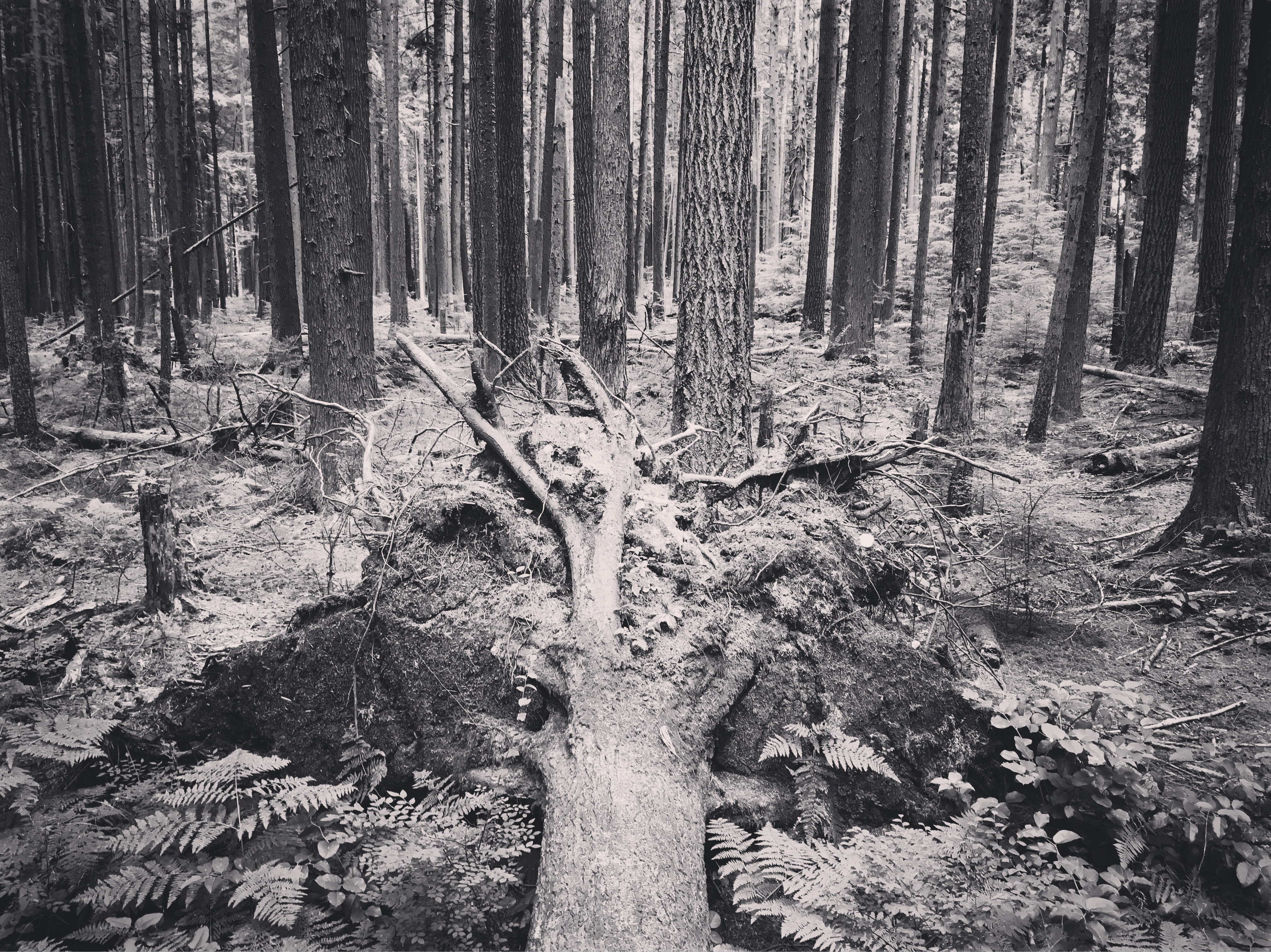

 holyscapes