In Part I, I wrote about my visit to a small religious community called the Doukhobors. Those who remain of this fascinating religious movement live mostly in the Kootenays region of British Columbia. I enjoyed visiting the Doukhobor service and getting to know a few of them. But I left feeling a mix of peace, sadness and a familiar longing. In this short piece, I want to put words to these emotions, even if just to work through them for myself.
I have always felt that there is something beautiful about group religious worship and identity. There is such a strong sense that those in the room know who they are, where they are, and why they are. I still appreciate this when I attend a religious service, visit temples, monasteries, or gurdwaras. I even appreciate this when I return to a Mormon meetinghouse with my family during the holidays. Though I have long since stopped identifying and practicing the religion of my upbringing, the familiar hymns, the inflection of prayer, the smell of a church, and everyone dressed in their Sunday best, tap into my longing for be-longing.
The sadness is harder to articulate. I think is has to do with a mixture of spiritual and existential loneliness. Though the Mormon / LDS tradition never espoused as radical an approach to Christianity as the Doukhobors, like many restorationist movements in the 19th century, they were certainly committed to living out Christianity in what they saw as an authentic and radical way. And I would even say that Mormonism’s roots were what led me to my exploration of radical politics.
At the Mormon university I attended, I really struggled with how overwhelmingly partisan Mormon culture can be, especially in the so-called Book of Mormon belt. By that I mean intentionally aligning itself with the US Republican Party. As if Jesus or Joseph Smith were teaching modern conservative talking points. I had always seen religion differently, and I soon found a community of more left-learning and radical Mormons, many soon to be ex-Mormons, and I felt very seen and understood in my leanings and struggles.
As I wrestled and read, I sympathized with more radical formulations of Christianity by authors like Leo Tolstoy, and non-religious writers Peter Kropotkin and Murray Bookchin. I even wrote an article about the first convert to Mormonism in Mexico, the Greek radical Plotino Constantino Rhodakanaty (1828-1890). Like him I saw something powerful at the heart of the early Mormon relationship to land, place and social organization. The Mormons attempted to create The United Order as a cooperative social-economic system. It was never fully realized. Like Rhodakanaty, I was eventually disillusioned with Mormonism’s assimilation of the American capitalist religion, though I tried for years to find my own sort of Mormon radicalism. I wrote several articles for a Catholic Worker inspired newspaper called The Mormon Worker. That was a long time ago.
I also felt sad because the Doukhobors are dwindling, and their tradition cannot live as they envisioned. As I chatted with my new Doukhobor friends, they related to me how the community gets along today, and how it has had to adapt with the times, and how from their peak in the early 20th century, only about 1,675 identify Doukhobor as their religion, according to the 2021 Canadian census. The Doukhobors work through a legal nonprofit structure, they do not own land communally, and many don’t bother observing vegetarianism anymore. I understand, but in addition to the existential loneliness of longing for belonging, seeing a tradition with such a beautiful way of live dwindling is a bit tragic.
And it’s not as though I would want to be Mormon again or become a Doukhobor, even if they were more radical. But there is a nameless love that is hidden inside the feeling I got sitting with the Doukhobors and listening to them sing together. After the visit, back on the road, I was marketed to by countless fruit stands, new distilleries, luxury retreats and resorts and excursions. The warm summer world seemed to be buckling under the weight of us ravenous experience-seeking tourists. This is a landscape of leisure, of make believe, of Air BnB rentals, cabins and resorts for the religion of consumerism. It feels like the opposite of that nameless longing. It feels like the contours of a spiritual wasteland of sorts. Always seeking, never finding, we wander around hungry for meaning and experiences. Why is this “religion” flourishing while the Doukhobors languish? I don’t know. But I want to keep finding places where I feel that feeling and keep trying to name that nameless love that is hiding within it.
Opening the creaking door of the large pickup truck that had driven us down the hatchery road, I was overwhelmed by the smell of death and decay. I let out a groan and my host, a board member of the Oyster River Salmon Enhancement Society, laughed and said, “That’s why I don’t eat fish most of the year!”
I had come for a scheduled tour of the Society’s hatchery. Our first stop was a fish trap that was filled with pink and a few early coho salmon. The trap was a large rectangular metal container submerged in a small side channel of the Oyster River. As we approached, we could hear loud banging coming from inside as the salmon jumped. When we opened the lid, a large pink salmon sprung out of the water with gusto and landed with a splash. The Society has been working for decades to restore salmon to historic numbers in the Oyster River which has been severely impacted by logging, mining, and development.
I felt a rush of childlike wonder at the sight of these living breathing aqua-bodies, swirling, and lusting for the gravel beds where they would spawn. They were born here, lived their lives in the oceans and then came back to these places to mate and die. The Society collected them, harvested their eggs and milt and then released them back into the river to live out the rest of their short lives. This might sound romantic, but salmon who have spawned start to look like zombies, their flesh decomposing and falling from their torsional bodies. Bears make frequent appearances along the banks, fishing with ease for the spent salmon, though we didn’t see any the day I went. Ravens and crows pick at the fishy bodies. Animals will sometimes carry the salmon deeper into the forest, and their bones nourish the roots of trees. The dying salmon give their bodies to the river and the forest, and in a way to the world.
A few days later, I came across a reference to New Testament scholar John Dominic Crossan’s book Jesus: A Revolutionary Biography. Crossan is known for his vivid and controversial portrayal of the “historical” Jesus. This moniker is to distinguish him from the Jesus of faith, belief, and miracles that is so familiar to the Christian story. In the passage, Crossan speculated that any convicted traitor crucified by the Romans was likely either left on the cross to terrorize the public, eventually devoured by carrion eaters; or, tossed into a shallow mass grave, and then, likely scavenged by dogs. Crossan believes that in all likelihood, Jesus of Nazareth met this fate, and stories of the tomb, the bodily resurrection and ascension emerged from the disciples’ grief, realistic visions of Jesus alive, enduring faith in his message and teachings, and the living breathing developments of oral traditions.
At first, the idea and image of the body of Jesus being picked at by vultures or eaten by dogs felt scandalous, blasphemous. Certainly, it is not an unprecedented claim. Denial of the resurrection is often part of larger polemics against Christianity from Greco-Roman Pagans or later materialists. All the same, I felt a flash of defensive anger at the implied disrespect to the central story of my Christian (even if unconventional) faith.
The Paschal Mystery is a deep and cherished cosmic myth and reality for me. God is not some distant First Cause, but implicates Themself into the world. Each day is a death and resurrection. Each phase of my life is death and rebirth. The Christian liturgical wheel of the year cycles through the birth, life, death, and resurrection of the landscapes of the Northern hemisphere and the Christ. The universe proceeds on the principle of star death and resurrection. The story feels deeply woven into the world, and into the land. And that is why I believe it. It has been less about whether it was historically true, but more about whether it felt real.
Visually, I am used to seeing the Jesus of stained-glass windows and icons. Stern, serene, floating in the air. Even if some of our more gruesome crosses vividly portray his suffering and death, we all know how the story ends. Jesus was resurrected and ascended bodily into heaven.
As I allowed Crossan’s image to sink a little deeper into my heart, my anger transformed into peace. Jesus, the God-Man, eaten by buzzards and dogs began to touch the soft edges of my faith. It was not at all that with Crossan’s scholarly boldness, the story finally made sense, appealing to my reason, intellect, and now I could just get on with taking the resurrection metaphorically or symbolically.
The image of a God who descended into our deepest pain and suffering through death on the cross, being further humiliated and devoured only enhanced the image of a God whose weakness is Their power. A God who enters fully into the world “saves” it by becoming one with it. The body of Jesus going the way of all flesh, cycling into the body of animals and the soil is an earthier resurrection. But it also adds a step to the Paschal Mystery. The world is in a constant cycle of Birth, Life, Death, Decomposition, and Resurrection. My God Decomposed before the resurrecting into the bodies of the animals, plants and fungi.
This may seem absurd to the orthodox ear, but Jesus himself invokes this kind of horticultural mysticism in the Gospel of John. The author writes Jesus saying, “Very truly I tell you, unless a kernel of wheat falls to the ground and dies, it remains only a single seed. But if it dies, it produces many seeds” (John 12:24). The seed does not grow in space. It does not ascend in the air. It sinks into the dark moist humus of the earth. This is the fabric of cosmic, biological and spiritual evolution. Jesus entered into this mystery, but we turned it into a fairytale about how good always wins and the wicked are always punished. The cross became a ransom, a universal sacrifice rather than a grand archetype of the way suffering must be metabolized and transformed for new life to emerge.
Most theological claims about the resurrection are primarily spiritual anyway. It isn’t that the resurrection is imagined to be a post-mortem resuscitation. Theologians claim that Jesus really died, and that the resurrected body was a post-mortal eschatological reality. It represented the Humanity 2.0 of the coming Age. Paul understood this as a spiritual body, and later Gnostics would assume that it was only spiritual, the physicality being illusory.
To be honest, despite my love for the Paschal Mystery, I have always struggled with the doctrine of resurrection as a historical event. The way it comes across in the New Testament is fragmentary, somewhat contradictory, and dream-like. The Ascension too has always troubled me, especially because it seems to be a clear homage to the power and legacy of the Hebrew Prophet Elijah, and a taunt to claims that some Roman Emperors were taken into heaven.
The idea of the resurrected body as an ecological body endears me to Jesus’s carnality, but still retains the Divinity he points to in himself, humanity, and the earth community. In addition, I like to imagine the life of Jesus after the resurrection as an insension rather than an Ascension. God went deeper into our world by becoming it. After all, Jesus didn’t come down to earth, he emerged from the fleshy humanity of Mary. He was born just like the rest of us.[1]
Franciscan Friar Richard Rohr writes of the difference between Jesus and Christ: “The Christ Mystery anoints all physical matter with eternal purpose from the very beginning.”[2] Rohr sees creation, Jesus, and the Christian community as instances of the Universal Christ spoken of in Colossians chapter 1. In Christ the world was created; the Son is a visible image of the invisible God, etc. With this scriptural Cosmic Christ, Rohr wants Christianity to expand not contract our view of God in the world and at the beginning of his book The Universal Christ he asks us directly:
“What if Christ is a name for the transcendent within of every “thing” in the universe? What if Christ is a name for the immense spaciousness of all true Love? What if Christ refers to an infinite horizon that pulls us from within and pulls us forward too? What if Christ is another name for everything—in its fullness?”[3]
The mystical body of the world includes the earth community evolving toward greater complexity. The French Jesuit Pierre Teilhard de Chardin saw Christ as the horizon of evolution, the Omega Point of all creation and Jesus as the living Heart of the Cosmos, which is love.
To be clear, I don’t want you to take my sketches here as anything like a truth claim. I am not trying to convince you that the resurrection is false. That Crossan’s is the real story. I don’t believe I have now discovered the true history of Christianity. My faith in the Paschal Mystery is not literal, it is literary. I am not seeking authentic orthodoxy but realistic mythodoxy.
There are times when I will resonate with the bodily resurrection after three days and the Ascension into Heaven after forty. But watching salmon give themselves to the world, and hearing Crossan’s scandalous claims about Jesus in the same week felt significant. I remember feeling like the salmon were a kind of Forest-Eucharist, and that to talk of Jesus’s body leaving the earth was a strange tale that abstracted his fleshliness from the earth that made him.
This fleshly eucharist was illustrated beautifully in Cormac McCarthy’s last dual-novel The Passenger and Stella Maris. A brother and sister are entangled in a forbidden love that is never consummated. Alicia Western is driven to suicide by vivid visions of mutated vaudevillian creatures and Bobby Western lives with the regret and guilt of her death. At the end of Stella Maris, which is a series of transcripts from interviews between Alicia and her therapist, Alicia longs to give herself back to the earth and end her deep existential loneliness. She says,
“I thought that I would go to Romania and that when I got there I would go to some small town and buy secondhand clothes in the market. Shoes. A blanket. I’d burn everything I owned. My passport. Maybe I’d just put my clothes in the trash. Change money in the street. Then I’d hike into the mountains. Stay off the road. Take no chances. Crossing the ancestral lands by foot. Maybe by night. There are bears and wolves up there. I looked it up. You could have a small fire at night. Maybe find a cave. A mountain stream. I’d have a canteen for water for when the time came that I was too weak to move about. After a while the water would taste extraordinary. It would taste like music. I’d wrap myself in the blanket at night against the cold and watch the bones take shape beneath my skin and I would pray that I might see the truth of the world before I died. Sometimes at night the animals would come to the edge of the fire and move about and their shadows would move among the trees and I would understand that when the last fire was ashes they would come and carry me away and I would be their eucharist. And that would be my life. And I would be happy.” (my emphasis)
Alicia wants to become a eucharist for the world. She intuits that for there to be life there must be death. Alicia’s self-emptying (the Greek is kenosis) impulse is much like that of the salmon, and much like that of Jesus. My encounter with the Salmon-Christ taught me that to get from life to death and back to life again, there must also be decomposition.
[1] I heard Richard Rohr say this in one of his daily emails somewhere.
[2] Rohr, Richard. The Universal Christ (p. 19). The Crown Publishing Group. Kindle Edition.
[3] Rohr, Richard. The Universal Christ (p. 5). The Crown Publishing Group. Kindle Edition.
I recently joined the board the Brandt Oyster River Hermitage Society. We are getting ready to launch our website, and I was tasked with writing a short bio on Father Charles Brandt, a Hermit-Priest who lived in a small cabin and supported himself as a bookbinder on Vancouver Island. I met Charles in 2016, when I was completing my dissertation at UBC.
Photo by the author, 2016
Charles Brandt was the fifth child of the six and was born on February 19, 1923, in Kansas City, Missouri. He is of Danish-English heritage, the child of Alvin Rudolph Brandt-Yde and Anna Chester Bridges. His father was an auto mechanic at a Buick dealership and later served as a pilot in the Airforce during World War II. After the war, he worked as a Park Superintendent at Swope Park. Charles had two brothers and two sisters.
At the age of three, the family moved to a small farm where he had some of his first encounters of wonder in the natural world. The family raised chickens and had a milking cow. A small spring emptied into a creek on the property and there Charles would fish for perch and crawdads. In primary school, an observant teacher encouraged Charles to paint, and he enjoyed painting apple blossoms with watercolors. His Aunt, Helen F. Bridges, was on the board of the Kansas City Art Gallery and encouraged all the Brandt children to pursue artistic talents. Charles continued studying art at the Kansas City Arts Institute on Saturdays for several years.
As a Boy Scout, he earned the rank of Eagle and was drawn toward craft and book binding. Eldon Newcomb, a scientist who was also the head of the nature staff at Osceola Boy Scout Camp, became a major mentor and influence on Charles. For several summers, he served as a counselor at the Osceola Boy Scout Camp, where he taught bird watching and natural history. As a Scout he was elected to the Mic-O-Say tribe, which is an honor society that exists within the Boy Scouts of America. (In recent years the organization has been criticized by Indigenous people over concern that it engages in cultural appropriation. But in Charles day, it was a different time.) Charles was very early on fascinated by birds. Charles writes,
“During the spring of my 2nd year of high school, having become quite interested in bird study, I had an experience on weekend out along the Blu River. It was beside a small stream with the spring foliage when I began to see a stream of warblers moving along the stream and in the bushes, feeding and calling. The amazing thing was there were about nine different species in all their mating plumages, migrating through their nesting grounds. It was an overwhelming experience of beauty and wonder and wild. I wanted to preserve it forever” (Brandt 2006, 2).
This fascination with birds, birding and wildlife was a key dimension of Charles’ contemplative approach to ecology, and ecological approach to contemplation.
Father Brandt attended high school in Raytown, Missouri. Active in debate, band, swimming, oratory, sports, drama. He also worked as a life saver and lifesaving instructor. When Charles was thirteen, he read Henry David Thoreau’s famous book Walden Pond, and immediately felt the desire to “go to the woods”, a desire that eventually would call him to the hermit vocation. On Thoreau Charles said,
“I got interested then in Henry David Thoreau. He went to the woods to find out what life was all about, and that was really quite exciting, and a real challenge for me; and I wanted to do something like that. That was probably my first inroad into the hermit life” (Grayston and Chang 2016, 42).
Land, place, ecology and silence were for Charles a single whole from a very young age.
But at university, he decided to study conservation at the University of Missouri where he majored in wildlife conservation. Reflecting on this later, Charles realized that he had roomed with Starker Leopold who was studying wild turkeys in the Ozarks. Starker was the son of the famed conservationist Aldo Leopold (1987-1948).
In 1943 Charles entered Active Service with the US Army Air Corps. It was around this time, while Charles was studying in Colorado for the army, that Charles began attending a Baptist Church. And until 1946, when Charles was discharged, he travelled and studied for his service positions with the US Army, including bombardier training in Victoriaville, California. Charles was appointed a Flight Officer but never saw active combat before the war ended. When he entered military service, he didn’t really reflect on whether or not it was the right thing to do, since it seemed to be a patriotic duty. But by the end of his service, he felt that he had become something of a pacifist and winced at the thought of being an actual bombardier.
In 1947, Charles headed to Cornell University to study ornithology. Charles studied birdsong recording under Dr. Peter Kellogg and studied nesting birds at the Edwin S. George Reserve in Michigan. He was also elected to Phi Kappa Phi, a student scientific society for his high academic achievement. Charles would go on to graduate first in his class with a Bachelor of Science in biology. Charles’ first scientific article was published in the Wilson Bulletin, based in Anne Arbor, Michigan. The essay was entitled “The Parasitism of the Acadian Flycatcher.”
Taking serious stock of his spiritual life, Charles began attending Saint John’s Episcopal Church in Ithaca, New York. Soon, Charles met the Reverent Francis Voelcker, the priest in residence there, who saw in Charles a great contemplative potential. He began mentoring Charles and encouraged him to explore a vocation to the Anglican priesthood. Charles spent that summer living with an Anglican religious order, the Brothers of Saint Barnabas, who were devoted to the care of men and boys with developmental disabilities and incurable illnesses.
Though as a Hermit-Priest Charles never married, and he doesn’t mention many romantic partners, it seems that during this time he was quite fond of a woman he refers to as C.C. They attended services together at Saint John’s and Charles simply writes, “we spent considerable time together” (Brandt 2006, 4).
After graduating from Cornell in 1948, Charles decided to pursue Holy Orders. He returned to Colorado where he lived during his military training and was accepted as candidate for Anglican priesthood by Bishop Bowen of the Colorado Diocese. He entered Nashotah House Seminary in Wisconsin, living there for three years where Charles enjoyed the routine of the community which included Mass and the daily office.
However, during seminary Charles continued to wrestle with finding a meaningful spirituality and began to read more widely from books by writers such as Jeremy Taylor and Father Benson of the Cowley Fathers of England, another Anglican religious order. He seemed to be seeking a deeper spirituality of silence and contemplation. Then, Charles stumbled upon Trappist monk Thomas Merton’s autobiography The Seven Story Mountain and found a deep resonance with Merton’s rich contemplative spirituality. Of Merton’s writing he said simply, “it blew me away.” So much so that he and several seminarians had arranged to spend easter at Gethsemani Abbey in Kentucky, where Thomas Merton lived, to experience Trappist life firsthand and meet Merton in person, but the trip was cancelled at the last minute, and they didn’t end up going. On reading Thomas Merton for the first time, Charles reflects,
“So when I read The Seven Story Mountain, that was what I was looking for; that really answered my question. I wanted to know if it was possible to really experience God in this lifetime, can you talk to him, as a person? That was really a revelation, The Seven Story Mountain, and it changed my whole thinking. From then on, I was thinking in terms of monastic the life” (Grayston and Chang 2016, 48).
That year, however, Charles ended up visiting another Trappist monastery. He made arrangements to meet with Father Bede O’Leary the Abbot and theologian of Our Lady of Guadeloupe Trappist Abbey which at the time was located in New Mexico (in 1954 the community relocated to Carlton, Oregon). Charles wanted to talk with O’Leary about contemplative, or mental prayer and Father Bede became a great voice of council for Charles.
In 1950 Charles spent the summer at the Community of Augustine and Anglican Contemplative House in Orange City, Florida and on December 7th Charles was ordained a Deacon at Saint Andrew’s Church in Denver, Colorado by Bishop Bowen.
In 1951, accompanied by Reverend Voelcker, Charles went to England to explore the varieties of the Church of England’s contemplative life. They visited Chevetogne, Belgium where he met with Dom Lambert Beauduin (OSB) who was interested in the Anglican re-unification with Rome. This meeting brought Charles to question the validity of Anglican Holy Orders, because he learned that they had been declared invalid by the Vatican.
From here, Charles began to try his hand at the monastic life in earnest and in 1951 he became a Postulant at Community of the Resurrection, an Anglican monastery in Mirfield, Yorkshire. Despite his doubts, in 1952 he was ordained an Anglican Priest by Bishop of Wakefield, UK.
In 1953 Charles left the Community of the Resurrection and spent some time in continental Europe making various stops in France and Rome. He spent ten days in Assisi, a few weeks in Rome, and met with a Benedictine monks named Father Dennis Stratham OSB. Father Stratham was from Saint Gregory’s monastery in Shawnee, Oklahoma. This meeting would prove providential, as Charles was received into the Roman Catholic Church there in 1956.
In the meantime, Charles continued his quest for a place to express his contemplative vocation within the existing religious communities of the Anglican/Episcopal traditions. When he returned from Europe in the latter half of 1953, he travelled to a property in Gaylordville, New York where Father Paul Weed had a property that he wanted to transform into a contemplative community. Father Charles built a small hermitage on the property out of old railroad ties and started working as a Chaplain at Kent School in Connecticut where he also helped with the garden.
Soon however, Charles discerned that this was not his place and he decided to move to Three Rivers Michigan, a small Anglican Benedictine community in 1954 and entered as a postulant. While he was there, he learned to chant the divine office in Latin, and continued his voracious reading of the mystics and contemplatives. Charles was deeply moved by the writings of Camaldoli monk Father Bede Griffiths whose autobiography The Golden String deeply impacted Charles. Griffiths was a monk in England for many years, but eventually found himself in India dialoguing with Hindu Sanyasis and fusing East and West. Father Charles also began reading John Henry Newman’s Apologia Pro Vita Sua. Newman had spearheaded the Anglo-Catholic revival in the Church of England in the late 19th century, but eventually converted to Catholicism and was made a Cardinal by Pope Leo XIII in 1879. This period sealed Father Charles movement to the Roman Catholic Church, so he left for Louisiana to meet with the only catholic priest he knew, Father Bede O’Leary who was on leave and serving a parish there. O’Leary sent Charles to St Benedict’s Monastery, and he met with the Prior there. Despite meeting daily for a month, Charles was not quite ready to make the move from Anglican to Roman Catholic. So, Charles decided to travel to Mexico City on pilgrimage to the Shrine of Our lady of Guadeloupe, accompanied by Father Bede.
Upon returning, he decided to head to Saint Gregory’s Abbey in Shawnee, Oklahoma where he continued his discernment, studied Latin, and met with a resident theology professor regularly. It was during this time that Father Charles fell in love with book binding, a skill that would become his own contemplative bread and butter throughout his years as a hermit in British Columbia.
On January 26, 1956, Charles Brandt was received into the Roman Catholic Church and in April he was confirmed in the Cathedral at Oklahoma City. Charles continued his stay at Saint Gregory’s, taking theology classes and deepening his bookbinding skills. That Easter Charles decided to travel to Gethsemani Trappist Abbey where he met with Thomas Merton who was the novice master at the time. Merton was warm and received Charles with kindness.
On his first meeting with the Trappist monk Thomas Merton, Brandt recounts, “So at Easter I went to Gethsemani. I knew Merton was the novice master. I didn’t realize I was going to meet him. I was in the guest house for about a week. So [knocking] I hear this knock on the door, and in enters Thomas Merton. You know, he sat down there, just the most ordinary person in the world. Immediately, I liked him, really liked him as a person, and we talked. My intent was to enter the novitiate there, but he said, “Don’t come here. We could make a good monk of you, but not a good contemplative”” (Grayston and Chang 2016, 52).
After several chats with Merton and later his Bishop, Charles decided to forgo a trip to Rome to pursue a quicker pathway to priesthood and decided to first solidify his vocation as a monk. Charles decided to enter New Melleray Abbey, Dubuque, Iowa, another Trappist Abbey. This decision seemed fruitful and in 1958 Charles made Simple Profession (temporary vows) and was put in charge of a small book bindery. Charles continued his studies in philosophy and theology.
In 1964, during the upheavals and experimentation of Vatican II, Charles became uncertain about making final profession (vows). All over the world, monastic orders were studying their roots, which went back to the hermits and recluses of Syria, Judea and Egypt. Charles remembered that Thomas Merton told him about the Camaldolese Order which had a monastery in Ohio. So, Charles and his Abbot drove to visit them. However, the Camaldolese stood for the duration of the divine office. Having a back problem, Charles knew within ten minutes that he wouldn’t make it.
Back to the drawing board, Charles wrote a letter to Thomas Merton. Merton’s reply was published in a collection of letters, and Merton encouraged Charles to continue his search for a more contemplative place to live out his vocation. Charles soon found two eremitic experiments: A Benedictine hermit named Peter Minard in North Carolina and Dom Winandy, greatly admired by Merton, who was leading a small group of hermits on Vancouver Island, British Columbia.
After visiting Peter Minard, Charles was impressed. Minard lived a simple life on old plantation. But soon it became clear that Father Minard was mostly looking for someone to run the farm. So, the Abbot of New Melleray wrote to Dom Winandy, who gave Charles permission to come for a visit.
In March of 1965 Charles arrived at Winandy’s group, The Hermits of Saint John the Baptist, located on the Tsolum River in Merville, BC one hundred acres of forested land. Charles moved into a small trailer and then began to build a hermitage there with some local help which was completed in September. To earn a living Charles decided he would try his hand at being a professional book binder, and the Trappists of Carlton, Oregon, Our Lady of Guadalupe Abbey (who Charles had previously visited in New Mexico), donated some book binding equipment. With this Charles began to search for clients in the local area.
Despite Dom Winandy’s misgivings about hermits becoming priests, Winandy gave Charles permission to meet with Bishop Remi De Roo, who eventually accepted him as candidate for priesthood. In August he received minor orders and was incardinated in the Diocese of Victoria which essentially ended his temporary vows at New Melleray. On November 21, 1966, Charles was ordained as a Roman Catholic priest by Bishop De Roo at the Canadian Martyrs Church. According to Charles, he was the first full time hermit ordained in Catholic Church in several hundred years.
While living on the Tsolum River, Charles began working as a fisheries technician, and assisted in some parish work in Cumberland on Sundays. Eventually the hermitage site became a bit too crowded, and Winandy and several hermits including Charles dispersed to other properties. In the Spring of 1970, Charles moved his hermitage structure to its current location on the Oyster River.
In the mid-1970s Charles travelled extensively to improve his bookbinding skills. He spent several months in San Francisco learning book restoration and then travelled to the New England Document Centre in Andover, Massachusetts to learn more about flatwork conservation of maps, parchments and prints. Charles was even appointed Chief of the Bindery, which kept him very busy teaching workshops and conducting surveys. In 1975-76, Charles travelled extensively in Europe where he both worked and studied additional conservation techniques.
Returning to Canada, from 1976-1981 Charles was employed by various Canadian book conservation programs. First, he worked for the Canadian Conservation Institute in Moncton, NB as Professional Book and Paper Conservator. Charles said a daily noon Mass in an English-speaking Church in Moncton. When this office closed, he moved to a centre based in Ottawa where he restored bound volumes, maps and art works on paper. Charles was also hired by the Manitoba government to design and oversee the building of a state-of-the-art restoration laboratory in Winnipeg from 1981-1984. The purpose was to survey and restore the Hudson’s Bay archives. Charles also travelled throughout Canada doing conservation work in Yukon, Manitoba, and Alberta during this time. On his love for bookbinding and conservation Charles wrote:
“Probably the best contemplative part of bookbinding is sewing the book. It’s a very relaxing, I think a very meditative, contemplative aspect of binding. Literature is disappearing at a great rate from our libraries all over the world, and it’s our written record of humanity. So if you’re preserving that, as I am, you’re preserving humanity, the culture, and I think that’s really quite worthwhile. It’s like preserving the earth. It’s not just a job, it’s something that’s conducive to the prolongation of civilization” (Grayston and Chang 2016, 55).
Charles was a craftsman and appreciated work well done. The embodied nature of the work, the quiet and the sense of purpose facilitated a contemplative atmosphere that was conducive of prayer.
In 1984, Charles finally returned to his beloved hermitage where he began making additions to the structure and installing a conservation lab and library. Charles began teaching conservation and restoration techniques at University of Victoria, UBC, Simon Fraser, University of Alberta, Washington State University and in many communities across Vancouver Island.
Even before he left for his travels related to book binding and document conservation, Charles was a passionate lover of place. He would write letters to local officials protesting proposed developments on the Oyster and Tsolum Rivers. When he returned to full time residency at the hermitage in 1984, he began lobbying campaign which mushroomed into a large number of environmental projects throughout Campbell River and the Comox Valley. Throughout the years, Charles was involved in many environmental groups and causes: The Steelhead Society of BC, Haig Brown Kingfisher Creek Society, the Campbell River Environmental Council, the Tsolum River Enhancement Committee, the Oyster River enhancement Society, the Oyster River Watershed Management Committee and the Tsolum River Restoration Committee. In the 1990s the local media began to take notice, and he even received several environmental awards for his work on river restoration and conservation.
It was at this same time that he began holding meditation retreats with the local community, despite some Catholic leaders warning against “Eastern” forms of prayer and meditation. His work of ecology and contemplation were quite a natural fit: Action and Contemplation were connected. In 1990, the meditation group became a regular event, which continued to the end of Charles’ life.
In 2001, Charles was the keynote Speaker at the Western Conference on Christian Meditation in Edmonton, Alberta which solidified his leadership in the global contemplative movement. On prayer, Charles reflected, “I think that anybody who prays benefits the whole body of Christ. Prayer touches everybody. The person next to me is affected by whatever I do. If I pray, that helps them, and it also helps the natural world” (Grayston and Chang 2016, 39).
Charles life was a series of questions lived out in many different places and among many different communities. But his love for craft, ecology, and prayer shine through all of this. Charles is an exemplar of contemplative ecology lived well. Toward the end of his life, Charles reflected on the contemplative life and on the hermitage property that the Hermitage Society lovingly maintains. He said,
“In a way, I’m looking towards eternity now. I’ll be 93 on February 19th, [2016], so I’m not going anywhere. I love this spot. I’m permanent. I feel steady, in a sense, with life, and with my calling. And this is my place. I walk out and I know the trees, and I know the birds and the animals. They’re my friends. As I said, the human community and the rest of the natural world has to go into the future as a single sacred community. I feel that I’m part of this community where the natural world and people come and go; and if we don’t, as Thomas Berry says, we’ll perish” (Grayston and Chang 2016, 57).
Father Charles Brandt died at the age of 97 on October 25, 2020, after a short stay at a local hospital in the Comox Valley. Upon his death, close friend and co-founder of the Brandt Oyster River Hermitage Society Bruce Witzel reflected, “His stature as a spiritual teacher as well as his whole legendary reputation as someone who integrated spirituality with ecology will live on after him in the lives and efforts of the many people he directly inspired” (Closter 2020).
Charles’ Publications
Charles Brandt. Meditations from the Wilderness: A Collection of Profound Writing on Nature as the Source of Inspiration (Harper Collins, 1997). 150 quotations about ecology, place and contemplation.
Self and Environment: On Retreat with Charles Brandt. (Bloomsbury Academic, 2000). An outline of Charles thinking on contemplative and ecology.
Bibliographical Sources
Charles Brandt, “Autobiographical Timeline” Email from Charles Brandt to Judy Hager (Dec. 14, 2006).
Rev. Don Grayston (1939-2017) and David Chang “A Single Sacred Community:
A short review of Adam Miller’s excellent book Original Grace: An Experiment in Restoration Thinking.
Prelude
The Church of Jesus Christ of Latter-day Saints (LDS) seems to have a grace problem. Like almost all Christian denominations in North America and Europe, the LDS Church has struggled in recent years to retain young people and progressives. Though the LDS Church’s support for conservative social issues will continue to be a point of tension for many, LDS philosopher Adam Miller’s Original Grace is an attempt to experiment with “Restoration Thinking” in order to affirm a core Christian doctrine to LDS spiritual practice: Grace. His research question: What happens when Justice and Grace are not seen as oppositional? His hypothesis: It changes everything.
Raised in the LDS church, but leaving in my late 20s, I have had my eye on Miller’s Zen-infused prose for a while. This is because Miller has wrestled with one of the issues that led me away from LDS practice and toward a more contemplative expression of Christianity. As an LDS person there was a grace-shaped hole in my life that I didn’t even know was there, but after suffering through deep depression during my mission years, mostly because of my own feelings of unworthiness, grace found me, and I began to believe that my status as a creature of God came before my actions or behaviors. In his boldly titled Future Mormon (2016), Miller’s essay ‘A General Theory of Grace’ simply states: “Grace is Original.” In this short review, I want to commend Adam Miller for his book length elaboration on that sentence and raise some questions for his ongoing experiment with a doctrine that has yet to find a comfortable place at the table of LDS spiritual practice.
Miller’s Radical Justice
Original Grace is a touching tribute to Miller’s late father, a disciple of Christ whose strongest theological proof of God’s existence was the self-giving love he felt all around him. For Miller, his father taught him that Justice and Mercy were always on the same team.
Central to Adam Miller’s claim is that the doctrine of Original Sin, a doctrine that the LDS church has negated since its ‘13 Articles of Faith’ were published in 1842, has nonetheless tainted the way LDS people live their understanding of the Gospel.
Despite LDS religious culture’s rejection of the austere Calvinist doctrine of “total depravity”, and its dismissal of Sola Fide (faith alone) soteriology, faithful LDS have nevertheless absorbed the idea that true justice justifies, at least in theory, the necessity of punishment for sin. That falling short of the Gospel merits our feelings of guilt and shame and that only by redoubling our efforts to be righteous will we come to our salvation.
LDS have often seen justice as a kind of divinely anointed karma: They, along with some other Christian lineages, intuitively believe the proposition that humans suffer because we deserve it. The Old Testament’s admonition of an eye for an eye is often described as a bridle for vengeance within a proportional tit for tat. The Hebrew imagination saw justice as restoring right relation among peoples, castes, land and God, and this certainly included God’s punishment of Israel’s enemies or those who strayed from Torah. Diseases, plagues and natural disasters were often interpreted as God’s justice playing out in the world (See 1 Chronicles 21:14).
Miller doesn’t negate the goodness of the law, but with LDS Apostle Dallin H. Oaks claims that Christ offers a better way. Miller asserts that this better way is to align justice with grace by returning not only good for good but also good for evil. This is a play taken directly from Jesus of Nazareth’s Sermon on the Mount. For Miller, in a Christian cosmos, suffering can never be deserved, only learned from and wrestled with.
Miller shares that as a missionary he constantly fought feelings of inadequacy and unworthiness. That is until he picked up Stephen Robinson’s 1992 Believing Christ. Robinson diagnoses the problem in his own spouse, who after working hard to be the perfect LDS woman collapses into a pile of defeat and despair. She accepted that her efforts would never be enough to merit the full measure of LDS salvation. Robinson takes the whole of the church to task on her behalf for refusing to believe that Christ means what he says and did what he did.
Robinson’s theory of the atonement is not so much of substitution, Jesus suffers on our behalf, but of being saved “after all you can do” (See 2 Nephi 25:23). To illustrate this Robinson shares ‘The Parable of the Bicycle’ wherein a little girl scrimps and saves for a bicycle for weeks, but still falls short, even after all her hard work. The loving father steps in and pays the rest. Grace, after all we can do.
Miller lauds Robinson’s first step, but argues that this “after thought” or “backup plan” soteriology still does not fully grasp the radical claim grace has upon us. When grace and justice are aligned, they ask not what we deserve, but what we need. Sin in this understanding is not a law broken, but grace rejected. Miller writes, “The problem isn’t that God is unwilling to offer the grace I need. The problem is that I’m unwilling to receive the grace God is giving” (14).
LDS tend to think that salvation is the highest reward for living a righteous life, rather than seeing righteousness as the fruit of our embrace of the saving (salving) love of God. The commonly quoted LDS scripture Doctrine and Covenants section 82 reads: “I, the Lord, am bound when ye do what I say” is an underlying motivation for an LDS version of the prosperity Gospel, an esoteric incantation that extracts blessings from a God of justice. It is Max Weber’s Protestant Work Ethic liberated from Calvin’s total depravity. Strange bed fellows indeed.
Miller admonishes LDS that salvation is better sought and understood as a present-tense reality. “A shared life lived in Christ’s presence is the end. It is salvation” (20). Christian virtues like charity are what grace looks like in human clothing, not what Christians do to impress God, whose grace is the very air we breathe (37-38). He writes, “If we take Jesus’s Sermon on the Mount as our guide, the logic of justice is the logic of grace” (37). Thus, no instance of a karmic approach to justice in scripture can dissuade Miller from seeing justice as an expression of how to arrive at what human beings need rather than what we deserve. The Bible is not after all a story of justice executed judiciously in each case, it is a story about a thousand broken promises met by a God who loves us as a nursing child at his breast.
Grace and Nature
Perhaps because the book is tailored to a general audience, and went through the editing filters of Deseret Book, the LDS publishing house, I found myself wanting Adam to weave in threads of the “Traditional Christianity” he is partly polemicizing against. I found the lack of historical context for Original Sin or Grace for that matter a weakness of the initial chapters, even if the book is aimed to keep folks from slogging through the theological mud. In addition, I found that his work of aligning justice with grace was more successful than his case against Original Sin. A brief discussion of what I mean.
First, a bit of background on the doctrine of Original Sin: This core doctrine is found at the heart of all Christian communions: Oriental Orthodox, Eastern Orthodox, Roman Catholic, Anglican, Lutheran, Calvinist, Anabaptist, Pentecostal and Evangelical. The theology claims that our mortality entails a proclivity to sin by nature.
This theology is primarily absorbed from the second account of Adam and Even in the Garden found in Genesis 3, wherein eating of the fruit of the Tree of Knowledge of Good and Evil results in the couple being expelled from the Garden of Eden. However, the doctrine also draws from the poetry of Psalm 51 where the poet writes, “Behold, I was shapen in iniquity; and in sin did my mother conceive me” (KJV). In the letter of Paul to the Romans (Ch. 5), he claims that if death came to humanity through one person (Adam), salvation most certainly could as well (Jesus).
However, Original Sin does not appear in Jewish theology. It was Saint Augustine of Hippo (354–430) an early Church Father who really solidified the doctrine. Augustine had a sudden and unexpected conversion to Christianity at the age of 31. His own riotous past convinced him that human beings are utterly dependent on God’s grace.
Miller’s only mention of non-Mormon theology is his mention of the theology of John Calvin, the 16th century French reformer whose understanding of faith meant that unlike the sacramental approach of the Catholic and Orthodox communions, no rite, ritual or sacrament was effective in ensuring our salvation. Not even an act of faith could save us. Our natures are totally depraved of the good, we are utterly and completely dependent on God’s grace. Our election is only made known to us through our desires to live a Christian life, or through the fruits of that life. The Westminster Confession, the current articles of faith of the American Presbyterians, continues to affirm that humans are: “Wholly defiled in all the parts and faculties of soul and body.” [1] Original Sin indeed. Interestingly, the Catechism of the Catholic Church reads:
“It is a sin which will be transmitted by propagation to all mankind, that is, by the transmission of a human nature deprived of original holiness and justice. And that is why original sin is called “sin” only in an analogical sense: it is a sin ‘contracted’ and not ‘committed’—a state and not an act.”[2]
In other words, human nature is wounded, but not totally depraved. The notion of an LDS human nature (which tends to be more optimistic) is never fully resolved by Miller who writes:
Christ’s atonement directly addresses a problem internal to my own nature as a sinner, not a problem internal to God’s nature. He bridges a gap caused by my rebellion against justice and grace, not a gap between God’s justice and God’s grace (59).
In all Christian readings, even LDS, my nature as a sinner comes through contraction, I have inherited my nature as a sinner. LDS do not appear to believe that our nature as sinners goes all the way back into the LDS pre-existence. Another option is that sin comes into the world only when we chose to sin. There is no pre-existing conditions, only a long string of spiritual lifestyle choices that our natures are vulnerable to slipping into.
When Miller says that his nature is as a sinner, he seems to be implying then that our sinful nature is contracted through our humanity and understood through the myth of Adam and Eve as the parents of our humanity. While this theory of sin feeds the logic of karmic justice Miller critiques, it is also at the center of his theology of grace, which does not presume to merit God’s grace, only strives to be a receptive vessel for it.
The LDS Church’s Palagian Problem
This leads to another bit of historical context. The rejection of Original Sin in the Christian tradition has tended to be by those who embrace the idea that we can earn our salvation. For example, Pelagius (c. 355 – c. 420 AD) a British monk, asserted that Original Sin did not taint our nature because our nature was synonymous with being, and being is sacred. Pelagius was one of the early Christians who demanded strict moral obedience for all Christians, especially priests. Pelagius’s view was quite popular in the 5th century, before Augustine’s Original Sin rose to the status of dogma. His notion of free will (free agency) suggested that God would not command us to be perfect (Matthew 5:48) if it were not possible. And God didn’t create anyone to be evil, this was a Manichean (dualist, gnostic) doctrine. However, after a public run in with Augustine, Pelagius’s ideas were condemned primarily at the councils of Carthage between 411–418 CE.
Miller’s challenge going forward is that Mormonism’s rejection of Original Sin is in my view primarily a Palagian move. This is evidenced, not just in many LDS’ embrace of the Prosperity Gospel, but in the persistence of certain folk theologies that come from Joseph Smith Jr.’s later revelations. For example, Miller uses the word “Creation” in the book but does not clarify whether he also rejects the Ex Nihilio (out of nothing) Creation of “traditional Christianity”. LDS tend to talk about creation as an activity of organization overseen by a certain Celestial precinct’s God, in earth’s case Jesus Christ out of existing matter. Many LDS believe that our pre-mortal selves participated in that organization, a beautiful thought for some, but also a move that steals something of the grace at the heart of what it means to be a Creature. These two rejections: Ex Nihilo and Original Sin seem to leave the possibility of embracing grace less likely. Rather, embracing the strong contingency of my existence that ex nihilo creation asserts, and my nature as a sinner that original sin canonizes, leaves me prone to the radical beauty of God’s grace.
Other Braids in the Estuary of Grace
Before I conclude, I would like to point readers to several other worthy explorations of grace-centered Christianity which flow in the same direction as Miller’s.
1) The Franciscan Alternative Orthodoxy
The Franciscan Order, founded in 1209, has since the writings of Duns Scotus (1265/66-1308), asserted a minority position on the Incarnation (the doctrine that God took on a human form/nature). Since Scotus, Franciscans have asserted that rather than a ransom, or substitutionary approach to salvation, which is predicated on the inevitability of sin, Franciscans assert that Incarnation has been part of God’s plan from the beginning. Contemporary Franciscan teacher Richard Rohr likes to say that God becomes what he saves, and the Incarnation was not just a single event in Jesus of Nazareth, but an ongoing event from the beginning (See John 1).
2) Matthew Fox’s Original Blessing
In 1997, Dominican Friar Matthew Fox wrote a book entitled Original Blessing. His book proves that Roman Catholicism has just as deep a wound related to Original Sin as the LDS Church. The book got him excommunicated by Cardinal Ratzinger. In the book, Fox emphasizes the many affirmations of the goodness of creation in Genesis 1 that preceded the sin of Adam and Eve that saw them exiled from the garden. While I don’t find Fox’s scholarship all that impressive or well-disciplined, his assertion that the interpretation of Original Sin needs a complete overhaul, was well received with progressive Christians, especially those interested in ecological theology.
3) The Neo-Celtic Christianity of John Phillip Newell
A former pastor in the Church of Scotland, John Phillip Newell has sought to amplify the teachings of the Church in the British Isles before the Roman standardizations of the 6th century. While he calls his Christianity Celtic, it is more accurately classified as a kind of Neo-Celtic Christianity, which infuses pre-Roman Christianity with contemporary concern for equality, spirituality, feminism and environmental stewardship. Newell negates the Virgin birth and believes that Creation was not effected out of nothing, but out of God. He boldly claims that holding an infant is the best argument against the doctrine of Original Sin, a doctrine that he simplistically explains as primarily about imperial control and oppression of the masses. For Newell, Original Sin is psychologically damaging and makes up the core wound of Western Civilization, which leads to so much shame and self-loathing.
Conclusion
There are perhaps many more examples, but these writers sketch out the basic topography of the Christian interlocutors that Miller is in conversation with. Each of them emphasizes the primacy of grace as a bewildering gift, not a post mortal rewards package. I commend the razor-sharp prose of Adam Miller’s excellent book. Any discussion of grace is a balm to the common affliction of shame and guilt that justice-oriented approaches to religion too often take. And as Miller says, the LDS Restoration it isn’t finished.
Over the next few weeks, I will post a series of sketches of some ideas I have kicking around in my head. With luck, they might become longer essays or full length books! Apologies in advance for grammar and spelling errors…
Living in Vancouver I have always felt a bit lonely in my Christianity. I love the catholic tradition, but I have serious hesitations about a full-throated enthusiasm for being part of the Roman Catholic Church. Recently, I learned that two men I admire converted (or in one case reverted) to Christianity. This has made me feel a bit less lonely and pointed to something I see happening among some spiritual but not religious ecological types. Paul Kingsnorth and then Martin Shaw, both British, and both frequent speakers on podcast and YouTube circuits, converted to Christianity in 2021. Paul converted directly into Eastern Orthodoxy, and Martin, after being baptized by an Anglican priest, has entered catechesis with a local Orthodox church in Exeter.
Shaw grew up in the Baptist tradition, with a preacher as a father, but in his teens became a musician and eventually left the church (very familiar to my own story). He was raised not just with theology but the telling of fairytales and myths. Now in his late 40s, at the end of a 101-night vigil in the forest, Shaw saw a multicolored star-like aura of light moving toward him which pierced the ground like an arrow. He heard a voice that said “Inhabit the time in Genesis of your original home.” He says he felt the presence of “the mossy face of Christ.” Thereafter, entering the lockdowns of COVID-19, he had series of dreams in which a clear message was conveyed. Podcasters Mark Vernon and then Justin Brierley have observed that many in the West are seeking for deeper meaning beyond the fuzzy post-Christian spiritual but not religious landscape of the liberal and progressive West. They have cautiously suggested that Christianity is entering a new phase.
Paul is a talented novelist, who for many years, was a front lines environmental activist. He always had a spiritual side and spent time in Buddhism and Wicca as an unapologetic Deep Ecologist and critique of industrial civilization. His book Confessions of a Recovering Environmentalist was a public break with his career in the mainstream environmental movement and a manifesto of slowing down, staying put and giving up on the “carbon game.” His response to environmentalism, and his lavish praise for writers like Wendell Berry always sounded to me quasi-monastic. His decision to move to a small farm in Ireland sealed that impression. Kingsnorth continues to rail against “the machine” but he is now doing so within a consciously English, even Celtic, Christianity that shares very little of the New Age trappings of the Neo-Celtic visions of folks like Matthew Fox or John Phillip Newell.
In both of their Substack threads Kingsnorth and Shaw have been thinking out loud about their newfound Christian practice. One thread of Shaw’s is entitled “A Liturgy of the Wild” and in it Shaw curates several wonder stories and archetypal hero journeys that are accompanying him as he learns the rhythms of the Christian liturgical calendar. I have always admired both men, and I feel a deeper kinship with their stories. I don’t always agree with Kingsnorth’s politics, but I certainly have taken heart in my own lonely journey with the catholic contemplative tradition.
My pilgrimage into catholic Christianity began when I stumbled onto the writings of Thomas Merton, the Trappist writer-monk who spent much of life writing about contemplative spirituality from his monastery in Kentucky. When I attended my first Easter Vigil (Saturday evening service before Easter Sunday), I felt the power of the liturgy through the candle-lit depth of anticipated resurrection. It was a powerful, aesthetic, and affective experience. As the warmth of the liturgy sank in over the days and weeks thereafter, I realized that for me the power of the Christian tradition lay not just in creeds and atonement for sin, but in an ability to invite us into a participation with the cruciform nature of the cosmos. By this I mean that through a liturgy that aligns with the seasons of the Norther Hemisphere’s waxing and waning and the earth’s own resurrection, we bring our own bodies to the pascal mystery: birth, death, and resurrection. Coming to believe in the resurrection of Christ was made possible for me by experiencing first a real attention to the resurrection of the earth. Thereafter, the resurrection of Jesus was not an exercise in intellectual ascent to the proposed truthfulness of an enchanted version of History, but to the reality of resurrection that spoke out of every flower and tree and my own circadian pilgrimage through the year. Jesus distilled and recapitulated that rhythm with his life.
I recount this here because what I am observing and learning from Kingsnorth and Shaw is that to a large extent they too were drawn to the archetypal, storied mysterious depth of the tradition. Their hearts were caught in the fisher’s net, and they have lived to tell the tale. Like the mystics, who classically emphasize direct experience, they are speaking from their own bewildered walk with a wild Christ. Not the buddy Christ of contemporary mainstream Christians, but a dark figure who broods in the wildlands and rails against convention.
Shaw for example specifically states that he was drawn back to Christianity because of the strangeness and wildness of Christ and the story. He calls Christianity “the last great mystery”. And now he is a on a mission to reclaim the contemplative, wild, ecologically rich texture of the faith. Whereas many converts to Orthodoxy I have read about tend to emphasize coming to some ascent to its authenticity in relation to some imagined original or continuous Christianity, what I hear Kingsnorth and Shaw doing, is, walking in the tracks of the mystics, drawing close to the warm glow of the power of Christianity’s stories and liturgies.
They are in short espousing what I want to call a Christian Mythodoxy. Mythos: from a root that comes from mouth, myths are not untruths to be busted, but the stories and deep human truths in which we see ourselves participating; not just moral lesson or entertainment. Doxy: meaning praise is our orientation toward the Divine, how do we soak up the rays of the Divine? It constitutes our spiritual practices, our liturgy and worship.
In the wider orbit of ecological spirituality, there are a lot of wonderful conversations that are trying to reconnect with the earth’s rhythms, place, archetypes, myths and even astrology. Adaya’s ecological spirituality courses, the School of Mythopoetics, the now defunct Seminary of the Wild, and many more. Yet while many of these courses can feel quite hostile to Christianity (speaking from personal experience), several renegade threads have been seeking to rewild the Christian lifeway.
For example, Franciscan Ilia Delio has showed that Catholic, from the Greek Kata-holon, according to the whole, must catch up with the facts of evolution and the implications of the discoveries of quantum physics regarding matter-energy as a continuous reality. Others like philosopher John D. Caputo have talked about post-modern Christianity as an exercise not in theology as science, but as a kind of Theo-poetics. As I often tell my students, religion done well is poetry about a mystery, meaning that theology for the most part is not meant to be an exercise certainty, proofs and evidence, but one of awe, wonder, praise and sometimes lament. Others such as writers Bayo Akomolafe and Sophie Strand are doing fascinating things with the possibilities of a wilder, earthier, porous Christianity. These two seem to be more on the outside margins of the tradition, but they speak eloquently about the wild origins of Jesus’s teachings, parables, and connections to the natural world in first century Palestine. Brie Stoner’s podcast Unknowing has also been the grounds for some interesting conversations about what comes after a rigid, denominational Christian identity at the dawn of the Anthropocene.
What I see happening more and more in these discoveries or reimaginings of Christianity does not fit into any denominational category. It is rather a kind of diffuse gesture, posture or dare I say (leaderless) movement. A Christian Mythodoxy seems to be one possible green shoot germinating out of the compost pile of a religion in decline (at least in the West). Stoner’s series on composting Christianity, and Sophie Strand have used that wonderful metaphor to talk about living on the edge of something that feels like both a death rattle and a birth pang (Romans 8). The so-called Anthropocene is bringing about great harm but is also opening space for something new.
What I am experiencing and observing is the idea that to be a Christian is not just to ascent to a platform of beliefs and then check one’s life against it. Rather, beyond theology (not in opposition to it), there lies a move toward a mythic praise, a mytho-doxy, grounded in the body and grounded in the cycles of the earth, that is the tangled fabric of our messy faith, which is always, already embedded in the liturgy of the cosmos, the good earth, and the breathtaking beauty of the pascal mystery.
“I believe in the Holy Spirit, the holy catholic Church, the communion of the saints, the forgiveness of sins, the resurrection of the body, and life everlasting. Amen.
–The Apostles Creed
“The only true joy on earth is to escape from the prison of our own false self, and enter by love into union with the Life Who dwells and sings within the essence of every creature and in the core of our own souls.”[1]
–Thomas Merton
A Communion of the Saintly
Toward the end of the Nicaean and Apostle’s Creeds, Christians from many denominations affirm the belief in the Communion of the Saints. In practice, Roman Catholic, Anglican, Oriental, and Easter Orthodox traditions commonly integrate saints into our liturgies, calendars and even patronal names at baptism. My own patron saint is Saint Kevin of Ireland. Not only is he the patron saint of very ordinary names like mine, but as a hermit, he embodied the deep love of Creation at the heart of Irish Paganism and Christianity.
The Catechism of the Roman Catholic Church defines a saint as someone who is closer or more united with Christ in heaven. Intercessory prayer, which seems to pick up where Pagan polytheism leaves off, sees this proximity to heaven as a legitimate and effective way of amplifying one’s prayers. It emphasizes the idea that the church is a communal structure that is not confined to the living.
Saints are also culture-heroes that elevate our eyes toward heavenly virtues through the prism of their unique gifts. Saints are the celebrities and athletes of the spiritual life. They are role models and icons of holiness and character. For example, sounding a bit like a Catholic Bodhisattva, 19th century French Saint Therese of Lisieux wrote, “I want to spend my heaven in doing good on earth.”[2] Saints are heroic in virtue, and yet they are often keenly aware of their own woundedness. Contemporary Catholic commentator and YouTube evangelist Bishop Robert Barron uses the analogy of a pane of glass to describe the saintly heart. As it becomes more directly illuminated by light, even the slightest smudges and blemishes become readily apparent. As Barron puts it, saints are simply people who know they are sinners. Saints don’t earn this merit, they simply orient their lives toward the light already there.
In a broader sense, all Christians, or even all people, are saints. In his letters, the Apostle Paul refers to the ordinary members of his churches as Saints—as contemporary Mormons, the Church of Jesus Christ of Latter-day Saints, continue to do. For Paul, the Saints (Gk: hagiois, holy ones) were those who had chosen to bask in the Grace of the risen Christ.
This notion of ordinary folks being Saints shouldn’t surprise us. Think of Paul’s stark transformation from a persecutor of the church to a Christic visionary; or of Peter’s penchant for cowardly self-preservation at the time of the crucifixion, to a miracle working evangelist-martyr who tradition holds was crucified upside down. From the earliest moments of Christianity there is a notion that each of us are saints in embryo, holy not just through extraordinary feats of virtue, but through our createdness, our belovedness, and our utter dependence on God, who brings us into being and sustains us in each moment.
Making Room for Creation in the Communion of the Saints
For most of Christian history, Sainthood has been seen as a human affair. However, it seems like the time has come to decenter the human person as the only creature in Creation worthy of the title. I don’t want to devalue us, I want to decenter us, there is a difference. I want to think about this with the help of 20th century spiritual writer and monk Thomas Merton (1915-1968), the patron saint of ecology Saint Francis of Assisi, and a few other geologians.
It isn’t actually that much of a leap to go from the notion of a primordial sainthood at the heart of our human createdness, which emerges from no merit of our own, to the saintliness of the rest of Creation with whom we share our evolutionary morphology and instincts. As a monk explained to me on retreat regarding his belief in animal souls: “Do we have the same Father? Ok, then we are siblings!”
In his poem Canticle to Creation, Saint Francis of Assisi affirmed this close kinship with creation in the 12th century. In writing with the reconciliation of two rival cities in mind, Francis declared with the Psalms that all of creation rightly gives God praise. However, he also went a step further by referring to Sun, Moon, Water, Plants, Earth, and Fire as our siblings. He wrote: “Praise be to you Lord God through Brother Sun…”[3] This kinship language is striking for a pre-ecological age that affirms the interrelatedness of all creation. And yet, there is no confusing Creation and Creator, only a more directly aligned prism that is able to see God’s loving presence in Creation.
In his foundational book New Seeds of Contemplation, Thomas Merton meditates on the depth of contemplative spirituality in the Catholic tradition. Merton’s writing had a great deal to do with bringing mysticism and contemplative spirituality to an entirely new generation of Catholics, and his influence has reached into the generations of the 21st century through the efforts of the International Thomas Merton Society. One of the most startling and beautiful passages in New Seeds beautifully amplifies saintliness beyond the more than human Creation in a way that would have turned Henry David Thoreau’s scruffy head. Merton writes:
“A tree gives glory to God by being a tree. For in being what God means it to be it is obeying Him. It “consents,” so to speak, to His creative love. It is expressing an idea which is in God and which is not distinct from the essence of God, and therefore a tree imitates God by being a tree.”[4]
A tree’s substance, its tree-ness, is its praise, and because that substance owes its very being to God, it is fundamentally united with God, or, in other words, a Saint. Merton continues:
“The forms and individual characters of living and growing things, of inanimate beings, of animals and flowers and all nature, constitute their holiness in the sight of God. Their inscape is their sanctity.”
Here, Merton alludes to a word coined by Jesuit poet Gerard Manley Hopkins. The Inscape for Hopkins is a creature’s most intimate uniqueness, which bears the very finger print of God. As Dan Horan has written, this is a deeply Franciscan idea, which echoes the heady theology of 14th century theologian John Duns Scotus. Merton, say on!
“The special clumsy beauty of this particular colt on this April day in this field under these clouds is a holiness consecrated to God by His own creative wisdom and it declares the glory of God. The pale flowers of the dogwood outside this window are saints. The little yellow flowers that nobody notices on the edge of that road are saints looking up into the face of God. This leaf has its own texture and its own pattern of veins and its own holy shape, and the bass and trout hiding in the deep pools of the river are canonized by their beauty and their strength.”[5]
Swoon. This is one of my very favorite passages from Merton, and when I first read it as a seasonal forester in Utah in 2012, it changed the way I saw the woods. It is recalling this passage that I affirm the idea that the Communion of Saints is ready for an update.
Extinction is Martyrdom
Death is a fact of evolution. Most species have an ecological life span of about a million or so years. Human beings may be no different if we don’t shape up. Extinction, the death of a species, happens naturally. Admittedly difficult to calculate, the background rate of natural extinctions is about one species per million species per year. The industrial machine is speeding up that rate so by estimates of between 100 to 1000 times the background rate. There have been five major extinctions of life on this planet, reducing species diversity by 75-90 per cent. Human expansion out of Africa, but especially the activities of industrial humanity initiated what some are calling the Sixth Extinction event.
For those of us who see the world as more than a God-given grocery store, extinction caused by human beings is a travesty. Extinction has been likened to the silencing of an instrument in the symphony of Creation. Said another way, if each creature is a word of God, unique and singular in its particularity and bespokeness, a species, is an epic cosmic poem. Extinction at the hands of human expansion impoverishes the vocabulary of this cosmic epic that makes up an earthly Communion of Saints. Just as murder is not just death, extinction by our hands is a kind of martyrdom.
Escha-ecology
In his Letter to the Romans chapter 8:22, Paul writes that “all creation has been groaning as in the pains of childbirth.” There is a sense that Christ is a cosmic event, and salvation an earthly affair. In the famous John 3:16, “God so loved the world”, after all. Eschatology is the study of last things, final words, and end times. For many Christians, only humans will accompany God into post-moral eternities. But in an era of ecological conscience, eschatology needs an earthy reassessment. As ecological theologian Sallie McFague has written, “Salvation is the direction of all of creation, and creation is the very place of salvation.”[6] Salvation was not just a single event, but an ongoing trajectory of Creation as the Body of God.
Theologians like the Jesuit priest Teilhard de Chardin and his contemporary interpreter Franciscan Sister Ilia Delio, see Big Bang cosmology as affirming the idea that Creation is moving toward its fulfillment in God. For Teilhard the Omega point was synonymous with the Logos of John Ch. 1, where the author states that the Word (Logos) was with God from the beginning and is God.
Omega is the last letter in the Greek alphabet, and Teilhard used this as an image of the entirety of Creation being drawn into God through the humanity of Christ (Logos). Of course for Teilhard, the Omega point insinuated that the Noosphere, or mental realm, would become independent of the physical world, but Delio’s writings make a stronger claim that all of creation is involved in this ongoing cosmic soteriology. She writes, “Rather, reality is a single, organic, evolutionary flowing.”[7] The lives of Saints are powerful because they give us a taste of heaven on earth. To expand the Communion of Saints is acknowledge that like the Our Father prayer, salvation is the ongoing process of earth merging with heaven.
Finally, if a human can be a saint, perhaps we should consider whether or not her gut flora, eye mites, viruses, lice, skin and mouth bacteria, fungi, and parasites might be as well. Perhaps as well, we should wonder whether the species that have been domesticated with us are Saints: Heather, corn, wheat, barley, millet, cows, chickens, dogs, pigs. Perhaps as well those that have accompanied us as we made our cities: Cats, rats, mice, cockroaches, pigeons, squirrels, starlings, coyotes, dandelions, and crows. And perhaps those species and ecologies that provided the materials, medicines, and wild foods that nourished us. And all those that populated our symbols, languages and stories. Perhaps the Communion of Saints is nothing less than an ongoing Being-One-With the Holy-Ones-of-Creation.
A Litany of Ten Salish Sea Rainforest Trees
Saint Western Red Cedar pray for us…
Saint Douglas fir pray for us…
Saint Western Hemlock pray for us…
Saint Grant Fir pray for us…
Saint Sitka Spruce pray for us…
Saint Amabilis Fir pray for us…
Saint Big Leaf Maple pray for us…
Saint Red Alder pray for us…
Saint Paper Birch pray for us…
Saint Yew pray for us…
[1] Thomas Merton, New Seeds of Contemplation (New Directions. Kindle Edition, 1961/2007), 27.
[2] St. Therese of Lisieux, The Final Conversations, (Washington: ICS, 1977), 102.
Since becoming Catholic, my love for the real meaning of Christmas has only grown. This year, I decided to do something extra in preparation for the Season of Advent, the season of ‘Holy Waiting’ in anticipation of the Incarnation.
Every year, Mountain View Cemetery holds A Night for All Souls, a public event and art installation that corresponds to the Christian Holy-day of All Saints and Souls Days, and the ancient Pagan Holy-day of Samhain (pronounced Saw-win). For the past couple years, I have really enjoyed this time of year. With the land turning from summer to winter and having lost several family members and friends, it was a good time to reflect on transitions; on life and death.
I wanted to do something to connect this time of year to my anticipation of Advent. I have heard of celebrating the Celtic Advent, which begins around mid-November. But it occurred to me that as we prepare to receive the Incarnation into the world, meditating on transition, on death, on our blessed dead was the perfect time to deepen our understanding of the mysterious idea of Kenosis.
Kenosis is Greek and literally means self-emptying. Paul uses this curious phrase in Philippians chapter 2, where he says:
5 In your relationships with one another, have the same mindset as Christ Jesus:
6 Who, being in very nature God, did not consider equality with God something to be used to his own advantage; 7 rather, he made himself nothing by taking the very nature of a servant, being made in human likeness. 8 And being found in appearance as a man, he humbled himself by becoming obedient to death— even death on a cross! (NIV)
God emptied himself of divinity to take on humanity, so that we could, in turn, enter into the divine presence.
This idea has cosmological implications. One of the monks that I interviewed for my PhD had this to say:
God reached into the far end of the universe, like grabbing the back end of a balloon and pulled it back the other direction. He’s made himself present by becoming part of the created order precisely so he can pull the entire created order back up into himself. Christ is the head of everything, and everything is present in him. Everything finds its expression before God in Christ. So when I’m encountering the beauty of a flower…any part of creation…I’m encountering some part of Christ, some radiance of Christ.
Christ’s full divinity and full humanity mean that the cosmos is not a static creation, but an ongoing event that is moving toward God. Teachers like Teilhard de Chardin and his contemporary interpreter Ilia Delio, see this as corroborating scientific discoveries of the 20th and 21st centuries that see the universe, not as a static space, but an unfolding drama, wherein human beings play an integral role with the rest of creation.
Kenosis also takes on an ethical dimension in Christianity. Not only did God empty himself of Godself to become human, but the way back to God on the Christian path is to mimic this self-emptying through the cultivation of agape, or love.
In Simone Weil’s (1909-1943) Gravity and Grace she writes:
It is God who in love withdraws from us so that we can love him. For if we were exposed to the direct radiance of his love, without the protection of space, of time and of matter, we should be evaporated like water in the sun; there would not be enough ‘I’ in us to make it possible to surrender the ‘I’ for love’s sake. Necessity is the screen set between God and us so that we can be. It is for us to pierce through the screen so that we can cease to be.
To cease to be often comes across as a kind of Eastern annihilationism. However, in Christianity, to empty ourselves is really to strip down the layers of prejudice, pretence, greed, selfishness and hate that plague us as human beings and discover what Thomas Merton calls the ‘True Self’ which lies at the core of our being. Weil goes on to write:
May God grant me to become nothing. In so far as I become nothing, God loves himself through me.
To empty the self is to dig down to the source of the living waters that bubble up at the core of our being, where God is continually present to us and in fact creating us at each moment. If you are like me, there is still a long way to get there. But no amount of work on my part will get me all the way there. So long as I am looking, waiting, watching for God, She tends to bubble up and surface in unexpected and grace-filled ways.
This is why Kenosis is such an important Christian practice, and perhaps why this is a good season to engage it more deeply. As we enter the season of Holy Longing (Eros), we await the refreshing fulfilment of the Incarnation. Once we have emptied ourselves of the clutter of self-regard and sin, we are more prepared to be filled with the pure love of Christ (Agape). This dance between Eros and Agape is a productive tension in Christianity, and it seems like the perfect time of the liturgical calendar to engage it most playfully. Longing and fulfilment, emptiness and fullness, eros and agape tug at each other. Christianity is a religion that seeks to find itself by giving up the self, a religion that worships one God in three persons. Or, as Mother Clare Morgan writes, “Christianity is about paradox. Our greatest wealth is our poverty. Our greatest strength is our vulnerability. Our greatest armor is the wound in our side.”
On Sunday I took two walks. One before church and one after. The first took me through the Downtown Eastside of Vancouver’s urban core. I set up the vestments and chalices for the morning Mass. Then, I left the church and headed west along the boundary between Gastown and Chinatown. Gentrification has created a kind of checker board of social housing interspersed with hip up and coming vintage stores, pizza by the slice and dive bars. Buildings tower over head. The streets are still sparse in the early cool of Sunday morning. A man lies sleeping in a doorway. A woman j-walks slowly eyes fixed to the ground. Crows and pigeons forage and peck at the street.
As I round a corner, turning north and then east, the streets are even more sparse. Trinket and tourist shops are still closed. There are a few early risers with cameras. The uneven pavement rests, waiting for the city to wake. I try to make unthreatening eye contact. I try to pray for each person. I forget. My mind wanders and then I start up again.
I return to the church and attend Mass. It is solemn and beautiful. The familiar words, chants and choreography nourish me. I relish in the tiny morsel of bread and sour wine that dissolves into my mouth, dissolving me with it.
The second through a second growth douglas fir forest in North Vancouver. Its tall trees and clean air have become something of a sacred grove for me as I work through a dark period in my life. A period in my life that is rich with the productive pain of spiritual growth. After coffee and a few greetings I drive to the Northshore and take a familiar trail down toward Lynn Creek. The trees tower over me. The sun peeks through in speckles and flecks from high above. The forest is still cool and still even though it is after noon. I ask the trees and salal to pray for me like they are saints. I pass couples and tourists, dog walkers and families. I try to make unthreatening eye contact. I try to pray for each person. I forget. My mind wanders and then I start up again. Crows and robins forage and peck at the ground. I approach the gurgle of Lynn Creek. I sit on a flat rock caressed on all sides by water. My mind drifts off into the soft sound and continuously flowing water. My two walks were really just one long walk.
Today in my morning prayers I read Psalms 58. If you are not familiar, Psalms 58 is one of the more vicious “Cursing” Psalms, wherein the poet-author begs God for vengeance on his enemies. Some exceptionally gruesome lines read:
O God, break the teeth in their mouths;
tear out the fangs of these lions, O Lord!
Let them vanish like water that runs away;
Let them wither like grass that is trodden underfoot.
Let them be like the snail that dissolves into slime,
like a woman’s miscarriage that never sees the sun.
This visceral desire for vengeance reminded me of the other infamous Psalm 137, which reads:
O daughter of Bablylon, destroyer,
blessed whoever repays you
the payment you paid us!
Blessed whoever grasps and shatters
your children on the rock!
Listening to mild mannered monks chant these lines is an interesting experience, but there is of course a theology behind it. The Psalms express and give voice to the entire range of human emotion, good and bad, and to chant the Psalms is to enter into those emotions on behalf of those who might be feeling them.
When I heard that a man known for past political activism killed two men on a train in Portland for confronting him over his harassment of two women, I felt angry. When I heard that Islamists had ambushed and killed over 20 Christians as they travelled to a monastery in Egypt, I was furious. When I heard about Manchester, Paris, Orlando, Charleston, the list goes on, I wanted justice. The cowardly acts of terrorists by these white supremacists and Islamist Extremists are cut from the same cloth.
In Psalm 137, the Psalmist is reeling from the recent leveling of Jerusalem by Babylonian forces. The carnage left the Jews feeling completely abandoned by God. And at times like this, with more and more senseless violence we can feel the same.
As a human being, my initial reaction is a desire for vengeance, justice and annihilation. But as someone who believes in the reality of the Christian story, I am also committed to reading the Psalms through the lens of Christ, who asks me to dash my vice, sin and hatred on the rock of his paschal mystery. The Psalms name the justifiable reaction, but Christ calls us to purify them, and to move toward a place of forgiveness, love and nonviolence.

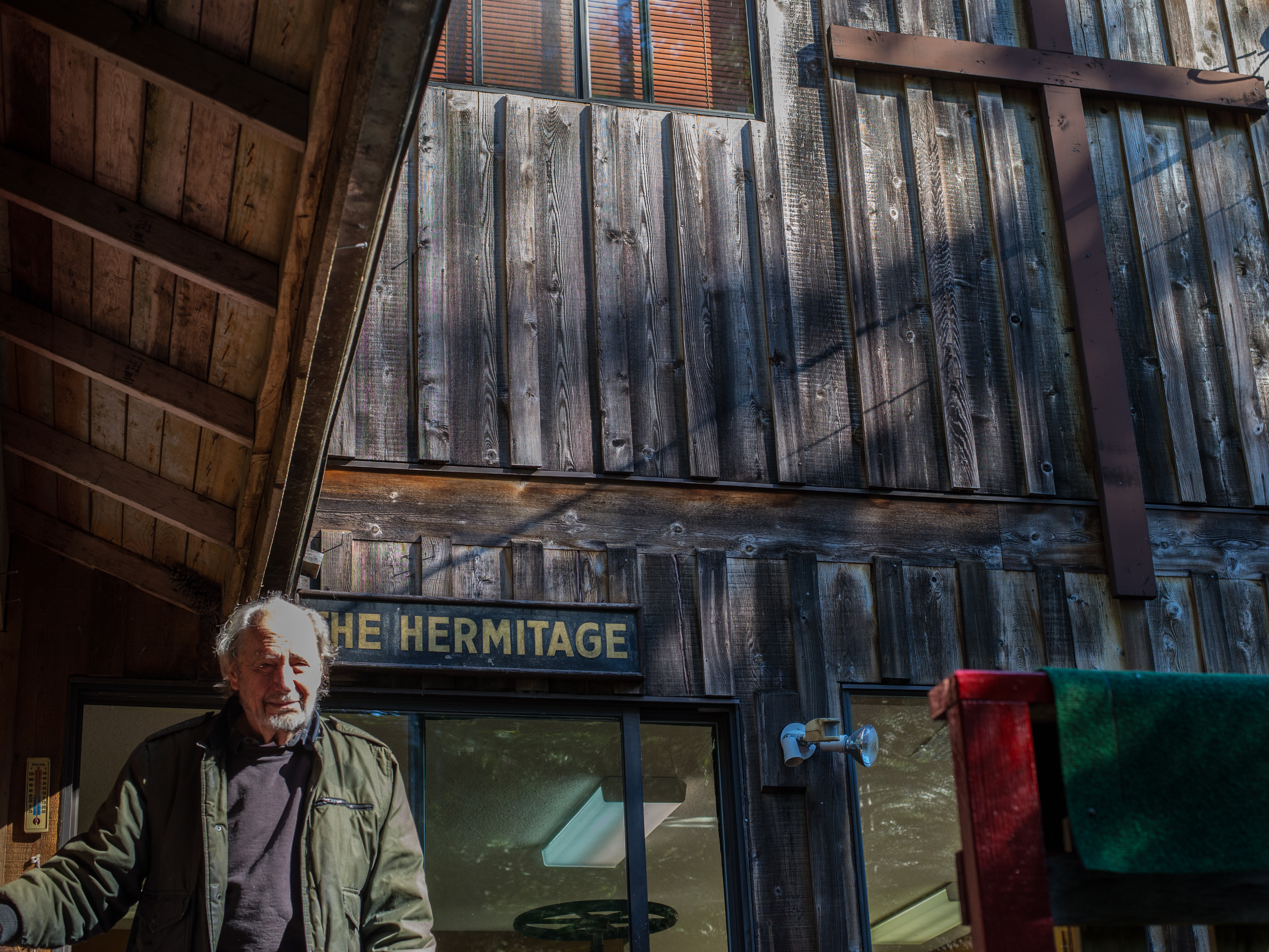


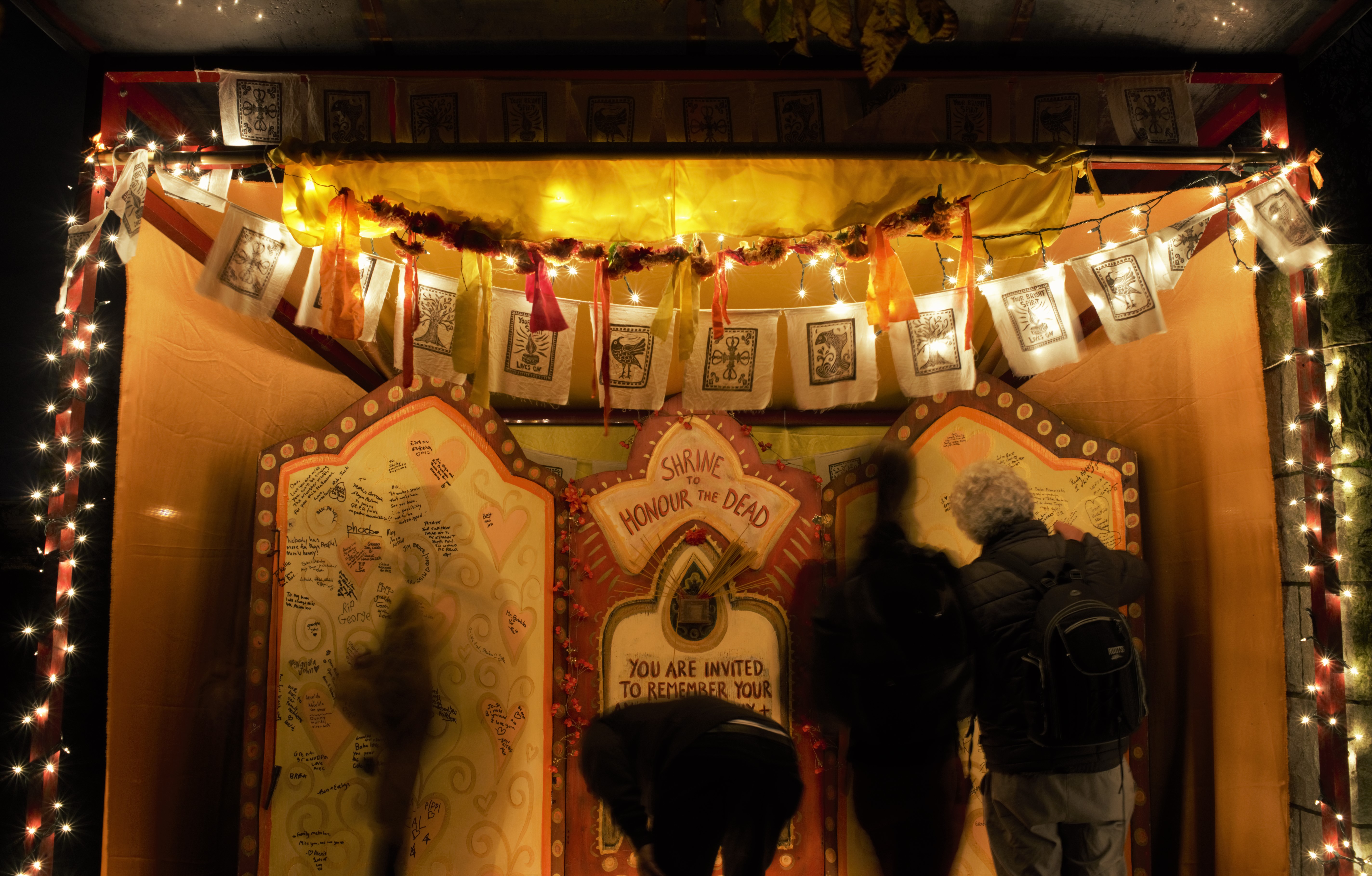


 Today in my morning prayers I read Psalms 58. If you are not familiar, Psalms 58 is one of the more vicious “Cursing” Psalms, wherein the poet-author begs God for vengeance on his enemies. Some exceptionally gruesome lines read: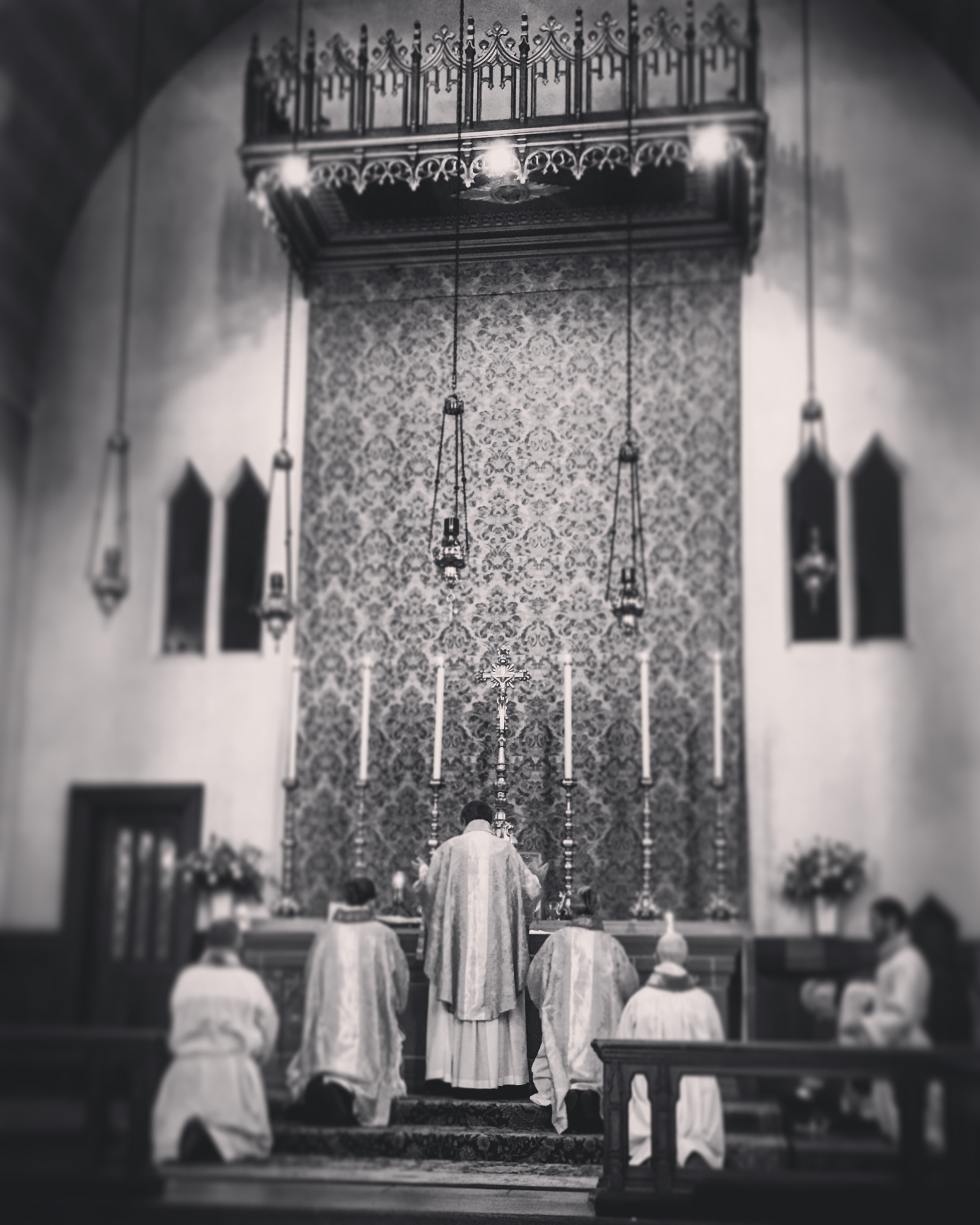
 holyscapes