Last year, I attended a meditation conference in Vancouver with a prominent international organization. The event featured an important teacher of Christian contemplative spirituality who spends much of his time travelling and teaching. I wrote much of this reflection the day after the conference and then decided not to post it. But I want to publish it now that some time has past because I think the distinctions I make are still relevant to our unfolding meta-crisis.
After my talk I was on a panel. An elderly woman stood and in her shaky voice said that she wants to know what we can do about climate change. And that for her, at her age, the best thing she could think to do is pray and meditate. I empathized with her desire to know what we can do, and I tried to assuage her guilt a little for not being able to do more. This was a meditation conference after all. So, I said, its not as though meditation is a tool in our climate action toolbox and that we should walk away from a conference on meditation with a list of five things you can do to solve the climate crisis.
The figurehead of the conference, who was also on the panel followed up in his characteristically blunt, didactic tone. Despite what I thought was a realistic and contemplative response, he took me to task for suggesting that there was nothing we could do (I did not say that). He suggested that while we shouldn’t instrumentalize meditation, it should always lead to action; and that there are plenty of things we can do to take meaningful action to solve the climate crisis.
At the end of the conference, the local organizer (who works in corporate finance) asked us to get into small groups and literally make a list of things we could do to combat climate change. This felt like a direct jab at my panel contribution, and at that point I could not stay in the room or join a small group. So, I stood up and left.
I admit this was not the most mature thing to do. But I also think that the gesture expressed without words how I feel about the risk they were taking in packaging the purpose of contemplative practices as useful action. So let me defend my one man walk out.
There is a controversy that goes all the way back to the Greeks between contemplation and action. Should the good life be devoted to higher things of the mind or the worldly things of politics and society? The Benedictine monks I have worked with say, do both! Their motto is Ora et Labora, Work and Prayer. But notice that the motto is not Work is Prayer. Work and prayer both have their place in the monastic life, as do contemplative and active pursuits outside of the monastery. But in relation to climate change, there is an important space to keep between these two domains.
Because here is where we are: avoiding 1.5- and even 2-degree warming targets are likely unattainable at current rates of emissions and international commitments. So, when we talk about “taking action” on climate, we are not talking about little things that will contribute to a gradual cultural shift. We are not talking about our individual actions adding up to dodging the worst implications of two degrees warming. We are talking about urgent, massive internationally coordinated efforts to radically reduce carbon emissions, and, at this point, because we have no other option, to pull carbon out of the atmosphere because if we don’t, we are looking at three or four degrees warming by the end of the century. That is where we are.
So, I agree, we should never stop asking the question “What must I do?” We are living out the risks of not being able to answer this question. My lifetime may never fully answer this question. I want to keep asking it. But when it comes to climate change, I just do not know of an answer that can be packaged into a pithy hope-slogan or a list of actions. There are dozens of things we can do with our days. And I have too long lists of them. But there is no thing that we can do individually, municipally, provincially or even nationally that will swallow this meta-crisis whole.
And that is where meditation resides. It lives in the dark folds of my still hopeful heart. Contemplative Practice is not a tool to get us ready for the right action. It is not just one of our strategies for effective climate action. It is not just a practice of self-care to process our burn out from our at-least-we-are doing-something actions. It is not just a means to an end. Contemplative practices are the ground of our action. They are the soil out of which right action grows and the air our actions breath. I engage in contemplative practices whether our actions succeed or fail, whether I know what to do or not. I meditate as I wait for the answers to come, or not.
I had never been alone in the Brandt hermitage before. I first visited Fr. Charles in 2017, when I was completing my PhD on monastic sense of place at the University of British Columbia. We sat on his back porch and talked about Thomas Berry, the state of environmental activism and climate change. And at the end of July, four years after Charles death, I was sitting alone on that same back porch listening to the Oyster River hush toward the sea.
Fr. Charles’ successor at the hermitage, was a contemplative nurtured by the Benedictine tradition and the spirituality of the Desert Mothers and Fathers (She has asked to keep her name private). However, she has recently moved to Nanaimo, to start the next chapter in her life journey. For the month of August, I took up temporary residence at the hermitage to work on getting the house ready for the Hermitage Society’s contemplative in residency program. We invite people of all backgrounds to experience the benefits of silence, solitude and immersion in the natural world while living in this historic and prayer-infused space.
Contemplative Ecology can be defined in many ways. We call Fr. Charles a contemplative ecologist because he brought his vocations of priest, hermit, bookbinder and land-keeper together into a single life well lived. A monk once told me that a hermit (a monk who lives mostly in solitude) is not someone who is running away from the world but running toward God. In my time here I can affirm that silence and stillness are compost for feeding the gardens of healing, growth and spiritual connection.
I have started and ended each day with silent meditation. In the mornings, after my meditation, I would make coffee and watch the day unfold before I buckled down to the day’s tasks of writing, my duties for the university, and coordinating the many repairs and upgrades to the hermitage that inevitably come with an aging building.
So, to be honest, I was not alone the whole time free of work. We have a very talented craftsperson who has taken on the hermitage as a personal project (we pay her of course) and members of the board stop by to help with the work. On my walks in the forest, I often meet people from the neighborhood and their dogs. I have met many slugs and birds, but no bears or cougars.
There is only a narrow driveway on which to walk on the property, as most of the property is on a steep bluff facing the Oyster River. But even on this small trail I never feel bored. My favorite thing about walking in the forest is how the light changes. In the morning the sunlight slants in from the east and by afternoon these slender sheets of light have shifted to the west. Each moment is its own eternity and when I am really paying attention, each footstep like a pilgrimage.
Sometimes late at night, when the weather was clear, I would wake up and stumble out to the deck to crane my neck at the night sky. I was lucky enough to catch some of the Perseid meteor shower and an early morning Mars/Jupiter conjunction. Cassiopia was my most constant constellation in the east, with trees obscuring most of the southern sky. Above me and to the west I could just make out through the trees, Vega and Arcturus, two of the brightest stars in the night sky. Being able to see the dark sky with her bejewelled cloak of stars felt very sacred to me. It both makes me feel very small and insignificant in size, and preciously and uniquely valued by this warm greenhouse world that spins so precariously on the vast oceans of the cosmos.
On Tuesdays I ride my bike to volunteer with the Oyster River Salmon Enhancement Society at Bear Creek Nature Park, which is only a few kilometres west of the hermitage on the Oyster River. The organization was founded in the late 1980s, and Fr. Charles was a part of it from the beginning. There is a picture of Fr. Charles in the small cabin that serves as a meeting area for board members and volunteers and his name is on a small plaque on a memorial bench near the river. Mostly what we do is maintain predator exclusion fences, feed fish, and brush algae off the river water intake screens. On my first day, I walked the meandering trails of the hatchery with a retired commercial fisherman and pruned shrubs and cleared debris.
As I was leaving the hatchery I saw hundreds of pink salmon who were beginning to venture into the Oyster River from the ocean as they prepare to spawn. Their sleek bodies syncopating through swirls and eddies delighted me. So, I decided that I would go fishing. Fr. Charles was a long-time fly fisherman, and many of the volunteers had met Fr. Charles. One old timer had tied flies for him. Later in life, Fr. Charles admitted that he really went fishing to feel more a part of the river, and that it seemed rather cruel to hook a fish and let it go. But I didn’t want to let one go. I wanted to eat one.
So, I found a fly-fishing guide in Campbell River and early in the morning we put on waders, and I soon felt the power of the river rushing past me. We spent time on the banks casting into deep pools for clouds of pink salmon who weren’t biting. We rafted down the river in his small boat and by the end of the day found ourselves at the kissing mouths of the Campbell River and the Salish Sea. I had hooked several pinks and a cutthroat trout with a small blue nymph, but none of them had wanted to go home with me.
Feeling bad, the guide invited me to come back to his house the next day, which is right on the south bank of the Campbell River, to see if I might catch one to keep. I returned the next morning and after a few fumbles and false starts, I felt that familiar tug on the line. She gave chase but after only a minute I could feel the line soften and I reeled her toward shore. I netted her and put her in a cooler filled with water, not sure if I could bring myself to end her life. I didn’t want to use a rock, that seemed barbaric, so I used a slender fishing knife and soon her water breathing gills fell still in the rose-clouding water.
As I cleaned the fish, I was amazed by the dense clusters of orange eggs marbled through the innards. I brought the fish to friends, and they mercifully taught me how to prepare and cook the fish on a cedar plank. We ate the smoky fillets with relish and cooked the roe in butter. I also made a stock out of the bones. I really wanted to use as much of the fish as I could to honor its life and to recognize that all life depends on death to continue. This cycle is embedded in ecosystems and the spiritual ecology of what Christians call the Paschal Mystery: Life, Death, Resurrection. Eating that fish was, in the language of the catholic tradition, eucharistic and sacramental because it pointed to the divine mystery that is shot through our days and meals and bodies and prayers.
I am grateful for my time at the Brandt Hermitage, and I am very hopeful to return for additional time there. But I am also excited to welcome in a single file community of folks from many faiths and paths and parts of the world to experience the power of silence and solitude. If you or someone you know might be interested in becoming a contemplative in residence, please have a look at our call for residents or send me an email with any questions at jason.minton.brown@gmail.com.
This essay is based on an interactive workshop given at the Swan Lake Nature House in Saanich, BC on Oct. 13, 2023.
Grieving Our Aloneness
Philosopher David Abram mused that the West is a civilization that has been increasingly talking to itself for the several hundred years. In so many ways, the mainstream of Western cultures have disenchanted the world and tuned out the hymn of praise that is being sung from its heart. This isolation is sometimes referred to as the modern malaise, a loss of meaning and purpose in what is felt to be a vast, godless cosmos. It is no wonder that so many of us feel a sense of longing and grief that is sometimes hard to place.
Biologist Paul Shepherd in Talking on the Water said, “The grief and sense of loss, that we often interpret as a failure in our personality, is actually a feeling of emptiness where a beautiful and strange otherness should have been encountered.” This quote appears in Francis Weller’s book The Wild Edge of Sorrow, where the author begs us to apprentice ourselves with the hidden pain in our hearts and of the world. As we Westerners move to re-enchant our worlds, we are sheepishly coming back into conversation with the earth community, which according to our science from the last 200 years, is merely driven by the laws of matter, chemical reactions and biological urges. For this reason, as Weller writes,
“…the perennial conversation has been silenced for the vast majority of us. There are no daily encounters with woods or prairies, with herds of elk or bison, no ongoing connection with manzanita or scrub jays. The myths and stories about the exploits of raven, the courage of mouse, and the cleverness of fox have fallen cold.”
Much of our grief for the world comes not from an inner imbalance, but from an outer absence from the web of life that make up our day-to-day worlds.
Tuning in, learning to listen again, witnessing the pain and joy of the world, and collaborating in a vast conversation is essential for these troubled times. We must, as Robin Wall Kimmerer admonishes, re-learn the grammar of animacy that exists in so many Indigenous languages. She writes,
“It’s no wonder that our language was forbidden. The language we speak is an affront to the ears of the colonist in every way, because it is a language that challenges the fundamental tenets of Western thinking—that humans alone are possessed of rights and all the rest of the living world exists for human use. Those whom my ancestors called relatives were renamed natural resources. In contrast to verb-based Potawatomi, the English language is made up primarily of nouns, somehow appropriate for a culture so obsessed with things.”[1]
The materialism of the West developed with and through our noun-based languages. Our lives and our tongues have been stripped of vibrancy, animacy and aliveness.
Fostering Ecological Dialogue
Western cultures are waking up to the rich chatter of the natural world in ways that were lost to us for half a millennium of mis-enchantment by our anthropocentric theologies and sciences. We are connecting with the ancient wisdom preserved by Indigenous peoples, rural people, and many ethnic and esoteric knowledge systems that have existed underground and on the margins within Western cultures.
In recent years, forest ecologist Dr. Suzanne Simard has made headlines for claiming that trees communicate through a neural-like web of root grafts and mycorrhizal networks. Though her work has come under fire in recent months for overstating this claim, she articulates a widespread intuition shared by many of us and reinforced by popular works from foresters like Peter Wohlleben or biochemist Diana Beresford-Kroeger. This intuition is that trees are more than natural objects that can be valued either as so many board feet of timber or for their intrinsic aesthetic beauty. Simard writes, “Our modern societies have made the assumption that trees don’t have the same capacities as humans. They don’t have nurturing instincts. They don’t cure one another, don’t administer care. But now we know Mother Trees can truly nurture their offspring.”[2] Trees are alive and they’re talking!
Trees seem to communicate as much with each other as with their fungal partners. Mycorrhizal fungi enter the very cells of trees and trade sugars for water, nutrients and information. A healthy and resilient forest is one that has a web of connections and dialogue partners. Despite being competitive when it comes to canopy real estate, trees have been documented sharing resources with other trees, especially kin, but also between species such as Douglas fir and Paper Birch. Trees can also communicate above ground. Some trees that are being attacked by defoliating insects, for example, release a pheromone that can be “smelled” by adjacent trees, queuing them to up their chemical defenses.
This awakening on the part of Western cultures and sciences to the amazing complexity of forests has got me thinking. How might we humans (of immigrant and settler backgrounds), learn to better listen to the conversations of the more than human world? And more specifically, what kinds of dialogue partners could help us discern a more reciprocal, relational and regenerative place in the rapidly changing ecologies of the so-called Anthropocene, an age of expanded human impacts on the earth community?
While it is certainly the case that we should continue to demand ecological justice, biodiversity protections, and an extreme reduction in carbon emissions, we are now at the point where reductions will almost certainly have to be paired with removal. This might mean that our children will come of age in a brave new world of geoengineering experiments and a global network of carbon vacuum plants.
Of course, planting trees is certainly an important activity and part of the solution, but with slow growth rates and their susceptibility to becoming carbon sources due to their pesky flammability, any carbon forestry should probably be nested within wider ecological and common good goals, rather than being integrated into market-based offset initiatives. In other words, we should plant trees because planting trees has a range of ecological and cultural benefits apart from the hyped quantified economic or climate benefits.
To these two general points—couching our ecological actions in dialogue and increasing tree-covered landscapes for a range of values—I want to start a conversation with a tree that has witnessed the entirety of human evolution across the globe. I am speaking of, and to, the mighty oak tree.
A Love for Oaks
Quercus agrifolia (Source: Wikipedia)
I grew up with an orange tree in the back yard, and our neighborhood streets were lined with Eucalyptus windrows. The oranges migrated from southeast Asia via Spain, and the Eucalypts directly from Australia. Orange County, a sleepy network of agrarian villages, eventually enlisted a narrow band of fruits in a botanical get rich quick scheme where they now grow mostly high-end houses and luxury malls.
Despite this charismatic flora, I will never forget the dusty smell and dappled light of the patches of preserved oak woodlands that were the destination of naturalist programs and school field trips. California boasts nearly 20 oak species, and the California Live Oak (Quercus agrifolia) was a common oak in protected areas and patches of undeveloped foothills inhabited by lurching dinosaur-shaped oil rigs. The Live Oak’s glaucous holly-shaped leaves and slender charcoal-colored acorns spoke to me of an ancient way of life. A way of living in this place that my people had never really been interested in learning. And so, the oak whispered softly in the background of my childhood, and most of my arboreal memories are of foraging lush oranges, feral figs, and blood red pomegranates from the shaggy suburbs of Yorba Linda.
When I lived in Utah, I met the Gambel Oak (Quercus gambelii) who lived in the foothills below the alpine fir forests. It is a scrubby oak that dwells in clusters and thickets and rarely grows taller than 10 meters. They are expertly fire adapted, and quickly regrow from their vital roots. They are a stable food source for bears, turkeys and deer. And Indigenous peoples of the Wasatch range and great basin harvested them regularly for food which was even used as an aphrodisiac by the Isleta Pueblo.
When I moved to Connecticut for forestry school, I worked for a summer at the Yale Forest in Northeaster Connecticut. The hardwood forests of Connecticut are home to at least 13 Quercus species. As foresters, we were attempting to manage the forests so that they would retain oak in perpetuity. Because oak trees need more light than maple trees, selection harvesting of choice oak trees can shift the forests species composition toward more shade tolerant species such as maples. To ensure that oaks would be in the next generation, harvest plans not only needed to ensure that there were enough oak trees in the canopy left to provide acorns, but also that there was enough room in the harvested forest floor for the oaks to germinate and thrive. I loved my time in the forest, and even though we marked for cutting some hefty oaks, we left behind many more, and opened space for the next generation to grow.
In 2014, I spent a month living with the monks of Our Lady of Guadalupe Trappist Abbey in Carlton, Oregon. I was there preparing for my doctoral dissertation which would study the sense of place and ecological spirituality of Catholic monastics. The 1,300-acre property had been clear cut in the 1950s and the monks spent many decades reforesting their steep hill with Douglas fir plantations. In the 1990s however, the abbey underwent an ecological paradigm shift. They wanted to manage the forest more sustainably, and more in line with the local ecology. They hired a talented local forester who wrote a new management plan for the abbey and began diversifying the abbey’s forests. One project he proposed was a full-scale restoration of the Oregon White Oak (called Gary oaks in British Columbia) savannas that used to be in abundance in western Oregon. After some persuasion the monks agreed, and the abbey now boasts several hundred acres of grasslands dotted with majestic oak trees. I have visited the abbey many times over the years, and I always enjoy reunited with both my monk and oaken friends.
Oak as Provider
Oaks are in the Beech family, Fagaceae. Globally, there are over 500 oak species, with Mexico and China being countries with the most species. Oaks evolved over 56 million years ago with the emergence of flowering plants. Oaks predate humans by millions of years, and by the time humans emerged, oaks had wrapped a green embrace around the temperate northern hemisphere.
Oaks are a loquacious species. They have associated with dozens of fungal partners including truffles. One source identified over 800 insects that are associated with the oaks, 48 of which were obligates. These obligates include the visible gall wasps which hijack to oak leaves to create a swollen outgrowth from which young wasps emerge sometimes gall oak apples. Mammals and birds also love their acorns which are a staple food for many diverse forest ecosystems.
In 1985, David A. Bainbridge coined the term Balanocultures. Balano is the Greek word for acorn, and Bainbridge argued that what in Asia and the Mediterranean were assumed to be mortar and pestles for grinding grain, in fact predated the widespread domestication of grains. Bainbridge suggested rather, that across the temperate zone, oak and oak ecosystems were the primary food system of our budding old-world civilizations.
Forest lands have always been multiuse spaces where game, cultivation and harvesting happened simultaneously. From the earliest archaeological accounts, fire was used as a management tool. Many forests containing oak, hazel, and chestnut were burned to maintain open pastures that were also good for grazing game species. As grain and domesticated animals replaced these forest-gathering systems, orchards, hedgerow and silvopastures were adopted. In some cases, hazel was coppiced under oak standards. And throughout Europe, but especially in Spain, pigs were enlisted in converting acorns into pork.[3]
All along the California Coast Indigenous peoples forged abiding relationships to oaks. Half a dozen oak species were managed with fire to provide a staple starch to their diverse diets. In her book Tending the Wild M. Kat Anderson writes about the sophistication of Indigenous food systems management, which, in addition to fire included intentional cultivation and planting, pruning, weeding and training branches into particular shapes such as digging sticks, tools and arrows. The West Coast of North America’s balanocultures were some of the last peoples to rely so heavily on acorns as a staple food, though acorns are still widely consumed in parts of Asia, especially Korea.
In Octavia Butler’s novel The Parable of the Sower, the main character Lauren Oya Olamina, lives in a post-prosperity United States that is struggling to stay out of all out survivalist chaos. Her small community gardens and has returned to making bread from acorn flour. They represent a kind of post-apocalyptic balanoculture. Later, forced to leave her relatively secure neighborhood she forms a new religious movement called Earthseed and the community Laura forms with a rag tag group of survivors is named Acorn.
The Oak is an abundant gift giver. Gifts are a kind of language, oaks speak in seasonal flows of acorns, bark, truffles and leaves. The bark and leaves have traditionally been used as astringent and have anti-inflammatory properties that can stop bleeding or sooth external sores. It is also anti-diarrheal and antioxidant. The bark is also used for tanning and for wine making.
The wood is structurally very sound and sought after for fuel and fine woodworking such as ship building. Neolithic European dugout canoes were sometimes made of oak trees. The Lurgan canoe, was used over 4,000 years ago in Galway, Ireland. It was re-discovered in the early 20th century and measured more than fourteen meters long. In Medieval Europe, trees were trained to become specific parts of the ships’ hulls and body.
Strong mature oak beams were also sought out to build the roofs of Westminster Abbey and Notre Dame. As an aside, when Notre Dame burned down in 2019, the restoration of the building insisted on using mature oak, which were sought from all over France. The Villefermoy forest has provided over 50 trees for the project. This was of course a controversial move, as more than 40,000 people signed petitions calling the cutting of oaks “ecocide.”
This foundational abundant gift giving on the part of oaks and their associated species, also contributed to the spiritual ecology that populated the imaginal realms of these primal peoples. For example, oak is a totem of almost all the sky gods within early Indo-European religious expressions. This probably means that oak was a sacred tree that later became anthropomorphized as the familiar male sky gods of Zeus/Jupiter, Dagda, Perun, Thor and Indra. These lightning bolt wielding thunderers were present in the form of oak, which itself has an affinity with lightning strikes due to its high water content. Even early fragments referring to Yahweh connect him to groves of trees some of which were identified as oaks. Later, extreme monotheists would cut down these sacred groves, so the official theology of Judaism’s relationship to trees certainly evolved. But after people, trees are the most often referred to entity in the Hebrew/Christian Bible.
In the Finnish epic The Kalevala, during the creation of the world, a massive oak tree shaded out the other trees, and more importantly the barley fields, from the sun.
“Spread the oak-tree’s many branches,
Rounds itself a broad corona,
Raises it above the storm-clouds;
Far it stretches out its branches,
Stops the white-clouds in their courses,
With its branches hides the sunlight,
With its many leaves, the moonbeams,
And the starlight dies in heaven.” (Rune II)
The tale’s hero Vainamoinen called on the goddess of Nature to help him. From the primal waters emerged a small man clothed in bronze. Despite his size, and tiny ax, he felled the mighty oak with three blows and Vainamoinen and his helper are again able to sow the fields and forests with seed. On one level the story reveals the tension that surely arose between the early balanocultures and the ascendant granocultures. The massive tree was not a tree of life, but a hindrance to the open growing conditions needed for barley.
In the Greek religious imagination, a dryad is a tree nymph or tree spirit. But the word Drys (δρῦς) is just the word for “oak” in Greek. Dodona was originally a center of worship and divination of a mother goddess, Dione, related to other feminine figures such as Rhea, Gaia, Hera and Aphrodite. Divination was often undertaken by listening to the rustle of leaves or to the sound of windchimes hung from the branches of sacred oak trees. Augury, or bird divination, was also done from within these sacred groves. By the 1200s BCE, Dodona had been appropriated by the cult of Zeus. But even then, a sacred oak was identified with him and was later walled off by King Pyrrhus (~290 BCE) to protect it.
You have probably heard of the connection between oaks and Druids. In Ireland, the word Druid, the name for their scholar-priests, refers to groves of oak trees where they performed their councils, rituals and perhaps even human sacrifices. Druid is sometimes translated as “knower of oaks”, and the harvest of mistletoe from these oaks was a sacred rite. We don’t know much about them, and there is plenty of Neo-Pagan romanticism about their proto-ecological ethics, it is likely that human sacrifice was part of their oaken religious rituals. Nothing is certain about this however, because much of our information comes to us through Roman imperial eyes. What is certain, is that oaks played an important role in the foodways and spiritways of these pre-Christian earthy pagans.
Druids harvesting mistletoe from oak groves (Image source: Wikipedia)
In the Salish Sea Bioregion, Coast Salish territories, or Cascadia, where I live, we dwell alongside only a single oak species. The Saanich (SENĆOŦEN) word for this oak is ĆEṈ¸IȽĆ (pronounced chung-ae-th-ch). In botanical Latin, it is the Quercus Garryana—the Garry Oak (The same species I encountered in Oregon). The name Garry came from explorer David Douglas who named the oak for his friend Nicholas Garry of the Hudson’s Bay Company (1782–1852). The rest of this essay is about my dialogue with Quercus Garryana and trying to tune into what they may have to teach us about living together in this messy post-colonial world. For English speakers, I propose that we begin to call them the Cascadia Oak. Sorry Garry!
According to Western archeological pollen studies, the Cascadia Oak migrated here around 10,000 years ago and flourished at its greatest extent from 8000-6000 years before present. After that its range began to shrink as the climate grew wetter. Many histories of the Cascadia Oak in this region suggest that a Mediterranean climate “prevails” over most of the oak’s range. While the rain shadow of Vancouver Island certainly provides conditions more suitable for the Cascadia Oak, they seem to flourish best when humans co-manage their range with fire. If I understand my reading of the history correctly, the oak savannas and grasslands where the oaks are most iconic may have disappeared completely if it had not been for continuous Indigenous management. This entanglement with human culture is what fascinates and inspires me most about oak trees in general and the Cascadia Oak in particular. Oak savannas are not a rare ecosystem just because European colonialism has displaced or replaced them, they are rare because they need fire to maintain themselves. Left untended, Douglas fir trees overtop them, and unless a natural fire comes through, they likely will die out after a couple of decades.
The Cascadia Oak, like most oaks, are also social trees. Over 100 species of birds have been identified in Cascadia Oak woodlands. Hundreds of insects and invertebrates make their homes with Cascadia Oaks. Indigenous peoples up and down the west coast used their bark, leaves, wood and acorns as sustenance, medicine, and tools. Their ecologies were also hunting grounds and camas prairies (Camassia quamash), a flowering plant with a starchy tuber that was one of several root crops cultivated by Coast Salish peoples. The Capital of British Columbia, Victoria is originally named Camosun, or “place to gather camas.” Like California, Island and lower mainland British Columbia maintained strong balanocultural food systems.
Dialogue through Ecological Restoryation
In Anna Tsing’s book, The Mushroom at the End of the World, she shows us how another ecological dialogue has been going on for many thousands of years. She studies the ways that matsutake mushrooms have not just been prized gourmet foods, but how their allure has ebbed and flowed with human land management, especially second growth pine lands in Japan. She writes,
“…one could say that pines, matsutake, and humans all cultivate each other unintentionally. They make each other’s world-making projects possible…As sites for more-than-human dramas, landscapes are radical tools for decentering human hubris. Landscapes are not backdrops for historical action: they are themselves active. Watching landscapes in formation shows humans joining other living beings in shaping worlds.”[4]
In a similar way, the Cascadia Oak was an integral part of a diverse land-based food system that included clam gardens, berry patches, salmon and herring runs, hazel orchards and camas gardens. These food systems were intensively managed by Coast Salish and Vancouver Island First Peoples. Cascadia Oak savannas were kept open from encroaching fir forests using fire, even as the climate got wetter. Burning was a technique for enhancing a set of anthropocentric management goals: keep grasses vigorous, keep bugs out of the duff and acorns. European invaders did not recognize these landscapes as anthromes, or if they did, did not respect Indigenous tenure enough to care. Much of what was assumed to be wilderness or unclaimed, was in fact ancient active landscapes where humans and a myriad other species made each other’s “world-making projects” possible.
Fast forward to contemporary restoration ecology. In recent decades, the Pacific West of North America has seen several organizations pop up like mushrooms to protect and restore the Cascadia Oak’s unique and biodiverse ecology. It seems to me that the central dialogue or story of Restoration Ecology is one of repair, purification, and penance. Ecological experts restore species composition and ecosystem function to make right, restore balance, bring order back to the natural world, which Western humans, from the outside have disrupted. We are the serpent in the Garden. So, Cascadia Oak ecosystems are seen to be under threat from “invasive” species and development. The Garry Oak Ecosystem Recovery Team comes across like First Aid to a wounded ecological person. The medicine is to eradicate invasives, wall off ecological precincts and begin to implement professionally supervised prescribed burns to maintain oak prevalence over Douglas Fir.
This approach has its place, and endangered species must be given room to flourish. However, on their website, GOERT has a page dedicated to resources for gardeners and landowners. This is the approach that enchants me most. This is what I would call a Collaborative or Reconciliation Ecology. A more collaborative ecology might accompany us from a so-called “crisis narrative” in which wild nature is besieged by a voracious culture; to a “dynamic narrative” in which all cultures are understood in ever shifting relationships to biodiversity.
Wherein diverse biocultures and values collaborate in restoring plural relationships to places, species, foods and materials. Native and non-native species are welcomed (not necessarily invasives), and Indigenous and non-indigenous perspectives and technologies are experimented with. This Restoryation is about approaching ecosystems where humans are back in right relationship to places, not restricting them to the status of invader, visitor or tourist. If all we see when we look at changing ecosystems is loss, we are not seeing the possibilities that change might afford for fostering novel relationships that are regenerative.
The Indigenous peoples who stewarded Cascadia Oaks were not park rangers, they were managers, gardeners. So, what if we began to think of oaks, and many other species, not as victims to be saved and protected, but as interlocutors and companions in responding to the unfolding climate crisis. The plants that I know are going to fight like hell to keep on living. I want to fight alongside them, not as a savior but as collaborator and kin. I want to grieve losses as they happen, but I also want gardening, which is a kind of ecological dialogue, to become one of many tactics for resisting consumerism and climate doom.
Restoryation, is not so much about a re-consecrating and purifying an ecosystem of its human influence as an act of environmental penance, it is about restoring our relationship to the earth community, a relationship which has been betrayed in many ways throughout time by our rampant and destructive economic culture. Ecologist Stephanie Mills even suggests that restoration, Restoryation, is a form of ecological ritual:
“[The act of restoration] gives [people] a basis for commitment to the ecosystem. It is very real. People often say, we have to change the way everybody thinks. Well, my God, that’s hard work! How do you do that? A very powerful way to do that is by engaging people in experiences. It’s ritual we’re talking about. Restoration is an excellent occasion for the evolution of a new ritual tradition”.[5]
We don’t have to endure the coming losses and changes in isolation. We have each other and we have the living, breathing world on our side. Oaks, like so many of the species on this planet, are here to dialogue with us about how to live in a chaotic and changing world, and for me at least, that makes fighting for a just and livable world just a little bit less lonely.
I recently joined the board the Brandt Oyster River Hermitage Society. We are getting ready to launch our website, and I was tasked with writing a short bio on Father Charles Brandt, a Hermit-Priest who lived in a small cabin and supported himself as a bookbinder on Vancouver Island. I met Charles in 2016, when I was completing my dissertation at UBC.
Photo by the author, 2016
Charles Brandt was the fifth child of the six and was born on February 19, 1923, in Kansas City, Missouri. He is of Danish-English heritage, the child of Alvin Rudolph Brandt-Yde and Anna Chester Bridges. His father was an auto mechanic at a Buick dealership and later served as a pilot in the Airforce during World War II. After the war, he worked as a Park Superintendent at Swope Park. Charles had two brothers and two sisters.
At the age of three, the family moved to a small farm where he had some of his first encounters of wonder in the natural world. The family raised chickens and had a milking cow. A small spring emptied into a creek on the property and there Charles would fish for perch and crawdads. In primary school, an observant teacher encouraged Charles to paint, and he enjoyed painting apple blossoms with watercolors. His Aunt, Helen F. Bridges, was on the board of the Kansas City Art Gallery and encouraged all the Brandt children to pursue artistic talents. Charles continued studying art at the Kansas City Arts Institute on Saturdays for several years.
As a Boy Scout, he earned the rank of Eagle and was drawn toward craft and book binding. Eldon Newcomb, a scientist who was also the head of the nature staff at Osceola Boy Scout Camp, became a major mentor and influence on Charles. For several summers, he served as a counselor at the Osceola Boy Scout Camp, where he taught bird watching and natural history. As a Scout he was elected to the Mic-O-Say tribe, which is an honor society that exists within the Boy Scouts of America. (In recent years the organization has been criticized by Indigenous people over concern that it engages in cultural appropriation. But in Charles day, it was a different time.) Charles was very early on fascinated by birds. Charles writes,
“During the spring of my 2nd year of high school, having become quite interested in bird study, I had an experience on weekend out along the Blu River. It was beside a small stream with the spring foliage when I began to see a stream of warblers moving along the stream and in the bushes, feeding and calling. The amazing thing was there were about nine different species in all their mating plumages, migrating through their nesting grounds. It was an overwhelming experience of beauty and wonder and wild. I wanted to preserve it forever” (Brandt 2006, 2).
This fascination with birds, birding and wildlife was a key dimension of Charles’ contemplative approach to ecology, and ecological approach to contemplation.
Father Brandt attended high school in Raytown, Missouri. Active in debate, band, swimming, oratory, sports, drama. He also worked as a life saver and lifesaving instructor. When Charles was thirteen, he read Henry David Thoreau’s famous book Walden Pond, and immediately felt the desire to “go to the woods”, a desire that eventually would call him to the hermit vocation. On Thoreau Charles said,
“I got interested then in Henry David Thoreau. He went to the woods to find out what life was all about, and that was really quite exciting, and a real challenge for me; and I wanted to do something like that. That was probably my first inroad into the hermit life” (Grayston and Chang 2016, 42).
Land, place, ecology and silence were for Charles a single whole from a very young age.
But at university, he decided to study conservation at the University of Missouri where he majored in wildlife conservation. Reflecting on this later, Charles realized that he had roomed with Starker Leopold who was studying wild turkeys in the Ozarks. Starker was the son of the famed conservationist Aldo Leopold (1987-1948).
In 1943 Charles entered Active Service with the US Army Air Corps. It was around this time, while Charles was studying in Colorado for the army, that Charles began attending a Baptist Church. And until 1946, when Charles was discharged, he travelled and studied for his service positions with the US Army, including bombardier training in Victoriaville, California. Charles was appointed a Flight Officer but never saw active combat before the war ended. When he entered military service, he didn’t really reflect on whether or not it was the right thing to do, since it seemed to be a patriotic duty. But by the end of his service, he felt that he had become something of a pacifist and winced at the thought of being an actual bombardier.
In 1947, Charles headed to Cornell University to study ornithology. Charles studied birdsong recording under Dr. Peter Kellogg and studied nesting birds at the Edwin S. George Reserve in Michigan. He was also elected to Phi Kappa Phi, a student scientific society for his high academic achievement. Charles would go on to graduate first in his class with a Bachelor of Science in biology. Charles’ first scientific article was published in the Wilson Bulletin, based in Anne Arbor, Michigan. The essay was entitled “The Parasitism of the Acadian Flycatcher.”
Taking serious stock of his spiritual life, Charles began attending Saint John’s Episcopal Church in Ithaca, New York. Soon, Charles met the Reverent Francis Voelcker, the priest in residence there, who saw in Charles a great contemplative potential. He began mentoring Charles and encouraged him to explore a vocation to the Anglican priesthood. Charles spent that summer living with an Anglican religious order, the Brothers of Saint Barnabas, who were devoted to the care of men and boys with developmental disabilities and incurable illnesses.
Though as a Hermit-Priest Charles never married, and he doesn’t mention many romantic partners, it seems that during this time he was quite fond of a woman he refers to as C.C. They attended services together at Saint John’s and Charles simply writes, “we spent considerable time together” (Brandt 2006, 4).
After graduating from Cornell in 1948, Charles decided to pursue Holy Orders. He returned to Colorado where he lived during his military training and was accepted as candidate for Anglican priesthood by Bishop Bowen of the Colorado Diocese. He entered Nashotah House Seminary in Wisconsin, living there for three years where Charles enjoyed the routine of the community which included Mass and the daily office.
However, during seminary Charles continued to wrestle with finding a meaningful spirituality and began to read more widely from books by writers such as Jeremy Taylor and Father Benson of the Cowley Fathers of England, another Anglican religious order. He seemed to be seeking a deeper spirituality of silence and contemplation. Then, Charles stumbled upon Trappist monk Thomas Merton’s autobiography The Seven Story Mountain and found a deep resonance with Merton’s rich contemplative spirituality. Of Merton’s writing he said simply, “it blew me away.” So much so that he and several seminarians had arranged to spend easter at Gethsemani Abbey in Kentucky, where Thomas Merton lived, to experience Trappist life firsthand and meet Merton in person, but the trip was cancelled at the last minute, and they didn’t end up going. On reading Thomas Merton for the first time, Charles reflects,
“So when I read The Seven Story Mountain, that was what I was looking for; that really answered my question. I wanted to know if it was possible to really experience God in this lifetime, can you talk to him, as a person? That was really a revelation, The Seven Story Mountain, and it changed my whole thinking. From then on, I was thinking in terms of monastic the life” (Grayston and Chang 2016, 48).
That year, however, Charles ended up visiting another Trappist monastery. He made arrangements to meet with Father Bede O’Leary the Abbot and theologian of Our Lady of Guadeloupe Trappist Abbey which at the time was located in New Mexico (in 1954 the community relocated to Carlton, Oregon). Charles wanted to talk with O’Leary about contemplative, or mental prayer and Father Bede became a great voice of council for Charles.
In 1950 Charles spent the summer at the Community of Augustine and Anglican Contemplative House in Orange City, Florida and on December 7th Charles was ordained a Deacon at Saint Andrew’s Church in Denver, Colorado by Bishop Bowen.
In 1951, accompanied by Reverend Voelcker, Charles went to England to explore the varieties of the Church of England’s contemplative life. They visited Chevetogne, Belgium where he met with Dom Lambert Beauduin (OSB) who was interested in the Anglican re-unification with Rome. This meeting brought Charles to question the validity of Anglican Holy Orders, because he learned that they had been declared invalid by the Vatican.
From here, Charles began to try his hand at the monastic life in earnest and in 1951 he became a Postulant at Community of the Resurrection, an Anglican monastery in Mirfield, Yorkshire. Despite his doubts, in 1952 he was ordained an Anglican Priest by Bishop of Wakefield, UK.
In 1953 Charles left the Community of the Resurrection and spent some time in continental Europe making various stops in France and Rome. He spent ten days in Assisi, a few weeks in Rome, and met with a Benedictine monks named Father Dennis Stratham OSB. Father Stratham was from Saint Gregory’s monastery in Shawnee, Oklahoma. This meeting would prove providential, as Charles was received into the Roman Catholic Church there in 1956.
In the meantime, Charles continued his quest for a place to express his contemplative vocation within the existing religious communities of the Anglican/Episcopal traditions. When he returned from Europe in the latter half of 1953, he travelled to a property in Gaylordville, New York where Father Paul Weed had a property that he wanted to transform into a contemplative community. Father Charles built a small hermitage on the property out of old railroad ties and started working as a Chaplain at Kent School in Connecticut where he also helped with the garden.
Soon however, Charles discerned that this was not his place and he decided to move to Three Rivers Michigan, a small Anglican Benedictine community in 1954 and entered as a postulant. While he was there, he learned to chant the divine office in Latin, and continued his voracious reading of the mystics and contemplatives. Charles was deeply moved by the writings of Camaldoli monk Father Bede Griffiths whose autobiography The Golden String deeply impacted Charles. Griffiths was a monk in England for many years, but eventually found himself in India dialoguing with Hindu Sanyasis and fusing East and West. Father Charles also began reading John Henry Newman’s Apologia Pro Vita Sua. Newman had spearheaded the Anglo-Catholic revival in the Church of England in the late 19th century, but eventually converted to Catholicism and was made a Cardinal by Pope Leo XIII in 1879. This period sealed Father Charles movement to the Roman Catholic Church, so he left for Louisiana to meet with the only catholic priest he knew, Father Bede O’Leary who was on leave and serving a parish there. O’Leary sent Charles to St Benedict’s Monastery, and he met with the Prior there. Despite meeting daily for a month, Charles was not quite ready to make the move from Anglican to Roman Catholic. So, Charles decided to travel to Mexico City on pilgrimage to the Shrine of Our lady of Guadeloupe, accompanied by Father Bede.
Upon returning, he decided to head to Saint Gregory’s Abbey in Shawnee, Oklahoma where he continued his discernment, studied Latin, and met with a resident theology professor regularly. It was during this time that Father Charles fell in love with book binding, a skill that would become his own contemplative bread and butter throughout his years as a hermit in British Columbia.
On January 26, 1956, Charles Brandt was received into the Roman Catholic Church and in April he was confirmed in the Cathedral at Oklahoma City. Charles continued his stay at Saint Gregory’s, taking theology classes and deepening his bookbinding skills. That Easter Charles decided to travel to Gethsemani Trappist Abbey where he met with Thomas Merton who was the novice master at the time. Merton was warm and received Charles with kindness.
On his first meeting with the Trappist monk Thomas Merton, Brandt recounts, “So at Easter I went to Gethsemani. I knew Merton was the novice master. I didn’t realize I was going to meet him. I was in the guest house for about a week. So [knocking] I hear this knock on the door, and in enters Thomas Merton. You know, he sat down there, just the most ordinary person in the world. Immediately, I liked him, really liked him as a person, and we talked. My intent was to enter the novitiate there, but he said, “Don’t come here. We could make a good monk of you, but not a good contemplative”” (Grayston and Chang 2016, 52).
After several chats with Merton and later his Bishop, Charles decided to forgo a trip to Rome to pursue a quicker pathway to priesthood and decided to first solidify his vocation as a monk. Charles decided to enter New Melleray Abbey, Dubuque, Iowa, another Trappist Abbey. This decision seemed fruitful and in 1958 Charles made Simple Profession (temporary vows) and was put in charge of a small book bindery. Charles continued his studies in philosophy and theology.
In 1964, during the upheavals and experimentation of Vatican II, Charles became uncertain about making final profession (vows). All over the world, monastic orders were studying their roots, which went back to the hermits and recluses of Syria, Judea and Egypt. Charles remembered that Thomas Merton told him about the Camaldolese Order which had a monastery in Ohio. So, Charles and his Abbot drove to visit them. However, the Camaldolese stood for the duration of the divine office. Having a back problem, Charles knew within ten minutes that he wouldn’t make it.
Back to the drawing board, Charles wrote a letter to Thomas Merton. Merton’s reply was published in a collection of letters, and Merton encouraged Charles to continue his search for a more contemplative place to live out his vocation. Charles soon found two eremitic experiments: A Benedictine hermit named Peter Minard in North Carolina and Dom Winandy, greatly admired by Merton, who was leading a small group of hermits on Vancouver Island, British Columbia.
After visiting Peter Minard, Charles was impressed. Minard lived a simple life on old plantation. But soon it became clear that Father Minard was mostly looking for someone to run the farm. So, the Abbot of New Melleray wrote to Dom Winandy, who gave Charles permission to come for a visit.
In March of 1965 Charles arrived at Winandy’s group, The Hermits of Saint John the Baptist, located on the Tsolum River in Merville, BC one hundred acres of forested land. Charles moved into a small trailer and then began to build a hermitage there with some local help which was completed in September. To earn a living Charles decided he would try his hand at being a professional book binder, and the Trappists of Carlton, Oregon, Our Lady of Guadalupe Abbey (who Charles had previously visited in New Mexico), donated some book binding equipment. With this Charles began to search for clients in the local area.
Despite Dom Winandy’s misgivings about hermits becoming priests, Winandy gave Charles permission to meet with Bishop Remi De Roo, who eventually accepted him as candidate for priesthood. In August he received minor orders and was incardinated in the Diocese of Victoria which essentially ended his temporary vows at New Melleray. On November 21, 1966, Charles was ordained as a Roman Catholic priest by Bishop De Roo at the Canadian Martyrs Church. According to Charles, he was the first full time hermit ordained in Catholic Church in several hundred years.
While living on the Tsolum River, Charles began working as a fisheries technician, and assisted in some parish work in Cumberland on Sundays. Eventually the hermitage site became a bit too crowded, and Winandy and several hermits including Charles dispersed to other properties. In the Spring of 1970, Charles moved his hermitage structure to its current location on the Oyster River.
In the mid-1970s Charles travelled extensively to improve his bookbinding skills. He spent several months in San Francisco learning book restoration and then travelled to the New England Document Centre in Andover, Massachusetts to learn more about flatwork conservation of maps, parchments and prints. Charles was even appointed Chief of the Bindery, which kept him very busy teaching workshops and conducting surveys. In 1975-76, Charles travelled extensively in Europe where he both worked and studied additional conservation techniques.
Returning to Canada, from 1976-1981 Charles was employed by various Canadian book conservation programs. First, he worked for the Canadian Conservation Institute in Moncton, NB as Professional Book and Paper Conservator. Charles said a daily noon Mass in an English-speaking Church in Moncton. When this office closed, he moved to a centre based in Ottawa where he restored bound volumes, maps and art works on paper. Charles was also hired by the Manitoba government to design and oversee the building of a state-of-the-art restoration laboratory in Winnipeg from 1981-1984. The purpose was to survey and restore the Hudson’s Bay archives. Charles also travelled throughout Canada doing conservation work in Yukon, Manitoba, and Alberta during this time. On his love for bookbinding and conservation Charles wrote:
“Probably the best contemplative part of bookbinding is sewing the book. It’s a very relaxing, I think a very meditative, contemplative aspect of binding. Literature is disappearing at a great rate from our libraries all over the world, and it’s our written record of humanity. So if you’re preserving that, as I am, you’re preserving humanity, the culture, and I think that’s really quite worthwhile. It’s like preserving the earth. It’s not just a job, it’s something that’s conducive to the prolongation of civilization” (Grayston and Chang 2016, 55).
Charles was a craftsman and appreciated work well done. The embodied nature of the work, the quiet and the sense of purpose facilitated a contemplative atmosphere that was conducive of prayer.
In 1984, Charles finally returned to his beloved hermitage where he began making additions to the structure and installing a conservation lab and library. Charles began teaching conservation and restoration techniques at University of Victoria, UBC, Simon Fraser, University of Alberta, Washington State University and in many communities across Vancouver Island.
Even before he left for his travels related to book binding and document conservation, Charles was a passionate lover of place. He would write letters to local officials protesting proposed developments on the Oyster and Tsolum Rivers. When he returned to full time residency at the hermitage in 1984, he began lobbying campaign which mushroomed into a large number of environmental projects throughout Campbell River and the Comox Valley. Throughout the years, Charles was involved in many environmental groups and causes: The Steelhead Society of BC, Haig Brown Kingfisher Creek Society, the Campbell River Environmental Council, the Tsolum River Enhancement Committee, the Oyster River enhancement Society, the Oyster River Watershed Management Committee and the Tsolum River Restoration Committee. In the 1990s the local media began to take notice, and he even received several environmental awards for his work on river restoration and conservation.
It was at this same time that he began holding meditation retreats with the local community, despite some Catholic leaders warning against “Eastern” forms of prayer and meditation. His work of ecology and contemplation were quite a natural fit: Action and Contemplation were connected. In 1990, the meditation group became a regular event, which continued to the end of Charles’ life.
In 2001, Charles was the keynote Speaker at the Western Conference on Christian Meditation in Edmonton, Alberta which solidified his leadership in the global contemplative movement. On prayer, Charles reflected, “I think that anybody who prays benefits the whole body of Christ. Prayer touches everybody. The person next to me is affected by whatever I do. If I pray, that helps them, and it also helps the natural world” (Grayston and Chang 2016, 39).
Charles life was a series of questions lived out in many different places and among many different communities. But his love for craft, ecology, and prayer shine through all of this. Charles is an exemplar of contemplative ecology lived well. Toward the end of his life, Charles reflected on the contemplative life and on the hermitage property that the Hermitage Society lovingly maintains. He said,
“In a way, I’m looking towards eternity now. I’ll be 93 on February 19th, [2016], so I’m not going anywhere. I love this spot. I’m permanent. I feel steady, in a sense, with life, and with my calling. And this is my place. I walk out and I know the trees, and I know the birds and the animals. They’re my friends. As I said, the human community and the rest of the natural world has to go into the future as a single sacred community. I feel that I’m part of this community where the natural world and people come and go; and if we don’t, as Thomas Berry says, we’ll perish” (Grayston and Chang 2016, 57).
Father Charles Brandt died at the age of 97 on October 25, 2020, after a short stay at a local hospital in the Comox Valley. Upon his death, close friend and co-founder of the Brandt Oyster River Hermitage Society Bruce Witzel reflected, “His stature as a spiritual teacher as well as his whole legendary reputation as someone who integrated spirituality with ecology will live on after him in the lives and efforts of the many people he directly inspired” (Closter 2020).
Charles’ Publications
Charles Brandt. Meditations from the Wilderness: A Collection of Profound Writing on Nature as the Source of Inspiration (Harper Collins, 1997). 150 quotations about ecology, place and contemplation.
Self and Environment: On Retreat with Charles Brandt. (Bloomsbury Academic, 2000). An outline of Charles thinking on contemplative and ecology.
Bibliographical Sources
Charles Brandt, “Autobiographical Timeline” Email from Charles Brandt to Judy Hager (Dec. 14, 2006).
Rev. Don Grayston (1939-2017) and David Chang “A Single Sacred Community:
Keynote address presented to Facing Ecological Grief at Simon Fraser University, April 29, 2023
I don’t know how you all build community, but planning conferences like this is one of my favorite ways! Planning this conference has been a joy. I am very grateful to Naomi Krogman, Paul Kingsbury, Laurie Anderson, Laurie Wood, Candace Ratelle-Le Roy and Chelsie de Souza for believing in this gathering. I am also grateful to all of you, who trust us enough with your day to come and sit and talk.
But I am not just grateful to you. I need you. We are going to need each other to weather the coming age. I am not sure if what we are witnessing is a death rattle or a birth pang. Perhaps, both. What I am going to do is outline some perspectives on ecological anxiety and grief. Not as a psychologist but more as a cultural and spiritual activist.
I want to gesture towards an engagement with grief that holds all the wonderful and terrifying tensions that are building in our time. I don’t come to grief as a problem to be solved. A symptom to be alleviated. A neurosis to be alchemized into action by positive thinking.
Rather, I want to suggest that grief is more like an art form. Grief is a skill. I would even say that grief is a companion or a friend.In the arriving age, we need movements and justice and policy and technology. We also need practitioners of what I call Griefcraft: Midwives and storytellers and artists and chaplains. So let’s talk about our time of trouble with no easy answers.
Because I don’t know if you’ve heard, but the world as we know it is ending. There has been a steady litany of troubling news from policy experts and scientists. There has been a litany of pleading for change from the world’s religious leaders, environmentalists and Indigenous communities. Listen to a few of these actual headlines from my newsfeed in recent weeks:
“Temperatures in 2023 could be record breaking with rapidly developing El Niño.”
“We are not the first civilization to collapse, but we will probably be the last.”
“Living sustainably isn’t just a trend, it’s a necessity.”
“As 1.5 degrees looms, scientists see growing risk of runaway warming, urgent need to slash emissions.”
“Climate diplomacy is failing — but we need it to survive.”
“Catastrophic warming will claim lives without action.”
“Ocean currents could collapse this century.”
“Oceans littered with 171 trillion pieces of plastic.”
“Record deforestation in Brazil’s Amazon a challenge for incoming president.”
“Extinction crisis puts one million species on the brink.”
“Scientists deliver ‘final warning’ on climate crisis: act now or it’s too late.”
Of course, there is lots of good news peppered in there too! Deforestation rates have slowed, nations are committing to more protected areas, or even that the garbage patch in the Pacific Ocean is enabling novel marine ecologies! But these days the scales seem to be tipped toward the catastrophic. We know there are still several pathways forward. But as the weeks and months pass, fewer and fewer of these pathways exclude a great reckoning with massive ecological, cultural and spiritual losses. This litany of troubling headlines can trigger in me a deep well of anxiety and anticipated grief. But what’s worse is that most of the time the sheer quantity of bad news results in numbness to feeling anything at all. (It also helps that the next frame is usually a tree or a cat or someone falling or a brand-new baby!)
Generation Dread
So, while there is no longer any uncertainty about the reality of anthropogenic climate change, it is not certain what kind of world our children will inherit. While passing 1.5, 2 or even 3 degrees warming will not be the end of the world full stop; this does not resolve a sense of dread about how bad things are and will continue to get. How much loss will the coming generations have to metabolize? How many species, whose evolutionary lineages span millions of years, will be put to an end? As psychologist and holocaust survivor Viktor Frankl wrote in Man’s Search for Meaning, “at the end of uncertainty comes the uncertainty of the end.”
For me, this uncertainty at the end of the Holocene climate invokes a buzzing anxiety. Ecological Anxiety is typically defined as a state of worry about the future that invokes feelings of sadness, despair, anger, helplessness or hopelessness. Mental health and therapy circles have been talking about climate and ecological anxiety as an impact or symptom of the unfolding crises. This clinical approach tends to revolve around adapting one-on-one therapy models to equip individuals with more tools for coping with their climate-induced emotions. But anxiety is a completely normal response to an unfolding crisis.
Anxiety is as much a signal being communicated from the heart of the world as it is a complex of subjective emotional responses. So rather than just coping with symptoms, deep attention to all of our feelings is an important part of engaging with anxiety related to the ecological crises. In her book Generation Dread, Britt Wray writes, “Despair and fear are not inherently bad. Hope and optimism are not inherently good…. We must move from an either/or to a both/and model. There is meaning in every emotion.”
There is a powerful practice here which is borrowed from Buddhist mindfulness. Anxiety is not best dealt with by insisting that I think positively or try to just focus on feeling gratitude. As Alain de Botton writes through his School of Life organization: “Peace of mind doesn’t come from hoping for the best; it comes from close attention to the very worst…”
A common misconception in discussions of climate anxiety and grief is that this is primarily a concern of the privileged, global north. However, psychologist Susan D. Clayton and co-authors which included Britt Wray have shown, young people in the global south self-reported negative emotions related to climate anxiety at a higher rate than those in the global north. Their essay published in the peer reviewed journal Sustainability analyzed the data from a survey of 10,000 young people between the ages of 16-25 from ten different countries. For young people all over the world, climate anxiety is impacting their ability to function on a daily basis. In Western countries however, self-reported impacts averaged around 45% whereas in the countries from the global south it was closer to 75%.
These findings reveal the obvious: Those closest to the front lines of these unfolding crises are most impacted by them. This is also the case for the far north. As the research of Ashlee Cunsolo, Dean of Arctic and Subarctic Studies at the Memorial University of Newfoundland shows, Northern and Inuit peoples are on the front lines of ecological anxiety and grief in an ecology that is seeing rates of warming four times higher than the global average. One of Cunsolo’s research partners, an Inuit Elder remarked: “Inuit are people of the sea ice. If there’s no more sea ice, how can we be people of the sea ice?”
Two Temptations
In a civilization that has perfected the art of either or, the media often presents us with two responses to the unfolding crises. The first is Climate Doomism which believes it is too late for any meaningful action. The second is a Hyper-Optimism that includes the belief that the more we do the better chance we have of fixing all the world’s troubles.
American writer Roy Scranton, in his book Learning to Die in the Anthropocene writes, “The greatest challenge we face is a philosophical one: understanding that this civilization is already dead. The sooner we confront our situation and realize that there is nothing we can do to save ourselves, the sooner we can get down to the difficult task of adapting, with mortal humility, to our new reality.”
Scranton frames himself as a climate realist, rather than an alarmist or reactionary. In my view he is more motivated by his anti-capitalist politics than a healthy realism about the future of the earth’s climate. Swedish academic and activist Andreas Malm, himself a Marxist scholar, calls Scranton’s book a reification of despair. This means that too often the Doomist view risks becoming a self-fulfilling prophecy that frees its adherents from any responsibility “in the meantime.”
But there is something else going on here too. Having frequented environmentalist circles and taught in universities in different parts of North America, I worry that a contributing factor to the Doomist mentality is the belief that our species deserves to go extinct. It is imagined that perhaps the earth community would be better off without us.
This intuition is actually a kind of self-hatred that appears among some settlers and progressives. Some days, I empathize. But I worry that we will not bother building the foundation for a world that we don’t believe our children are worthy to inherit.
Rather, with scholar Lyla June Johnston, who has Navajo, Cheyenne and European ancestry, I believe that “Human beings are meant to be a gift to the land.” Human extinction would be as tragic as passenger pigeon extinction or monk seal extinction or tiger extinction or orca whale extinction. Human beings emerged from a mesh of ecological brilliance; and there is a place for us in the web of life so long as we can stop techno-industrial civilization from unraveling it completely.
Hyper-Optimism
On the other side of this false choice is what I am calling Hyper-Optimism; which feeds a well-intentioned fix-it mentality. All of us struggle with finding meaningful ways to take action. But this urge is so powerful that we sometimes demand ten ways to take action, before listening to what’s really going on. Fed on a sugary diet of can-do’s, many activists throw their lives into the work and end up burning out in a few years. In his excellent book Earth Grief, Stephen Harrod Buhner reflects, “Activism is an institution that compulsively seeks to heal the world’s pain rather than feel it.”
Of course, he (and I) are not against action, or activism. We worry that a compulsive activism, fueled by urgency but also by guilt, can end up bypassing the necessary work of processing our feelings of fear, anxiety and grief. Some of this hyper-optimism is also deeply rooted in the modernist humanism which created these crises in the first place. The so-called techno-optimists, sometimes referred to as Eco-Modernists or Pragmatists, promise us that we are one technological breakthrough away from solving the climate crisis. Geoengineering, carbon credits, carbon capture and de-extinction will allow us to finally usher in the ecological utopia we have been dreaming of. I am very often tempted by their promises myself. Boosters of this approach are not so shy about suggesting that soon we will be managing every aspect of the planet’s biosphere.
There is, I think, a middle way between Doomism and its self-hatred and Hyper-optimism and its over-activism. Ecological Grief is part of this middle way: Griefcraft engages with complexities and uncertainties. As Donna Haraway writes, it’s part of the work of Staying with the Trouble. As an analogy, perhaps rather than franticly thrashing around in the dark to find the light switch, we might sit still for a moment and let our eyes adjust.
Topographies of Grief
In his book about the death phobia that pervades European descended North Americans, Stephen Jenkinson offers a novel description of grief: “Grief is a way of loving what has slipped from view. Love is a way of grieving that which has not yet done so.” This definition of grief shows how deeply connected it is to love, to feeling connected. We cannot grieve for that which we do not love.
Our experience of grief can vary from person to person and culture to culture. The famed psychiatrist Elisabeth Kübler-Ross developed a typology for the stages of grief: Denial, Anger, Depression, Bargaining, and finally Acceptance. This has been a helpful tool for individuals coping with a terminal diagnosis or the death of a loved one. But as the illustration below shows, there may be a common definition of grief, but there is no common experience of it.
We began today with a land acknowledgement. And every land acknowledgement brushes up against a deep well of historical trauma and grief. To speak of ecological grief as an emerging phenomenon is absurd without first acknowledging that it is a present reality for so many. As Indigenous scholar Kyle Whyte writes, “In the Anthropocene, then, some indigenous peoples already inhabit what our ancestors would have likely characterized as a dystopian future.” As a philosopher, Whyte has theorized an Indigenous ethic of sustainability and spiritually appropriate science. He also amplifies the many examples of Indigenous communities that are restoring ecological and cultural connections to place and species despite the heavy losses wrought by colonial violence and erasure.
To some extent, all of our bodies carry the grief of our ancestors. But the topography of ancestral grief is anything but flat. The collision of colonial, racist, gender-based and species-ist violence with ecologies and Indigenous bodies, black bodies, brown bodies and women’s bodies shape the contours of the topographies of grief like tectonic plates. Some are subducted under the enormous weight of oppression, while others are lifted to greater heights of privilege and social mobility.
Humans are not alone in feeling grief over lost loved ones. There are cultures of grief woven through the earth community. Fellow primates express grief and may even have a form of ritual. For example, chimpanzees have been observed ritually cleaning the fur of a dead loved one. Elephants are well known to reverence the dead and even to handle their bones. And closer to home, J35 was a Salish Sea resident mother Orca who carried her dead newborn with her for over 17 days.
Psychologist and writer Andrew Solomon writes, “To be creatures who love, we must be creatures who despair at what we lose.” Most of us have felt that icy absence of a partner, a loved one or a pet from our homes. We have walked around familiar places after a divorce or tough break up and felt both cherished and painful memories.
There is an ecology to our grief that is at once a response to loss within the web of our relationships, and the slow composting of loss into new life that finds a way to keep going. Grief after the death of a loved one is learning to inhabit a new interpersonal landscape, a rearranged social ecology. Paraphrasing writer and mythologist Sophie Strand, “Each loss opens a wound and a song in the Animate Everything.”
Zooming out a little, loss is also an integral part of the earth’s ecosystems. But on the ecological level, the long-term effects of loss are more difficult to judge. By this I mean that ecosystems are not nouns they are verbs, they are not things but events. Ecologies are adept at reorienting around loss and forming new processes and pathways. Afterall, with hindsight, I am incredibly grateful for the many losses that melted the glaciers that once covered this very spot and made way for lush rainforests to grow.
Death and loss are not separate from change and life and birth. The good earth subsumes interconnection and rupture, balance and imbalance. If you go into a forest and only see what is alive, you are only seeing half the picture. So, to my fellow environmentalists, if all we see when we look at changing ecosystems is loss, then we are not seeing the possibilities that change might afford for fostering novel relationships that are regenerative.
But do not get me wrong! I am not saying that actually, loss is just change, let’s accept it. There is a massive work of discernment here! It is true that a fear of change makes me allergic to loss. So, engaging with ecological grief helps me become better acquainted with loss and death. But ecological grief, as contemplative as it is, is not quietism! It is not a resignation to whatever may come. If grief is a way of loving, then I am not afraid to admit: We still have a lot to lose! This is going to mean that Griefcraft is not just the skill of accommodating loss and tragedy. It is not passive or reactive.
As the twin sister of love, grief teaches us to accept loss when it comes, yes it does. But a love-bound grief is also willing to resist the losses that should not yet be let go of! In Cormac McCarthy’s novel The Road we read a grueling and gritty thought experiment with a stripped-down sense of human purpose. In the novel, a man and his son stumble through a post-catastrophe landscape scrounging for food and avoiding roving bands of cannibals. The man’s only purpose is to see his son survive. His son is deeply committed to an objective sense of the Good. He carries with him the flame of hope that some day a better world might exist. At the end of the novel, McCarthy warns us against inheriting a world that is starved of life and beauty. He writes,
“Once there were brook trout in the streams in the mountains. You could see them standing in the amber current where the white edges of their fins wimpled softly in the flow. They smelled of moss in your hand. Polished and muscular and torsional. On their backs were vermiculate patterns that were maps of the world in its becoming. Maps and mazes. Of a thing which could not be put back. Not be made right again. In the deep glens where they lived all things were older than man and they hummed of mystery.”
We have a lot to lose, and I do not want to make meaning with the scraps of a once beautiful world! I want to live in a world that teams with life and love and beauty. And yes, even in that world that we all know is possible, grief will not disappear. On some deep level, I know that to love is to risk great suffering.
Building on this idea that love grows out of the rich compost of grief, University of Washington scholar Jennifer Atkinson writes that, “Grief is strength in these times. Burying our emotions might shield us for a while, but grief keeps us in contact with truth, and beneath everything, it opens our eyes to the profound love we feel for the fabric of life that’s under threat. Grief is a direct expression of connection—a pain we could never feel if it weren’t for the depth of our love. And more than cheerfulness or stoicism or more information, it is love that will move us to fight. No scientific report or technological innovation will ever match that kind of power.”
So being willing to risk the deep wounds of grief might give us a fighting chance. And that, my friends, brings us to Hope.
Litanies of Hope
Writer Rebecca Solnit’s Hope in the Dark is a powerful meditation on the complexities of history and the power of collective action over the long term. Solnit argues that Hope is active, but it does not die when things don’t turn out the way we expect. Hope is a stance of openness to the possibilities that uncertainty may bring. It is a posture of prayer. Hope is what got me out of bed this morning. Hope is what led Britt Wray, the author of Generation Dread, to the decision to have a baby despite her deep fears for the future. Hope is what is blooming all over Vancouver right now. Hope is what brough the goldfinches and chickadees and sparrows to my bird feeder this morning.
For these reasons, I appreciate Stephen Harrod Buhner’s reflections. He writes, “Hope is a quiet, enduring, persistent thing. It is not filled with the excited, uplifting, future-oriented energy of optimism. It possesses instead a slow-moving groundedness, an enduringness, a solidity, a nowness. It isn’t going anywhere, it just is. It’s a form of faith, a faith that comes from life itself.”
Hope is our animal soul’s very breath! There are dozens of projects, workshops, circles, art exhibitions and gardens that are engaging with the skills that accompany what I am calling grief-craft. Projects that are exploring the personal and collective depths of ecological grief. Francis Weller’s book The Wild Edge of Sorrow outlines many ways of engaging with grief through ritual. And groups in Iceland and Switzerland have already held public funerals for glaciers that are melting out of existence. A woman named Gabrielle Gelderman who lives in Edmonton, Alberta has begun using the title of Climate Grief Chaplain. In Victoria, a small collective of artists has started a magazine called Solastalgia which aims to be a resource for art, movement building and grief-craft. (I’ll explain this word in a moment.) There are earth hospices, good grief networks, grief circles and climate cafés being explored all over the world, online and off.
Just to highlight a few more of my favorite projects: Participatory artists Heidi Quante and Alicia Escott founded the “Bureau of Linguistic Reality”. This project solicits new words that express worries and the textures of our unfolding reality. They took inspiration from philosopher Glenn Albrecht’s neologism Solastalgia which means Comfort-Pain, was imagined to get at a pervasive uneasiness about the losses our home places are incurring. This word has spoken to thousands of people from Appalachians fighting against mountain top removal, to the Inuit peoples witnessing the rapid warming unfolding before their eyes. This is a powerful reminder that cultivating a love for our home places is not just for good days. Placefulness, as I call it, is also about loving our places after they have been clear cut, or on the days that wildfire smoke is turning the sun orange and we cannot breathe.
Joanna Macy’s Work that Reconnects began as a pioneering method for processing movement and ecological grief. Her cyclical, almost liturgical practices, encourage us to return again and again to gratitude. Then, turning our attention to honoring our pain allows us to see the world with new eyes. And even after one hundred burn outs, doing so enables us to go forth, back into the fray. To say with Samuel Becket, “I can’t go on. I’ll go on.” In a way, I structured this talk around this liturgy of hope: Gratitude, pain, new ways of seeing and the ways we might go forth from this conference.
Trebbe Johnson, a former wilderness guide, has started an organization called Radical Joy for Hard Times. Through annual Earth Exchanges, she invites us to love wounded and neglected places with simple acts of beauty. In a similar act of beauty, on June 16, 2017, during a Save the Arctic Campaign Ludovico Einaudi’s played “Elegy for the Arctic” before a calving glacier. This was of course primarily a public awareness campaign, but it reminded me of the famous epigram from German playwright Bertolt Brecht who wrote from exile, “In the dark times will there be singing? Yes, there will be singing. About the dark times.”
Ecological Grief is deeply personal, but we also need ways to express collective grief. I am open to ideas. Even bad ones! Perhaps we could create rituals that honor the losses we are too numb to feel. Perhaps we could sing our grief together and walk our grief together and dance our grief together. Or, perhaps we could experiment with nurturing trees and plants that are adapted to warmer climates. The many projects popping up all over the world help me to see that grief is not the opposite of hope, it is its pollinator.
Just as death is a mirror that we hold up to life to see how precious it is; grief is a mirror that is held up to love to feel how risky it can be. Public intellectual Cornel West once said that “justice is what love looks like in public;” well, my friends, if that is so, then perhaps what love feels like in public, at least sometimes, is grief. And perhaps that is what storyteller Brother Blue meant when he said, “My heart is broken. I never want it to mend.”
Over the next few weeks, I will post a series of sketches of some ideas I have kicking around in my head. With luck, they might become longer essays or full length books! Apologies in advance for grammar and spelling errors…
Living in Vancouver I have always felt a bit lonely in my Christianity. I love the catholic tradition, but I have serious hesitations about a full-throated enthusiasm for being part of the Roman Catholic Church. Recently, I learned that two men I admire converted (or in one case reverted) to Christianity. This has made me feel a bit less lonely and pointed to something I see happening among some spiritual but not religious ecological types. Paul Kingsnorth and then Martin Shaw, both British, and both frequent speakers on podcast and YouTube circuits, converted to Christianity in 2021. Paul converted directly into Eastern Orthodoxy, and Martin, after being baptized by an Anglican priest, has entered catechesis with a local Orthodox church in Exeter.
Shaw grew up in the Baptist tradition, with a preacher as a father, but in his teens became a musician and eventually left the church (very familiar to my own story). He was raised not just with theology but the telling of fairytales and myths. Now in his late 40s, at the end of a 101-night vigil in the forest, Shaw saw a multicolored star-like aura of light moving toward him which pierced the ground like an arrow. He heard a voice that said “Inhabit the time in Genesis of your original home.” He says he felt the presence of “the mossy face of Christ.” Thereafter, entering the lockdowns of COVID-19, he had series of dreams in which a clear message was conveyed. Podcasters Mark Vernon and then Justin Brierley have observed that many in the West are seeking for deeper meaning beyond the fuzzy post-Christian spiritual but not religious landscape of the liberal and progressive West. They have cautiously suggested that Christianity is entering a new phase.
Paul is a talented novelist, who for many years, was a front lines environmental activist. He always had a spiritual side and spent time in Buddhism and Wicca as an unapologetic Deep Ecologist and critique of industrial civilization. His book Confessions of a Recovering Environmentalist was a public break with his career in the mainstream environmental movement and a manifesto of slowing down, staying put and giving up on the “carbon game.” His response to environmentalism, and his lavish praise for writers like Wendell Berry always sounded to me quasi-monastic. His decision to move to a small farm in Ireland sealed that impression. Kingsnorth continues to rail against “the machine” but he is now doing so within a consciously English, even Celtic, Christianity that shares very little of the New Age trappings of the Neo-Celtic visions of folks like Matthew Fox or John Phillip Newell.
In both of their Substack threads Kingsnorth and Shaw have been thinking out loud about their newfound Christian practice. One thread of Shaw’s is entitled “A Liturgy of the Wild” and in it Shaw curates several wonder stories and archetypal hero journeys that are accompanying him as he learns the rhythms of the Christian liturgical calendar. I have always admired both men, and I feel a deeper kinship with their stories. I don’t always agree with Kingsnorth’s politics, but I certainly have taken heart in my own lonely journey with the catholic contemplative tradition.
My pilgrimage into catholic Christianity began when I stumbled onto the writings of Thomas Merton, the Trappist writer-monk who spent much of life writing about contemplative spirituality from his monastery in Kentucky. When I attended my first Easter Vigil (Saturday evening service before Easter Sunday), I felt the power of the liturgy through the candle-lit depth of anticipated resurrection. It was a powerful, aesthetic, and affective experience. As the warmth of the liturgy sank in over the days and weeks thereafter, I realized that for me the power of the Christian tradition lay not just in creeds and atonement for sin, but in an ability to invite us into a participation with the cruciform nature of the cosmos. By this I mean that through a liturgy that aligns with the seasons of the Norther Hemisphere’s waxing and waning and the earth’s own resurrection, we bring our own bodies to the pascal mystery: birth, death, and resurrection. Coming to believe in the resurrection of Christ was made possible for me by experiencing first a real attention to the resurrection of the earth. Thereafter, the resurrection of Jesus was not an exercise in intellectual ascent to the proposed truthfulness of an enchanted version of History, but to the reality of resurrection that spoke out of every flower and tree and my own circadian pilgrimage through the year. Jesus distilled and recapitulated that rhythm with his life.
I recount this here because what I am observing and learning from Kingsnorth and Shaw is that to a large extent they too were drawn to the archetypal, storied mysterious depth of the tradition. Their hearts were caught in the fisher’s net, and they have lived to tell the tale. Like the mystics, who classically emphasize direct experience, they are speaking from their own bewildered walk with a wild Christ. Not the buddy Christ of contemporary mainstream Christians, but a dark figure who broods in the wildlands and rails against convention.
Shaw for example specifically states that he was drawn back to Christianity because of the strangeness and wildness of Christ and the story. He calls Christianity “the last great mystery”. And now he is a on a mission to reclaim the contemplative, wild, ecologically rich texture of the faith. Whereas many converts to Orthodoxy I have read about tend to emphasize coming to some ascent to its authenticity in relation to some imagined original or continuous Christianity, what I hear Kingsnorth and Shaw doing, is, walking in the tracks of the mystics, drawing close to the warm glow of the power of Christianity’s stories and liturgies.
They are in short espousing what I want to call a Christian Mythodoxy. Mythos: from a root that comes from mouth, myths are not untruths to be busted, but the stories and deep human truths in which we see ourselves participating; not just moral lesson or entertainment. Doxy: meaning praise is our orientation toward the Divine, how do we soak up the rays of the Divine? It constitutes our spiritual practices, our liturgy and worship.
In the wider orbit of ecological spirituality, there are a lot of wonderful conversations that are trying to reconnect with the earth’s rhythms, place, archetypes, myths and even astrology. Adaya’s ecological spirituality courses, the School of Mythopoetics, the now defunct Seminary of the Wild, and many more. Yet while many of these courses can feel quite hostile to Christianity (speaking from personal experience), several renegade threads have been seeking to rewild the Christian lifeway.
For example, Franciscan Ilia Delio has showed that Catholic, from the Greek Kata-holon, according to the whole, must catch up with the facts of evolution and the implications of the discoveries of quantum physics regarding matter-energy as a continuous reality. Others like philosopher John D. Caputo have talked about post-modern Christianity as an exercise not in theology as science, but as a kind of Theo-poetics. As I often tell my students, religion done well is poetry about a mystery, meaning that theology for the most part is not meant to be an exercise certainty, proofs and evidence, but one of awe, wonder, praise and sometimes lament. Others such as writers Bayo Akomolafe and Sophie Strand are doing fascinating things with the possibilities of a wilder, earthier, porous Christianity. These two seem to be more on the outside margins of the tradition, but they speak eloquently about the wild origins of Jesus’s teachings, parables, and connections to the natural world in first century Palestine. Brie Stoner’s podcast Unknowing has also been the grounds for some interesting conversations about what comes after a rigid, denominational Christian identity at the dawn of the Anthropocene.
What I see happening more and more in these discoveries or reimaginings of Christianity does not fit into any denominational category. It is rather a kind of diffuse gesture, posture or dare I say (leaderless) movement. A Christian Mythodoxy seems to be one possible green shoot germinating out of the compost pile of a religion in decline (at least in the West). Stoner’s series on composting Christianity, and Sophie Strand have used that wonderful metaphor to talk about living on the edge of something that feels like both a death rattle and a birth pang (Romans 8). The so-called Anthropocene is bringing about great harm but is also opening space for something new.
What I am experiencing and observing is the idea that to be a Christian is not just to ascent to a platform of beliefs and then check one’s life against it. Rather, beyond theology (not in opposition to it), there lies a move toward a mythic praise, a mytho-doxy, grounded in the body and grounded in the cycles of the earth, that is the tangled fabric of our messy faith, which is always, already embedded in the liturgy of the cosmos, the good earth, and the breathtaking beauty of the pascal mystery.
“I believe in the Holy Spirit, the holy catholic Church, the communion of the saints, the forgiveness of sins, the resurrection of the body, and life everlasting. Amen.
–The Apostles Creed
“The only true joy on earth is to escape from the prison of our own false self, and enter by love into union with the Life Who dwells and sings within the essence of every creature and in the core of our own souls.”[1]
–Thomas Merton
A Communion of the Saintly
Toward the end of the Nicaean and Apostle’s Creeds, Christians from many denominations affirm the belief in the Communion of the Saints. In practice, Roman Catholic, Anglican, Oriental, and Easter Orthodox traditions commonly integrate saints into our liturgies, calendars and even patronal names at baptism. My own patron saint is Saint Kevin of Ireland. Not only is he the patron saint of very ordinary names like mine, but as a hermit, he embodied the deep love of Creation at the heart of Irish Paganism and Christianity.
The Catechism of the Roman Catholic Church defines a saint as someone who is closer or more united with Christ in heaven. Intercessory prayer, which seems to pick up where Pagan polytheism leaves off, sees this proximity to heaven as a legitimate and effective way of amplifying one’s prayers. It emphasizes the idea that the church is a communal structure that is not confined to the living.
Saints are also culture-heroes that elevate our eyes toward heavenly virtues through the prism of their unique gifts. Saints are the celebrities and athletes of the spiritual life. They are role models and icons of holiness and character. For example, sounding a bit like a Catholic Bodhisattva, 19th century French Saint Therese of Lisieux wrote, “I want to spend my heaven in doing good on earth.”[2] Saints are heroic in virtue, and yet they are often keenly aware of their own woundedness. Contemporary Catholic commentator and YouTube evangelist Bishop Robert Barron uses the analogy of a pane of glass to describe the saintly heart. As it becomes more directly illuminated by light, even the slightest smudges and blemishes become readily apparent. As Barron puts it, saints are simply people who know they are sinners. Saints don’t earn this merit, they simply orient their lives toward the light already there.
In a broader sense, all Christians, or even all people, are saints. In his letters, the Apostle Paul refers to the ordinary members of his churches as Saints—as contemporary Mormons, the Church of Jesus Christ of Latter-day Saints, continue to do. For Paul, the Saints (Gk: hagiois, holy ones) were those who had chosen to bask in the Grace of the risen Christ.
This notion of ordinary folks being Saints shouldn’t surprise us. Think of Paul’s stark transformation from a persecutor of the church to a Christic visionary; or of Peter’s penchant for cowardly self-preservation at the time of the crucifixion, to a miracle working evangelist-martyr who tradition holds was crucified upside down. From the earliest moments of Christianity there is a notion that each of us are saints in embryo, holy not just through extraordinary feats of virtue, but through our createdness, our belovedness, and our utter dependence on God, who brings us into being and sustains us in each moment.
Making Room for Creation in the Communion of the Saints
For most of Christian history, Sainthood has been seen as a human affair. However, it seems like the time has come to decenter the human person as the only creature in Creation worthy of the title. I don’t want to devalue us, I want to decenter us, there is a difference. I want to think about this with the help of 20th century spiritual writer and monk Thomas Merton (1915-1968), the patron saint of ecology Saint Francis of Assisi, and a few other geologians.
It isn’t actually that much of a leap to go from the notion of a primordial sainthood at the heart of our human createdness, which emerges from no merit of our own, to the saintliness of the rest of Creation with whom we share our evolutionary morphology and instincts. As a monk explained to me on retreat regarding his belief in animal souls: “Do we have the same Father? Ok, then we are siblings!”
In his poem Canticle to Creation, Saint Francis of Assisi affirmed this close kinship with creation in the 12th century. In writing with the reconciliation of two rival cities in mind, Francis declared with the Psalms that all of creation rightly gives God praise. However, he also went a step further by referring to Sun, Moon, Water, Plants, Earth, and Fire as our siblings. He wrote: “Praise be to you Lord God through Brother Sun…”[3] This kinship language is striking for a pre-ecological age that affirms the interrelatedness of all creation. And yet, there is no confusing Creation and Creator, only a more directly aligned prism that is able to see God’s loving presence in Creation.
In his foundational book New Seeds of Contemplation, Thomas Merton meditates on the depth of contemplative spirituality in the Catholic tradition. Merton’s writing had a great deal to do with bringing mysticism and contemplative spirituality to an entirely new generation of Catholics, and his influence has reached into the generations of the 21st century through the efforts of the International Thomas Merton Society. One of the most startling and beautiful passages in New Seeds beautifully amplifies saintliness beyond the more than human Creation in a way that would have turned Henry David Thoreau’s scruffy head. Merton writes:
“A tree gives glory to God by being a tree. For in being what God means it to be it is obeying Him. It “consents,” so to speak, to His creative love. It is expressing an idea which is in God and which is not distinct from the essence of God, and therefore a tree imitates God by being a tree.”[4]
A tree’s substance, its tree-ness, is its praise, and because that substance owes its very being to God, it is fundamentally united with God, or, in other words, a Saint. Merton continues:
“The forms and individual characters of living and growing things, of inanimate beings, of animals and flowers and all nature, constitute their holiness in the sight of God. Their inscape is their sanctity.”
Here, Merton alludes to a word coined by Jesuit poet Gerard Manley Hopkins. The Inscape for Hopkins is a creature’s most intimate uniqueness, which bears the very finger print of God. As Dan Horan has written, this is a deeply Franciscan idea, which echoes the heady theology of 14th century theologian John Duns Scotus. Merton, say on!
“The special clumsy beauty of this particular colt on this April day in this field under these clouds is a holiness consecrated to God by His own creative wisdom and it declares the glory of God. The pale flowers of the dogwood outside this window are saints. The little yellow flowers that nobody notices on the edge of that road are saints looking up into the face of God. This leaf has its own texture and its own pattern of veins and its own holy shape, and the bass and trout hiding in the deep pools of the river are canonized by their beauty and their strength.”[5]
Swoon. This is one of my very favorite passages from Merton, and when I first read it as a seasonal forester in Utah in 2012, it changed the way I saw the woods. It is recalling this passage that I affirm the idea that the Communion of Saints is ready for an update.
Extinction is Martyrdom
Death is a fact of evolution. Most species have an ecological life span of about a million or so years. Human beings may be no different if we don’t shape up. Extinction, the death of a species, happens naturally. Admittedly difficult to calculate, the background rate of natural extinctions is about one species per million species per year. The industrial machine is speeding up that rate so by estimates of between 100 to 1000 times the background rate. There have been five major extinctions of life on this planet, reducing species diversity by 75-90 per cent. Human expansion out of Africa, but especially the activities of industrial humanity initiated what some are calling the Sixth Extinction event.
For those of us who see the world as more than a God-given grocery store, extinction caused by human beings is a travesty. Extinction has been likened to the silencing of an instrument in the symphony of Creation. Said another way, if each creature is a word of God, unique and singular in its particularity and bespokeness, a species, is an epic cosmic poem. Extinction at the hands of human expansion impoverishes the vocabulary of this cosmic epic that makes up an earthly Communion of Saints. Just as murder is not just death, extinction by our hands is a kind of martyrdom.
Escha-ecology
In his Letter to the Romans chapter 8:22, Paul writes that “all creation has been groaning as in the pains of childbirth.” There is a sense that Christ is a cosmic event, and salvation an earthly affair. In the famous John 3:16, “God so loved the world”, after all. Eschatology is the study of last things, final words, and end times. For many Christians, only humans will accompany God into post-moral eternities. But in an era of ecological conscience, eschatology needs an earthy reassessment. As ecological theologian Sallie McFague has written, “Salvation is the direction of all of creation, and creation is the very place of salvation.”[6] Salvation was not just a single event, but an ongoing trajectory of Creation as the Body of God.
Theologians like the Jesuit priest Teilhard de Chardin and his contemporary interpreter Franciscan Sister Ilia Delio, see Big Bang cosmology as affirming the idea that Creation is moving toward its fulfillment in God. For Teilhard the Omega point was synonymous with the Logos of John Ch. 1, where the author states that the Word (Logos) was with God from the beginning and is God.
Omega is the last letter in the Greek alphabet, and Teilhard used this as an image of the entirety of Creation being drawn into God through the humanity of Christ (Logos). Of course for Teilhard, the Omega point insinuated that the Noosphere, or mental realm, would become independent of the physical world, but Delio’s writings make a stronger claim that all of creation is involved in this ongoing cosmic soteriology. She writes, “Rather, reality is a single, organic, evolutionary flowing.”[7] The lives of Saints are powerful because they give us a taste of heaven on earth. To expand the Communion of Saints is acknowledge that like the Our Father prayer, salvation is the ongoing process of earth merging with heaven.
Finally, if a human can be a saint, perhaps we should consider whether or not her gut flora, eye mites, viruses, lice, skin and mouth bacteria, fungi, and parasites might be as well. Perhaps as well, we should wonder whether the species that have been domesticated with us are Saints: Heather, corn, wheat, barley, millet, cows, chickens, dogs, pigs. Perhaps as well those that have accompanied us as we made our cities: Cats, rats, mice, cockroaches, pigeons, squirrels, starlings, coyotes, dandelions, and crows. And perhaps those species and ecologies that provided the materials, medicines, and wild foods that nourished us. And all those that populated our symbols, languages and stories. Perhaps the Communion of Saints is nothing less than an ongoing Being-One-With the Holy-Ones-of-Creation.
A Litany of Ten Salish Sea Rainforest Trees
Saint Western Red Cedar pray for us…
Saint Douglas fir pray for us…
Saint Western Hemlock pray for us…
Saint Grant Fir pray for us…
Saint Sitka Spruce pray for us…
Saint Amabilis Fir pray for us…
Saint Big Leaf Maple pray for us…
Saint Red Alder pray for us…
Saint Paper Birch pray for us…
Saint Yew pray for us…
[1] Thomas Merton, New Seeds of Contemplation (New Directions. Kindle Edition, 1961/2007), 27.
[2] St. Therese of Lisieux, The Final Conversations, (Washington: ICS, 1977), 102.
My current residence, Vancouver, BC is only the latest layer in a deep cultural geology that emerged after the glaciers melted from what is now being called the Salish Sea—the watersheds that drain into the Puget Sound, Strait of Juan de Fuca and the Georgia Strait. Coast Salish peoples number over 60,000 souls today making up over 50 tribes, bands and kin groups. By many of their own accounts, they have dwelt in this place from the beginning of time. I cannot speak for them, but I know that for many, place is not an inert geometric space that has over the years produced fond feelings of attachment; it is not an object outside themselves that they have learned to appreciate through meaning-making. Place is the ground of their being; it is an oikos—a dwelling-place, a habitation. The sea, mountains, forests, salmon, deer, plants, air and sky are woven into their being. The stories, myths, rituals, ceremonies and dangers spoken of by First Peoples are not metaphors projected onto otherwise meaningless physical terrain, they are the grammar of dwelling, they do not make up a worldview, they make up the world (See Eduardo Kohn (2013) How Forests Think).
For my people, the new-comers, the settlers, the children of colonials seeking a better life under the watchful eye of God and Progress, the Salish Sea too nourished our bodies, but also our love of money. Only later did we get around to nourishing our souls. Having laid our hands to ax and plow, we were proud of our work and our sweat. We dedicated it to God and built places of worship in His name. We brought ‘savage’ peoples a saving ‘religion’.
We too were immersed in not only a worldview, but a world; one that we believed would bring peace to earth and eternal life to souls. Only within the last few years have we begun to wake up to the savagery of our world; to the violence of what we thought was love, to the folly of what we thought was progress. We the learned, have much to learn, some achievements to celebrate, much to undo, and much to apologize for.
One way we sought to right our wrongs was by offering up large swaths of the land to healing, contemplation, beauty and solitude. Today, the Salish Sea has become our Spiritual Ecology too. In the 1800s we fell in love with Nature and sought to protect it from our advancing cult of Progress. But our Spiritual Ecology had a flaw, a difference to that of the First Peoples: it was dualistic. By dualistic I mean that the West dwells in a world of distinct domains: culture and nature, subject and object, traditional and modern, spirit and matter. This orientation to the world separates our dwelling places from our soul places: work and worship, city and country. Nature became a place that we went to after a long day; a refuge from civilization, a recreation. Non-humans became objects for our perception and manipulation (whether that be for food, money or beauty). Being ejected from the Garden, we tried to bring the Garden back to us through protected areas, National Parks and National Forests. Ecology meant Nature, and Spirit meant the non-material aspect of our all too materialistic world. This ontology is killing the world. It is killing our religions. It is killing our souls. Things are changing, slowly. Can you feel it?
For many of the rising generation, spirit is not so much a shimmery version of ourselves that lives inside us like the driver of a car. Spirit is anima, breath. Spirit is Life. Being spiritual is nothing more or less than being fully alive; being present to life and it’s flourishing. The religions most of us grew up with felt like rules and beliefs, and in-group out-group posturing. But within all religions there is always a spirituality of life. Religion, religare—to bind together—can be about our connection to God and each other, but also about our connection to Life. Religion practiced in this guise is a response to life. It is not an answer to the question ‘what is the meaning of life?’, for as Philosopher John Caputo would say, life is the meaning of life. Or as poet Rainer Marie Rilke famously wrote, religious peoples everywhere might benefit from “living the questions” more than seeking for answers to them.
Ecology is not nature as a separate domain of reality. Ecology is the scientific study of organisms in their environment; but it is so much more than this, for there is no such thing as an environment. There is only a great web be-ing, an intricate web of life, life-ing. All life, even the life that is not yet life in the air, rocks food and water; even the life no longer living. Being present to life is being present to both the beauty and the pain of life. Yes there is tremendous suffering in the web of life and death, but even in the predator, disease and parasite there is life and the continuation of life, the evolution of life, the creativity of life.
A Spiritual Ecology then is a deep reverence for life a celebration of life in all aspects, and a participation in life’s beauty and pain. A Spiritual Ecologist mindfully witnesses to this beauty and pain and acts accordingly. Spiritual Ecology as I see it is one part perception, one part practice and one part ethic.
Perception: For a long time in the West, Spiritual Ecology was about appreciating the beauty of Nature, or protecting Nature from culture. In light of Climate Change, we are realizing there is no such thing as Nature. This is not to say that the world is an illusion, or even that it is an ephemeral social construction. Rather if we are looking for hard facts about the world, a place, a thing called Nature outside and apart from culture we will not find it. Nature is a disembodied spirit, a ghost that has haunted us for 200 years. But our perception is changing, through both the wisdom of religion and the propositions of science we are waking up to a different world. Theologian John Caputo gives us a glance of that world:
“The cosmos opened up by Copernicus collapse the distinction between ‘heaven’ and ‘earth’…The earth is itself a heavenly body, one more heavenly body made up of stardust, as are our own bodies. We are already heavenly bodies, which means that ‘heaven’ and ‘hell’ must report back at once to headquarters for reassignment, where they turn out to be ways of describing our terrestrial lives here ‘below’. Every body—everybody, everything—is a heavenly body. Heaven is overtaken by the heavens. Dust to dust, indeed, but it is all stellar dust. Our bodily flesh is woven of the flesh of the earth, even as the earth itself is the debris of stars, the outcome of innumerable cyclings and recyclings of stellar stuff, all so many rolls of the cosmic dice. We are not ‘subjects’ over and against ‘objects’, but bits and pieces of the universe itself, ways the world is wound up into little intensities producing special effects of a particular sort in our bodies in our little corner of the universe” (Caputo, 2011, The Insistence of God, 175).
Caputo expresses a deep call calling from beyond our Western world. Science and Religion, who have been temporarily separated due to irreconcilable differences, are starting to warm up to one another again. We need them both, but not as complementary institutions concerned with facts on one hand and values on the other; not as two coins that add up to 1.00, but two eyes in the same face, two lungs in the same chest.
It is very likely that there is no objective knowledge outside of human experience, but neither is human experience the unreliable black box of mere subjectivity. Our bodies, minds, souls and science emerged from this planet (even if we assert a Divine source). As Caputo again states, “our power of vision, as well as the particular structure of the color spectrum available to sight, is a direct and precise effect of the astronomical composition of our sun, which has set the parameters of vision which we and other animal forms have evolved. To ask whether what we see, as if it were inside our head, ‘corresponds’ to what is out there, ‘outside our head’, is to ask a question not only without an answer but without meaning” (Caputo 2006, The Insistence of God, 176).
Spiritual Ecology then does not involve going to Nature to find spiritual meaning or connection. This keeps nature separate from culture and spirit. Spiritual Ecology is cherishing life, and witnessing to the beauty and pain of the world wherever we are. Yes it is about interconnection, but also the connections that hurt, that threaten us with harm; and the connections that threaten others. The virtue of Christian hospitality is not only welcoming the known, the familiar; but also the wholly (Holy) other. Being open to life is to see it, really see it, in all its complexity and to let our lifeways emerge accordingly. This can happen in the ocean, the forest, the savannah, a farm, a city, or a slum. Spiritual Ecology is our communities, our places of worship, our prisons, our hospitals, our schools, the blackberry patches on the side of the road. It is wherever we are present to the unfolding of life.
This presence is not the appreciation of an aesthetic object. Anthropologist David Abrams helps us shift our gaze in this respect: “To touch the course skin of a tree is thus, at the same time to experience one’s own tactility, to feel oneself touched by the tree. And to see the world is also, at the same time to experience oneself as visible, to feel oneself seen” (Abrams 1996, The Spell of the Sensuous, 68). This is not a relationship between knowing subject and known object, it is the relationship between two waves in an ocean.
Practice: Once we realize with theologian (geologian) Thomas Berry that “The natural world is the maternal source of our being…the larger sacred community to which we belong.” (Berry 2006, Dream of the Earth, 81), our spiritual practices will reflect that fact. I was raised in the Mormon Church (LDS). I greatly admire the Mormon faith and its people; however, my own religious path has called me to a more contemplative and earthy practice. In catholic Christianities the Eucharist, prayer, churches and the saints all enhance and give particular form to the celebration of life, but they can also obscure it just as easily if they are taken as a club for the saved.
To say that Christ is in the bread and wine of the Eucharist is to ritualize the presence of Christ in the cosmos from the moment it flared forth at the Big Bang. To shout Christ is Risen, Alleluia! at Easter is to ritualize the emergence of tiny beautiful buds from the limbs of every tree at spring (in the northern hemisphere at least). To bring the body of Christ into one’s body prepares us to see God in everything we eat, in everyone we come into contact with.
Ethic: Once we realize in body and mind that we are the world we seek to experience, our actions should not take the form of a rigid dogma, a puritanical obsession with recycling or turning off the lights. I do not mean that these are wrong, I only mean that they are not ethics, they are dogmas. Green purchasing has become another marketing scheme to Western individuals that want to consume an identity. We do it all the time. I do it all the time. An ethic is a practice that carries moral weight, it is more complicated than a rule. Anthropologist Richard Nelson, writing of his connection to an island off the coast of British Columbia, captures the spirit of how an ethic might emerge for a Spiritual Ecologist:
“There is nothing in me that is not of earth, no split instant of separateness, no particle that disunites me from the surroundings. I am no less than the earth itself. The rivers run through my veins, the winds blow in and out with my breath, the soil makes my flesh, the sun’s heat smolders inside me. A sickness or injury that befalls the earth befalls me. A fouled molecule that runs through the earth runs through me. Where the earth is cleansed and nourished, its purity infuses me. The life of the earth is my life. My eyes are the earth gazing at itself…I am the island and the island is me” (My emphasis, Nelson 1989, The Island Within, 249-250).
All of our decisions have consequences that eventually return to us. How and whether we are able to turn this culture around is an ongoing debate, but it will require more than carbon markets, stricter regulations, expanded protected areas, or planting more trees. It will require a deep shift in our perception and practice of the world from which emerges an ethic that refuses to see one more species go extinct, one more child starve, one more woman abused, one more First Nations’ sacred site destroyed, one more mine tailings pond burst, one more clear cut, or one more oil spill in the ocean. How we get there, if we ever can at this point, is part of a long and difficult conversation. Spiritual Ecology is only one aspect of that conversation, but let’s let our lives start speaking.
Laying on cured grass just outside of a closed Forest Service campground in the foothills of the Idaho panhandle, cool air condenses into dew on my sleeping bag. I shiver between sleep and wakefulness. The stars keep me company. I watch Cassiopeia slowly swing around the North Star, and around 4:00 am, Orion becomes visible. It is strange that only when we sit still do we realize just how constant is our motion. There are dozens of other constellations whose faces I do not recognize, and whose stories I do not recall. Then, in the east, an almost imperceptible glow begins to put the trees and hilled horizon into dim relief. Venus, Mercury and Jupiter line up to greet the day. Morning is approaching.
I, along with five other members of the Salish Sea Spiritual Ecology Alliance are on our way to the 2015 Parliament of the World’s Religions supported by a small grant from the Sisters of Charity Halifax and we have stopped to camp for the night after a long day of driving.
The Parliament of the World’s Religions was first convened in 1893 in Chicago to coincide with the World’s Fair. This year it is being held in Salt Lake City, Utah the Axis Mundi of my first religious tradition, Mormonism, and the place I lived and taught World Religions for two years before I moved to Vancouver. In 2014, I attended the Society of American Foresters annual conference in the very same venue, and when I heard that the Parliament was coming in 2015, I felt a pang of synchronicity. I studied both forestry and theology in graduate school, and though it was a small coincidence, it felt like Life reassuring me that I was on the right path.
Arriving in Salt Lake City, we found the Salt Palace Convention Center packed with about 10,000 people, representing at least 50 faiths, from 80 countries. The first Parliament excluded Native peoples, Mormons and Atheists, but this year just about every possible belief and practice was present. We began by going through a ‘smudge’ purification ritual officiated by a kindly Paiute elder, and then making an offering of tobacco to the sacred fire. It was good to start the Parliament by acknowledging the Spiritual Ecology of the First Peoples of this land.
The Parliament was a veritable smorgasbord of spiritual and religious diversity: mandalas, labyrinths, spontaneous dance parties, flash mobs, meditation gurus, chanting, even a procession of people dressed like angels. Exhibitors hawked every kind of spiritual ware from prayer beads and Native American jewelry, to sacred texts and icons. It was a cacophonous mosaic of the world’s spiritu-diversity. Overwhelming at first, I settled into the rhythm of the Parliament, and to try and drink from its convention-shaped wisdom.
The mission of the Parliament is “to cultivate harmony among the world’s religious and spiritual communities and foster their engagement with the world and its guiding institutions in order to achieve a just, peaceful and sustainable world.” This mission was on full display throughout the Parliament, as most sessions focused on issues of poverty, cooperation, women’s rights, violence, terrorism, climate change, ecology, and more. I attended dozens of the concurrent sessions –from Pagans respond to the Pope, to Vedic Cosmology. I was even lucky enough presented a few myself.
In ‘Religion and Ecology in the Anthropocene’, I looked to the future religion in an ecological context of human domination. I presented Spiritual Ecology as an emerging and increasingly popular orientation that transcends religious affiliations. Our Panel headed up by Suresh Fernando, Maya Graves-Bacchus and Alysha Jones then defined spiritual ecology and presented the vision and mission of our organization. It was a wonderful conversation! In my second presentation ‘Trees, Forests and the Sacred’, I started with a poem on Sacred Groves, and then rushed through a PowerPoint on the types of sacred trees and forests. Then I invited participants to leave the air-conditioned convention center and spend time with actual trees in Temple Square. We reconvened in front of the LDS Temple and discussed our experiences. It was a very powerful way to bring home the importance of trees in our spiritual lives. My third presentation was as a short guided meditation on cosmology. Wandering through the phases of cosmic evolution, we meditation on the 5 elements focused on each in our bodies and in the earth. But enough about that!
Along with the hundreds of concurrent sessions there were six plenaries sessions spaced throughout the week which addressed Women’s issues; Emerging Leaders; Income Inequality; War, Violence and Hate Speech; Climate Change and Indigenous issues. The speeches and energy in the massive plenary hall was electric, and I was deeply moved by most of the speeches and speakers. The diversity of voices were not there to convince us of their beliefs or doctrines, but to challenge us to live up to our best moral teachings. Not that their beliefs and doctrines did not come through in their talks, or that they needed to check them at the door, but that the Parliament was simply not the place to debate the metaphysical truths of religious belief. It was a place of convergence in common cause, and a space for sharing the unique perspectives each tradition brings to the works of justice, mercy, poverty and ecology.
I was particularly inspired by the number and diversity of women leaders. Eco-feminist Vandana Shiva, writer and Course in Miracles enthusiast Marianne Williamson, Ayurveda teacher Mother Maya Tiwari, theologian Dr. Serene Jones, Indigenous Grandmother Mary Lyons, Rabbi Amy Eilberg, indigenous youth activist Ta’Kaiya Blaney, Primatologist Jane Goodall, writer Karen Armstrong, evangelical climate activist Katherine Hayhoe, religion and ecology scholar Mary Evelyn Tucker and so many more. The Parliament was a welcome place for those who sought to advance the equality of women. There was also a surge of energy focused on the reemergence of the Divine Feminine.
On the role of women, it was stated plainly, the world’s religions have a mixed record with respect to treating women with dignity. Parliament Board member Phyllis Curott reiterated,
“The dignity, safety and equality of women is the global human rights struggle of our time. The world’s religions can no longer contribute to or allow the denigration of half of humanity…Women, and men, of faith and spirit are gathering in Salt Lake City to fix this broken moral compass and call upon the world’s religions to stop the deprivation and violence against women and girls; to stop harmful teachings and practices that justify discrimination and abuse; and to ensure that women are fully involved in decision-making within religions.”
It was humbling to once again realize how much privilege I carry in the world as a white, cis-gendered male, Christian; and to realize that my place of privilege has led to the suffering of bodies that do not look like mine. Speaking of the recent attack on a Gurdwara in Wisconsin where a white supremacist killed six people and wounded four others, Sikh woman Valerie Kaur lamented that:
“100 years after my family has called this country home, and 14 years after 9/11, our bodies are seen as perpetually foreign, and potentially terrorist. Just as black bodies are seen as criminal, brown bodies illegal, trans bodies immoral, indigenous bodies savage, and women’s bodies as property.”
It is always a hard reality to face; that my demographic has caused so much suffering to women, to immigrants, to blacks, to indigenous communities, and to the LGBTQ community. It reminded me of something Jim Wallis said in relation to the violence facing so many African Americans in the US: “If white Christians in America acted more Christian than white when it came to race, black parents would be less fearful for their children.” These are hard words. The Parliament was a call to repentance. I am trying not to internalize guilt, but to channel it into the energy we need to build a better world, and the energy I need to continue to strive to be a better man, a more conscious white person, and the kind of Christian that takes God’s love seriously, for myself and for the other.
There was no illusion that religion is often tangled up with this discrimination, violence, terror and hatred around the globe. Fundamentalism, extremism, patriarchy, terrorism and capitalism were all called out for their negative consequences, faults, flaws and mistakes, but there was very little bitterness, vitriol or blame. For all its faults, religion was overwhelmingly embraced as a force for good in the world, a force that is capable of acting out of a deep and Divine source of love toward those that we might otherwise fear. Each speaker drawing from their own traditions and experiences, in the face of insurmountable problems, was able to expose the center of love and compassion at the core of all our religious and spiritual traditions. They admonished us to access this core with the intention of serving our human siblings and the earth community. Each speaker was grounded in respect, love and hope for the possibilities present in this remarkable gathering.
While the problems we face were certainly front and center, the good we have accomplished was also with us. Discussion of the transition from the UN Millennium Development Goals to the Sustainable Development Goals cited that fact that globally, extreme poverty has been cut in half since 1990. Eboo Patel discussed his work with Interfaith Youth Corps, which works with campus groups around the USA to build interfaith relationships and to make it known just how much interfaith cooperation has succeeded in the past. New Thought Minister Michael Beckwith talked about the potential of moving the economy from a model of Success 1.0 and 2.0 with an emphasis on personal profit, or personal profit tempered by philanthropy; to what he called Success 3.0, which focuses on the impacts our enterprises have on other people and the planet before personal profit. Jane Goodall spoke to the evolutionary origins of violence, and how human beings, unlike chimpanzees face a choice. We can act on those evolutionary impulses or we can transcend them. The Parliament was a pep-rally for actively choosing goodness over evil, forgiveness rather than revenge, and hope rather than despair.
One thing I noticed at the Parliament was that young people were a minority. This really hit home when I sat around the table with old friends from Utah and we realized that though most of us had attended BYU (the LDS owned College in Provo, Utah), most of us had left the Mormon Church. Few had transitioned to other faiths as I had, and most were still carrying the wounds of lost belief, residual guilt, and bitterness. My friends have left for many reasons, but I wished that they could have heard the plenary speeches which called us to forgiveness and hope. Yet, for most young people, the damage has been done, and the thought of returning to the religions of their upbringing is near impossible. I do not blame young people for leaving organized religion, as I said, there is plenty to point fingers at, but it makes me sad none the less. Especially at a time when their voices and creativity are so desperately needed to address these mounting global issues and problems. If religion wants to survive, it must find a way to engage young people in ways that are authentic, meaningful, and hopeful.
Yes religion can be insular, exclusive, moralistic and violent, but at the Parliament of the World’s Religions I realized that we were part of something much greater than a collection of religious institutions in dialogue. We are part of a global Interfaith Movement that is predicated on the assumption that we have something to learn from other religious traditions, and that the problems of the world are a test of how well our traditions serve humanity and the earth. Some predict that religion will go away. I am not convinced of this. Yes, religion will have to change as it always has—as I realized in the wet grass of the Idaho Panhandle, it is only when we sit still do we realize just how constant is our motion. As we continue to dialogue, to seek understanding, to cooperate on global projects to combat climate change, poverty and discrimination, the roots of our faith may deepen, but our branches will become more entwined. This is the religion of the future.


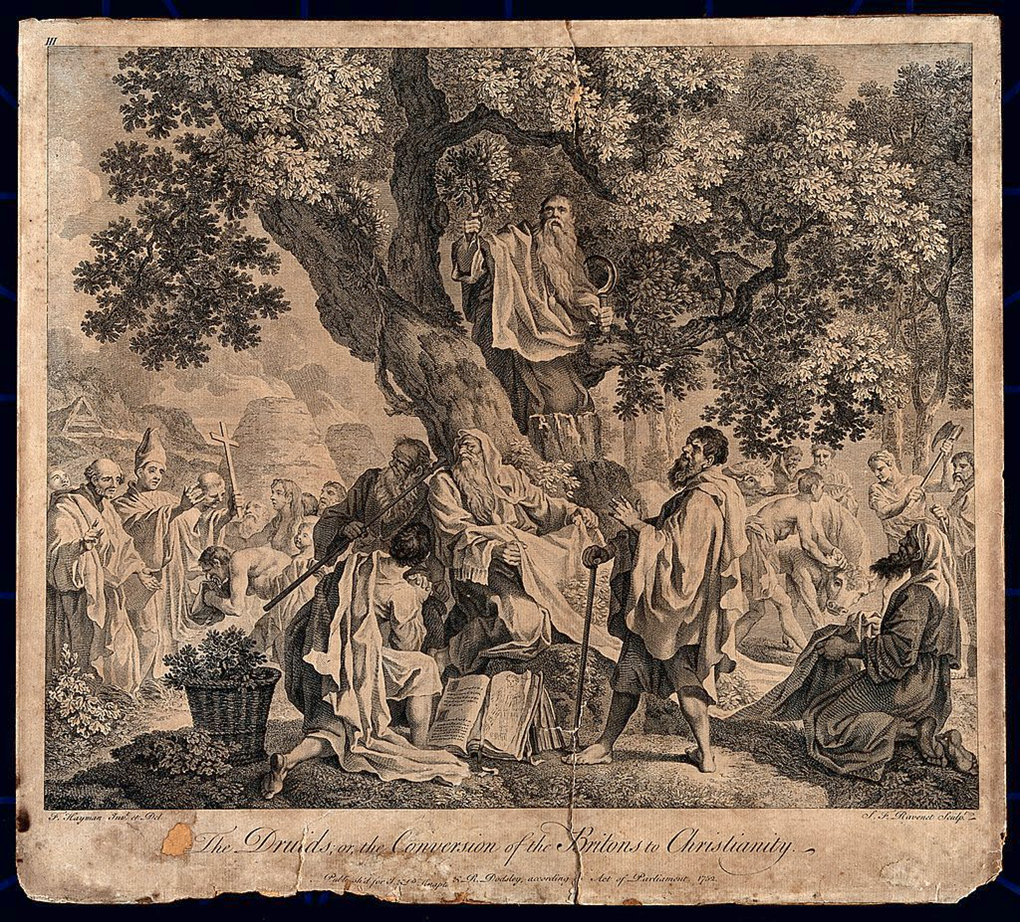
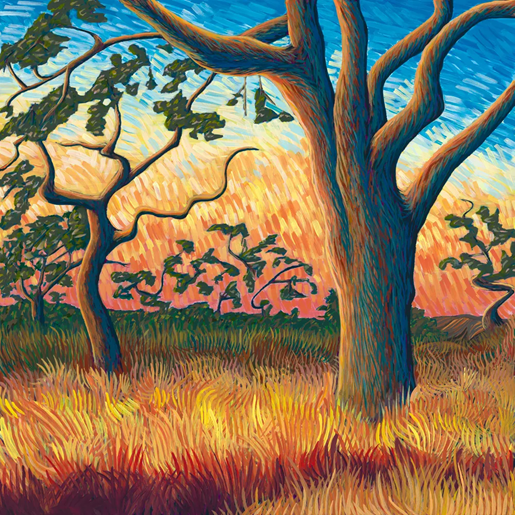
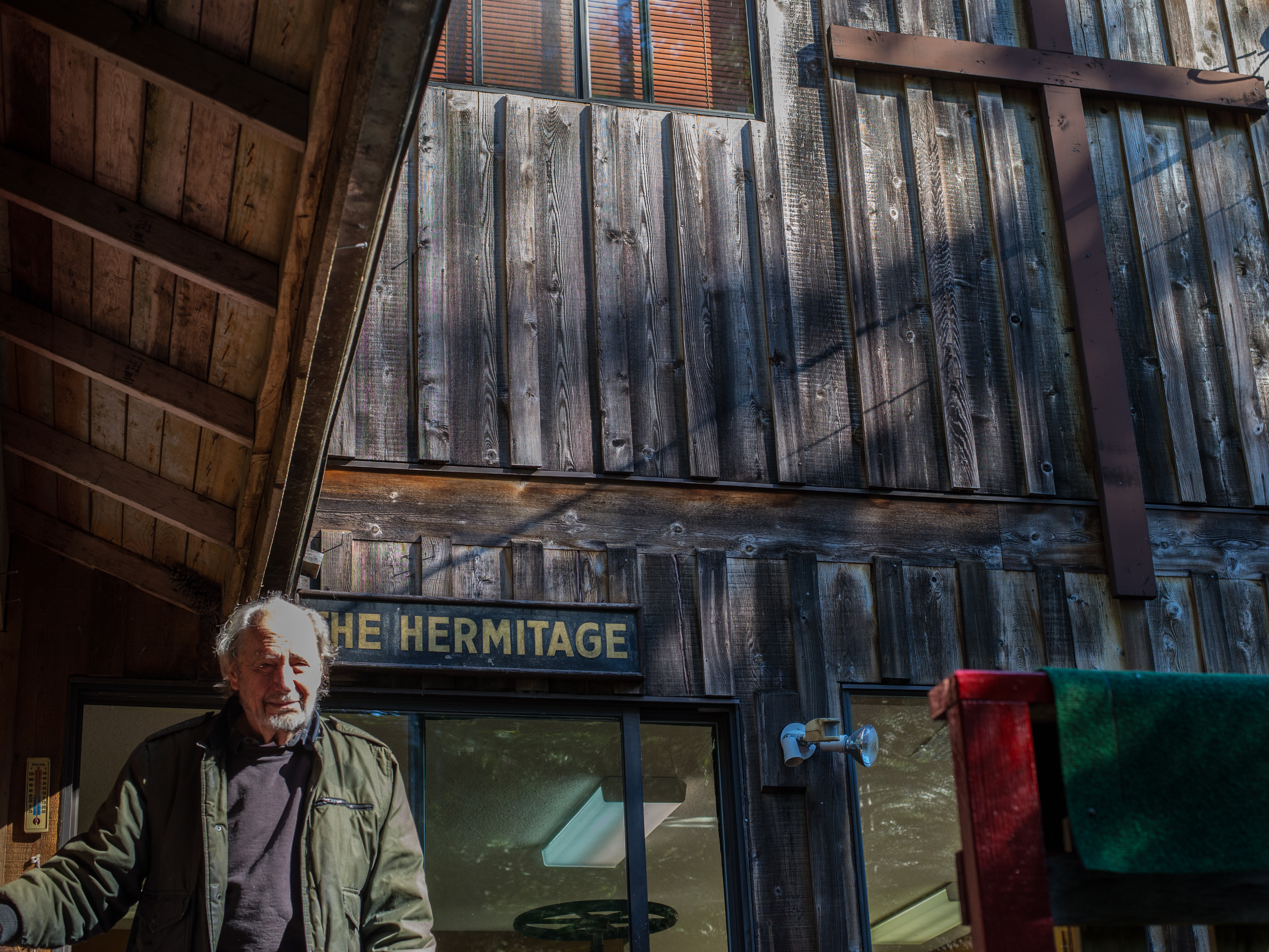
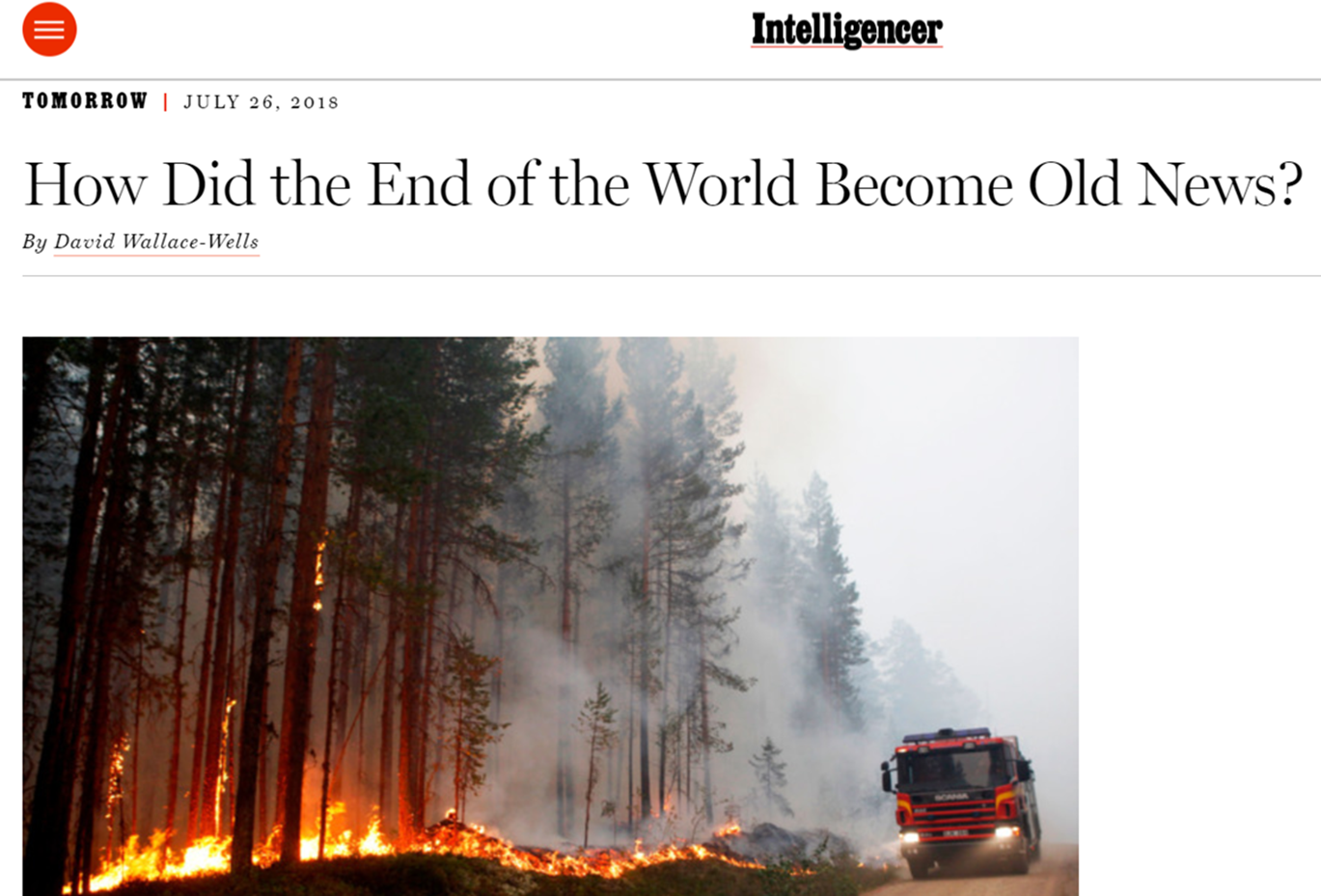
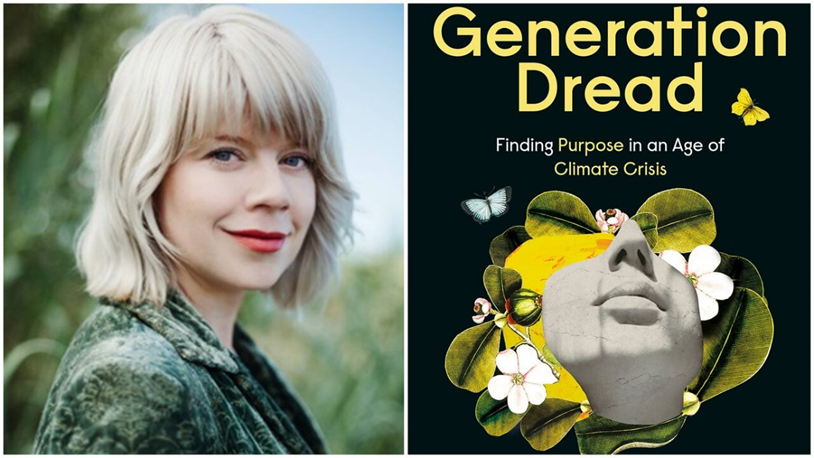


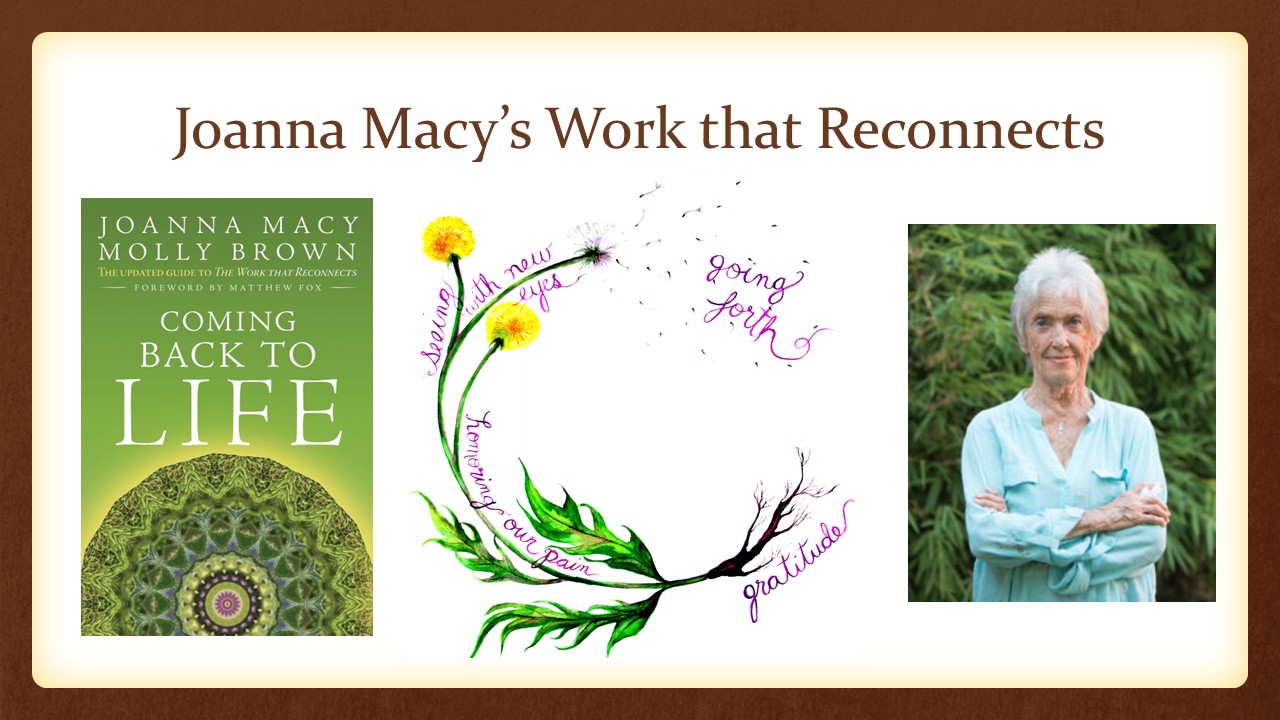


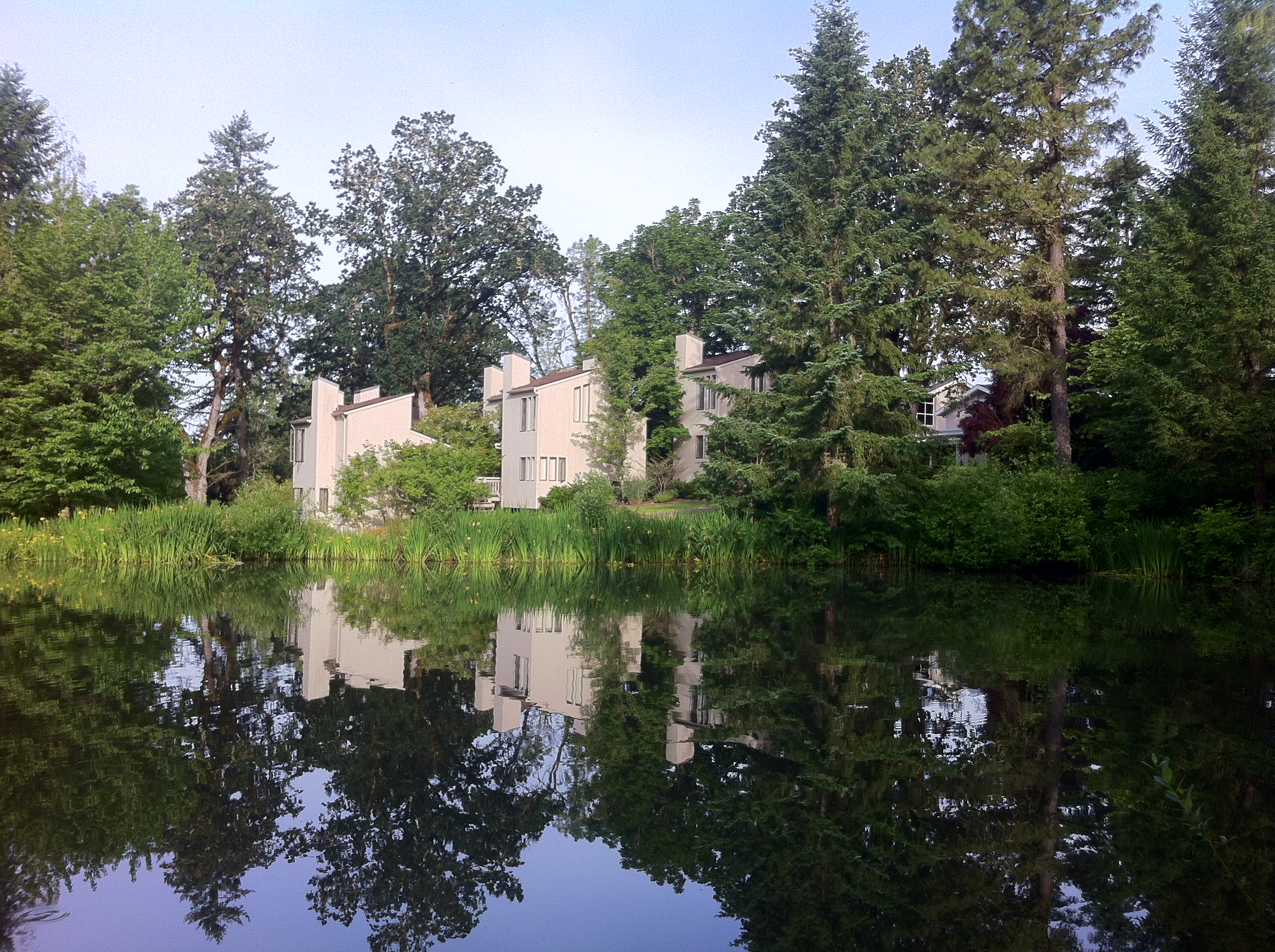
 holyscapes