Honoring Our Grief as a Community

“In the dark times

Will there be singing?

There will be singing

of the dark times.”

— Bertolt Brecht, Svendborg Poems, II

Bertolt Brecht (1889-1956) was a German playwright and poet. He fled Nazi Germany and later became a Hollywood screenwriter. In one collection of poems, he wrote the motto above. It was written in Svendborg, Denmark, where he first fled from the rise of Nazi Germany. His words remind us that though we did not choose to live in these times, we can choose how we respond to them.

Every age has its darkness, but in a time of climate chaos, heartbreaking warfare and political uncertainty, many of us are feeling the weight of anxiety and anticipated grief. Walking the halls of our university between classes or meetings, we wonder what good might come of our disciplines, our research, our reading, our lives. In the coming months some of us will make plans, New Year’s resolutions, earn degrees and find jobs. And yet, each step carries a hesitation, a whisper that the times are too hard for our lives to matter. We wonder at a future that feels less and less certain.

For others, people we love have slipped from view. Parents, siblings, friends or non-human companions have died; cherished relationships have ended; jobs or careers or imagined pathways have turned out differently than we planned. We worry about wildfire, violent storms, species extinctions, deforestation, drought. Sometimes it feels almost too much to bear.

It is no wonder we are afraid of facing our grief. But Brecht reminds us, in dark times there should be singing about dark times. “This is how the heart makes a duet of wonder and grief,” writes the poet Mark Nepo in his poem Adrift. “I am so sad and everything is beautiful.”

This is because grief touches something deep inside of each of us that dares to be named hope and love and “yes, I will keep going.” This is because to honour our grief is not to give in but to live on. To honour our grief is to let the seeds we have buried rise rooted in the loamy soil of these dark times and to grow. And like a forest, we cannot grow in isolation.

So, what if Simon Fraser University was a place where we didn’t feel like we had to hide our grief? What if as a community we honoured our losses, our pain and our uncertainties?

Tuesday, November 19th is National Grief and Bereavement Day and the Ecological Chaplaincy Program is hosting a gathering to honour our personal, political and ecological grief.

Register here.

We will also be hosting a table in the northeast corner of the AQ with resources. Stop by our table from 11 a.m. to 2 p.m. on November 20th through the 22nd. Write a letter to your loss. Honour your beloved with a photograph and candle. And take a blue ribbon with you to show that we don’t have to hide our grief, and that grief is a way of loving ourselves, our community and the future even during times of uncertainty.

Resources for grief and bereavement

  • SFU Ecological Chaplaincy Discord
  • BC Grief and Bereavement Helpline: Visit their website or call 604-738-9950; toll free 877-779-2223
  • MySSP 24/7 crisis support: 833-768-2188
  • Staff and faculty support: lesjames_reimer@sfu.ca
  • Counselling Rapid Access appointment: 778-782-4615 
  • Indigenous Counselling Services: iscwell@sfu.ca
Easter Vigil

On Maundy Thursday

I will wash my feet in the riffle of a creek

On Good Friday

I will lament the crucifixion with the dear earth

and venerate the weeping wood of too many crosses born by still living trees

On Holy Saturday

I will sit in vigil

at the tomb under a night sky

greyed by a shroud of sleepless electric lights

And on Easter Sunday

I will wander and worship

the resurrection body

in the cherry petals

that bloom and waft all over my garden city

Mass Grave

[In June, I started working part time at a Funeral Home. One of my tasks was to arrange all the cremated remains that have been left behind over time. It was baffling. Over 500 since the 1950s. I wrote this poem shortly after a long shift working in the Home.]

I’m standing in a mass grave.

Not one dug in the dubious cloak of night by the shovel of a tyrant.

A grave that is tucked away in the fluorescent catacombs of a funeral home.

I have been appointed to order these lonely parcels into chronological and alphabetical order—due diligence to finally put them into the ground en masse.

Shelf after shelf of neatly packaged cremated human remains—boxes just wide enough to grasp with one hand, but too heavy to carry for long.

I pick up one that feels empty and quickly realize that the box contains the remains of a baby.

There are many babies.

Weathered masking tape holds serial numbers that verify an identity, some with instructions—

Nephew will pick up. Brother in Germany. Hold for six months. Will pick up on April 11. Call family.

Most have names: Maude, Clive, Edna, Dorothy, Daisy, Stan, Bertha.

Some do not have names—Unidentified male, Vancouver. Unidentified Male, Burnaby. Unidentified Male, New Westminster.

This cubical congregation spans many decades—1955, 1958, 1972, 1978, 1986, 1998, 2004.

A weathered box from the 1970s leaks gritty ash from a corner,

It piles like an hour glass on an empty pine coffin I am using as a workstation.

Ash like any ash, dust like any dust;

And yet, attach a name and a big bang of images, ideas and personality expand outward like a tiny universe.

I tape the box shut and put it in its new niche.

Silver fish swim among the disintegrating brown paper and masking taped cardboard coffins.

I scratch my arm and dead skin cells slough off, a slow cremation.

I breath in the trace dust of 500 lives lived and cough them out again.

I want to take them all home and adopt them as my own ancestors and friends.

Build them cathedrals and mausoleums.

Make biopics about their lives, extraordinary and ordinary alike.

Write biographies that will scandalize, or end up in free bins in the foyers of public libraries.

But my arms give out,

A fuse mysteriously blows,

I leave the boxes where they lay for another night alone together.

Easter Desert

The soft patter of cool drops,

Christen forehead, neck and hands.

The earthy incense of the desert’s thirsty breath

As He opens his sandy mouth to drink.

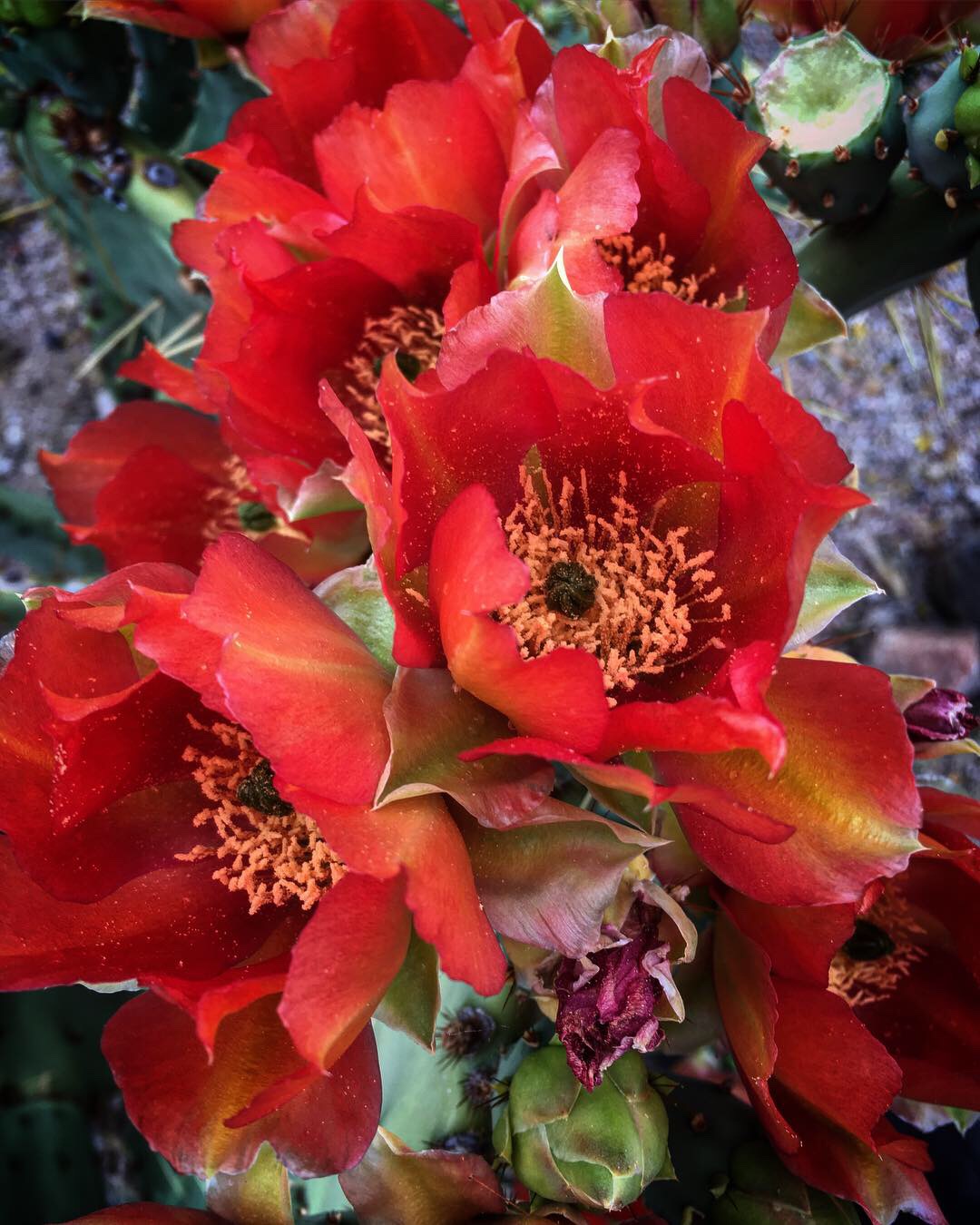
Processions of Palo Verde and Mesquite still clad in their golden Easter vestments

Shout Alleluia! from the valley’s hillsides

And throw their spent petals into the Pentecostal winds.

Even the cacti are clad in their Sunday best.

Like my own spiny succulent heart—

Prickly and defensive most of the time

With seasons of extravagant

Openness and beauty.

April 29, 2019

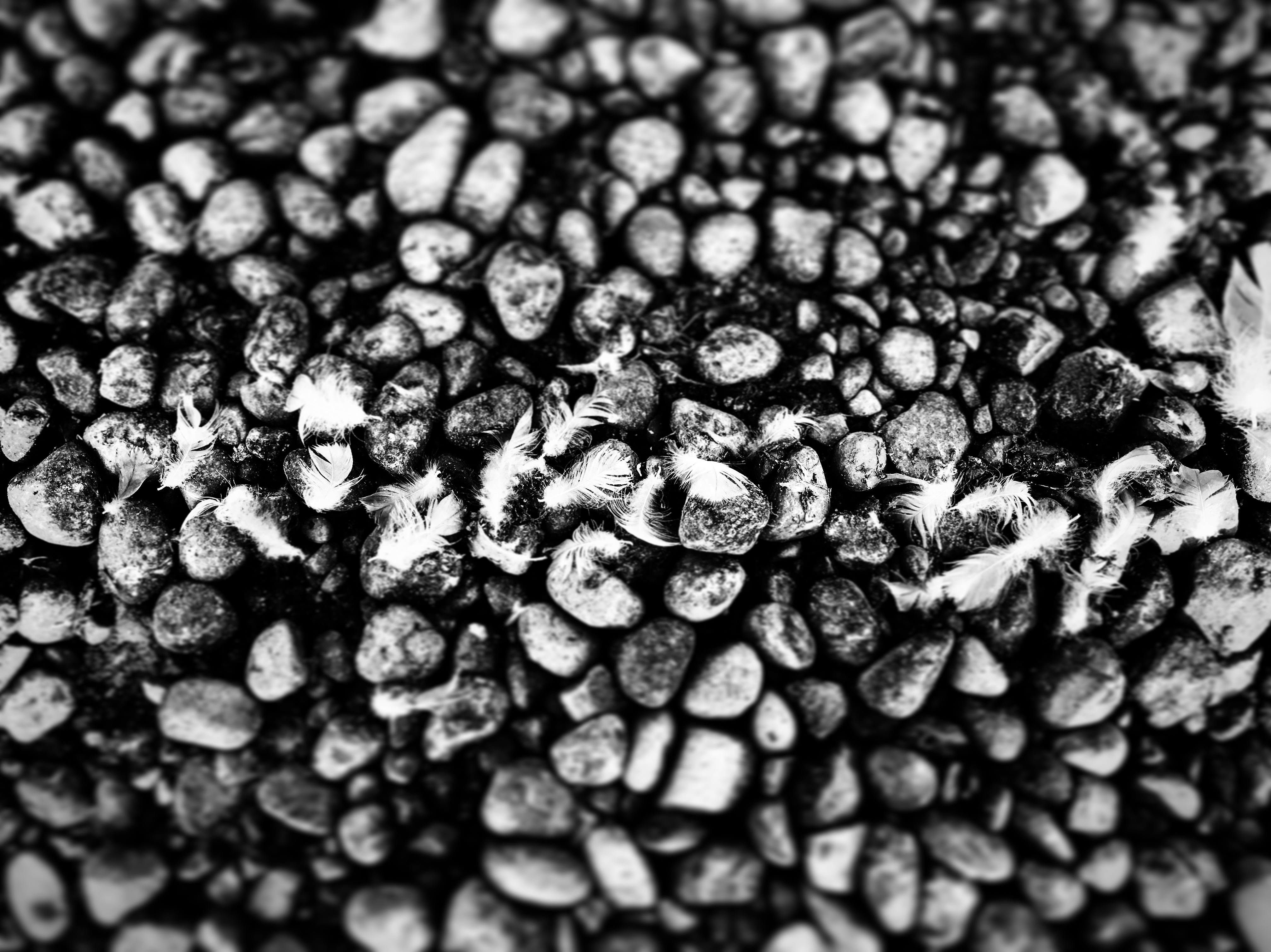
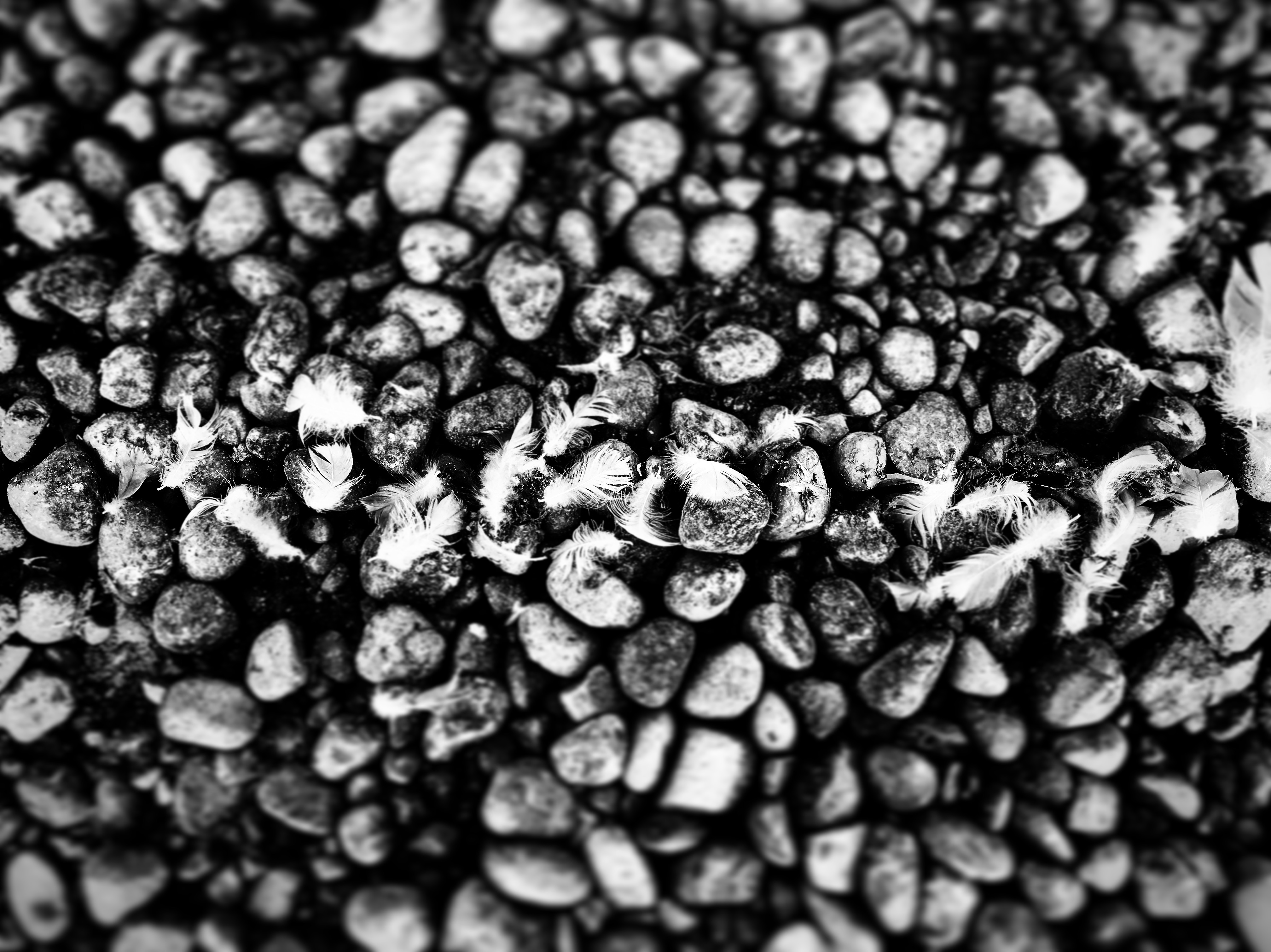
A Dying Grebe

At the bottom of steep steps

that lead to the edge of an ocean

between a sandy cliff and the lapping tide

I see a red eye gleaming among the logs and silent stones

–silent until the tide teaches them to speak.

The eye belongs to a small bird we call Grebe

in drab plumage he struggles out of the sea he knows so well.

Still now below a beached and weathered log

silent, awkward and alone

on the cobbled clacking shore.

The shore of incessant

syncopated

chatter

between sea and stone.

Two of my kind walk by

Without noticing

the Grebe in drab plumage.

I move closer

an arm’s length away.

I look into that fierce red eye

and watch as his back

rises and falls

in short resigned breaths.

There is broken flesh below his wing

I am too timid to touch him

to carry him away

perhaps my touch would only make things worse.

I watch the water that is

endlessly rising and receding

chattering with rocks that do not care

If they live or die

because they will always be

alive in the tiny flecks of body

that make up plankton

and shell fish

and seals

and herring

and clams

and eagles

and uncertain men’s hands

and Grebes’ red eyes.

This grebe, on the edge

of the ocean he knows so well

an ocean that incessantly

speaks with the rocks

beneath his wounded wings

stares at the coming fog of that dark ocean

a death he may not fully grasp

and I sit stone still at the edge of the world

and look at these hands

and wait.

Redemption

IMG_7726

Redemption comes in tiny ripples, not crashing waves.

Redemption arrives quietly like swallows—one or two appear overnight and stay on for a time.

Redemption comes in an instant like the sparkle of grains of sand that catch the sun just right.

Redemption works on a person like the tides.

What begins as the sharp edges of broken glass-hearts, yield their violence to the slow washing over of the ever breathing sea.

Redemption comes like clouds of pollen from sturdy pines that somehow find the nakedness of fertile cones.

And, once acknowledged in the heart, redemption, ever present, becomes a ripened seed that plunges into the fecund darkness of earth with an unwavering hope that she too will become a towering tree.

IMG_7575.JPG

Two Walks

IMG_7592

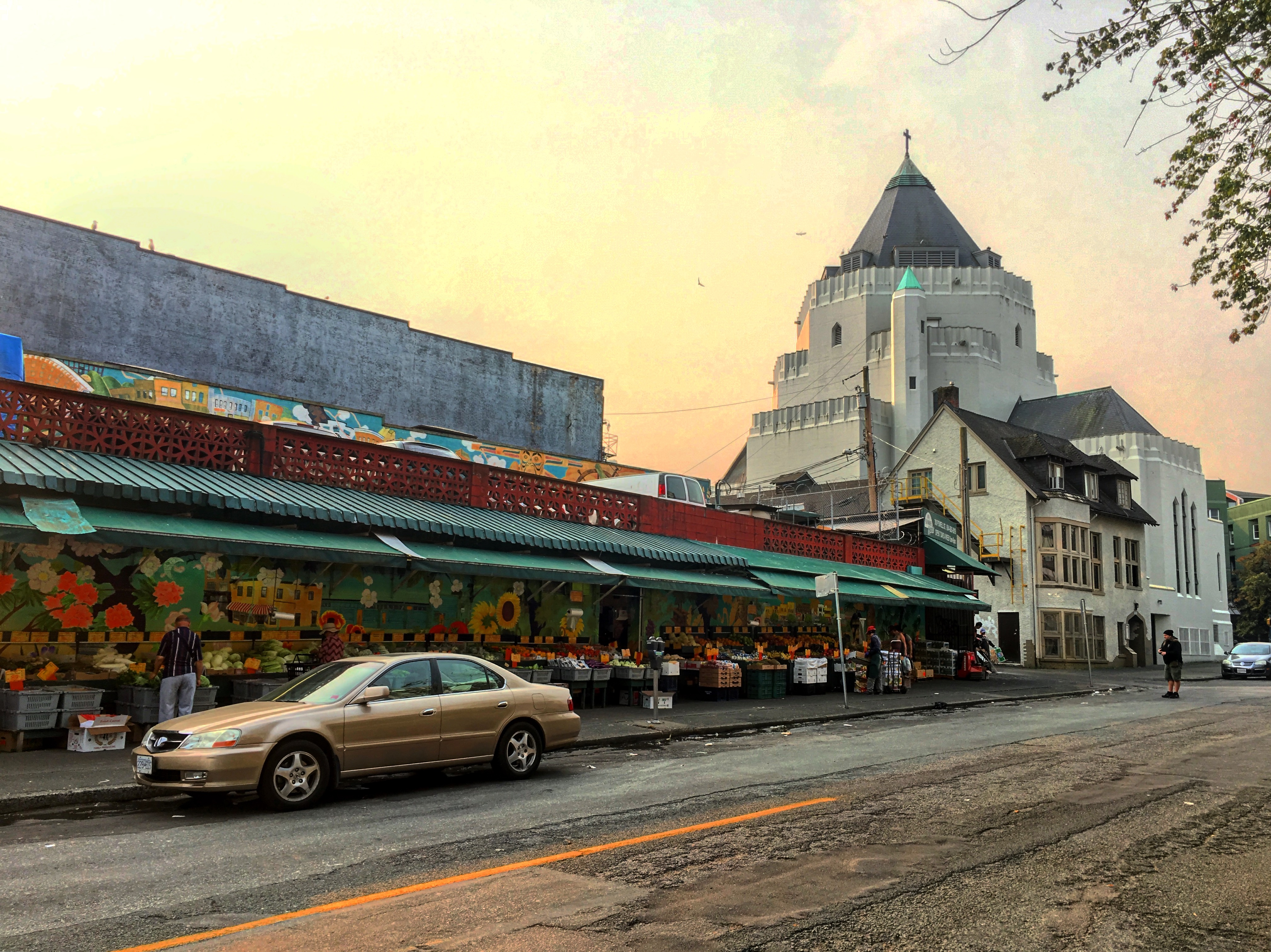
On Sunday I took two walks. One before church and one after. The first took me through the Downtown Eastside of Vancouver’s urban core. I set up the vestments and chalices for the morning Mass. Then, I left the church and headed west along the boundary between Gastown and Chinatown. Gentrification has created a kind of checker board of social housing interspersed with hip up and coming vintage stores, pizza by the slice and dive bars. Buildings tower over head. The streets are still sparse in the early cool of Sunday morning. A man lies sleeping in a doorway. A woman j-walks slowly eyes fixed to the ground. Crows and pigeons forage and peck at the street.

As I round a corner, turning north and then east, the streets are even more sparse. Trinket and tourist shops are still closed. There are a few early risers with cameras. The uneven pavement rests, waiting for the city to wake. I try to make unthreatening eye contact. I try to pray for each person. I forget. My mind wanders and then I start up again.

I return to the church and attend Mass. It is solemn and beautiful. The familiar words, chants and choreography nourish me. I relish in the tiny morsel of bread and sour wine that dissolves into my mouth, dissolving me with it.

The second through a second growth douglas fir forest in North Vancouver. Its tall trees and clean air have become something of a sacred grove for me as I work through a dark period in my life. A period in my life that is rich with the productive pain of spiritual growth.  After coffee and a few greetings I drive to the Northshore and take a familiar trail down toward Lynn Creek. The trees tower over me. The sun peeks through in speckles and flecks from high above. The forest is still cool and still even though it is after noon. I ask the trees and salal to pray for me like they are saints. I pass couples and tourists, dog walkers and families. I try to make unthreatening eye contact. I try to pray for each person. I forget. My mind wanders and then I start up again. Crows and robins forage and peck at the ground. I approach the gurgle of Lynn Creek. I sit on a flat rock caressed on all sides by water. My mind drifts off into the soft sound and continuously flowing water. My two walks were really just one long walk.

img_7587.jpg

Why we Need the Cursing Psalms

DSC_0925.jpgToday in my morning prayers I read Psalms 58. If you are not familiar, Psalms 58 is one of the more vicious “Cursing” Psalms, wherein the poet-author begs God for vengeance on his enemies. Some exceptionally gruesome lines read:

O God, break the teeth in their mouths;

tear out the fangs of these lions, O Lord!

Let them vanish like water that runs away;

Let them wither like grass that is trodden underfoot.

Let them be like the snail that dissolves into slime,

like a woman’s miscarriage that never sees the sun.

This visceral desire for vengeance reminded me of the other infamous Psalm 137, which reads:

O daughter of Bablylon, destroyer,

blessed whoever repays you

the payment you paid us!

Blessed whoever grasps and shatters

your children on the rock!

Listening to mild mannered monks chant these lines is an interesting experience, but there is of course a theology behind it. The Psalms express and give voice to the entire range of human emotion, good and bad, and to chant the Psalms is to enter into those emotions on behalf of those who might be feeling them.

When I heard that a man known for past political activism killed two men on a train in Portland for confronting him over his harassment of two women, I felt angry. When I heard that Islamists had ambushed and killed over 20 Christians as they travelled to a monastery in Egypt, I was furious. When I heard about Manchester, Paris, Orlando, Charleston, the list goes on, I wanted justice. The cowardly acts of terrorists by these white supremacists and Islamist Extremists are cut from the same cloth.

In Psalm 137, the Psalmist is reeling from the recent leveling of Jerusalem by Babylonian forces. The carnage left the Jews feeling completely abandoned by God. And at times like this, with more and more senseless violence we can feel the same.

As a human being, my initial reaction is a desire for vengeance, justice and annihilation. But as someone who believes in the reality of the Christian story, I am also committed to reading the Psalms through the lens of Christ, who asks me to dash my vice, sin and hatred on the rock of his paschal mystery. The Psalms name the justifiable reaction, but Christ calls us to purify them, and to move toward a place of forgiveness, love and nonviolence.