In Part I, I wrote about my visit to a small religious community called the Doukhobors. Those who remain of this fascinating religious movement live mostly in the Kootenays region of British Columbia. I enjoyed visiting the Doukhobor service and getting to know a few of them. But I left feeling a mix of peace, sadness and a familiar longing. In this short piece, I want to put words to these emotions, even if just to work through them for myself.
I have always felt that there is something beautiful about group religious worship and identity. There is such a strong sense that those in the room know who they are, where they are, and why they are. I still appreciate this when I attend a religious service, visit temples, monasteries, or gurdwaras. I even appreciate this when I return to a Mormon meetinghouse with my family during the holidays. Though I have long since stopped identifying and practicing the religion of my upbringing, the familiar hymns, the inflection of prayer, the smell of a church, and everyone dressed in their Sunday best, tap into my longing for be-longing.
The sadness is harder to articulate. I think is has to do with a mixture of spiritual and existential loneliness. Though the Mormon / LDS tradition never espoused as radical an approach to Christianity as the Doukhobors, like many restorationist movements in the 19th century, they were certainly committed to living out Christianity in what they saw as an authentic and radical way. And I would even say that Mormonism’s roots were what led me to my exploration of radical politics.
At the Mormon university I attended, I really struggled with how overwhelmingly partisan Mormon culture can be, especially in the so-called Book of Mormon belt. By that I mean intentionally aligning itself with the US Republican Party. As if Jesus or Joseph Smith were teaching modern conservative talking points. I had always seen religion differently, and I soon found a community of more left-learning and radical Mormons, many soon to be ex-Mormons, and I felt very seen and understood in my leanings and struggles.
As I wrestled and read, I sympathized with more radical formulations of Christianity by authors like Leo Tolstoy, and non-religious writers Peter Kropotkin and Murray Bookchin. I even wrote an article about the first convert to Mormonism in Mexico, the Greek radical Plotino Constantino Rhodakanaty (1828-1890). Like him I saw something powerful at the heart of the early Mormon relationship to land, place and social organization. The Mormons attempted to create The United Order as a cooperative social-economic system. It was never fully realized. Like Rhodakanaty, I was eventually disillusioned with Mormonism’s assimilation of the American capitalist religion, though I tried for years to find my own sort of Mormon radicalism. I wrote several articles for a Catholic Worker inspired newspaper called The Mormon Worker. That was a long time ago.
I also felt sad because the Doukhobors are dwindling, and their tradition cannot live as they envisioned. As I chatted with my new Doukhobor friends, they related to me how the community gets along today, and how it has had to adapt with the times, and how from their peak in the early 20th century, only about 1,675 identify Doukhobor as their religion, according to the 2021 Canadian census. The Doukhobors work through a legal nonprofit structure, they do not own land communally, and many don’t bother observing vegetarianism anymore. I understand, but in addition to the existential loneliness of longing for belonging, seeing a tradition with such a beautiful way of live dwindling is a bit tragic.
And it’s not as though I would want to be Mormon again or become a Doukhobor, even if they were more radical. But there is a nameless love that is hidden inside the feeling I got sitting with the Doukhobors and listening to them sing together. After the visit, back on the road, I was marketed to by countless fruit stands, new distilleries, luxury retreats and resorts and excursions. The warm summer world seemed to be buckling under the weight of us ravenous experience-seeking tourists. This is a landscape of leisure, of make believe, of Air BnB rentals, cabins and resorts for the religion of consumerism. It feels like the opposite of that nameless longing. It feels like the contours of a spiritual wasteland of sorts. Always seeking, never finding, we wander around hungry for meaning and experiences. Why is this “religion” flourishing while the Doukhobors languish? I don’t know. But I want to keep finding places where I feel that feeling and keep trying to name that nameless love that is hiding within it.
I am driving to Calgary to pick up my parents from the airport so we can tour Banff and Jasper National Parks. It is going to be Disneyland-dense with fellow tourists, each of us seeking to feel something like awe, to connect with the rawest aspects of nature. Still, I am very excited to go and see the beauty of the Canadian Rockies!
From Vancouver I decided to take the southern route along the US border which passes through the Kootenays on Highway 3. It was a stunning drive, even with the pangs of climate anxiety I occasionally nursed from seeing massive clear cuts, fire scarred mountainsides, aspen groves drying out too soon, and browned-over fir forests dying from some unknown pathogen (Spruce bud worm?).
While I was planning my trip, I realized that the route would take me right through the traditional heartland of the Doukhobors, an ethno-religious community originally from Russia. I learned about the Doukhobors shortly after moving to BC, when I was chatting with the barber cutting my hair (I had more then). I told her I was studying religion and ecology at UBC, and she told me she grew up in a Doukhobor village in the Kootenays.
As I came to learn, the Doukhobors emerged in the late 1600 and early 1700s. The word means “Spirit Wrestlers”, and as a sect of radical Christianity, they were known for their communalism and simplicity. Some of their beliefs are similar to branches of Radical Reformation groups such as the Amish and the Mennonites. The Doukhobors however also resemble the Quakers in that they believed that God dwells in every person, and that this meant clergy and even scriptures were not necessary. Instead, they speak of the “Book of Life”, wisdom embodied in sayings, hymns, psalms and prayers.
If this was not controversial enough, they got into more hot water in 1734 when they were declared iconoclasts for preaching against the use of icons, a cherished piety in the Russian Orthodox Church. Eventually they came to espouse a vegetarian diet for ethical rather than ascetical reasons and as pacifists, they refused to swear oaths or join the military.
They were persecuted by Russian Orthodox clergy and a string of Tzars. Many were forced to migrate to various places in the Transcaucasia region and their leaders were often exiled to Siberia. In 1895, a group of Doukhobors burned their weapons in protest, causing another wave of persecution. One community attempted to settle in British controlled Cyprus, but soon many died of disease in route.
In 1899, around 6,000 Doukhobors emigrated to Saskatchewan with the help of local Quakers and Russian pacifist author Leo Tolstoy. Others such as Russian anarchist Peter Kropotkin and professor of economics James Mavor at the University of Toronto donated to the cause. By 1930 there were over 8,000.
They worked on communal farms and ran a grain mill and a brick factory among other things. They built communal dormitories, but unlike the Shakers of New England, they were not celibate. Their communal land and pacifism eventually got them in trouble with the Canadian government as well. In 1906, they refused to surrender their communal title to land and lost much of it to the Crown when a law was passed requiring landownership to be under a single person’s name. During the world wars, they were also resented by Canadians for not supporting the war effort. In the 1920s, a breakaway group calling themselves the Sons of Freedom staged naked protests and engaged in arson attacks against more law-abiding Doukhobor families causing tensions within the community.
Today, the majority of practicing Doukhobors live in Grand Forks and other areas of British Columbia. Many moved here in 1908 after the Canadian law against communal landholding. Tensions also grew within the community, and it seems likely that a Doukhobor bombed the train that community leader Peter V. Verigin (1859-1924) was on as he headed to British Columbia in 1924. So much for pacifism (though we still don’t know who planted the bomb). Some of the Doukhobor children were forcibly interned into boarding school much like Indigenous residential schools.
I pulled up to the Doukhobor meeting house, now officially called The Union of Spiritual Communities of Christ (USCC) and noticed several veiled women making their way to the door accompanied by men and some younger folks. A large stylized dove adorned the doorway, symbolizing the Holy Spirit, and their persistent commitment to peace.
I had planned to just snap a picture and be on my way, but when I realized that they were gathering for service, it was Sunday after all, and I happened to arrive at the top of the hour, it seemed providential that I attend the meeting. I guess I half expected them to speak only Russian, but when I wandered over and asked a young man if the public were allowed to attend, he spoke to me in unaccented English and said, “of course!” I was greeted warmly by all and began chatting with one of the men, who immediately inquired as to my own religious convictions. I told him it was a long, meandering story, but that I had been raised in the Mormon tradition. I mentioned that in my view, Mormons shared a few similarities—a health code (The Word of Wisdom), early experiments with communalism (The United Order), friendly people, and a love for the land they settled in Utah.
There were about a dozen and a half people attending the service, with men and women sitting on opposite sides facing each other. There was a small table at the front that held a loaf of bread, a pitcher of water and a small wooden bowl of salt. These symbols, which we never partook of during the service, were symbolic of “hospitality, sharing, and our basic principle—Toil and Peaceful Life.” (from the Doukhobor hymn book).
The service was simple, the singing beautiful. They did a sort of ritual greeting call and response as people entered. The women were veiled and the elder women dressed in what seemed like more traditional dress, though I saw one carrying her things in a Lululemon bag. They sang and prayed in Russian and bowed after each hymn. There was also a sort of passing of the peace ritual during the beginning which involved three handshakes and a kiss. But only a few folks in the first rows did it. Toward the end they asked me to come to the front and say a few words, and I introduced myself and thanked them for their hospitality, kindness and way of life. After the service I perused some of the historic wall photos, chatted a bit more and was given a stack of literature to take with me.
The experience left me feeling a mix of familiar longing and a bit of sadness. And I am not quite sure how to articulate it… perhaps a part two of this essay is in order, or perhaps not.
I recently joined the board the Brandt Oyster River Hermitage Society. We are getting ready to launch our website, and I was tasked with writing a short bio on Father Charles Brandt, a Hermit-Priest who lived in a small cabin and supported himself as a bookbinder on Vancouver Island. I met Charles in 2016, when I was completing my dissertation at UBC.
Photo by the author, 2016
Charles Brandt was the fifth child of the six and was born on February 19, 1923, in Kansas City, Missouri. He is of Danish-English heritage, the child of Alvin Rudolph Brandt-Yde and Anna Chester Bridges. His father was an auto mechanic at a Buick dealership and later served as a pilot in the Airforce during World War II. After the war, he worked as a Park Superintendent at Swope Park. Charles had two brothers and two sisters.
At the age of three, the family moved to a small farm where he had some of his first encounters of wonder in the natural world. The family raised chickens and had a milking cow. A small spring emptied into a creek on the property and there Charles would fish for perch and crawdads. In primary school, an observant teacher encouraged Charles to paint, and he enjoyed painting apple blossoms with watercolors. His Aunt, Helen F. Bridges, was on the board of the Kansas City Art Gallery and encouraged all the Brandt children to pursue artistic talents. Charles continued studying art at the Kansas City Arts Institute on Saturdays for several years.
As a Boy Scout, he earned the rank of Eagle and was drawn toward craft and book binding. Eldon Newcomb, a scientist who was also the head of the nature staff at Osceola Boy Scout Camp, became a major mentor and influence on Charles. For several summers, he served as a counselor at the Osceola Boy Scout Camp, where he taught bird watching and natural history. As a Scout he was elected to the Mic-O-Say tribe, which is an honor society that exists within the Boy Scouts of America. (In recent years the organization has been criticized by Indigenous people over concern that it engages in cultural appropriation. But in Charles day, it was a different time.) Charles was very early on fascinated by birds. Charles writes,
“During the spring of my 2nd year of high school, having become quite interested in bird study, I had an experience on weekend out along the Blu River. It was beside a small stream with the spring foliage when I began to see a stream of warblers moving along the stream and in the bushes, feeding and calling. The amazing thing was there were about nine different species in all their mating plumages, migrating through their nesting grounds. It was an overwhelming experience of beauty and wonder and wild. I wanted to preserve it forever” (Brandt 2006, 2).
This fascination with birds, birding and wildlife was a key dimension of Charles’ contemplative approach to ecology, and ecological approach to contemplation.
Father Brandt attended high school in Raytown, Missouri. Active in debate, band, swimming, oratory, sports, drama. He also worked as a life saver and lifesaving instructor. When Charles was thirteen, he read Henry David Thoreau’s famous book Walden Pond, and immediately felt the desire to “go to the woods”, a desire that eventually would call him to the hermit vocation. On Thoreau Charles said,
“I got interested then in Henry David Thoreau. He went to the woods to find out what life was all about, and that was really quite exciting, and a real challenge for me; and I wanted to do something like that. That was probably my first inroad into the hermit life” (Grayston and Chang 2016, 42).
Land, place, ecology and silence were for Charles a single whole from a very young age.
But at university, he decided to study conservation at the University of Missouri where he majored in wildlife conservation. Reflecting on this later, Charles realized that he had roomed with Starker Leopold who was studying wild turkeys in the Ozarks. Starker was the son of the famed conservationist Aldo Leopold (1987-1948).
In 1943 Charles entered Active Service with the US Army Air Corps. It was around this time, while Charles was studying in Colorado for the army, that Charles began attending a Baptist Church. And until 1946, when Charles was discharged, he travelled and studied for his service positions with the US Army, including bombardier training in Victoriaville, California. Charles was appointed a Flight Officer but never saw active combat before the war ended. When he entered military service, he didn’t really reflect on whether or not it was the right thing to do, since it seemed to be a patriotic duty. But by the end of his service, he felt that he had become something of a pacifist and winced at the thought of being an actual bombardier.
In 1947, Charles headed to Cornell University to study ornithology. Charles studied birdsong recording under Dr. Peter Kellogg and studied nesting birds at the Edwin S. George Reserve in Michigan. He was also elected to Phi Kappa Phi, a student scientific society for his high academic achievement. Charles would go on to graduate first in his class with a Bachelor of Science in biology. Charles’ first scientific article was published in the Wilson Bulletin, based in Anne Arbor, Michigan. The essay was entitled “The Parasitism of the Acadian Flycatcher.”
Taking serious stock of his spiritual life, Charles began attending Saint John’s Episcopal Church in Ithaca, New York. Soon, Charles met the Reverent Francis Voelcker, the priest in residence there, who saw in Charles a great contemplative potential. He began mentoring Charles and encouraged him to explore a vocation to the Anglican priesthood. Charles spent that summer living with an Anglican religious order, the Brothers of Saint Barnabas, who were devoted to the care of men and boys with developmental disabilities and incurable illnesses.
Though as a Hermit-Priest Charles never married, and he doesn’t mention many romantic partners, it seems that during this time he was quite fond of a woman he refers to as C.C. They attended services together at Saint John’s and Charles simply writes, “we spent considerable time together” (Brandt 2006, 4).
After graduating from Cornell in 1948, Charles decided to pursue Holy Orders. He returned to Colorado where he lived during his military training and was accepted as candidate for Anglican priesthood by Bishop Bowen of the Colorado Diocese. He entered Nashotah House Seminary in Wisconsin, living there for three years where Charles enjoyed the routine of the community which included Mass and the daily office.
However, during seminary Charles continued to wrestle with finding a meaningful spirituality and began to read more widely from books by writers such as Jeremy Taylor and Father Benson of the Cowley Fathers of England, another Anglican religious order. He seemed to be seeking a deeper spirituality of silence and contemplation. Then, Charles stumbled upon Trappist monk Thomas Merton’s autobiography The Seven Story Mountain and found a deep resonance with Merton’s rich contemplative spirituality. Of Merton’s writing he said simply, “it blew me away.” So much so that he and several seminarians had arranged to spend easter at Gethsemani Abbey in Kentucky, where Thomas Merton lived, to experience Trappist life firsthand and meet Merton in person, but the trip was cancelled at the last minute, and they didn’t end up going. On reading Thomas Merton for the first time, Charles reflects,
“So when I read The Seven Story Mountain, that was what I was looking for; that really answered my question. I wanted to know if it was possible to really experience God in this lifetime, can you talk to him, as a person? That was really a revelation, The Seven Story Mountain, and it changed my whole thinking. From then on, I was thinking in terms of monastic the life” (Grayston and Chang 2016, 48).
That year, however, Charles ended up visiting another Trappist monastery. He made arrangements to meet with Father Bede O’Leary the Abbot and theologian of Our Lady of Guadeloupe Trappist Abbey which at the time was located in New Mexico (in 1954 the community relocated to Carlton, Oregon). Charles wanted to talk with O’Leary about contemplative, or mental prayer and Father Bede became a great voice of council for Charles.
In 1950 Charles spent the summer at the Community of Augustine and Anglican Contemplative House in Orange City, Florida and on December 7th Charles was ordained a Deacon at Saint Andrew’s Church in Denver, Colorado by Bishop Bowen.
In 1951, accompanied by Reverend Voelcker, Charles went to England to explore the varieties of the Church of England’s contemplative life. They visited Chevetogne, Belgium where he met with Dom Lambert Beauduin (OSB) who was interested in the Anglican re-unification with Rome. This meeting brought Charles to question the validity of Anglican Holy Orders, because he learned that they had been declared invalid by the Vatican.
From here, Charles began to try his hand at the monastic life in earnest and in 1951 he became a Postulant at Community of the Resurrection, an Anglican monastery in Mirfield, Yorkshire. Despite his doubts, in 1952 he was ordained an Anglican Priest by Bishop of Wakefield, UK.
In 1953 Charles left the Community of the Resurrection and spent some time in continental Europe making various stops in France and Rome. He spent ten days in Assisi, a few weeks in Rome, and met with a Benedictine monks named Father Dennis Stratham OSB. Father Stratham was from Saint Gregory’s monastery in Shawnee, Oklahoma. This meeting would prove providential, as Charles was received into the Roman Catholic Church there in 1956.
In the meantime, Charles continued his quest for a place to express his contemplative vocation within the existing religious communities of the Anglican/Episcopal traditions. When he returned from Europe in the latter half of 1953, he travelled to a property in Gaylordville, New York where Father Paul Weed had a property that he wanted to transform into a contemplative community. Father Charles built a small hermitage on the property out of old railroad ties and started working as a Chaplain at Kent School in Connecticut where he also helped with the garden.
Soon however, Charles discerned that this was not his place and he decided to move to Three Rivers Michigan, a small Anglican Benedictine community in 1954 and entered as a postulant. While he was there, he learned to chant the divine office in Latin, and continued his voracious reading of the mystics and contemplatives. Charles was deeply moved by the writings of Camaldoli monk Father Bede Griffiths whose autobiography The Golden String deeply impacted Charles. Griffiths was a monk in England for many years, but eventually found himself in India dialoguing with Hindu Sanyasis and fusing East and West. Father Charles also began reading John Henry Newman’s Apologia Pro Vita Sua. Newman had spearheaded the Anglo-Catholic revival in the Church of England in the late 19th century, but eventually converted to Catholicism and was made a Cardinal by Pope Leo XIII in 1879. This period sealed Father Charles movement to the Roman Catholic Church, so he left for Louisiana to meet with the only catholic priest he knew, Father Bede O’Leary who was on leave and serving a parish there. O’Leary sent Charles to St Benedict’s Monastery, and he met with the Prior there. Despite meeting daily for a month, Charles was not quite ready to make the move from Anglican to Roman Catholic. So, Charles decided to travel to Mexico City on pilgrimage to the Shrine of Our lady of Guadeloupe, accompanied by Father Bede.
Upon returning, he decided to head to Saint Gregory’s Abbey in Shawnee, Oklahoma where he continued his discernment, studied Latin, and met with a resident theology professor regularly. It was during this time that Father Charles fell in love with book binding, a skill that would become his own contemplative bread and butter throughout his years as a hermit in British Columbia.
On January 26, 1956, Charles Brandt was received into the Roman Catholic Church and in April he was confirmed in the Cathedral at Oklahoma City. Charles continued his stay at Saint Gregory’s, taking theology classes and deepening his bookbinding skills. That Easter Charles decided to travel to Gethsemani Trappist Abbey where he met with Thomas Merton who was the novice master at the time. Merton was warm and received Charles with kindness.
On his first meeting with the Trappist monk Thomas Merton, Brandt recounts, “So at Easter I went to Gethsemani. I knew Merton was the novice master. I didn’t realize I was going to meet him. I was in the guest house for about a week. So [knocking] I hear this knock on the door, and in enters Thomas Merton. You know, he sat down there, just the most ordinary person in the world. Immediately, I liked him, really liked him as a person, and we talked. My intent was to enter the novitiate there, but he said, “Don’t come here. We could make a good monk of you, but not a good contemplative”” (Grayston and Chang 2016, 52).
After several chats with Merton and later his Bishop, Charles decided to forgo a trip to Rome to pursue a quicker pathway to priesthood and decided to first solidify his vocation as a monk. Charles decided to enter New Melleray Abbey, Dubuque, Iowa, another Trappist Abbey. This decision seemed fruitful and in 1958 Charles made Simple Profession (temporary vows) and was put in charge of a small book bindery. Charles continued his studies in philosophy and theology.
In 1964, during the upheavals and experimentation of Vatican II, Charles became uncertain about making final profession (vows). All over the world, monastic orders were studying their roots, which went back to the hermits and recluses of Syria, Judea and Egypt. Charles remembered that Thomas Merton told him about the Camaldolese Order which had a monastery in Ohio. So, Charles and his Abbot drove to visit them. However, the Camaldolese stood for the duration of the divine office. Having a back problem, Charles knew within ten minutes that he wouldn’t make it.
Back to the drawing board, Charles wrote a letter to Thomas Merton. Merton’s reply was published in a collection of letters, and Merton encouraged Charles to continue his search for a more contemplative place to live out his vocation. Charles soon found two eremitic experiments: A Benedictine hermit named Peter Minard in North Carolina and Dom Winandy, greatly admired by Merton, who was leading a small group of hermits on Vancouver Island, British Columbia.
After visiting Peter Minard, Charles was impressed. Minard lived a simple life on old plantation. But soon it became clear that Father Minard was mostly looking for someone to run the farm. So, the Abbot of New Melleray wrote to Dom Winandy, who gave Charles permission to come for a visit.
In March of 1965 Charles arrived at Winandy’s group, The Hermits of Saint John the Baptist, located on the Tsolum River in Merville, BC one hundred acres of forested land. Charles moved into a small trailer and then began to build a hermitage there with some local help which was completed in September. To earn a living Charles decided he would try his hand at being a professional book binder, and the Trappists of Carlton, Oregon, Our Lady of Guadalupe Abbey (who Charles had previously visited in New Mexico), donated some book binding equipment. With this Charles began to search for clients in the local area.
Despite Dom Winandy’s misgivings about hermits becoming priests, Winandy gave Charles permission to meet with Bishop Remi De Roo, who eventually accepted him as candidate for priesthood. In August he received minor orders and was incardinated in the Diocese of Victoria which essentially ended his temporary vows at New Melleray. On November 21, 1966, Charles was ordained as a Roman Catholic priest by Bishop De Roo at the Canadian Martyrs Church. According to Charles, he was the first full time hermit ordained in Catholic Church in several hundred years.
While living on the Tsolum River, Charles began working as a fisheries technician, and assisted in some parish work in Cumberland on Sundays. Eventually the hermitage site became a bit too crowded, and Winandy and several hermits including Charles dispersed to other properties. In the Spring of 1970, Charles moved his hermitage structure to its current location on the Oyster River.
In the mid-1970s Charles travelled extensively to improve his bookbinding skills. He spent several months in San Francisco learning book restoration and then travelled to the New England Document Centre in Andover, Massachusetts to learn more about flatwork conservation of maps, parchments and prints. Charles was even appointed Chief of the Bindery, which kept him very busy teaching workshops and conducting surveys. In 1975-76, Charles travelled extensively in Europe where he both worked and studied additional conservation techniques.
Returning to Canada, from 1976-1981 Charles was employed by various Canadian book conservation programs. First, he worked for the Canadian Conservation Institute in Moncton, NB as Professional Book and Paper Conservator. Charles said a daily noon Mass in an English-speaking Church in Moncton. When this office closed, he moved to a centre based in Ottawa where he restored bound volumes, maps and art works on paper. Charles was also hired by the Manitoba government to design and oversee the building of a state-of-the-art restoration laboratory in Winnipeg from 1981-1984. The purpose was to survey and restore the Hudson’s Bay archives. Charles also travelled throughout Canada doing conservation work in Yukon, Manitoba, and Alberta during this time. On his love for bookbinding and conservation Charles wrote:
“Probably the best contemplative part of bookbinding is sewing the book. It’s a very relaxing, I think a very meditative, contemplative aspect of binding. Literature is disappearing at a great rate from our libraries all over the world, and it’s our written record of humanity. So if you’re preserving that, as I am, you’re preserving humanity, the culture, and I think that’s really quite worthwhile. It’s like preserving the earth. It’s not just a job, it’s something that’s conducive to the prolongation of civilization” (Grayston and Chang 2016, 55).
Charles was a craftsman and appreciated work well done. The embodied nature of the work, the quiet and the sense of purpose facilitated a contemplative atmosphere that was conducive of prayer.
In 1984, Charles finally returned to his beloved hermitage where he began making additions to the structure and installing a conservation lab and library. Charles began teaching conservation and restoration techniques at University of Victoria, UBC, Simon Fraser, University of Alberta, Washington State University and in many communities across Vancouver Island.
Even before he left for his travels related to book binding and document conservation, Charles was a passionate lover of place. He would write letters to local officials protesting proposed developments on the Oyster and Tsolum Rivers. When he returned to full time residency at the hermitage in 1984, he began lobbying campaign which mushroomed into a large number of environmental projects throughout Campbell River and the Comox Valley. Throughout the years, Charles was involved in many environmental groups and causes: The Steelhead Society of BC, Haig Brown Kingfisher Creek Society, the Campbell River Environmental Council, the Tsolum River Enhancement Committee, the Oyster River enhancement Society, the Oyster River Watershed Management Committee and the Tsolum River Restoration Committee. In the 1990s the local media began to take notice, and he even received several environmental awards for his work on river restoration and conservation.
It was at this same time that he began holding meditation retreats with the local community, despite some Catholic leaders warning against “Eastern” forms of prayer and meditation. His work of ecology and contemplation were quite a natural fit: Action and Contemplation were connected. In 1990, the meditation group became a regular event, which continued to the end of Charles’ life.
In 2001, Charles was the keynote Speaker at the Western Conference on Christian Meditation in Edmonton, Alberta which solidified his leadership in the global contemplative movement. On prayer, Charles reflected, “I think that anybody who prays benefits the whole body of Christ. Prayer touches everybody. The person next to me is affected by whatever I do. If I pray, that helps them, and it also helps the natural world” (Grayston and Chang 2016, 39).
Charles life was a series of questions lived out in many different places and among many different communities. But his love for craft, ecology, and prayer shine through all of this. Charles is an exemplar of contemplative ecology lived well. Toward the end of his life, Charles reflected on the contemplative life and on the hermitage property that the Hermitage Society lovingly maintains. He said,
“In a way, I’m looking towards eternity now. I’ll be 93 on February 19th, [2016], so I’m not going anywhere. I love this spot. I’m permanent. I feel steady, in a sense, with life, and with my calling. And this is my place. I walk out and I know the trees, and I know the birds and the animals. They’re my friends. As I said, the human community and the rest of the natural world has to go into the future as a single sacred community. I feel that I’m part of this community where the natural world and people come and go; and if we don’t, as Thomas Berry says, we’ll perish” (Grayston and Chang 2016, 57).
Father Charles Brandt died at the age of 97 on October 25, 2020, after a short stay at a local hospital in the Comox Valley. Upon his death, close friend and co-founder of the Brandt Oyster River Hermitage Society Bruce Witzel reflected, “His stature as a spiritual teacher as well as his whole legendary reputation as someone who integrated spirituality with ecology will live on after him in the lives and efforts of the many people he directly inspired” (Closter 2020).
Charles’ Publications
Charles Brandt. Meditations from the Wilderness: A Collection of Profound Writing on Nature as the Source of Inspiration (Harper Collins, 1997). 150 quotations about ecology, place and contemplation.
Self and Environment: On Retreat with Charles Brandt. (Bloomsbury Academic, 2000). An outline of Charles thinking on contemplative and ecology.
Bibliographical Sources
Charles Brandt, “Autobiographical Timeline” Email from Charles Brandt to Judy Hager (Dec. 14, 2006).
Rev. Don Grayston (1939-2017) and David Chang “A Single Sacred Community:
A short review of Adam Miller’s excellent book Original Grace: An Experiment in Restoration Thinking.
Prelude
The Church of Jesus Christ of Latter-day Saints (LDS) seems to have a grace problem. Like almost all Christian denominations in North America and Europe, the LDS Church has struggled in recent years to retain young people and progressives. Though the LDS Church’s support for conservative social issues will continue to be a point of tension for many, LDS philosopher Adam Miller’s Original Grace is an attempt to experiment with “Restoration Thinking” in order to affirm a core Christian doctrine to LDS spiritual practice: Grace. His research question: What happens when Justice and Grace are not seen as oppositional? His hypothesis: It changes everything.
Raised in the LDS church, but leaving in my late 20s, I have had my eye on Miller’s Zen-infused prose for a while. This is because Miller has wrestled with one of the issues that led me away from LDS practice and toward a more contemplative expression of Christianity. As an LDS person there was a grace-shaped hole in my life that I didn’t even know was there, but after suffering through deep depression during my mission years, mostly because of my own feelings of unworthiness, grace found me, and I began to believe that my status as a creature of God came before my actions or behaviors. In his boldly titled Future Mormon (2016), Miller’s essay ‘A General Theory of Grace’ simply states: “Grace is Original.” In this short review, I want to commend Adam Miller for his book length elaboration on that sentence and raise some questions for his ongoing experiment with a doctrine that has yet to find a comfortable place at the table of LDS spiritual practice.
Miller’s Radical Justice
Original Grace is a touching tribute to Miller’s late father, a disciple of Christ whose strongest theological proof of God’s existence was the self-giving love he felt all around him. For Miller, his father taught him that Justice and Mercy were always on the same team.
Central to Adam Miller’s claim is that the doctrine of Original Sin, a doctrine that the LDS church has negated since its ‘13 Articles of Faith’ were published in 1842, has nonetheless tainted the way LDS people live their understanding of the Gospel.
Despite LDS religious culture’s rejection of the austere Calvinist doctrine of “total depravity”, and its dismissal of Sola Fide (faith alone) soteriology, faithful LDS have nevertheless absorbed the idea that true justice justifies, at least in theory, the necessity of punishment for sin. That falling short of the Gospel merits our feelings of guilt and shame and that only by redoubling our efforts to be righteous will we come to our salvation.
LDS have often seen justice as a kind of divinely anointed karma: They, along with some other Christian lineages, intuitively believe the proposition that humans suffer because we deserve it. The Old Testament’s admonition of an eye for an eye is often described as a bridle for vengeance within a proportional tit for tat. The Hebrew imagination saw justice as restoring right relation among peoples, castes, land and God, and this certainly included God’s punishment of Israel’s enemies or those who strayed from Torah. Diseases, plagues and natural disasters were often interpreted as God’s justice playing out in the world (See 1 Chronicles 21:14).
Miller doesn’t negate the goodness of the law, but with LDS Apostle Dallin H. Oaks claims that Christ offers a better way. Miller asserts that this better way is to align justice with grace by returning not only good for good but also good for evil. This is a play taken directly from Jesus of Nazareth’s Sermon on the Mount. For Miller, in a Christian cosmos, suffering can never be deserved, only learned from and wrestled with.
Miller shares that as a missionary he constantly fought feelings of inadequacy and unworthiness. That is until he picked up Stephen Robinson’s 1992 Believing Christ. Robinson diagnoses the problem in his own spouse, who after working hard to be the perfect LDS woman collapses into a pile of defeat and despair. She accepted that her efforts would never be enough to merit the full measure of LDS salvation. Robinson takes the whole of the church to task on her behalf for refusing to believe that Christ means what he says and did what he did.
Robinson’s theory of the atonement is not so much of substitution, Jesus suffers on our behalf, but of being saved “after all you can do” (See 2 Nephi 25:23). To illustrate this Robinson shares ‘The Parable of the Bicycle’ wherein a little girl scrimps and saves for a bicycle for weeks, but still falls short, even after all her hard work. The loving father steps in and pays the rest. Grace, after all we can do.
Miller lauds Robinson’s first step, but argues that this “after thought” or “backup plan” soteriology still does not fully grasp the radical claim grace has upon us. When grace and justice are aligned, they ask not what we deserve, but what we need. Sin in this understanding is not a law broken, but grace rejected. Miller writes, “The problem isn’t that God is unwilling to offer the grace I need. The problem is that I’m unwilling to receive the grace God is giving” (14).
LDS tend to think that salvation is the highest reward for living a righteous life, rather than seeing righteousness as the fruit of our embrace of the saving (salving) love of God. The commonly quoted LDS scripture Doctrine and Covenants section 82 reads: “I, the Lord, am bound when ye do what I say” is an underlying motivation for an LDS version of the prosperity Gospel, an esoteric incantation that extracts blessings from a God of justice. It is Max Weber’s Protestant Work Ethic liberated from Calvin’s total depravity. Strange bed fellows indeed.
Miller admonishes LDS that salvation is better sought and understood as a present-tense reality. “A shared life lived in Christ’s presence is the end. It is salvation” (20). Christian virtues like charity are what grace looks like in human clothing, not what Christians do to impress God, whose grace is the very air we breathe (37-38). He writes, “If we take Jesus’s Sermon on the Mount as our guide, the logic of justice is the logic of grace” (37). Thus, no instance of a karmic approach to justice in scripture can dissuade Miller from seeing justice as an expression of how to arrive at what human beings need rather than what we deserve. The Bible is not after all a story of justice executed judiciously in each case, it is a story about a thousand broken promises met by a God who loves us as a nursing child at his breast.
Grace and Nature
Perhaps because the book is tailored to a general audience, and went through the editing filters of Deseret Book, the LDS publishing house, I found myself wanting Adam to weave in threads of the “Traditional Christianity” he is partly polemicizing against. I found the lack of historical context for Original Sin or Grace for that matter a weakness of the initial chapters, even if the book is aimed to keep folks from slogging through the theological mud. In addition, I found that his work of aligning justice with grace was more successful than his case against Original Sin. A brief discussion of what I mean.
First, a bit of background on the doctrine of Original Sin: This core doctrine is found at the heart of all Christian communions: Oriental Orthodox, Eastern Orthodox, Roman Catholic, Anglican, Lutheran, Calvinist, Anabaptist, Pentecostal and Evangelical. The theology claims that our mortality entails a proclivity to sin by nature.
This theology is primarily absorbed from the second account of Adam and Even in the Garden found in Genesis 3, wherein eating of the fruit of the Tree of Knowledge of Good and Evil results in the couple being expelled from the Garden of Eden. However, the doctrine also draws from the poetry of Psalm 51 where the poet writes, “Behold, I was shapen in iniquity; and in sin did my mother conceive me” (KJV). In the letter of Paul to the Romans (Ch. 5), he claims that if death came to humanity through one person (Adam), salvation most certainly could as well (Jesus).
However, Original Sin does not appear in Jewish theology. It was Saint Augustine of Hippo (354–430) an early Church Father who really solidified the doctrine. Augustine had a sudden and unexpected conversion to Christianity at the age of 31. His own riotous past convinced him that human beings are utterly dependent on God’s grace.
Miller’s only mention of non-Mormon theology is his mention of the theology of John Calvin, the 16th century French reformer whose understanding of faith meant that unlike the sacramental approach of the Catholic and Orthodox communions, no rite, ritual or sacrament was effective in ensuring our salvation. Not even an act of faith could save us. Our natures are totally depraved of the good, we are utterly and completely dependent on God’s grace. Our election is only made known to us through our desires to live a Christian life, or through the fruits of that life. The Westminster Confession, the current articles of faith of the American Presbyterians, continues to affirm that humans are: “Wholly defiled in all the parts and faculties of soul and body.” [1] Original Sin indeed. Interestingly, the Catechism of the Catholic Church reads:
“It is a sin which will be transmitted by propagation to all mankind, that is, by the transmission of a human nature deprived of original holiness and justice. And that is why original sin is called “sin” only in an analogical sense: it is a sin ‘contracted’ and not ‘committed’—a state and not an act.”[2]
In other words, human nature is wounded, but not totally depraved. The notion of an LDS human nature (which tends to be more optimistic) is never fully resolved by Miller who writes:
Christ’s atonement directly addresses a problem internal to my own nature as a sinner, not a problem internal to God’s nature. He bridges a gap caused by my rebellion against justice and grace, not a gap between God’s justice and God’s grace (59).
In all Christian readings, even LDS, my nature as a sinner comes through contraction, I have inherited my nature as a sinner. LDS do not appear to believe that our nature as sinners goes all the way back into the LDS pre-existence. Another option is that sin comes into the world only when we chose to sin. There is no pre-existing conditions, only a long string of spiritual lifestyle choices that our natures are vulnerable to slipping into.
When Miller says that his nature is as a sinner, he seems to be implying then that our sinful nature is contracted through our humanity and understood through the myth of Adam and Eve as the parents of our humanity. While this theory of sin feeds the logic of karmic justice Miller critiques, it is also at the center of his theology of grace, which does not presume to merit God’s grace, only strives to be a receptive vessel for it.
The LDS Church’s Palagian Problem
This leads to another bit of historical context. The rejection of Original Sin in the Christian tradition has tended to be by those who embrace the idea that we can earn our salvation. For example, Pelagius (c. 355 – c. 420 AD) a British monk, asserted that Original Sin did not taint our nature because our nature was synonymous with being, and being is sacred. Pelagius was one of the early Christians who demanded strict moral obedience for all Christians, especially priests. Pelagius’s view was quite popular in the 5th century, before Augustine’s Original Sin rose to the status of dogma. His notion of free will (free agency) suggested that God would not command us to be perfect (Matthew 5:48) if it were not possible. And God didn’t create anyone to be evil, this was a Manichean (dualist, gnostic) doctrine. However, after a public run in with Augustine, Pelagius’s ideas were condemned primarily at the councils of Carthage between 411–418 CE.
Miller’s challenge going forward is that Mormonism’s rejection of Original Sin is in my view primarily a Palagian move. This is evidenced, not just in many LDS’ embrace of the Prosperity Gospel, but in the persistence of certain folk theologies that come from Joseph Smith Jr.’s later revelations. For example, Miller uses the word “Creation” in the book but does not clarify whether he also rejects the Ex Nihilio (out of nothing) Creation of “traditional Christianity”. LDS tend to talk about creation as an activity of organization overseen by a certain Celestial precinct’s God, in earth’s case Jesus Christ out of existing matter. Many LDS believe that our pre-mortal selves participated in that organization, a beautiful thought for some, but also a move that steals something of the grace at the heart of what it means to be a Creature. These two rejections: Ex Nihilo and Original Sin seem to leave the possibility of embracing grace less likely. Rather, embracing the strong contingency of my existence that ex nihilo creation asserts, and my nature as a sinner that original sin canonizes, leaves me prone to the radical beauty of God’s grace.
Other Braids in the Estuary of Grace
Before I conclude, I would like to point readers to several other worthy explorations of grace-centered Christianity which flow in the same direction as Miller’s.
1) The Franciscan Alternative Orthodoxy
The Franciscan Order, founded in 1209, has since the writings of Duns Scotus (1265/66-1308), asserted a minority position on the Incarnation (the doctrine that God took on a human form/nature). Since Scotus, Franciscans have asserted that rather than a ransom, or substitutionary approach to salvation, which is predicated on the inevitability of sin, Franciscans assert that Incarnation has been part of God’s plan from the beginning. Contemporary Franciscan teacher Richard Rohr likes to say that God becomes what he saves, and the Incarnation was not just a single event in Jesus of Nazareth, but an ongoing event from the beginning (See John 1).
2) Matthew Fox’s Original Blessing
In 1997, Dominican Friar Matthew Fox wrote a book entitled Original Blessing. His book proves that Roman Catholicism has just as deep a wound related to Original Sin as the LDS Church. The book got him excommunicated by Cardinal Ratzinger. In the book, Fox emphasizes the many affirmations of the goodness of creation in Genesis 1 that preceded the sin of Adam and Eve that saw them exiled from the garden. While I don’t find Fox’s scholarship all that impressive or well-disciplined, his assertion that the interpretation of Original Sin needs a complete overhaul, was well received with progressive Christians, especially those interested in ecological theology.
3) The Neo-Celtic Christianity of John Phillip Newell
A former pastor in the Church of Scotland, John Phillip Newell has sought to amplify the teachings of the Church in the British Isles before the Roman standardizations of the 6th century. While he calls his Christianity Celtic, it is more accurately classified as a kind of Neo-Celtic Christianity, which infuses pre-Roman Christianity with contemporary concern for equality, spirituality, feminism and environmental stewardship. Newell negates the Virgin birth and believes that Creation was not effected out of nothing, but out of God. He boldly claims that holding an infant is the best argument against the doctrine of Original Sin, a doctrine that he simplistically explains as primarily about imperial control and oppression of the masses. For Newell, Original Sin is psychologically damaging and makes up the core wound of Western Civilization, which leads to so much shame and self-loathing.
Conclusion
There are perhaps many more examples, but these writers sketch out the basic topography of the Christian interlocutors that Miller is in conversation with. Each of them emphasizes the primacy of grace as a bewildering gift, not a post mortal rewards package. I commend the razor-sharp prose of Adam Miller’s excellent book. Any discussion of grace is a balm to the common affliction of shame and guilt that justice-oriented approaches to religion too often take. And as Miller says, the LDS Restoration it isn’t finished.
Over the next few weeks, I will post a series of sketches of some ideas I have kicking around in my head. With luck, they might become longer essays or full length books! Apologies in advance for grammar and spelling errors…
Living in Vancouver I have always felt a bit lonely in my Christianity. I love the catholic tradition, but I have serious hesitations about a full-throated enthusiasm for being part of the Roman Catholic Church. Recently, I learned that two men I admire converted (or in one case reverted) to Christianity. This has made me feel a bit less lonely and pointed to something I see happening among some spiritual but not religious ecological types. Paul Kingsnorth and then Martin Shaw, both British, and both frequent speakers on podcast and YouTube circuits, converted to Christianity in 2021. Paul converted directly into Eastern Orthodoxy, and Martin, after being baptized by an Anglican priest, has entered catechesis with a local Orthodox church in Exeter.
Shaw grew up in the Baptist tradition, with a preacher as a father, but in his teens became a musician and eventually left the church (very familiar to my own story). He was raised not just with theology but the telling of fairytales and myths. Now in his late 40s, at the end of a 101-night vigil in the forest, Shaw saw a multicolored star-like aura of light moving toward him which pierced the ground like an arrow. He heard a voice that said “Inhabit the time in Genesis of your original home.” He says he felt the presence of “the mossy face of Christ.” Thereafter, entering the lockdowns of COVID-19, he had series of dreams in which a clear message was conveyed. Podcasters Mark Vernon and then Justin Brierley have observed that many in the West are seeking for deeper meaning beyond the fuzzy post-Christian spiritual but not religious landscape of the liberal and progressive West. They have cautiously suggested that Christianity is entering a new phase.
Paul is a talented novelist, who for many years, was a front lines environmental activist. He always had a spiritual side and spent time in Buddhism and Wicca as an unapologetic Deep Ecologist and critique of industrial civilization. His book Confessions of a Recovering Environmentalist was a public break with his career in the mainstream environmental movement and a manifesto of slowing down, staying put and giving up on the “carbon game.” His response to environmentalism, and his lavish praise for writers like Wendell Berry always sounded to me quasi-monastic. His decision to move to a small farm in Ireland sealed that impression. Kingsnorth continues to rail against “the machine” but he is now doing so within a consciously English, even Celtic, Christianity that shares very little of the New Age trappings of the Neo-Celtic visions of folks like Matthew Fox or John Phillip Newell.
In both of their Substack threads Kingsnorth and Shaw have been thinking out loud about their newfound Christian practice. One thread of Shaw’s is entitled “A Liturgy of the Wild” and in it Shaw curates several wonder stories and archetypal hero journeys that are accompanying him as he learns the rhythms of the Christian liturgical calendar. I have always admired both men, and I feel a deeper kinship with their stories. I don’t always agree with Kingsnorth’s politics, but I certainly have taken heart in my own lonely journey with the catholic contemplative tradition.
My pilgrimage into catholic Christianity began when I stumbled onto the writings of Thomas Merton, the Trappist writer-monk who spent much of life writing about contemplative spirituality from his monastery in Kentucky. When I attended my first Easter Vigil (Saturday evening service before Easter Sunday), I felt the power of the liturgy through the candle-lit depth of anticipated resurrection. It was a powerful, aesthetic, and affective experience. As the warmth of the liturgy sank in over the days and weeks thereafter, I realized that for me the power of the Christian tradition lay not just in creeds and atonement for sin, but in an ability to invite us into a participation with the cruciform nature of the cosmos. By this I mean that through a liturgy that aligns with the seasons of the Norther Hemisphere’s waxing and waning and the earth’s own resurrection, we bring our own bodies to the pascal mystery: birth, death, and resurrection. Coming to believe in the resurrection of Christ was made possible for me by experiencing first a real attention to the resurrection of the earth. Thereafter, the resurrection of Jesus was not an exercise in intellectual ascent to the proposed truthfulness of an enchanted version of History, but to the reality of resurrection that spoke out of every flower and tree and my own circadian pilgrimage through the year. Jesus distilled and recapitulated that rhythm with his life.
I recount this here because what I am observing and learning from Kingsnorth and Shaw is that to a large extent they too were drawn to the archetypal, storied mysterious depth of the tradition. Their hearts were caught in the fisher’s net, and they have lived to tell the tale. Like the mystics, who classically emphasize direct experience, they are speaking from their own bewildered walk with a wild Christ. Not the buddy Christ of contemporary mainstream Christians, but a dark figure who broods in the wildlands and rails against convention.
Shaw for example specifically states that he was drawn back to Christianity because of the strangeness and wildness of Christ and the story. He calls Christianity “the last great mystery”. And now he is a on a mission to reclaim the contemplative, wild, ecologically rich texture of the faith. Whereas many converts to Orthodoxy I have read about tend to emphasize coming to some ascent to its authenticity in relation to some imagined original or continuous Christianity, what I hear Kingsnorth and Shaw doing, is, walking in the tracks of the mystics, drawing close to the warm glow of the power of Christianity’s stories and liturgies.
They are in short espousing what I want to call a Christian Mythodoxy. Mythos: from a root that comes from mouth, myths are not untruths to be busted, but the stories and deep human truths in which we see ourselves participating; not just moral lesson or entertainment. Doxy: meaning praise is our orientation toward the Divine, how do we soak up the rays of the Divine? It constitutes our spiritual practices, our liturgy and worship.
In the wider orbit of ecological spirituality, there are a lot of wonderful conversations that are trying to reconnect with the earth’s rhythms, place, archetypes, myths and even astrology. Adaya’s ecological spirituality courses, the School of Mythopoetics, the now defunct Seminary of the Wild, and many more. Yet while many of these courses can feel quite hostile to Christianity (speaking from personal experience), several renegade threads have been seeking to rewild the Christian lifeway.
For example, Franciscan Ilia Delio has showed that Catholic, from the Greek Kata-holon, according to the whole, must catch up with the facts of evolution and the implications of the discoveries of quantum physics regarding matter-energy as a continuous reality. Others like philosopher John D. Caputo have talked about post-modern Christianity as an exercise not in theology as science, but as a kind of Theo-poetics. As I often tell my students, religion done well is poetry about a mystery, meaning that theology for the most part is not meant to be an exercise certainty, proofs and evidence, but one of awe, wonder, praise and sometimes lament. Others such as writers Bayo Akomolafe and Sophie Strand are doing fascinating things with the possibilities of a wilder, earthier, porous Christianity. These two seem to be more on the outside margins of the tradition, but they speak eloquently about the wild origins of Jesus’s teachings, parables, and connections to the natural world in first century Palestine. Brie Stoner’s podcast Unknowing has also been the grounds for some interesting conversations about what comes after a rigid, denominational Christian identity at the dawn of the Anthropocene.
What I see happening more and more in these discoveries or reimaginings of Christianity does not fit into any denominational category. It is rather a kind of diffuse gesture, posture or dare I say (leaderless) movement. A Christian Mythodoxy seems to be one possible green shoot germinating out of the compost pile of a religion in decline (at least in the West). Stoner’s series on composting Christianity, and Sophie Strand have used that wonderful metaphor to talk about living on the edge of something that feels like both a death rattle and a birth pang (Romans 8). The so-called Anthropocene is bringing about great harm but is also opening space for something new.
What I am experiencing and observing is the idea that to be a Christian is not just to ascent to a platform of beliefs and then check one’s life against it. Rather, beyond theology (not in opposition to it), there lies a move toward a mythic praise, a mytho-doxy, grounded in the body and grounded in the cycles of the earth, that is the tangled fabric of our messy faith, which is always, already embedded in the liturgy of the cosmos, the good earth, and the breathtaking beauty of the pascal mystery.
I have participated in my share of circles where Western folks like me are seeking deeper spiritual connection outside of their Christian or Abrahamic roots. Many of us have come from more rigid religious backgrounds that felt moralistic and spiritually anemic. In addition, the unfortunate legacy of violence, toxic patriarchy, intentional genocide and overt structural racism within the cultures that huddle under the umbrella of Western civilization has led to an understandable longing for the “Not-West”. As a result many of us have mixed, dabbled, converted, or fawned over traditions generally labelled as Eastern, Indigenous, Pagan, Celtic, Pre-modern or non-Western.
We say things like “Christianity is dualistic” or “Western civilization is patriarchal”, “colonialism is violence”, “this land was stolen”. We feel ashamed of our history and seek to extract ourselves from tainted, offending identities by talking about the need to move toward anything but the “West.” The general belief seems to be that unlike our civilizations, Indigenous cultures and Eastern philosophies are generally speaking animistic, more spiritual, and more egalitarian.
This disillusion with the entirety of one’s own culture/civilization can be quite distressing. One may, as many of us have, descend into an internalized self-loathing rooted in a self-imposed cultural exile. We feel lost, uncertain, despairing. The egregious sins of Western civilizations compels us to seek atonement through our lifestyles as post-Western, post-Christian, or what have you.
However, sometimes it feels like there is an unhealthy polarity in this longing for the not-West. By this I mean that our longing seems to reflect an instinct implanted in us by the very cultures we critique. This is a logic expressed by either/or thinking, by dichotomies. Because we have come to reject the framework of the West, we seek alternatives in cultures perceived to be outside of the West. For example, disillusioned Christians will sympathize with a vague sort of Buddhism, which is imagined to be less moralistic, focused on individual spirituality and closer to nature. This view conveniently ignores the fact that Western Buddhisms have mostly found a social niche within Western individualism. Rarely is it acknowledged that historical and global Buddhisms are quite capable of their own versions of patriarchal sexism, violent Nationalisms or a strict, even suffocating, socially constricted moralizing.
In light of a flood of individuals embracing non-Western spirituality and identities, some social justice advocates have rightfully raised the question of cultural appropriation. This is generally defined as: “the use of objects or elements of a non-dominant culture in a way that reinforces stereotypes or contributes to oppression and doesn’t respect their original meaning or give credit to their source.”[1] This critical gaze is generally cast toward those in the Neo-Shamanic, Neo-Pagan, New Animist, Entheogenic, or the ever evolving New Age traditions. It is sometimes levelled against Western Yogis who teach Yoga that has been stripped of its Tantrism/Hinduism, or Mindfulness meditation stripped of its Buddhism.
I sometimes find that the critics of cultural appropriation are too rigid in their boundary policing and fail to discern between spiritual eclecticism and harmful exploitation. It can be difficult to tell the difference. The practices associated with cultural appropriation that I find most harmful or offensive are not the ones that adopt practices into one’s own spiritual path, but those which twist the practices into something entirely contrary to their original intent.
For example, non-Western cultures which carry a kind of cache or alluring exoticism are easily appropriated as yet another marketing icon in the religion of consumerist self-worship. Late capitalism’s fetishism of brands and consumer goods is unequivocally religious in nature and believe it or not, most of us are members of the Church of the Consumer.
A contrast: Perhaps the use of Yoga primarily as a means to physical fitness with some positive mental and spiritual side effects would be a slight misuse of the practice’s original intent, but certainly not necessarily the kind of repugnant cultural appropriation that is worth denouncing. Rather, appropriation is the intentional distortion and exploitation of the allure of Yoga’s exotic imagery for profit or in service of the exalted, self-realized, human being. Once a yearning for a particular type of life, value, or habit gains any semblance of social cohesion, focus-group-high-priests are there to sell it back to us as a means to self-fulfillment. Your spirituality, your zero waste lifestyle, your veganism, your social justice activism are already being sold back to you in a thousand different ways.
In my view, this twisting is worthy of public denunciation and avoidance by those who care enough to think about it. However, another danger that lurks behind the adoption of non-Western forms of spirituality is that it can enable what has been termed spiritual bypassing: avoiding the necessary healing of one’s own cultural traditions or the reclaiming of one’s own culture’s symbols and archetypes. The term spiritual bypassing was coined by psychiatrist John Welwood who defines it as a “tendency to use spiritual ideas and practices to sidestep or avoid facing unresolved emotional issues, psychological wounds, and unfinished developmental tasks.”[2] So, for example, rather than working through our issues with the Divine Masculine, we opt to focus on the Divine Feminine. Harnessing the momentum from legitimate grievances against our own cultures, we ping to the mirror image of a polemical spiritual binary, rather than seeking to re-integrate a broken and abused dimension of the whole. Again, I am not against authentic conversion, or responsible syncretisms, but I think this caution is not often heeded before starting on the journey out of the traditions of own upbringing (if we in fact have had them).
My Own Situation
All of the world’s spiritual and religious traditions formed from some level of improvisational spiritual jazz. I was raised in the Mormon tradition which borrows from Judaism, Masonic rites, folk magic, and Puritan capitalism. Gradually however, I found myself drawn toward the contemplative catholic tradition with a strong emphasis on the natural world as a means of communing with the Divine. I identify very much with the pluralist impulses at the heart of the Perennial Tradition, Western mysticism and esotericism. So, I converted. Catholicism is an open-invitation tradition, all are invited to join and participate in the forms of Catholicism. It is also within the same religious family as Mormonism, Christianity (as Mormons themselves claim).
In my personal spirituality I practice Centering Prayer as a method of meditation. This is a silent meditation practice developed by Catholic monks in the Christian contemplative tradition. It is not borrowed from Buddhism or Hinduism, but shares certain qualities and characteristics. However, even if I chose to participate in a Zen community for example, the spiritual goals, though very different, are in some ways compatible. So, even though I would feel justified borrowing and mixing from Buddhist practices, I don’t really need to, as the resources are available within my own tradition. Rather, I am able to admire the Chan/Zen/Dao traditions of China and Japan and sometimes cross reference the theologies of the Bhagavad Gita and Upanishads because they are resonant with my own catholic pan(en)theistic pluralism. I do this inter-spiritual work rooted in my contemplative Christianity.
However, Western contemplative practice is notoriously Neo-Platonist, meaning it often elevates the mental/spiritual over the bodily/earthly. In my own practice I have really struggled with ways to engage in a more embodied contemplative prayer practice. Christianity, as far as I know, has not developed a rich tradition of ‘body prayer’ except for perhaps pilgrimage, which I have embraced as a practice in my daily walking and in my travels to Spain and Italy. Yet, I have still felt drawn to experimenting with other forms of embodied contemplative spirituality. For example, I have begun to learn more about the basics of spiritual Qigong. I am fascinated by the cosmological depth of Chinese spirituality, and it’s reflection in the human body. Certainly Western forms of astrology attempt this, but do not have forms of body prayer practices that have been developed beyond prayer postures such as genuflection and prostration. So, I have experimented with a few rudimentary forms of this practice. I have incorporated Qigong into my own spiritual goals, goals that certainly resonate with the various religious traditions they come from, but not exactly. Unlike the forms of economic cultural appropriation discussed above I would characterize this use as within the bounds of an ethical appreciation and adoption (spiritual jazz).
However, I am curious to hear your thoughts on the difference between appropriation and appreciation. I wonder if those of us who were raised with a particular tradition should spend more time seeking out and understanding the jewels in our own traditions before we begin to bridge and bricolage with others. This not only honors our ancestors, but builds up a strong point of reference when seeking alternative expressions for specific spiritual goals. Here are a few questions to ask yourself when thinking through the question of cultural appropriation versus cultural creativity:
How would you feel about charging money to teach a specific and known practice from a tradition that has a history of suppression from your own lineage/group?
Was the practice you are engaging with looked down on with skepticism or seen as superstition by previous generations? What historical injustices took place as a result of this?
Were you trained in your practice by a member of your own culture or the practice’s originating culture(s)? Does that bother you? Did your teachers have a reverence for their lineage?
Did they have the blessing of someone in that lineage to use the practice as a source of livelihood?
Have you listened to traditional practitioners of this practice? How do they feel about you practicing it? Promoting it?
Have traditional practitioners made repeated and public efforts to discourage the use of a certain or set of practices?
Are you participating in a practice that has become athleticized yet retains certain vocabulary and concepts that have been repurposed toward general wellness or individualism, the dominant religion of capitalist humanism?
Are sacred symbols or statuary that are often associated with sacred rites being used as aesthetical objects or décor?
Does your practice feel like it is being used as a weapon in your own rejection of the dominant culture?
To the post-Christians out there, if broadly speaking, Buddhism and Christianity are equally capable of being awful, why is the Eastern foil so consistently sympathized with and apologized for? Why not spend that energy re-claiming, healing and transforming Christianity?
12 Century Spanish Cistercian Chapter House being restored at New Clairvaux Trappist Abbey in Vina, CA.
A few weeks after I had defended my PhD and graduated from the University of British Columbia, I bought a ticket to Barcelona. I had heard of many people having amazing experiences on the nearly 500 miles long Camino de Santiago pilgrimage route that gained popularity in the middle ages as a safer alternative to the Holy Land. In the last several decades, annual walkers of the “French Way” have risen to approximately 300,000. I love walking, but I have never done any long distance hiking apart from a hand full of overnight backpack trips. I want to walk the Camino for a lot of the same reasons that most people walk it. I have the time and the resources. I love to travel. I love Christian history, mythology and architecture. I am discerning my vocation within the church.
Of course, a pilgrimage is supposed to be more than just a long hike. Twentieth-century contemplative writer and Trappist monk Thomas Merton (1915-1968) wrote that “the geographical pilgrimage is the symbolic acting out an inner journey.” My journey has been one of enormous privilege and blessing. Now, at the end of my education, there is no juicy job offer, no tenure-track position awaiting me; just the vacuous uncertainty of 50 or so digital black holes asking for three letters of recommendation. It is a frightening liminality; being in between my last moments of a very long career as a student, and my hoped-for profession of scholar and educator.
About a week ago, after wrapping up a course for the Forestry Department at UBC, and delivering my last midday meal to some high-rise office in downtown Vancouver for my part-time food delivery job, I packed up my truck and said goodbye to a beloved Vancouver community. As I have done many times before, I boxed up my possessions, mostly books, and hoisted a few boxes into the creaking bed of my small truck. On the morning I left, after saying what felt like weeks of send-offs and well wishes, I took one last look at the strange geometry of a familiar but empty room. Over the last week, I drove down the West Coast, staying with friends along the way. I am writing this in Oceanside, California, while I visit with family in preparation for my brother’s college graduation. I will catch a flight to Barcelona from LAX on Sunday, May 27.
Even though I leave this coming Sunday, I began my pilgrimage kneeling on the sanctuary steps of Saint James Anglican Church about a week and a half ago. After converting to Roman Catholicism in 2015, my long spiritual journey continues, and I have really fallen in love with the balance between progressive values and traditional liturgy of the Anglo-Catholic tradition that is alive and well in the Downtown Eastside of Vancouver where Saint James is located. At the end of my last Sunday High Mass, the Rector gave me a simple pilgrims blessing, and the love, admiration and prayers of the parishioners buoyed my spirit.
Whenever I drive to Southern California, the first thing I notice when I summit the passes of the desert mountains is the smell. It is a smell that tugs at all of the memories of my formative years and if I were to describe it, it would be something like the smell of fresh rain on hot pavement. I love that the freeway exit signs and place names read like a catechism of the Catholic Saints. Just as we call the collection of states in the Northeastern United States ‘New England’, it would not be inappropriate to call the Southwest ‘New Spain.’ I only realize now that the tallest mountain in Orange County, where I grew up, was christened by the Spanish in honour of Saint James. Santiago Peak and Santiago Canyon were familiar words with invisible histories for me as a young Mormon growing up in Orange County. There is a certain “Catholicity” to the geography of Southern California, and I am only now becoming literate to the names and charisms of the many saints and feast days that dot the state’s many post-colonial place names. Having grown up in Southern California near Mexico, and having travelled in Latin America, it feels right to finally be paying a visit to the ‘Old Country.’
The last few months have been busy with planning the logistics of the trip, making lists of cathedrals and monasteries I want to visit, and assembling the proper gear for the walk. It is only in the last few weeks that I have begun to really reflect on the spiritual reasons I am walking the Camino apart from the raw experience of the walk. Traditionally, people undertook a pilgrimage as an act of penance, petition or gratitude to God. I am certainly taking my own sins, prayers and thankfulness with me on the Camino, but I wonder if there is something more my walk could mean or put out into the world. I am not expecting any grand revelations or mystical encounters, but what does the simple act of going for a long walk mean in such uncertain times?
As I drove a long stretch of highway between the city of Saint Francis (San Francisco) and San Luis Obispo, California, I listened to a three-part series from Radiolab about illegal immigration in the United States. The series explored how toughening border security in urban areas in the 1990s had pushed desperate migrants into the deserts, who must walk for days on end to reach the United States. The number of deaths and disappearances surged drastically. Prior to 2000, fewer than five migrant deaths were reported each year. After 2000, the number has reached nearly 200 each year. And those are just the ones that are found. As Radiolab’s guests argued in gruesome detail, a dead body does not last long in the desert, with vultures, scavengers and even ants quickly dismembering and dissolving the bodies into nothingness.
The Desert Fathers and Mothers took vows of voluntary poverty and privation and sought a kind of spiritual anonymity. Desperate migrants, who risk everything to find a better life for themselves and their families all have names, stories and people who love them, and yet do find spiritual solace in the privations of the desert. As I listened to the stories of these brave people seeking a better life, a life like the one I was given through no merit of my own, I could not help but feel somewhat ashamed of my privileged stance as a voluntary pilgrim. I am going to walk for leisure, adventure and spiritual insight; they walk for their lives and the lives of their families.
In addition to my own burdens and questions, the people and petitions I am carrying with me; I will also make space to pray for refugees and migrants. For the thousands of men and women who have no other choice but to walk. I know this will not contribute directly to solving these complex global problems and heartbreaking realities. But there is a small part of me that believes that in the midst of a broken world, the earnest prayers of even one person make a difference. I am praying with my feet on a path that has been travelled by thousands of people for over a thousand years. I am going for a walk.
Bhagwan Shree Rajneesh (1931–1990) began teaching publically in the 1960s. Bhagwan criticized socialism and Gandhian politics and challenged many traditional Hindu values. His talks seemed to synthesize and illuminate the teachings of various religious traditions. He was an advocate of free love, he blended psychotherapy and meditation, and held civilizational aspirations that framed his movement as the catalyst for a global transformation that would end war, violence, sectarianism and hunger. Many of his talks are available on YouTube.
Despite being fascinated by religion, and having even taught a course on New Religious Movements, I had never heard of Rajneesh, or Osho, as he was later affectionately called. With the release of a six-part Netflix documentary series Wild, Wild Country directed by Maclain and Chapman Way, we are given a whirlwind tour of one of the US’s most fascinating and explosive religious experiments.
In terms of production quality, Wild, Wild Country may be the best documentary series I have ever seen! The visual storytelling is masterful. The cinematography seamlessly blends historic footage and colour-saturated contemporary footage of the people and places associated with the movement’s heyday. The soundtrack isn’t bad either! The narrative is at times alarmist but overall sympathetic to both those who opposed Osho’s movement, and those who are still loyal to him and his teachings. Wild, Wild Country confronts us with yet another case of religious outsiders seeking acceptance on the margins of American society, and like most new religious movements, they were met with intense resistance.
The 40 residents of the town of Antelope, state and federal officials were almost immediately worried when an obscure Guru from India purchased a large ranch in central Oregon. Baghwan’s first commune in Pune, India, established in the early 1970s, ran into trouble with the national government. In 1981 Rajneesh and many of his followers relocated to the United States.
Several things did not sit right with the local towns peoples. The Rajneeshees practised an ecstatic form of meditation called ‘Dynamic Meditation’ that resembled, in some footage, a kind of psychotic break. They embraced free-love. They re-incorporated the town of Antelope and renamed it Rajneeshpurum, occupying almost the entire City Council. Rajneeshees or, Sannyasins as they were also called, wore mostly maroon or pink colours as a sign of group cohesion. Feeling somewhat unwelcomed, they became heavily armed as a measure of “self-defence.” And, it seemed that Rajneesh lived in lavish luxury, while his followers lived simple communal lives, suggesting a disparity between teacher and student. Many followers also cut off ties with family and friends and donated their assets to the movement, a red flag for many. This combination of factors, and the recent mass-suicide at Jonestown in Guyana meant that what may have felt like utopia to some, was being framed by locals and the media as a capital ‘C’ cult.
However, by far the most compelling character in the series is Rajneesh’s personal secretary Ma Anand Sheela. Much of the militancy and controversy in the public eye came through her interviews as the mouthpiece of the movement. She was the Stalin to Rajneesh’s Lenin; an uncompromising and fierce protector of Osho and his movement. In the defence of the commune, Sheela would stop at nothing. She plotted assassinations, wiretapped the entire compound, and perpetuated one of the worst bioterrorism attacks in the history of the United States by contaminating Wasco County salad bars with E. coli bacteria.
You simply must see for yourself how it all comes unravelled, but in reviewing this excellent film, I wanted to focus on one aspect that caught my attention. Though not rooted in the Christian tradition, the decision of the religious commune to take refuge in a remote part of Oregon has a long lineage in monastic and religious movements. Religious scholar and theologian Belden Lands says this of the relationship between land and new religious movements:
“People seeking new vitality in the spiritual life continually retreat to wild and undeveloped landscapes, seeking new meaning along the outer margins of familiarity. There, in places of abandonment—the desert, the highlands—they establish community rooted in the spirit of wilderness saints before them. But after having made this new land habitable, beginning to look upon it with a pastoral eye, they sense the danger of losing the sharp edge and hardiness the original landscape had suggested. Subsequent movements of reform, therefore, set off in search of still other wild and remote regions to begin anew. Or they preserve within the present terrain an archetypal or metaphorical landscape symbolizing the wilderness enclave the community still aspires to become. Repeatedly, therefore, the “desert ideal” of fourth-century monasticism in Egypt, Syria, and the Wilderness of Judea served to inspire successive movements of spiritual renewal” (The Solace of Fierce Landscapes, 47).
In some ways, I appreciate religious movements that see religion as something more than an after-work hobby, a social club, or a Sunday ritual. The Rajneeshees saw themselves as moving to the desert to begin the work of transforming the planet. Sound familiar? Many hundreds of utopian movements have had similar ambitions and claimed not to be a new religious sect.
In my research on medieval era monasticism, new orders would often emerge as an attempt to return to the spiritual roots of the Desert Fathers and Mothers. They would write grand narratives about their fleeing to the dangerous and unforgiving wilderness to make the wildlands blossom as a rose and to spread the Gospel. And, if there were people there, they would either write them out of the story or in more rare cases, physically drive them out of the area.
The Rajneeshees often claimed that they simply wanted to live in peace. But as they set their sights on the Wasco County Commission election, it became clear that they had a more evangelical agenda. There is something absolutely revitalising about starting fresh. But, when you show up in someone’s ‘countryside’ and assume it to be a ‘desert wilderness’ there are bound to be problems.
I suppose it was appropriate to the theme that it was pouring rain as I approached the theatre. After the Oscar buzz of The Shape of Water, Mexican director Guillermo Del Toro’s new fantasy film, I had to brave the water and see it. It was gorgeously imagined, shot and performed, and nods to monster movies and romantic classics. The final scene, however, was something of a jolt to my eco-spiritual sensibilities.
The film revolves around a white woman named Eliza (Sally Hawkins), who is a winsome janitor at a top-secret Cold War era US military research facility that has just acquired a new “asset.” She is an orphan who has strange scars on her neck which apparently are the reason she cannot speak. Her friends Zelda (Octavia Spencer) and Giles (Richard Jenkins) are both outcasts in some way: Zelda is a black woman in a racially charged time in American history, and Giles is a gay man in a very straight world.
The “Asset” is an anthropomorphic, aqueous creature that can breathe air and underwater through a kind of dual respiratory system, which interests the scientists immensely. Their plan, rather than study the creature alive, is to vivisect it and learn what they can before the Russians get a hold of anything that could put them ahead. The creature is tortured and prodded by arch-villain Colonel Richard Strickland (Michael Shannon) who is the head of security.
Of course, as we soon realize, Strickland is the real monster of the film. On the surface, he embodies the supposed pinnacle of Western civilization during the Cold War: he has a beautiful, obedient wife, two children, a new Cadillac in the driveway, and is on the road to a promotion. None of this makes him happy of course, and he is myopically obsessed with power, with prestige, and with money. He is of course chronically insecure and has to have frequent pep talks with himself in the fluorescent mirrors of the men’s room.
Del Toro’s moral critique of American high modernism couldn’t be any clearer. At every turn, Strickland oozes stale white, male, modernist, Christian stereotypes. He is an effectively hate-able villain, but also a completely predictable, one-dimensional one that merits no sympathy whatsoever. Anthropocentric, greedy Western culture captures and destroys innocent and beautiful nature in a dark sterile industrial looking lab. The subtext is clear: Nature, embodied by the extracted Amazonian amphibious creature who is “worshipped” by the Indigenous peoples of his home place is valuable only as a dissected object. Echoing the classically masculine scientistic view of the world that Carolyn Merchant outlines in the Death of Nature, Strickland will do whatever it takes to subdue and exploit the Asset.
Enter Eliza. The whimsical Amalie-esque janitor is assigned to clean up the lab after the creature is tortured. She inexplicably connects with him and begins a secret romance. She brings him eggs, plays music for him and teaches him sign language. They fall in love. At one point the man-creature is being tortured and prodded by Strickland and manages to bite off two of his fingers. Eliza finds them on the floor as she is cleaning up the blood. They are surgically reattached, but they do not take, and by the end of the film are black and rotten (like his soul?). When Eliza finally gets wind that the lab has decided to kill the Asset because he is too dangerous, she decides to break him out with the reluctant help of her friends and a Russian spy on the inside at the lab.
Fast forward to the final scene: Strickland finds out that Eliza’s friend Zelda knows something about the location of the man-creature and is determined to get it back. He has her pinned to the wall and to intimidate her, he rips off his blackened fingers and throws them on the floor, much to her disgust. This act of sadism compels Zelda’s husband to blurt out Eliza’s name, which he had overheard Zelda talking about the creature with. When Strickland finally finds Eliza, Giles and the man-creature at the docks, Strickland knocks Giles out and then shoots Eliza and the man-creature, who crumpled to the ground. However, as alluded to earlier in the film, the creature has a kind of bioluminescent healing power, he rouses and resurrects. The creature staggers to his feet, places his hands over his bullet wounds, heals himself, and walks toward Strickland who is attempting to reload his pistol. Strickland marvels at the creatures abilities and says, “You are a god.”
At this point in my mystical naïveté, I will be honest, I actually I expected the creature to heal Strickland’s hand, which would soften Strickland’s cold black heart, and the beauty and transformative power of nature revealed. However, as soon as Strickland says “you are a god,” the creature, without thought or much effort slices Strickland’s throat from one end to the other with his sharp claws, and he falls to the ground, himself unable to speak in his final moments. My mouth actually fell open in surprise. There was no harmonious ending for Strickland’s long history of abuse.
The earth is being abused by a relentless industrial culture. The Shape of Water, a kind of Fairytale for the Anthropocene, shows just how indifferent the earth may be to our hubris and attempts at control and power. Many are hoping for a soft landing from our consumer culture. Many are rallying for a ‘good’ Anthropocene. Many see a path of penance and repentance for humanity. In my own eco-theological hope I wanted nature to overwhelm Strickland with grace and healing. To show that the earth is resilient to our abuse and that there is a future for humanity if we would just repent and change our relationship with the earth and her creatures. However, Del Toro’s brutal ending teaches an important lesson, one that is sometimes difficult for me to hear: the earth can only be pushed so far before (s)he pushes back.
Since becoming Catholic, my love for the real meaning of Christmas has only grown. This year, I decided to do something extra in preparation for the Season of Advent, the season of ‘Holy Waiting’ in anticipation of the Incarnation.
Every year, Mountain View Cemetery holds A Night for All Souls, a public event and art installation that corresponds to the Christian Holy-day of All Saints and Souls Days, and the ancient Pagan Holy-day of Samhain (pronounced Saw-win). For the past couple years, I have really enjoyed this time of year. With the land turning from summer to winter and having lost several family members and friends, it was a good time to reflect on transitions; on life and death.
I wanted to do something to connect this time of year to my anticipation of Advent. I have heard of celebrating the Celtic Advent, which begins around mid-November. But it occurred to me that as we prepare to receive the Incarnation into the world, meditating on transition, on death, on our blessed dead was the perfect time to deepen our understanding of the mysterious idea of Kenosis.
Kenosis is Greek and literally means self-emptying. Paul uses this curious phrase in Philippians chapter 2, where he says:
5 In your relationships with one another, have the same mindset as Christ Jesus:
6 Who, being in very nature God, did not consider equality with God something to be used to his own advantage; 7 rather, he made himself nothing by taking the very nature of a servant, being made in human likeness. 8 And being found in appearance as a man, he humbled himself by becoming obedient to death— even death on a cross! (NIV)
God emptied himself of divinity to take on humanity, so that we could, in turn, enter into the divine presence.
This idea has cosmological implications. One of the monks that I interviewed for my PhD had this to say:
God reached into the far end of the universe, like grabbing the back end of a balloon and pulled it back the other direction. He’s made himself present by becoming part of the created order precisely so he can pull the entire created order back up into himself. Christ is the head of everything, and everything is present in him. Everything finds its expression before God in Christ. So when I’m encountering the beauty of a flower…any part of creation…I’m encountering some part of Christ, some radiance of Christ.
Christ’s full divinity and full humanity mean that the cosmos is not a static creation, but an ongoing event that is moving toward God. Teachers like Teilhard de Chardin and his contemporary interpreter Ilia Delio, see this as corroborating scientific discoveries of the 20th and 21st centuries that see the universe, not as a static space, but an unfolding drama, wherein human beings play an integral role with the rest of creation.
Kenosis also takes on an ethical dimension in Christianity. Not only did God empty himself of Godself to become human, but the way back to God on the Christian path is to mimic this self-emptying through the cultivation of agape, or love.
In Simone Weil’s (1909-1943) Gravity and Grace she writes:
It is God who in love withdraws from us so that we can love him. For if we were exposed to the direct radiance of his love, without the protection of space, of time and of matter, we should be evaporated like water in the sun; there would not be enough ‘I’ in us to make it possible to surrender the ‘I’ for love’s sake. Necessity is the screen set between God and us so that we can be. It is for us to pierce through the screen so that we can cease to be.
To cease to be often comes across as a kind of Eastern annihilationism. However, in Christianity, to empty ourselves is really to strip down the layers of prejudice, pretence, greed, selfishness and hate that plague us as human beings and discover what Thomas Merton calls the ‘True Self’ which lies at the core of our being. Weil goes on to write:
May God grant me to become nothing. In so far as I become nothing, God loves himself through me.
To empty the self is to dig down to the source of the living waters that bubble up at the core of our being, where God is continually present to us and in fact creating us at each moment. If you are like me, there is still a long way to get there. But no amount of work on my part will get me all the way there. So long as I am looking, waiting, watching for God, She tends to bubble up and surface in unexpected and grace-filled ways.
This is why Kenosis is such an important Christian practice, and perhaps why this is a good season to engage it more deeply. As we enter the season of Holy Longing (Eros), we await the refreshing fulfilment of the Incarnation. Once we have emptied ourselves of the clutter of self-regard and sin, we are more prepared to be filled with the pure love of Christ (Agape). This dance between Eros and Agape is a productive tension in Christianity, and it seems like the perfect time of the liturgical calendar to engage it most playfully. Longing and fulfilment, emptiness and fullness, eros and agape tug at each other. Christianity is a religion that seeks to find itself by giving up the self, a religion that worships one God in three persons. Or, as Mother Clare Morgan writes, “Christianity is about paradox. Our greatest wealth is our poverty. Our greatest strength is our vulnerability. Our greatest armor is the wound in our side.”
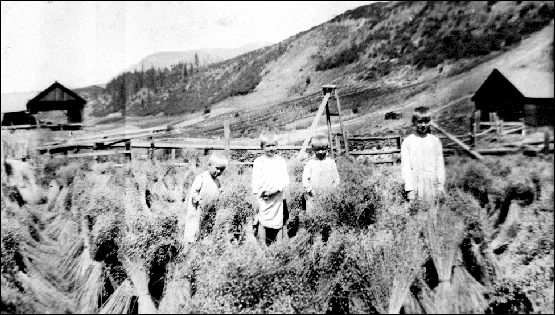
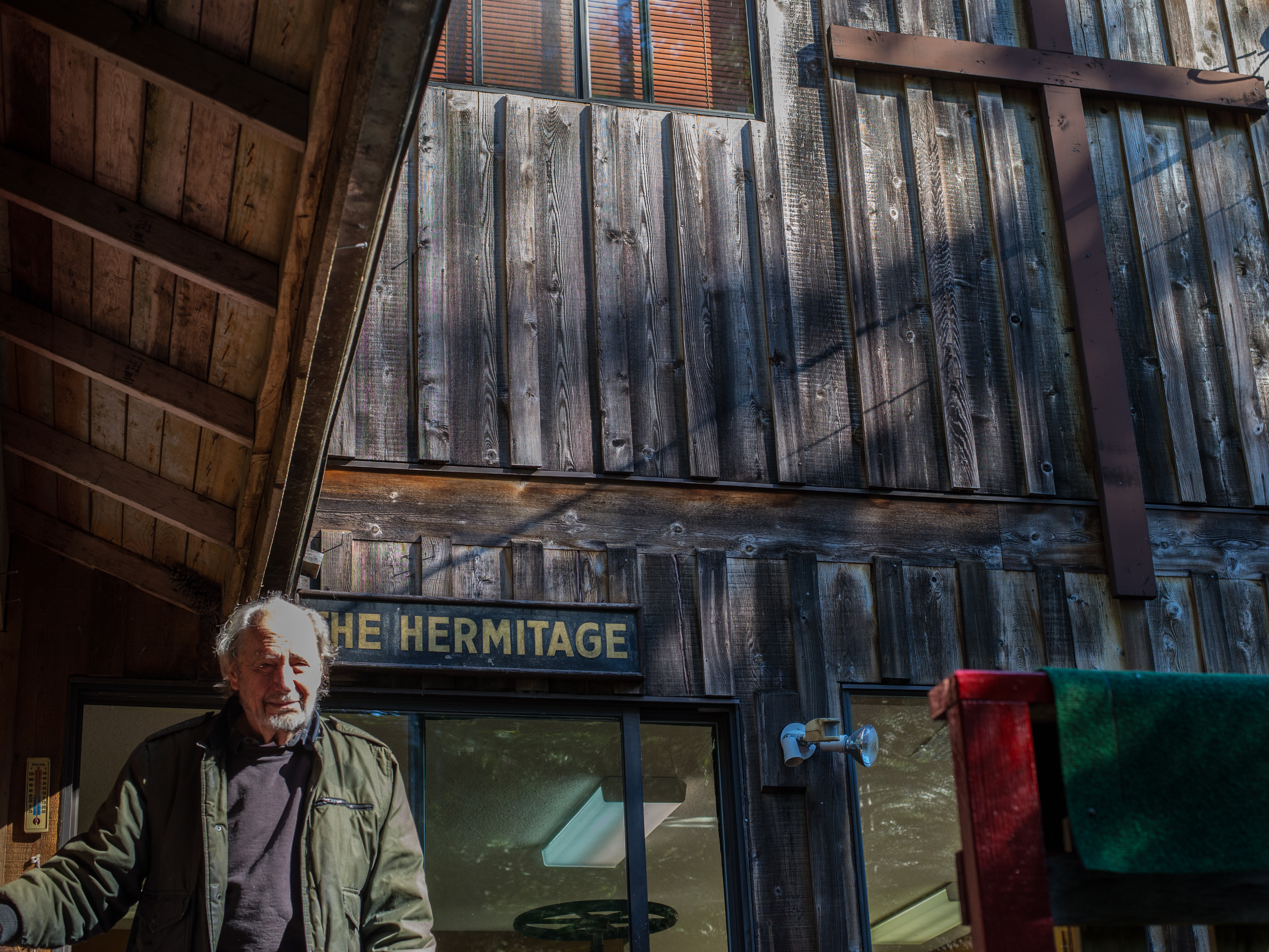


 I suppose it was appropriate to the theme that it was pouring rain as I approached the theatre. After the Oscar buzz of The Shape of Water, Mexican director Guillermo Del Toro’s new fantasy film, I had to brave the water and see it. It was gorgeously imagined, shot and performed, and nods to monster movies and romantic classics. The final scene, however, was something of a jolt to my eco-spiritual sensibilities.
 holyscapes