Desert Spirituality in the Rainforest: A Lenten Retreat


DSC_0722

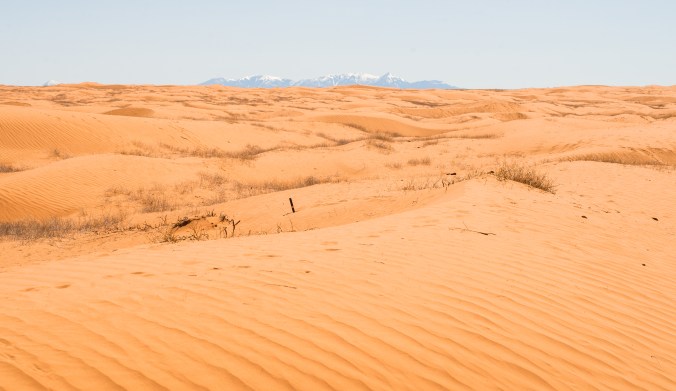
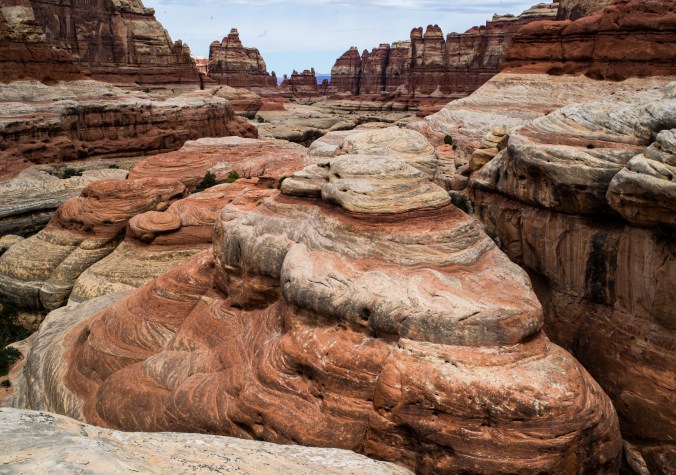
Lookout at Capitol Reef National Park in Utah

Introduction


On March 17, I led a short ‘Quiet Day’ at Saint James Anglican Church. Quiet Days are topical mini-retreats that include several sessions of silence and time to wander about Saint James’ church. Having just finished my PhD dissertation on Catholic monasticism, I was eager to do something along the lines of monastic spirituality. However, looking out my window into the grey drip of a January day, I decided I wanted to, at least in spirit, travel to the deserts of monasticism’s ancient past. This short post is a summary of the major points I covered over three sessions of the Quiet Day. I hope to eventually develop this into a longer multi-day retreat and/or book of essays. Enjoy!

The Call to the Desert

In world mythology and Jungian psychology, the desert can be imagined as an archetypal image of the call to adventure; of primordial chaos in need of ordering. An archetypal image is a symbol that is deeply ingrained in the human experience and shared among most or all human societies. They bubble up from our evolutionary past and occupy the collective consciousness. The tension between the desert and the garden; between chaos and order, are deeply ingrained in peoples who make claims to civilizations ancient and modern.

The desert was the foundation of the experience of the Hebrew people. The nation was later named Israel, which means ‘one who wrestles with God.’ From Adam and Eve’s expulsion from the Garden of Eden, the people of Israel were trying to get back to the garden. The prophets spoke of a promised paradise-garden if the people would simply keep Yahweh’s commandments. John the Baptist and Jesus of Nazareth himself spent long stretches of time alone in the desert.

It was perhaps this long history of engagement with the desert that allured the early hermits and monks, who we call the Desert Fathers and Mothers. They were the beginnings of the monastic tradition. They were drawn to the desert because of its theological past, and because it was apart from the Roman Empire yes, because also because the harsh, remote and silent ecology was a perfect container for contemplative prayer, and facing one’s demons. One fourth century Desert Father, Evagrius of Pontus, taught that the contemplative must overcome vice and sin in order to reach a state of Apatheia, literally without passion, and enter fully into union with God. Our cravings, desires and tendency to sin prevent us from being fully present to God’s already deep presence within.

In contemplative spirituality, Purgation is often referred to as the first phase of spiritual development toward union with God. The desert was the perfect purgative so to speak; as Saint Jerome writes, “the desert loves to strip bare.” This process can also be imagined through what Saint Paul calls Kenosis, or self-emptying. What areas of our lives are calling us to adventure? What chaos needs ordering? What passions, desires or sins are getting in the way of our union with God?

The Book of Creation

The second phase of spiritual development is often referred to as Illumination. As we begin to master our desires, sin and passions, we are filled with confidence, spiritual insight and light. It feels like we are making progress. In contemplative spirituality, we can speak of Cataphatic Prayer, or, prayer that claims to say something about God. Liturgical, intercessory and Ignatian prayers are examples. In addition to our liturgical prayers, which speak words about God, Christians believe that the world says something about God. We often feel comfortable with claiming that Bible is the word of God; however, throughout our history teachers have often spoken of the Book of Creation. Just as Christ is the Logos of God, the Word made flesh, creatures are words of God because they speak of God’s love, attributes and purposes.

Within Christian Spirituality, the desert is certainly a place of kenosis, trial and deprivation; but it is also a place of encounter and revelation. In Saint Athanasius’s Life of Saint Anthony, he writes of the Desert Father:

“A certain Philosopher asked Saint Anthony (of Egypt): Father, how can you be so happy when you are deprived of the consolation of books? Anthony replied: My book, O philosopher, is the nature of created things, and anytime I want to read the words of God, the book is before me.”

Saint Anthony was known for his austerity and severity. He was a powerful teacher and often reported violent encounters with demons. However, he also came to deeply love his desert hermitage. Once the desert hermit had reached a certain level of spiritual maturity, they began to abound in charity and compassion for their fellow beings. They were not just anti-social recluses. As one monk told me, the hermit is running toward God, not away from people. However, the desert hermits also developed a deep love for the desert. Thus while the hagiographies of the desert hermits are filled with tales of their heroic charity, radical hospitality and communal worship; they are also often described as building close friendships with animals, including large predators.

It is sometimes easy to abstract desert spirituality to the point that we are no longer in need of the desert itself. Certainly, the desert teaches us powerful lessons about stripping life down to its bare necessities, and Lent is a great time to reflect on this. However, let us not lose sight of the specifics of desert ecology that contribute to these valuable lessons.

The desert speaks of God in unique ways. However, within our canon of nature writing, it took settlers in North America many decades to come to love the desert in itself. It was also a domain of demons and devils, and this is evident from the many place names settlers gave places that referred to the Devil or demons, or evil. Certainly, for Indigenous peoples, these places were simply home, with all the malevolent and benevolent forces that belonged to their cosmologies. However, for Europeans settlers, who had inherited an agrarian template for interpreting the world, the desert was hostile and a threat to life. Of course, now we know that many of the world’s deserts are complex and biodiverse biomes. Even the Arctic and Antarctic deserts, the world’s largest deserts, harbor microorganisms that are able to survive their harsh domain. Here are a few lessons we can extract from the desert:

  • The desert comes to life at night.
  • Much of the action happens underground.
  • Stillness and quiet help us listen to God.
  • Adversity is sometimes the key to spiritual growth.
  • We have to stick together to survive.
  • We have to learn to rely on God.
  • The desert teaches humility.
  • The desert doesn’t care what we think.
  • The desert draws us out of our comfort zone.

To comment briefly on these, in researching this section, I stumbled across the Velvet Mesquite tree, a seemingly humble tree. However, in order to survive, it is able to put down roots that go some 50 meters deep. This is as deep as an 11-story building is tall! This gorgeous allegory reminded me of a quote from Jean Pierre Caussade’s book Abandonment to the Divine Providence:

“Do You not give fecundity to the root hidden underground, and can You not, if You so will, make this darkness in which You are pleased to keep me, fruitful? Live then little root of my heart, in the deep invisible heart of God; and by its power send forth branches, leaves, flowers and fruits, which, although invisible to yourself, are a pure joy and nourishment to others.”

Sometimes our most productive times come when all seems to be in dryness or darkness. What does the temperate rainforest say about God? How might we develop a more intimate relationship with the places and creatures in our bioregion?

The Garden in the Desert

The third phase of spiritual development is described as Union. To commune with God is not to cease to exist, but to come to a knowledge of our True Self, as Thomas Merton called it. The true self is the place deep inside where God is actively creating us at any given moment. It is the place the soul and God meet through the Holy Spirit. However, as we pick up speed in learning and feeling God’s presence, we should not turn these feelings into idols of their own. Union with God is, paradoxically, as much about unknowing as it is about knowing.

In Christian Spirituality, this phase is often associated with Apophatic Prayer, prayer that seeks to go beyond words, experience, and language, to rest in the being of God. This prayer seeks simply to rest in God. It as much about unknowing as Cataphatic Prayer is about knowing; both being important aspects of life and prayer and spiritual development, and neither necessarily better than the other, or antecedent one to the other.

Even in desert spirituality, if we head out into the desert in search of meaning or spiritual symbols, we run the risk of over-instrumentalizing the creatures and places we encounter. As theologian Belden Lane has written regarding land-based spirituality:

“The challenge is to honor the thing itself, as well as the thing as metaphor. When [Ralph Waldo] Emerson declared in 1836 that “every natural fact is a symbol of some spiritual fact,” he sent people racing to the woods, anticipating the voice of God in the call of every thrush. But too often they paid scant attention to the songbird in their anxiousness to hear some transcendent message. They returned home full of nothing but themselves, their pockets stuffed with metaphors. As the imagination reaches relentlessly for a timeless, interior soulscape, it is easy to sail over the specificity of particular landscapes. The tendency to ‘reach through’ every concrete detail of the environment—looking for God under every bush and twig, ‘injecting one’s dream into what is, simply there’–is to fall into [John] Ruskin’s pathetic fallacy, betraying the ‘true appearance of things’ under the influence of emotion” (The Solace of Fierce Landscapes, 17).

Even desert spirituality is in danger of treating the desert as an exploitable resource. However, with the rise of the Deep Ecology wing of the environmental movement, we have begun to talk about appreciating the intrinsic value of creation. This means that creation has meaning and value in itself, apart from its potential use or exchange value to human beings. This point is reiterated by Pope Francis in Laudato Si (2015) when he wrote:

“The universe unfolds in God, who fills it completely. Hence, there is a mystical meaning to be found in a leaf, in a mountain trail, in a dewdrop, in a poor person’s face. The ideal not only to pass from the exterior to the interior to discover the action God in the soul but also to discover God in all things” (#233).

The world is not simply a resource for human consumption, but an expression and creature of God. Thus, as we learn the names and lessons of the desert and its creatures and features, we must also take time to sink deeply into the present moment and the things themselves as they exist within God. This apophatic approach is difficult to grasp but resembles something similar to what we often imagine Zen Buddhism to value in silence and solitude. The world is not just a symbol pointing to an inner world of experience, but a node in an unfolding, dynamic, changing cosmos.

What the monks, adventurers and settlers often found in the desert was a flawed, chaotic, dangerous, deserted, hostile place. When we look in the mirror we are often faced with our sin, flaws, and brokenness. But once we decide to sit in the desert and let its subtle energies work on us, rather than immediately go about trying to transform it, the desert blossoms as a rose before our very eyes and we see the beauty that is already there. The same goes for the human soul. We are fallen creatures, and much of our anxiety comes from the ways we beat ourselves up for not being perfect. But what the desert teaches us is that it is through our brokenness that the light is able to enter. Once we learn to sit still, to listen to the deserts of our own lives, we will find there a beautiful garden, where Christ himself is the gardener. We must ask ourselves, what riches lay unacknowledged in the gardens of our own hearts?

Closing Prayer

A Prayer for our Earth

All-powerful God, you are present in the whole universe and in the smallest of your creatures.

You embrace with your tenderness all that exists.

Pour out upon us the power of your love, that we may protect life and beauty.

Fill us with peace, that we may live as brothers and sisters, harming no one.

O God of the poor, help us to rescue the abandoned and forgotten of this earth, so precious in your eyes.

Bring healing to our lives, that we may protect the world and not prey on it, that we may sow beauty, not pollution and destruction.

Touch the hearts of those who look only for gain at the expense of the poor and the earth.

Teach us to discover the worth of each thing, to be filled with awe and contemplation, to recognize that we are profoundly united with every creature as we journey towards your infinite light.

We thank you for being with us each day.

Encourage us, we pray, in our struggle for justice, love and peace.

Pope Francis, Laudato Si (2015)

Resources on Desert Spirituality

  • Edward Abbey, Desert Solitaire
  • Henry L. Carrigan, The Wisdom of the Desert Fathers and Mothers
  • Douglas Burton-Christie, The Word in the Desert
  • John Chryssavgis, In the Heart of the Desert: The Spirituality of the Desert Fathers and Mothers
  • David Jaspers, The Sacred Desert
  • Belden Lane, The Solace of Fierce Landscapes
  • Thomas Merton, The Wisdom of the Desert
  • Gregory Mayers, Listen to the Desert: Secrets of Spiritual Maturity from the Desert Fathers and Mothers
  • Henri J. M. Nouwen, The Way of the Heart: The Spirituality of the Desert Fathers and Mothers
  • Marc Reisner, Cadillac Desert: The American West and Its Disappearing Water

The Shape of Water as Anthropocene Fairytale

[SPOILERS]

The Shape of Water (film).pngI suppose it was appropriate to the theme that it was pouring rain as I approached the theatre. After the Oscar buzz of The Shape of Water, Mexican director Guillermo Del Toro’s new fantasy film, I had to brave the water and see it. It was gorgeously imagined, shot and performed, and nods to monster movies and romantic classics. The final scene, however, was something of a jolt to my eco-spiritual sensibilities.
The film revolves around a white woman named Eliza (Sally Hawkins), who is a winsome janitor at a top-secret Cold War era US military research facility that has just acquired a new “asset.” She is an orphan who has strange scars on her neck which apparently are the reason she cannot speak. Her friends Zelda (Octavia Spencer) and Giles (Richard Jenkins) are both outcasts in some way: Zelda is a black woman in a racially charged time in American history, and Giles is a gay man in a very straight world.

The “Asset” is an anthropomorphic, aqueous creature that can breathe air and underwater through a kind of dual respiratory system, which interests the scientists immensely. Their plan, rather than study the creature alive, is to vivisect it and learn what they can before the Russians get a hold of anything that could put them ahead. The creature is tortured and prodded by arch-villain Colonel Richard Strickland (Michael Shannon) who is the head of security.

Of course, as we soon realize, Strickland is the real monster of the film. On the surface, he embodies the supposed pinnacle of Western civilization during the Cold War: he has a beautiful, obedient wife, two children, a new Cadillac in the driveway, and is on the road to a promotion. None of this makes him happy of course, and he is myopically obsessed with power, with prestige, and with money. He is of course chronically insecure and has to have frequent pep talks with himself in the fluorescent mirrors of the men’s room.

Del Toro’s moral critique of American high modernism couldn’t be any clearer. At every turn, Strickland oozes stale white, male, modernist, Christian stereotypes. He is an effectively hate-able villain, but also a completely predictable, one-dimensional one that merits no sympathy whatsoever. Anthropocentric, greedy Western culture captures and destroys innocent and beautiful nature in a dark sterile industrial looking lab. The subtext is clear: Nature, embodied by the extracted Amazonian amphibious creature who is “worshipped” by the Indigenous peoples of his home place is valuable only as a dissected object. Echoing the classically masculine scientistic view of the world that Carolyn Merchant outlines in the Death of Nature, Strickland will do whatever it takes to subdue and exploit the Asset.

Enter Eliza. The whimsical Amalie-esque janitor is assigned to clean up the lab after the creature is tortured. She inexplicably connects with him and begins a secret romance. She brings him eggs, plays music for him and teaches him sign language. They fall in love. At one point the man-creature is being tortured and prodded by Strickland and manages to bite off two of his fingers. Eliza finds them on the floor as she is cleaning up the blood. They are surgically reattached, but they do not take, and by the end of the film are black and rotten (like his soul?). When Eliza finally gets wind that the lab has decided to kill the Asset because he is too dangerous, she decides to break him out with the reluctant help of her friends and a Russian spy on the inside at the lab.

Fast forward to the final scene: Strickland finds out that Eliza’s friend Zelda knows something about the location of the man-creature and is determined to get it back. He has her pinned to the wall and to intimidate her, he rips off his blackened fingers and throws them on the floor, much to her disgust. This act of sadism compels Zelda’s husband to blurt out Eliza’s name, which he had overheard Zelda talking about the creature with. When Strickland finally finds Eliza, Giles and the man-creature at the docks, Strickland knocks Giles out and then shoots Eliza and the man-creature, who crumpled to the ground. However, as alluded to earlier in the film, the creature has a kind of bioluminescent healing power, he rouses and resurrects. The creature staggers to his feet, places his hands over his bullet wounds, heals himself, and walks toward Strickland who is attempting to reload his pistol. Strickland marvels at the creatures abilities and says, “You are a god.”

At this point in my mystical naïveté, I will be honest, I actually I expected the creature to heal Strickland’s hand, which would soften Strickland’s cold black heart, and the beauty and transformative power of nature revealed. However, as soon as Strickland says “you are a god,” the creature, without thought or much effort slices Strickland’s throat from one end to the other with his sharp claws, and he falls to the ground, himself unable to speak in his final moments. My mouth actually fell open in surprise. There was no harmonious ending for Strickland’s long history of abuse.

The earth is being abused by a relentless industrial culture. The Shape of Water, a kind of Fairytale for the Anthropocene, shows just how indifferent the earth may be to our hubris and attempts at control and power. Many are hoping for a soft landing from our consumer culture. Many are rallying for a ‘good’ Anthropocene. Many see a path of penance and repentance for humanity. In my own eco-theological hope I wanted nature to overwhelm Strickland with grace and healing. To show that the earth is resilient to our abuse and that there is a future for humanity if we would just repent and change our relationship with the earth and her creatures. However, Del Toro’s brutal ending teaches an important lesson, one that is sometimes difficult for me to hear: the earth can only be pushed so far before (s)he pushes back.

A Season for Kenosis


_DSC1119

A Night for All Souls, Mountainview Cemetery

Since becoming Catholic, my love for the real meaning of Christmas has only grown. This year, I decided to do something extra in preparation for the Season of Advent, the season of ‘Holy Waiting’ in anticipation of the Incarnation.


Every year, Mountain View Cemetery holds A Night for All Souls, a public event and art installation that corresponds to the Christian Holy-day of All Saints and Souls Days, and the ancient Pagan Holy-day of Samhain (pronounced Saw-win). For the past couple years, I have really enjoyed this time of year. With the land turning from summer to winter and having lost several family members and friends, it was a good time to reflect on transitions; on life and death.

I wanted to do something to connect this time of year to my anticipation of Advent. I have heard of celebrating the Celtic Advent, which begins around mid-November. But it occurred to me that as we prepare to receive the Incarnation into the world, meditating on transition, on death, on our blessed dead was the perfect time to deepen our understanding of the mysterious idea of Kenosis.

Kenosis is Greek and literally means self-emptying. Paul uses this curious phrase in Philippians chapter 2, where he says:

In your relationships with one another, have the same mindset as Christ Jesus:

Who, being in very nature God,
    did not consider equality with God something to be used to his own advantage;
rather, he made himself nothing
    by taking the very nature of a servant,
    being made in human likeness.
And being found in appearance as a man,
    he humbled himself
    by becoming obedient to death—
        even death on a cross! (NIV) 

God emptied himself of divinity to take on humanity, so that we could, in turn, enter into the divine presence.

This idea has cosmological implications. One of the monks that I interviewed for my PhD had this to say:

God reached into the far end of the universe, like grabbing the back end of a balloon and pulled it back the other direction. He’s made himself present by becoming part of the created order precisely so he can pull the entire created order back up into himself. Christ is the head of everything, and everything is present in him. Everything finds its expression before God in Christ. So when I’m encountering the beauty of a flower…any part of creation…I’m encountering some part of Christ, some radiance of Christ.

Christ’s full divinity and full humanity mean that the cosmos is not a static creation, but an ongoing event that is moving toward God. Teachers like Teilhard de Chardin and his contemporary interpreter Ilia Delio, see this as corroborating scientific discoveries of the 20th and 21st centuries that see the universe, not as a static space, but an unfolding drama, wherein human beings play an integral role with the rest of creation.

Kenosis also takes on an ethical dimension in Christianity. Not only did God empty himself of Godself to become human, but the way back to God on the Christian path is to mimic this self-emptying through the cultivation of agape, or love.

In Simone Weil’s (1909-1943) Gravity and Grace she writes:

It is God who in love withdraws from us so that we can love him. For if we were exposed to the direct radiance of his love, without the protection of space, of time and of matter, we should be evaporated like water in the sun; there would not be enough ‘I’ in us to make it possible to surrender the ‘I’ for love’s sake. Necessity is the screen set between God and us so that we can be. It is for us to pierce through the screen so that we can cease to be.

To cease to be often comes across as a kind of Eastern annihilationism. However, in Christianity, to empty ourselves is really to strip down the layers of prejudice, pretence, greed, selfishness and hate that plague us as human beings and discover what Thomas Merton calls the ‘True Self’ which lies at the core of our being. Weil goes on to write:

May God grant me to become nothing. In so far as I become nothing, God loves himself through me.

To empty the self is to dig down to the source of the living waters that bubble up at the core of our being, where God is continually present to us and in fact creating us at each moment. If you are like me, there is still a long way to get there. But no amount of work on my part will get me all the way there. So long as I am looking, waiting, watching for God, She tends to bubble up and surface in unexpected and grace-filled ways.

This is why Kenosis is such an important Christian practice, and perhaps why this is a good season to engage it more deeply. As we enter the season of Holy Longing (Eros), we await the refreshing fulfilment of the Incarnation. Once we have emptied ourselves of the clutter of self-regard and sin, we are more prepared to be filled with the pure love of Christ (Agape). This dance between Eros and Agape is a productive tension in Christianity, and it seems like the perfect time of the liturgical calendar to engage it most playfully. Longing and fulfilment, emptiness and fullness, eros and agape tug at each other. Christianity is a religion that seeks to find itself by giving up the self, a religion that worships one God in three persons. Or, as Mother Clare Morgan writes, “Christianity is about paradox. Our greatest wealth is our poverty. Our greatest strength is our vulnerability. Our greatest armor is the wound in our side.”

Liturgy as Ecology

FullSizeRender

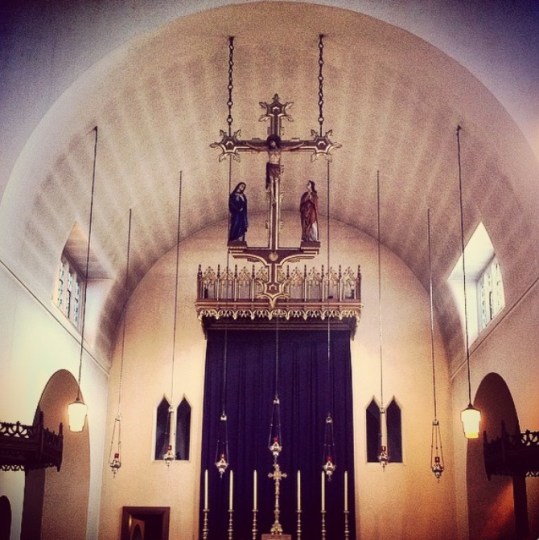
Saint James Anglican Church

I attend a High Mass Anglo-Catholic Parish in Vancouver called Saint James. There are sometimes 12 people in the Chancel at a time, attending to the consecration of the Eucharist, swarming in dervish like semi-circles around the eastward facing priest. Priests, deacons, sub-deacons, acolytes, thurifer, torch bearers and crucifer. No single one of us, even the priest makes the dance complete. We are each an integral part of the liturgical ecology.

This is of course not a food chain, but food is involved. Our oikos is the altar,  the place where we bring the fruits of the land, the work of human hands, and  ourselves, and to turn it, ever so slowly, into God. As an ecosystem transfers energy from up the trophic hierarchy from simple to complex organisms, so we during the liturgy, move the desires of our hearts into God’s desires; a little more each day.

It is true, that if we stay on the surface, the liturgy can be boring and repetitive. But just under the surface, the intricate dance that turns bread and wine into the body and blood of Christ on the altar, is an icon for the everyday intricacy that turns our food into our bodies; bodies that make up the mystical body of Christ.

The Gardener

Slide1
In today’s Gospel reading from John 20:12-15 we read:

“But Mary stayed outside the tomb weeping. And as she wept, she bent over into the tomb and saw two angels in white sitting there, one at the head and one at the feet where the body of Jesus had been. And they said to her, “Woman, why are you weeping?” She said to them, “They have taken my Lord, and I don’t know where they laid him.” When she had said this, she turned around and saw Jesus there, but did not know it was Jesus. Jesus said to her, “Woman, why are you weeping? Whom are you looking for?” She thought it was the gardener and said to him, “Sir, if you carried him away, tell me where you laid him, and I will take him.”

We all know what happens next. This familiar Easter narrative has both delighted and puzzled Christians over the centuries. Mary Magdalene, a woman, was the first to see the resurrected Jesus. She was the Apostle to the Apostles, the first member of the Christian Church. We have often wondered, however, why it was that she did not immediately recognize Jesus.

One Jewish legend of the time, attempting to discredit the story of the resurrection, speaks of a man named Judas, who was worried that Jesus’s disciples would trample his cabbages when they came to visit his tomb. So, he relocated Jesus to another tomb, and the myth of the resurrection began. It is said by Biblical scholar Rudolf Schnackenberg, that perhaps this story is the reason John’s Gospel refers to Jesus as a gardener in the first place.

Other commentators have of course pointed to Mary’s grief, or even her focus on the worldly body of Jesus as reasons why she did not at first see her Teacher. Or, perhaps the author of the Gospel was playing with the familiar ancient trope of the disguised returning hero (See Homer’s Odyssey).

I would like to suggest a much simpler possibility. Perhaps Mary mistook Jesus for a gardener, because he was gardening. The scripture says that Mary turns around and sees Jesus there, it does not say that Jesus was facing her. Perhaps she noticed his presence, but his face was obscured because he was hunched over, hands in the dirt, taking in the smells of the earth on the early morning after he had suffered so much, and been miraculously returned to life.

The dialogue that ensues between Mary and Jesus could have taken place at a short distance, as Jesus playfully repeats the words of the angels, “why are you crying?” and Mary hopelessly asks if perhaps he knows where her Teacher has been laid. Perhaps he then got up from his task, and put his hand on Mary’s shuddering shoulder and spoke more directly: “Mary!” And when she looked up, only then did she recognize the face of the man she had come to love and respect so much.

Now, of course this is speculation, but I feel like this reading enriches many of the existing elements of symbolism in salvation history. As many commentators have pointed out from the earliest days of the church, including Paul, whereas Adam brings sin and death into the world through disobedience in the Garden of Eden, it is Christ, who in the Garden of Gethsemane and then the garden of the tomb points to the final Garden of the Resurrection. The Garden of Eden begins the salvation narrative, and the garden tomb finishes it. Jesus is the new Adam, as Mary is the new Eve. Christ suffered in a garden. He rises in a garden. As the second Adam, he is the “Greater Gardener.”

Sometimes we imagine the resurrected Jesus as a white-clad, angel like man. But the accounts of the resurrection, often portray him in day-to-day scenes. He appears to Apostles in a small room, and eats with them; He appears to two men walking along the road, and again eats with them; He sits by the Lake of Galilee and cooks breakfast over a fire. I am reminded of the familiar Zen Koan, “Before enlightenment, chop wood, carry water. After enlightenment, chop wood, carry water.” Before the resurrection, fully human and fully divine, after the resurrection, fully human and fully divine.

We will never know for certain of course, but there is nothing that convicts me of the both the reality and naturalness of the resurrection more than watching the cycles of birth, life, death, decay and rebirth that happen each year in the garden that we call earth.

References

Schnackenberg, Rudolf. The Gospel According to St. John: Volume III. Crossroad, 1990.

Lost in Lent

5-Moss on sleeping oak
About a week before Lent began, I took a retreat to a Benedictine monastery in central Washington. Unlike several of the other monasteries I have visited, this particular monastery was located in a more suburban setting, and, founded as a small college, the monastery is now a bustling university.

I went hoping for some silence, writing time and immersion in the familiar rhythms of the monastic liturgy. When I arrived, however, the first thing I noticed when I got out of the car, was how loud it was. I could hear I-5 rushing and hushing in the background. In addition, the liturgy was not chanted but spoken, which made it feel less vibrant, and the space of the chapel was one of those ill conceived modernist boxes. Nonetheless, the monks were kind, and I enjoyed talking with them, and learning about the monastery’s history.

The monastery started with close to 600 acres, but now retained only about 350, most of which was devoted to the campus and student housing. They had a small farm operation in the 1930s-1950s but it ended by the 1960s. Even with a smaller footprint, the monastery had taken good care of the remaining second or third growth forests, which had a number of walking trails. And even with the white noise of the freeway in the background, I enjoyed walking them.

Despite the loveliness of the forest, I ended up having a difficult time writing, felt restless during the spoken Divine Office, and everywhere I went, the freeway was audible. I ended up leaving early, so I could get home and regroup.

On the way, feeling the weight of dissertation anxiety and something of the distance that opens between us and the Divine at times, I decided to go for a hike at my favorite protected area in Bellingham, Washington, Stimpson Family Nature Preserve. It was late in the afternoon, and a friend and I headed around the wet, still snowy in places, trail.

It is one of the few older growth forests in the area, and I often feel God’s presence there as I breathe the clean cool air, and marvel at the riot of colors. But this time, riding the wave of restlessness from my retreat, I felt a very strong sense of God’s absence. It hit me like a wave, a sudden pang of nihilistic agnosticism, and the darkening forest, still silent and deadened to winter, felt cold, indifferent and lifeless.

For several days after this, I pondered the dark mood that had descended. I stopped praying, and considered skipping Church for a few weeks. My usual excitement for Lent turned into a smoldering dread.

I recently decided to join an Anglo-Catholic Parish in Vancouver because of its wonderful liturgy, and I had signed up to be part of the altar party as a torch bearer on Ash Wednesday. So, despite the darkness that had descended onto my spiritual life, I decided to go.

At first I felt sad, and distant, but as the liturgy proceeded, my attention sharpened, and I began to feel lighter. During the consecration of the Eucharist, which like Traditionalist Catholic Mass is said with the Priest facing the altar, as torch bearer, I knelt with the candle behind the priest. As the bells rang and the priest lifted the bread and then the wine, a subtle shift occurred in my chest. The utter strangeness and beauty of the liturgy penetrated my dark mood, and lifted me back into a place of openness and receptivity. It was nothing profound, or revelatory, but a perceptible change. I was again, ready to enter into simplicity and silence of Lent, in anticipation of Easter.

Reflecting on this ‘Dark Night of the Soul’, I began to understand the gift that God’s absence can sometimes be. I remembered the scene in 1 Kings 19, where Elijah is called out of his hiding place in a cave by God:

Then a great and powerful wind tore the mountains apart and shattered the rocks before the Lord, but the Lord was not in the wind. After the wind there was an earthquake, but the Lord was not in the earthquake. After the earthquake came a fire, but the Lord was not in the fire. And after the fire came a gentle whisper. When Elijah heard it, he pulled his cloak over his face and went out and stood at the mouth of the cave.” (NIV) 

Of course God is present to all things, but She cannot be confined to any one of the elements. Having experienced God’s presence so deeply in forests over the years, it was alarming to feel such a sense of despair, and emptiness. But it is true, just as the forest is a place of beauty and life; it is also a place of suffering and death. If God were wholly present to the forest, there would be no distance to cross between us.

As Pope Francis writes in Laudato Si:

“Our relationship with the environment can never be isolated from our relationship with others and with God. Otherwise, it would be nothing more than romantic individualism dressed up in ecological garb, locking us into a stifling immanence” (Laudato Si, 119).

I am most certainly guilty of romanticism, but this phrase, “stifling immanence” keeps coming back to me. God is everywhere present, and hold all things in existence at each moment. But there remains an infinite gap between us.

As I deepen my Lenten journey with prayer, fasting and silence, I am grateful for this lesson, and it has served as rich food in the Desert of Lent this year.

DSC_0858

The Tower of Silence

The Prophet Zoroaster

The Prophet Zoroaster. Source: Wikipedia

I recently did an interview with three Zoroastrians who live here in Vancouver. As I was preparing for the interview, I learned the fascinating history of the death rituals practiced by ancient and some modern Zoroastrian communities.

Briefly, Zoroastrians are followers of the teachings of the prophet Zarathustra, or Zoroaster in Greek, who is thought to have lived some time between 1,500 and 650 BCE. They are probably the first monotheistic religions with a great reverence for the elements, especially fire, which is a kind of incarnation of wisdom.

However, because of a dualistic cosmology, with the forces of good and evil forever at odds, dead bodies are believed to be quickly tainted by evil spirits. Because the elements are holy, death must be dealt with in such a way that the elements are not tainted by the corpse. This means no burial, no cremation, or setting out to sea. Traditionally then, Zoroastrians have conducted what is often referred to as ‘sky burial.’ The corpse is taken to a place called a Tower of Silence, where carrion eaters such as vultures devour the corpse. The technical term for this is excarnation, and it is also practiced by certain sects of Tibetan Buddhism, and in Mongolia, Bhutan, and Nepal.

Mumbai Tower of Silence Entrance Source: Wikipedia

Mumbai Tower of Silence Entrance
Source: Wikipedia

One particular case that drew my attention, was the Zoroastrian community in Mumbai, whose Tower of Silence called the Doongerwadi, is surrounded by 54 acres of unmanaged forest, creating a small oasis. The Tower was built in the late 1600s, but is located in what is now an upper middle class neighborhood.

However, in the 1990s, the vulture population, which traditionally devoured the corpses in short order, collapsed due to the use of a drug administered to cattle, which was then ingested by the birds who had eaten the remains of treated cows. In some places, the vulture population was decreased by 99%.

This decrease in the vulture population, has meant that there are not enough birds to properly decompose the corpses of Mumbai’s Zoroastrian community, and there are worries about the public health implications of half decomposed corpses sitting around, even with the forest buffer.

In response, Zoroastrian activists have begun experimenting. There is a vulture breeding program in the works that is having some success, but others have began experimenting with solar concentrators which direct the suns heat onto the decomposing corpses which dries them out and speeds up decomposition time.

Sources

https://www.theguardian.com/cities/2015/jan/26/death-city-lack-vultures-threatens-mumbai-towers-of-silence

http://news.bbc.co.uk/2/hi/south_asia/1443789.stm

Homily: Living Symbols

[Homily delivered Feb. 26, 2017 to Saint Margaret Cedar-Cottage Anglican Church.]

img_6588

At 4:13 AM I stumbled in the pale darkness to my choir stall. When I finally looked up through the west facing window of the chapel at Our Lady of Guadalupe Abbey in northwestern Oregon, a glowing full moon was setting through a light haze. The monks began to chant the early morning Divine Office of Vigils, a ritual that unfolds day after day, month after month, and year after year in monasteries all over the world.

This month-long immersive retreat in 2014, inspired the questions that would become my PhD dissertation research, which I completed over a six month period in 2015 and 2016. I am now in writing the dissertation, and should be done in the next 2, 3, 4 or 5 months. I wanted to better understand the relationship between the 1,500 year old monastic tradition, contemporary environmental discourses and the land. And I wanted to better describe for the emerging Spiritual Ecology literature the ways that theological ideas and spiritual symbols populate monastic spirituality of place and creation.

Exodus 24:12-18

In the readings this morning, we are gifted several land-based symbols. God says to Moses in Exodus: “Come up to me on the mountain.” Liberated from Egypt, God is now eager to build a relationship with his people and Moses’s ascent of Mount Sinai to receive the Law mirrors our own spiritual journeys. A thick cloud covered the mountain for six days before Moses was finally called into God’s presence, like so much of my own spiritual life, lived in darkness, with small rays of light.

Matthew 17:1-19

In the Gospel reading, Jesus too ascends a “high mountain.” There, his disciples witness one of the most perplexing scenes in the New Testament: The Transfiguration. Jesus’s face and garments shone like the sun. And then, certainly conscious of the Hebrew text, the writer says that a bright cloud overshadowed them and they heard a voice say: “This is my Son, the Beloved; with him I am well pleased; listen to him!” Christ, who was fully human and fully God, was revealing in his very person to Peter, James and John his fulfillment of the Law and the Prophets. And presence of the symbols of mountain and cloud were bound up in the authenticity of Jesus’s claims to messianic authority.

2 Peter 1:16-21

Even though it’s not clear that the Apostle Peter is the author of our second reading, the message is clear: “For we did not follow cleverly devised myths when we made known to you the power and coming of our Lord Jesus Christ, but we had been eyewitnesses of his majesty.” Reading Exodus and Matthew, it might feel simple to slip into an easy allegorical hermeneutic, to see everything as a symbol; but the writer of 2 Peter is clear: Stop trying to turn everything into a myth! This reminds me of the quote from Catholic writer Flannery O’Conner who said of the Real Presence in the Eucharist, “If it’s just a symbol, to hell with it.”

img_6579With these texts in mind, especially questions of religious symbols and religious realities, I want to talk a little bit about my research with monastic communities, and then return to these texts at the end. Monasticism, like Christianity as a whole is steeped in symbols. For example, the Abbas and Ammas of the early monastic tradition experienced the desert as a symbol of purification and sanctification. Saint Anthony fled to the desert to live a life of solitude, spiritual warfare and strict asceticism. The silence and nakedness of the desert landscape was as it were a habitat for the silence and simplicity that led the Desert Fathers and Mothers through the wilderness of their own sin to the simplicity of God’s presence. As Saint Jerome wrote, “The desert loves to strip bare.”
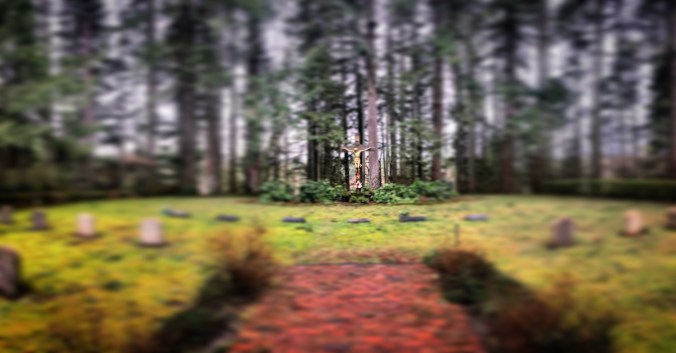
The motifs of the Desert-wilderness and the Paradise-garden are like two poles in Biblical land-based motifs. Pulling the people of Israel between them. Adam and Eve were created in a garden, but driven to the wilderness. The people of Israel were enslaved in the lush Nile Delta, but liberated into a harsh desert. The prophets promised the return of the garden if Israel would flee the wilderness of their idolatry. Christ suffered and resurrected in a garden after spending 40 days in the wilderness. The cloister garden at the center of the medieval monastery embodied also this eschatological liminality between earth and heaven, wilderness and garden.

Mountains too were and continue to be powerful symbols of the spiritual life. From Mount Sinai to Mount Tabor, John of the Cross and the writer of the Cloud of Unknowing, each drawing on the metaphors of ascent and obscurity.

But do you need a desert to practice desert spirituality?

Do you need the fecundity of a spring time garden to understand the resurrection?

I would argue that we do.

For my PhD research, I conducted 50 interviews, some seated and some walking, with monks at four monasteries in the American West. My first stop was to New Camaldoli Hermitage in Big Sur, California. The community was established in 1958 by monks from Italy. The Hermitage is located on 880 acres in the Ventana Wilderness of the Santa Lucia Mountains. Coastal Live Oak dominate the erosive, fire adapted chaparral ecology, and the narrow steep canyons shelter the southernmost reaches of Coastal Redwood. The monks make their living by hosting retreatants and run a small fruitcake and granola business.

The second monastery I visited was New Clairvaux Trappist Abbey, which is located on 600 acres of prime farmland in California’s Central Valley and was founded in 1955. It is located in orchard country, and they grow walnuts and prunes, and recently started a vineyard. They are flanked on one side by Deer Creek, and enjoy a lush tree covered cloister that is shared with flocks of turkey vultures and wild turkeys that are more abundant than the monks themselves. They recently restored a 12th century Cistercian Chapter house as part of an attempt to draw more pilgrims to the site.

Thirdly, I stayed at Our Lady of Guadalupe Trappist Abbey, which was also founded in 1955, in the foothills of the Coastal Range in Western Oregon. When they arrived, they found that the previous owner had clear cut the property and run. They replanted, and today the 1,300 acre property is covered by Douglas fir forests, mostly planted by the monks. Though they began as grain and sheep farmers, today the monastery makes its living through a wine storage warehouse, a bookbindery, a fruitcake business, and a sustainable forestry operation.

For my last stop, I headed to the high pinyon-juniper deserts of New Mexico. At the end of a 13 mile muddy dirt road, surrounded by the Chama River Wilderness, an adobe chapel stands in humble relief against steep painted cliffs. Founded in 1964, Christ in the Desert Abbey is the fastest growing in the Order, with over 40 monks in various stages of formation. The monks primarily live from their bookstore and hospitality, but also grow commercial hops which they sell to homebrewers.

In my interviews, the monastic values of Silence, Solitude and Beauty were consistently described as being upheld and populated by the land. The land was not just a setting for a way of life, but elements which participated in the spiritual practices of contemplative life. To use a monastic term, the land incarnates, gives flesh, to their prayer life.

Thus, the monks live in a world that is steeped in religious symbols through their daily practice of lectio divina, and the chanting of the Psalms. As one monk of Christ in the Desert put it:

“Any monk who has spent his life chanting the Divine Office cannot have any experience and not have it reflect, or give utterance in the Psalmody. The psalmody is a great template to place on the world for understanding it, and its language becomes your own.”

In this mode, the land becomes rich with symbol: a tree growing out of a rock teaches perseverance, a distant train whistle reminds one to pray, a little flower recalls Saint Therese of Lisieux, a swaying Douglas fir tree points to the wood of the cross, a gash in a tree symbolizes Christ’s wounds. In each case, the elements of the land act as symbol within a system of religious symbology. One monk of Christ in the Desert, who wore a cowboy hat most of the time related:

“When the moon rises over that mesa and you see this glowing light halo. It echoes what I read in the Psalms. In the Jewish tradition the Passover takes place at the full moon, their agricultural feasts are linked to the lunar calendar. When they sing their praises, ‘like the sunlight on the top of the temple,’ ‘like the moon at the Passover Feast.’ ‘Like the rising of incense at evening prayer.’ They’re all describing unbelievable beauty. I look up and I’m like that’s what they were talking about.”

The land populates familiar Psalms, scriptures and stories with its elements and thus enriches the monastic experience of both text and land.

Theologically speaking, God’s presence in the land is a kind of real presence that does not just point to, but participates in God. This gives an embodied or in their words, incarnational, quality to their experience of the land. As another example, one monk went for a long walk on a spring day, but a sudden snow storm picked up and he almost lost his way. He related that from then on Psalm 111 that states “Fear of the Lord is the beginning of wisdom” took on a whole new meaning.

In addition, the monks often spoke of their experiences on the land in terms of flashes of insight, or moments of clarity that transcended any specific location or symbolic meaning. One monk called these experiences “charged moments” where a tree or vista one sees frequently, suddenly awakens to God’s presence.

The monks at each community, in their own ways, have sunken deep roots into the lands they live on and care for. Each, in the Benedictine tradition, strive to be “Lovers of the place” as the Trappist adage goes. When I asked one monk if this meant that the landscape was sacred, he paused and said, “I would only say that it is loved.”

I am arguing in my dissertation that monastic perception of landscape can be characterized as what an embodied semiotics. By this I simply mean that symbols and embodied experience reinforce each other in the landscape, and without embodied experience symbols are in danger of losing their meaning.

The motifs of desert and wilderness, the symbols of water, cloud, mountain, doves, bread and wine, the agricultural allegories of Jesus, and the garden, are in this reading, reinforced by consistent contact with these elements and activities in real life.

On the last Sunday before Lent, as we move into the pinnacle of the Christian calendar, it is no coincidence that the resurrection of the body of Jesus is celebrated during the resurrection of the body of the earth. But does this mean that Jesus’s resurrection can be read as just a symbol, an archetype, a metaphor for the undefeated message of Jesus? Certainly Peter and the other Apostles would say no. They did not give up their own lives as martyrs for a metaphor.

For a long time I struggled with believing in the resurrection as a historical reality. But when I began to realize the connection between the land and the paschal mystery, it was the symbols in the land itself that drew me to the possibility of Christ’s resurrection. And that in turn reinforced my ability to see Christ in the entire cosmic reality of death and rebirth active and continual in every part of the universe.

As Peter warns his readers: “You will do well to be attentive to this as to a lamp shining in a dark place, until the day dawns and the morning star rises in your hearts.” For how can we truly believe in the return of the Beloved Son, if we have never been up early enough to see the return of the star we call sun?

img_6568

Sacred Groves

img_6302

Prelude

Imagine the most common of trees, the Christmas (or Solstice) tree, decorated with globes, lights and a star on top. Allow that tree to grow in your mind so that it fills the sky.

The bright star at the very top of the tree merges with the North Star, Polaris.

Now imagine that the gold and silver globes become the sun, the phases of the moon, and the other planets moving through the sky, appearing to pivot around the North Star.

Imagine that the twinkling lights are billions and billions of stars.

The Christmas tree is a microcosm of the macrocosm.

The Norse pagans placed the ash tree at the center of their cosmology.

Its sprawling roots descended into the underworld; its trunk and branches passed through the mortal realm, ascending to heavenly.

The Maya imaged the cosmos as a great Ceiba tree, which also descended to the underworld and ascended through thirteen levels of heaven, each level with its own god.

The sun and moon made their way along the Ceiba’s trunk, and the spirits of the dead moved along its rough bark.

The naturalist and pantheist John Muir used to climb to the top of large pine trees during rain storms. About trees and the universe he mused:

We all travel the Milky Way together, trees and [humans]; but it never occurred to me until th[at] stormy day, while swinging in the wind, that trees are travelers, in the ordinary sense. They make many journeys, not extensive ones, it is true; but our own little journeys, away and back again, are only little more than tree-wavings—many of them not so much.

The Tree of Life

In the beginning, the tree of life emerged as a tiny seedling.

Soon, it branched out into everything we call living: microbes, fungi, plants, trees, animals.

The seeds of humans germinated in the trees.

Our mammalian and primate ancestors made their homes in their bows.

Eventually, our curiosity compelled us down from the safety of their branches and out onto the savanna.

Yet, the trees never left us;

They continued to provision us with gifts on our long walks.

They gave food, fodder, shelter, tools, medicine and stories.

They appeared in our dreams.

It was here, in a forest, that Zoroaster in Persia saw the Saena Tree in a vision emerging from the primeval sea, a tree from whose seeds all other plants would grow.

It was here that Yahweh, Semitic sky god, came to earth and planted a garden of trees, pleasing to the eye and good for food.

It was here that Inanna, Babylonian goddess of beauty and love, nourished the Huluppu tree on the banks of the Euphrates River.

It was here that Kaang, creator god of the Batswana Bushmen, created the first mighty tree and led the first animals and people out from the underworld through its roots and branches.

It was here that the sacred tree gave light to the Iroquois’s island in the sky—before the sun was made, before Sky Woman fell through a hole in the island in the sky, and before the earth was formed on the back of a great turtle.

It was here that the Mayan Tree of Life lifted the sky out from the primordial sea, surrounded by four more trees that hold the sky in place and mark the cardinal directions.

First Visions

It was here, in a forest, that the first whispers of the divine spoke to human consciousness.

It was here that Jacob wrestled with angels and beheld visions.

It was here that Hindu seekers learned the wisdom of gurus.

It was here, seated beneath the Bodhi tree, that Siddhartha Gautama became the Buddha.

It was here that Moses fasted, prayed, and received God’s Law.

It was here that Muhammad sought refuge in mountain caves and spoke the words of the holy Koran.

It was here that Guru Nanak experienced the Oneness of God.

It was here that Nephi of the Book of Mormon communed with angels and beheld the glorious fruit of the Tree of Life.

First Temples

It was here, in a forest, that we built our first temples and worshipped God without priesthoods.

It was here that Asherah, Canaanite goddess of all living things, was worshipped.

It was here, as Sycamore fig, that Isis of Egypt was lavished praise.

It was here, in grove of sacred oak, that the Druids passed on their knowledge, and sacrificed human flesh to the gods.

It was also here, in the forest, that, after civilization blossomed, we looked for inspiration—

Temples of stone with their pillars, columns, and cathedral arches were all made to resemble the trunks of trees, carrying the eye upward to God.

And yet, it would seem that these temples of stone confined God to one place, one people, one faith.

Fall

It was here that we fell from grace.

It was here that Adam and Eve ate the fruit of a misunderstood tree.

It was here that civilization bloomed.

It was here that we logged, burned, mined, clear-cut, developed.

It was here that the old stories were forgotten and new ones were written;

Stories in which creation was no longer sacred, enchanted, animate, subjective.

Return

In an age of climate chaos and heart breaking extinction, it is here, to the forest, that we must return.

Not only as skiers, hikers, campers, birders, hunters, and foresters, but as devotees.

Because it is here that we see the universe in microcosm, where we get our bearings.

It is here that creation awes.

It is here that we experience the divine.

It is here that we can bring our questions.

It is here that we can dwell in mystical solitude.

It is here that we are now—The global forest.

Call

To return to the forest, we must become familiar with it.

I invite you to go to a mountain grove or a city park and take off your shoes.

When you are comfortable and alone, close your eyes.

Begin by focusing on feeling—as a tree might—the sun, the wind, the earth beneath your toes and on your skin.

If you wish, stretch your arms up and out like branches seeking the light.

Imagine drinking in the caramel rays of the sun as nourishment.

Focus on your breath by letting the air pass through your nostrils and fill the arboreal-patterned branches in your lungs.

Feel your lungs slowly fill with oxygen.

Feel them slowly empty as your body expels carbon dioxide.

Focus on the entire process of breathing and how each moment changes.

In and out.

As you breathe in, imagine that the oxygen, conceived in the leaves of trees, is gently birthed from the leaf’s stomata, wafting through space, and entering your lungs.

As you breathe out, imagine that the CO2, re-born in your lungs, is gently wafting through the air and entering the receptive stomata of the leaves.

In and out.

The air becomes us, becomes them.

It is a sacrament; we take it upon us, into us, and they upon themselves.

As we breathe in, the trees breathe out.

As the trees breathe out, we breathe in.

We are their lungs and they are ours.

In and out.

This is not a supernatural idea; it is an ecological reality.

May we dwell in this reality!

The mystic monk and (one time monastery forester) Thomas Merton said:

We are already one. But we imagine that we are not. And what we have to recover is our original unity. What we have to be is what we are.

What we are is not all that different from trees.

And so I offer you this prayer for your walks and sits among the trees.

Forest, Trees. May we sustain you as you sustain us.

A Reluctant Critique of Adam Miller’s General Theory of Grace

What initially drew me to Catholicism as my current spiritual home was a realization, after 30 years of practicing Mormonism, that grace was central to the Christian life. When I began participating in the Eucharist, the center of Catholic Christianity, this beautiful ritual not only made present for me the Body and Blood of Jesus, it also pointed me to the fundamental beauty, mystery and givenness of creation. The Eucharist is a way for me to practice the presence of God and to uncover grace in all things. The Eucharist made real for me the God that is love, and the creation that God loved into existence.

Keeping one foot in Mormon Studies conversations, though certainly no expert, I have been deeply impressed with the writings of LDS theologian and philosopher Adam Miller. Writing with a Zen-Christian accent, Miller is breathing much needed oxygen into a spiritually stale theological discourse. Primary among his contributions, Miller has broken with decades of consensus among Mormon leaders about how the central Christian notion of grace works. For much of Mormon history, grace has been framed as a response by God to our sinfulness accessed through Christ’s atonement. This works-focused soteriology is most often backed by the passage in the LDS scripture of the Book of Mormon which states: “for we know that it is by grace that we are saved, after all that we can do” (2 Nephi 25:23).

As a young Mormon I was made to understand time and again that keeping the commandments was not only my key to salvation, but the way to ensure God’s loving presence through the Holy Spirit. If I fell short of perfect obedience, I knew that forgiveness was possible, but deep down I could never shake the feeling that I was letting God down, that I was not good enough or worthy enough for God to love me in the first place. Unfortunately for me, I missed all together the foundational understanding that grace brings—our very existence emerges from a God who is love.

Miller, with the help of Saint Paul and King Benjamin (a Book of Mormon prophet), shows that our attempts to please God, or in other words, fulfill the law through merit or obedience, are ultimately futile. God’s love cannot be earned; God’s grace does not function like a vending machine through which we purchase blessings with the currency of obedience. In Chapter 1 of Future Mormon, Miller expounds the alternative which he calls a General Theory of Grace. Miller takes the familiar triad of Christian salvation history, creation, fall and atonement, as foundational, but suggests that while we often emphasize the ecology of our fall and Christ’s atonement, we forget the primacy, the givenness, the grace, of God’s ongoing creation. Miller states:

“Grace is original. Grace is what comes first, and it is sin that then comes in response. Or, creation is what comes first, and it is the fall that then comes in response. Sin, at root, is a rejection of what God, by way of creation has given by grace.”

In other words, we (Mormons and Catholics alike) have a tendency to get the core of Christian theology precisely backwards. Miller’s approach echoes the heterodox works of theologians Matthew Fox, the former Dominican Priest and Passionist Priest Thomas Berry, who both emphasized creation as God’s primary revelation. Miller’s insistence that Mormons begin to see grace not as a response to sin, but sin as the rejection of God’s original grace, that is creation, mirrors Fox’s insistence that we live in a state of original blessing rather than original sin (See Fox’s Original Blessing, 1983).

Miller astutely observes the consequences of focusing on grace as a response to sin. Mormons, like many other Christians, have logically assumed that avoiding sin through obedience not only increases God’s approval of us, but also binds him to bless us (See LDS Doctrine and Covenants Section 82). This transactional approach, not only cheapens the atonement itself, it negates the primacy of grace. As Miller argues in Ch. 1, this approach actually becomes as way of avoiding God’s grace:

“We should note, in particular, one surprising approach to sin: strict obedience. One strategy for suppressing the truth and avoiding God’s grace is to put God in your debt. Here, the more obedient I become, the less I figure I’ll be indebted to God, the less grace I’ll need, and the more in control I’ll become.”

Avoiding the tired polemic between grace and works, Miller is not suggesting Christians abandon a strong commitment to moral behavior, but only that “the end of the law is love and only love can fulfill the law.” If the law compels obedience it loses love; but because God is love our ability to fulfill the law comes only through the realization that we are loved from the beginning. We were loved into existence. Therefore, because Christ fulfills the law, our commitment to goodness flows out of the realization that we are loved from the beginning in all our imperfection. Love fulfills the law, because realizing we are loved gives us the strength to keep trying. In my own life this has made a revolutionary difference in my self-worth and commitment to the Christian life.

Miller keeps a strong focus on grace throughout Future Mormon, and the book is absolutely wonderful on all counts. I could not agree more with Miller’s assessment of the primacy of grace, its manifestation through the created order, and of love as the center of the Christian life. My reluctant critique comes after reading this passage from Chapter 7:

“Sin is our rejection of this original and ongoing grace….or even better it is a refusal of our own createdness. Sin is our proud and fearful refusal of our dependence on a world that we didn’t ask for, can’t control, and can’t escape.”

It occurred to me after reading this that perhaps Mormons have not developed a robust emphasis on grace precisely because of their theology of creation, this world we did not ask for and can’t control. Joseph Smith, Jr. the founding prophet of the faith, was fascinated with the first chapters of Genesis. Much of his post-Book of Mormon revelatory energy was focused on clarifying and expanding the Mormon theology of creation as distinct from the 19th century Creedal denominations. I would summarize these major shifts in doctrine pertaining to creation as follows:

  • The earth was organized from preexistent, eternal matter, rather than created Ex Nihilo through a pattern of spiritual and then physical creation (See Joseph Smith’s ‘Book of Abraham’ Ch. 4; and Joseph Smith’s Book of Moses Ch. 3).
  • Both the universe and moral law are eternal and predate the current Godhead (The Father, Son and Holy Spirit as three distinct personages; See D&C 130:22).
  • The “Intelligences” that constitute our souls are also eternal, and thus co-eternal with God (See Book of Abraham Ch. 3; and D&C Section 93).
  • God’s plan of salvation is a wise and loving response to conditions that already existed in the universe. Gods work (See Moses 1:39) is to efficiently move his spirit children toward exaltation, a status he himself enjoys.

If I am interpreting these points correctly, I see them as not only obstacles that may have contributed to Mormonism weak theology of grace, but as analytical hurdles Miller does not adequately address in his otherwise stellar writing.

Firstly, because God did not bring the universe into being out of nothing as is traditionally understood, God exists as a being within the universe. Nor did God create the earth. Rather, God organized the world as a platform for the mortal bodies of his spirit children. In Creedal Christianity, creation is radically contingent on a God that is Being itself, not simply a Being among beings. God is the one “in whom we live and move and have our being” (Acts 17:28). There is no radical contingency in Joseph Smith’s revelations, only skillful means. God is a skillful demiurge who fashions the world he is not responsible for bringing into being. What’s more, LDS folk theology asserts that we, in our pre-mortal state, participated in this fashioning, writing our merits deeper into the creation story and lessening our existential contingency.

Secondly, moral law is also said to be eternal, law that God perfectly obeys. Redemption then is a cosmic loophole that allows God to be both just and merciful, but only because we are incapable of perfect obedience in our mortal state. The non-traditional Trinity of Mormonism, which is institutional rather than ontological (a unity of purpose rather than essence), functions as the arbiter and mediator between us and this eternally existent moral law.

Thirdly, God did not create the most fundamental aspect of our soul which Mormons call Intelligence. These Intelligences have always been, eternal like the rest of the cosmos. Thus we are at some fundamental level co-eternal with God (See the King Follet Discourse). Mormons affirm an actual rather than spiritual parent-child relationship between God and our souls, but the soul is composed of this undefined eternal component called Intelligence for which God apparently had no part in bringing into being.

Finally, for Mormons, God’s grace as manifest through the Plan of Salvation is not the ontological overflowing of love that has always already existed, Incarnated into the person of Jesus; it could be better described as a divinizing technology for moving God’s children through the phases of cosmic exaltation (through which God himself once moved). Framed in this way, grace is a response to conditions that already existed within the universe. Grace is the lubricant that gets us through the process, not the ontological ground of our being. The universe is eternal, and God works within a structure of repeating cosmic cycles of creation, mortal probation and exaltation for those who follow the Plan of Salvation (See Book of Mormon, Alma 37). Certainly we owe an unpayable debt to God for putting this structure into place (See Book of Mormon, Mosiah 2), and Christ for making it work, but I am not sure I would describe these gifts as free, since within Mormon soteriology, we must do the work within these saving structures to make them effective for us. And yet, despite these theological obstacles Miller is able to write beautiful passages like this:

“Foremost among the things God is trying to give me is, well, me—this body, this mind, this weakness, this hunger, this passing away. Redemption involves my willingness, first, to just be the hungry, weak, failing thing that I already am. Redemption involves my willingness to accept that gift and treat it as a gift. This grace is free but it’s certainly not cheap” (Ch. 7).

This gets to the heart of a grace-filled theology, a theology I did not experience as a practicing Mormon. This apparent heterodoxy makes Adam Miller’s contribution all the more valuable and powerful for those within the Mormon fold who seek to allow grace to loosen their iron grip on the iron rod of perfect obedience as the only means to God’s love and acceptance. Again Miller knocks it out of the park:

“Grace is this massive, ongoing act of divinely organized creation that involves an uncountable host of agents, human and nonhuman, embedded in irreducible webs of stewardship, consecration, sacrifice, and interdependence. “Glory” is one name for God’s grace as it continually brews out of these massive, creative networks of divinely enabled agents” (Ch. 7).

Taking grace seriously is not about abandoning ethical and moral behavior (grace without works is most certainly dead), but about realizing in our bones that every particle, every breath, every instance of beauty, was brought about and is sustained by God. Putting grace before the fall and the atonement has awakened me to the sacrament of each moment and the sacrament of every person, tree, creature, mountain and river I meet. Miller expresses beautifully a radical approach to grace. Yet I was left uncertain about how this approach fits within the established Mormon cosmology, a cosmology that simply does not employ God to explain the very givenness of the universe which gives graces its theological teeth. Miller wants us to accept that creation speaks of God’s grace without adequately explaining how God is the source of that grace.