I am driving to Calgary to pick up my parents from the airport so we can tour Banff and Jasper National Parks. It is going to be Disneyland-dense with fellow tourists, each of us seeking to feel something like awe, to connect with the rawest aspects of nature. Still, I am very excited to go and see the beauty of the Canadian Rockies!
From Vancouver I decided to take the southern route along the US border which passes through the Kootenays on Highway 3. It was a stunning drive, even with the pangs of climate anxiety I occasionally nursed from seeing massive clear cuts, fire scarred mountainsides, aspen groves drying out too soon, and browned-over fir forests dying from some unknown pathogen (Spruce bud worm?).
While I was planning my trip, I realized that the route would take me right through the traditional heartland of the Doukhobors, an ethno-religious community originally from Russia. I learned about the Doukhobors shortly after moving to BC, when I was chatting with the barber cutting my hair (I had more then). I told her I was studying religion and ecology at UBC, and she told me she grew up in a Doukhobor village in the Kootenays.
As I came to learn, the Doukhobors emerged in the late 1600 and early 1700s. The word means “Spirit Wrestlers”, and as a sect of radical Christianity, they were known for their communalism and simplicity. Some of their beliefs are similar to branches of Radical Reformation groups such as the Amish and the Mennonites. The Doukhobors however also resemble the Quakers in that they believed that God dwells in every person, and that this meant clergy and even scriptures were not necessary. Instead, they speak of the “Book of Life”, wisdom embodied in sayings, hymns, psalms and prayers.
If this was not controversial enough, they got into more hot water in 1734 when they were declared iconoclasts for preaching against the use of icons, a cherished piety in the Russian Orthodox Church. Eventually they came to espouse a vegetarian diet for ethical rather than ascetical reasons and as pacifists, they refused to swear oaths or join the military.
They were persecuted by Russian Orthodox clergy and a string of Tzars. Many were forced to migrate to various places in the Transcaucasia region and their leaders were often exiled to Siberia. In 1895, a group of Doukhobors burned their weapons in protest, causing another wave of persecution. One community attempted to settle in British controlled Cyprus, but soon many died of disease in route.
In 1899, around 6,000 Doukhobors emigrated to Saskatchewan with the help of local Quakers and Russian pacifist author Leo Tolstoy. Others such as Russian anarchist Peter Kropotkin and professor of economics James Mavor at the University of Toronto donated to the cause. By 1930 there were over 8,000.
They worked on communal farms and ran a grain mill and a brick factory among other things. They built communal dormitories, but unlike the Shakers of New England, they were not celibate. Their communal land and pacifism eventually got them in trouble with the Canadian government as well. In 1906, they refused to surrender their communal title to land and lost much of it to the Crown when a law was passed requiring landownership to be under a single person’s name. During the world wars, they were also resented by Canadians for not supporting the war effort. In the 1920s, a breakaway group calling themselves the Sons of Freedom staged naked protests and engaged in arson attacks against more law-abiding Doukhobor families causing tensions within the community.
Today, the majority of practicing Doukhobors live in Grand Forks and other areas of British Columbia. Many moved here in 1908 after the Canadian law against communal landholding. Tensions also grew within the community, and it seems likely that a Doukhobor bombed the train that community leader Peter V. Verigin (1859-1924) was on as he headed to British Columbia in 1924. So much for pacifism (though we still don’t know who planted the bomb). Some of the Doukhobor children were forcibly interned into boarding school much like Indigenous residential schools.
I pulled up to the Doukhobor meeting house, now officially called The Union of Spiritual Communities of Christ (USCC) and noticed several veiled women making their way to the door accompanied by men and some younger folks. A large stylized dove adorned the doorway, symbolizing the Holy Spirit, and their persistent commitment to peace.
I had planned to just snap a picture and be on my way, but when I realized that they were gathering for service, it was Sunday after all, and I happened to arrive at the top of the hour, it seemed providential that I attend the meeting. I guess I half expected them to speak only Russian, but when I wandered over and asked a young man if the public were allowed to attend, he spoke to me in unaccented English and said, “of course!” I was greeted warmly by all and began chatting with one of the men, who immediately inquired as to my own religious convictions. I told him it was a long, meandering story, but that I had been raised in the Mormon tradition. I mentioned that in my view, Mormons shared a few similarities—a health code (The Word of Wisdom), early experiments with communalism (The United Order), friendly people, and a love for the land they settled in Utah.
There were about a dozen and a half people attending the service, with men and women sitting on opposite sides facing each other. There was a small table at the front that held a loaf of bread, a pitcher of water and a small wooden bowl of salt. These symbols, which we never partook of during the service, were symbolic of “hospitality, sharing, and our basic principle—Toil and Peaceful Life.” (from the Doukhobor hymn book).
The service was simple, the singing beautiful. They did a sort of ritual greeting call and response as people entered. The women were veiled and the elder women dressed in what seemed like more traditional dress, though I saw one carrying her things in a Lululemon bag. They sang and prayed in Russian and bowed after each hymn. There was also a sort of passing of the peace ritual during the beginning which involved three handshakes and a kiss. But only a few folks in the first rows did it. Toward the end they asked me to come to the front and say a few words, and I introduced myself and thanked them for their hospitality, kindness and way of life. After the service I perused some of the historic wall photos, chatted a bit more and was given a stack of literature to take with me.
The experience left me feeling a mix of familiar longing and a bit of sadness. And I am not quite sure how to articulate it… perhaps a part two of this essay is in order, or perhaps not.
In November of 2024 scientists declared that they were now confident another species had gone extinct. The Slender Billed Curlew (Numenius tenuirostris) is in the sand piper family and was last photographed in Morocco in 1995. Dr. Alex Bond, Senior Curator at the Natural History Museum in the UK reviewed all the available recent sightings and data and made this grim conclusion.
Europeans have caused extinctions in the past. The Dodo, the Great Auk or the Canary Island Oystercatcher. But these birds were endemic to islands. The Slender Billed Curlew was a shore bird that inhabited mainland habitat from Europe to North Africa. It was known to have bred in Siberia, but migration wintering grounds were observed in the Mediterranean and the Middle East.
It is a notable extinction because it is the first continental bird species to be declared extinct in recent history. The decline was long, but scientists are confident that the species is now globally extinct. What do we make of an extinction? How do we mourn a body of bodies that no longer flies, an avian language that is now silent?
We know that animals grieve for their dead kin in their own ways. Tahlequah, the Salish Sea resident orca mother carried her dead baby for 17 days. Primates, dogs, even crows show distinct behaviors around their dead. Elephants have been observed fondling the bones of their dead matriarchs tenderly, standing in quiet circles over the remembered dead.
On September 1, 1914, Martha the last Passenger Pigeon (Ectopistes migratorius) died in the Cincinnati Zoo. Once numbering in the billions, passenger pigeons formed sun-darkening flocks over much of eastern North America. They were hunted into oblivion by people with guns. Martha may not have understood that she was the last of her species, but I am sure there was a dove-shaped loneliness to her final days.
Death is part of life, not an exception. Extinction is part of evolution and not a failure of it. All that is true in this world is also all that is change, flux and transformation. From death comes new life. From extinction comes openings in the ongoing ecologies of our home. Just as death must be grieved, even in the hope of new life, so too must extinction be grieved. But the difference is that extinction in these times is one of many outward symptoms of a global illness that is threatening us with planetary death. And this death would not hold the promise of new life for a very long time. It is this death, not death in general, that we must resist; the death of a vibrant and living earth who should not yet die. And just as in ancient alchemy and Chinese variolation the cure was to be found in the illness itself, resistance is our only medicine, our lives lived well the best anti-bodies.
Nov. 30th has begun to be honored as a Remembrance Day for Lost Species. To face our grief and to acknowledge this planetary illness is to commit ourselves to healing, to building strength to fight. The documented events suggest that in the past there have been gatherings that encourage art making, speaker series, poetry readings. They encourage lighting candles, holding vigils and procession. I did not know the Slender Billed Curlew; can I still grieve authentically for her absence from the world? How might you sit with the strangeness of extinction in these heartbreaking times? Perhaps we could sit together. I am open to ideas.
In a previous post I discussed the ethical questions of borrowing spiritual practices from the Hindu and Daoist traditions. Wary of inappropriate cultural appropriation, I have resisted adopting practices outside of a general contemplative Christian framework. However, I realized that Christianity simply does not have the resources for an embodied spirituality that many other traditions such as Yoga and Daoism do. Some may disagree, but this has been my experience. In this post I just want to add a bit more context to the question of embodiment in spiritual practice.
For many years I have been a somewhat consistent practitioner of what has been called contemplative spirituality or Centering Prayer. Fully fleshed out by Trappist monks like Fr. William Meninger, Fr. M. Basil Pennington and Abbot Thomas Keating in the 1970s, the practice modernizes the musings of the medieval author of the Cloud of Unknowing. This form of prayer is Apophatic, in that it attempts to move beyond words, images and ideas about God and into a place of unknowing, or forgetting the world of self, sacrament and matter. Apophatic prayer moves beyond Cataphatic prayer, from creation to creator, from world to heaven. The writer of Cloud states, “During contemplative prayer all created things and their words must be buried beneath the cloud of forgetting.”[i] (The author imagines a Cloud of Unknowing above and a Cloud of Forgetting below the novice meditator.) The practice strives to move the practitioner into the Cloud of Unknowing, the very presence of God’s being, toward a sort of objectless awareness beyond guided meditations, mantras, rote prayers, petitions, visualizations. This is of course a form of (neo) Platonism, moving from body and world to Source and God. And even if the author maintains the goodness of creation, as they do with words, the ultimate experience of God is beyond all words and things.
Centering Prayer is meant to train us in the slow lifelong spelunking to the cave of the heart, to the core of our being where God is actively creating us in each moment. Thomas Merton, the Trappist monk largely responsible for popularizing contemplative spirituality in the 1950s and 60s, in his book Contemplative Prayer wrote: “Monastic prayer begins not so much with ‘considerations’ as with a ‘return to the heart,’ finding one’s deepest center, awakening the profound depths of our being in the presence of God.”[ii] For Merton, contemplative prayer was a practice for achieving the ultimate communion with God, who could be conceived as dwelling at the inmost space of our being, much like the Atman/Brahman (Soul/Source) theology of the Hindu Upanishads. Catholic critics of Centering Prayer however, claim that Centering Prayer is not prayer at all but a form self-hypnosis or even self-worship.[iii]
In recent years, writer Cynthia Bourgeault and Franciscan Father Richard Rohr have become the most visible advocates of Centering Prayer through the Center for Action and Contemplation. They teach the method as a form of prayer and self-discovery.[iv] In recent years, there has been some lovely discussions of the method taking forms not narrowly influenced by the more sedentary Zen sensibilities of the practice. For example, Barbara A. Holmes in her book Joy Unspeakable: Contemplative Practices of the Black Church (2017) surveys the history of contemplative practice in the black church in North America (Mostly the United States) which takes place in spaces that are saturated with the charismatic worship of black churches and the vital spaces of political activism in the wake of Black Lives Matter.
So far I have described spirituality in at least two senses:
Spirituality 1: “The quality of being concerned with the human spirit or soul as opposed to material or physical things” (Oxford Dictionary). In this sense, spirituality is a dualized concept that sets spirit in opposition to matter. The intuition behind aphorisms like: “We are spiritual beings having a human experience.”
Spirituality 2: “An understanding of how life should be lived and an attempt to live that way” (Gottlieb 2012). In this sense, spirituality is a method or practice designed to achieve a religiously-minded goal. Contemplative Prayer it seems is often framed in this way. We engage in the practice to achieve some state of mind or being but also with a hope in some end goal, usually communion with God, enlightenment, Moksha, Nirvana.
However, beyond these two senses of contemplative spirituality, a broader definition is emerging that blurs boundaries between ontological and methodological senses. Many in North America have begun to adopt a more “immanent frame” to borrow Charles Taylor’s phrase from his landmark book A Secular Age. This sense can defined this way:
Spirituality 3: “Spiritual but not Religious”. No longer as concerned with Transcendence, we claim to be spiritual in this sense when we have a vague notion of the world’s sacredness, or when we are in a zone of body-mind synchronization (Flow States or In the Zone). This “New” spirituality is expressed most often in the surge in popularity of the vaguely spiritual athleticized forms of North American Yoga.
It would see that Senses 1 and 2 are compatible, and Senses 2 and 3 are compatible, but Senses 1 and 3 are not compatible. In North America the assumption that one could be spiritual without the trappings of a specific religion is almost an article of faith. We have seen books and seminars on Bodifulness rather than Mindfulness. Art, music, performance, dance, craft, sex, rock climbing, surfing are spoken of as a kind of spiritual practice in Sense 3 above.
Forest Bathing as a therapeutic and spiritual practice has also rocketed into the collective imagination. Zero Waste, Green, Sustainable and Vegan lifestyle-isms have taken not only a moralizing character but a sort of green monastic asceticism. And attending to the dying and death practices has also become an area for discussion both as a form of ecological activism, critique of capitalist professionalization the death industry, and a form of accompaniment-based spirituality.
For me, the exploration of Yoga and Qigong (still very amateur) are motivated by a blending of Senses 2 and 3 of spirituality. Because Centering Prayer tends to have a strong Sense 1 and 2 motivation, engaging the body has been less a part of the conversation in contemplative prayer circles in my experience. We focus on the power of silence and stilling the monkey mind. Of slowing down and not being in movement all the time. Centering Prayer finds God in the center of our being. This is powerful stuff! I think practicing stillness and silence will always be important to my practice. But could an Embodied Contemplative Spirituality help us de-center the Self and thus de-center the presence of God? Not only found in some core Essential Self, but within the wider Ecological Self that is hopelessly entangled, hybrid and open to the more-than-human world. Rather than contrasting Transcendence and Immanence, to speak of Inscendence as the intertwined threads of the tapestry of Being.[v] Not as distinct domains of reality but as folds and contours in the evolving fabric of Cosmos.
Does Embodied Contemplative Prayer resonate? What practices do you engage with that you would consider a form of Embodied Spirituality?
[i] The Cloud of Unknowing (Image Classics) (p. 65). The Crown Publishing Group. Kindle Edition.
[ii] Merton, Thomas (2009). Contemplative Prayer (First paperback ed.). New York: Crown Publishing Group. pp. 5–6. ISBN 978-0-307-58953-8.
“Indeed the Eucharist is itself an act of cosmic love: Yes, cosmic! Because even when it is celebrated on the humble altar of a country church, the Eucharist is always in some way celebrated on the altar of the world. The Eucharist joins heaven and earth; it embraces and penetrates all creation. The world which came forth from God’s hands returns to him in blessed and undivided adoration: in the bread of the Eucharist, creation is projected towards divinization, towards the holy wedding feast, towards unification with the Creator himself.”
–Pope Francis, Laudato Si, #236 (several quotation marks excluded)
People sometimes ask me why I like to attend Mass. So many have grown up under the obligation of going to church and when they reach adulthood breathe a sigh of relief when they are no longer required to go. Like a strange or creepy partner, many of my friends don’t understand what I see in this seemingly archaic and painfully boring rite. The Mass is essentially the exact same words, interchanging seasonal flourishes and lectionary readings. On top of that some priests (all too many it seems) have spiritually checked out and are often clearly coasting on autopilot through the rote prayers and recycled surface level sermons.
But just as a water strider (Gerridae) is able to glide along the surface of a pond due to water’s properties of maintaining surface tension, there is a kind of spiritual surface tension to the Mass. It is pretty easy to stay on the surface, and many Anglicans and Catholics (especially if it appears they are there for someone else) do. In order to sink more deeply into the Eucharist, I find that it is easier to simply relax into the flow of liturgical waters rather than try to extract relevant meaning from the spoken words or sermon by an extra effort of attention.
In fact, I don’t really go for the scripture readings, the singing, the community or the sermons. I go for the Eucharist. I love the Eucharist, as I will try to describe here, because it is an act of practicing God’s presence in something as humble and unassuming as a wafer of bread. This practice of presence helps me to find that presence more readily in myself, other people, mother earth and our vast evolving cosmos.
When talking about the Eucharist in Christian circles, it is common to take one of two views: First, that the Eucharist (sometimes spoken of as Communion) is symbolic of the sacrifice of Jesus, and the common communion of his followers. Second, is the Catholic dogma of the Real Presence, which states that by speaking the words of Jesus in the New Testament during the Last Supper, the celebrating Priest effects a change in the substance (true essence) of the bread and wine whose accidents (appearances) remain the same.
Generally speaking, modernity has attempted to demystify the world; to rid the world of superstition, ghosts and animating spirits. The material world is governed by predictable laws that govern the world, and God has been banished to a sort of cosmic Turner-of-the-Ignition.
After the Protestant reformation, the Eucharist took a more symbolic meaning for many Christians as scientific materialism became mainstream, viewing the Real Presence as a kind of superstitious magical thinking.
Even those who profess a Roman Catholic identity tend to see the Eucharist through a strictly realist metaphysics that straightforwardly affirms that the bread and wine are transformed into the body and blood of Jesus during the consecration. Interestingly, this has led to a rise in reports of Eucharistic miracles wherein host bread mysteriously transforms into what appears to be sinew and flesh (morbid, I know).
While the doctrine of the Real Presence does affirm that Jesus is really, truly and substantially present in the Eucharist, the accidents do not change in any way that is perceivable by our senses. Thus Eucharistic miracles that affirm a material basis to the theology of the Real Presence appeal to the predominant modernist mind which is hungry for visible proof, substantial evidence and explanation of religious belief that can be used to counter incredulous atheist claims of superstition.
This seems to be an unfortunate foray away from the power of the rite. As I pilgrim’d into the catholic tradition, I struggled with the strongly literal emphasis on the dogma of the Real Presence in the Eucharist. I was trying to wrap my head around the doctrine of Real Presence with a sort of concentration that sought to shift my mental perception of the host. I seemed to be trying to get my mind to accept that the Real Presence was true with my mind rather than perceive it as real with my heart. It was like trying to taste salt with my finger. However, I have found that just as the Mass requires a different kind of attention in order to enjoy, experiencing God’s presence in the Eucharist is more about a practice than a perception.
Many years ago, before I was catholic, I was living in West Jordan, Utah. One day, I walked past a field of wheat that had not yet been converted into single family dwellings. The sun was hitting the short stalks of maturing grain like the teeth of a comb and I stopped to watch as they strummed and swayed. As a Mormon I had participated in the weekly Sacrament Meeting for most of my life, wherein bread and water were reverently passed to the sitting congregation by young men in white shirts and ties. Each week we saw this bare bones ritual as a means of renewing our baptismal covenants. We would take the bread and bow our heads in prayer while the young men finished passing the trays throughout the quiet bare-walled chapel. This was a time for grateful reflection and hopeful prayer.
Standing over the field of wheat, intuiting a sacramental theology of the Real Presence that I would later embrace, I felt that for most of my life, the primary emblems of the sacrament (for Mormons as small torn pieces of bread and water) were eclipsed by my rush to symbolize them. The bread was quickly chewed and swallowed and I moved on to prayer. Forgotten was bread’s iconic participation in the Divine by being an element of creation. By this I mean that the bread is inextricably inter-connectedness with sun, air, water, insects, worms, fungus, bacteria, soil and human labor. By reducing the bread to a symbol that marked an inward spiritual exercise, I was neglecting the ways in which the bread was inviting me into a deeper sense of an expansive cosmic mystery. This is what a more catholic, sacramental approach has done for me in the Eucharist.
As Zen Master Thich Nhat Hanh writes beautifully of the Eucharist in his book Living Buddha, Living Christ, “The Eucharistic rite encourages us to be fully aware so that we can touch the body of reality in us. Bread and wine are not symbols. They contain the reality, just as we do.”[i] Nhat Hanh’s theology of Inter-being develops a classical Buddhist doctrine called Dependent Origination. Devoid of a discrete soul, the self emerges in relation with many aspects of Reality. There is no thing called a flower, only an interconnected web of non-flower phenomenon that converge like a wave in a vast ocean and eventually fold back into the cosmic waters from which they emerged. Surely, if creation can be experienced in a morsel of bread, God can be as well.
Thich Nhat Hanh’s Buddhism of differs from a Christian theology of the soul, the True Self that is deeply connected with the Source of Being we call God. However, learning of the doctrine of the Real Presence, Nhat Hanh couldn’t help but connect it to this fundamental property of the Buddhist cosmos.
Thus Buddhists who meditate speak of their spirituality as a practice. This is because they are practicing being fully present to that interconnected, emergent, always changing Reality in every moment. Zen/Chan Buddhists in particular have honed this skill of mindful awareness by doing all sorts of other things as well, from archery to washing the dishes to sweeping floors.
Starting with my experience near the wheat field, continuing through my reading in Buddhism, and my eventual conflicted conversion to Catholicism, I began to see the Eucharist as a practice of the presence of God. The more attuned I was to God’s sacramental presence in the world, the easier it was to perceive the Real Presence in the Eucharist and vice versa.
In the quotation at the beginning of this essay, Pope Francis speaks of the Eucharist as an emblem of Divinization. The Eucharist is not as some place marker for an eventual eschaton but as an icon of a mystery that is always, already at our feet. As Gerard Manley Hopkins writes in a much celebrated poem: “The world is charged with the grandeur of God.” The Eucharist, hitched as it is to everything else in the cosmos, shows that in Nature “There lives the dearest freshness deep down things.”
When I sit attentive to the Real Presence of God in a wafer of bread, it becomes easier to discern that presence everywhere else. Participating in the Eucharist or sitting before the Blessed Sacrament ensconced in a monstrance is an invitation to practice God’s presence is something as humble as a morsel of bread. We then take that attention with us as we consume the body and blood of Christ through our mouths and into bodies and then go forth (the Latin meaning of Mass) into the world as a tabernacle of God’s presence; an invitation as Saint Teresa of Avila wrote to be God’s hands and feet in the world.
Sometimes, I watch as people approach the altar for the Eucharist. They reverently bow and take the Eucharist into their outstretched hand or open mouth from the Priest or server. Often, that same person will, out of habit, continue to genuflect or bow to the tabernacle behind the altar as they return to their seat. This is of course a common act of piety when crossing in front of the altar or tabernacle. However, to my mind it seems to demonstrate that they have not fully internalized the implications of the Real Presence: YOU are now the tabernacle. Live accordingly.
We have all heard the story. Christianity, with its embrace of Greek metaphysics and its longing for the Kingdom of God, drove a wedge between humanity and the earth, between Creator and creation. A wedge that became a full-fledged dualism under Enlightenment and Protestant iterations that emphasized rationality and nature’s objectivity. What had once been an enchanted cosmos, was now a vast and mostly empty universe.
Yet, despite this ambiguous lineage, Christianity is having something of an ecological renaissance, with theologians, ministries and parishes responding to the call to ‘re-enchant’ the earth, and to lend our weight to reversing course. The ecological crisis is thus necessarily being framed as a moral crisis, and it is generally agreed that a perception of the world as sacred, a perception that was intentionally dismantled under modernism and capitalism, should be reclaimed. The favored model of God as transcendent, distant, removed and patriarchal, is giving way to an experience of God as immanent, sacramental, and feminine.
In my own life, I have boomeranged between these models; from Christianity to a sort of pantheistic nature spirituality and back again over the last several years. However, it was something Pope Francis wrote in his recent encyclical letter Laudato Si, and an experience I recently had in a cherished forest that got me thinking about the value of the transcendent in our approach to the sacred in the age that is increasingly being christened the ‘Anthropocene,’ the age of human domination.
It was partly because of Christianity’s complicity in the ecological crisis, and a host of other reasons, that I had broken with the faith of my upbringing. While I was in graduate school, an inner tumult developed into a full scale crisis of faith. I became depressed and nihilistic. Perhaps, I thought, the world and our existence were meaningless, that there was no value, beauty or purpose outside of our tiny little human minds. It seems part of the human vocation to grapple with questions of meaning and purpose at some level, and I didn’t necessarily expect a resolution. But as I tried to put the pieces of a broken faith back together, I somehow knew that God would still be among them or between them.
Bit by bit, my experience of God began to change, and I became more and more convicted of God’s immanence to the world. In theology and philosophy, immanence, from the Latin for ‘remaining with,’ specifically refers to God’s presence or expression within the created order. For example, in Greek philosophy the Logos was thought to be the logic, or rational pattern behind the stuff of the world. Philosophers such as Baruch Spinoza, and later Gilles Deleuze, postulated a metaphysical monism in which all things were one substance in various states or forms within the vast event of the cosmos. Rather than speak of essences, the cosmos was an unfolding event. Specifically for Spinoza, God and Nature were the same, Pan– all, –theism, God.
However, beginning with the monotheistic writers of second temple Judaism, and later affirmed by Christianity, it was argued that if God is all powerful and the creator, God cannot be encapsulated by the world, contained by it or synonymous with it. God is imagined to be the source and ground of being, within which the universe and being itself comes to be. Theologians such as Dominican Friar Thomas Aquinas postulated that God’s radical transcendence from creation could only be met with analogy, metaphor and iconography.
Growing up, I had been taught about God’s otherness or beyondness, a creator in stark contrast to creature. However, throughout my life, and particularly as I emerged from my short-lived faith crisis, it was encounters with silence, wild and urban nature, and the poor that drew me deeper into an experience of the sacredness of the world, especially through trees and forests, and the underlying divinity that shines through when I remember to look up from my philosophical musings and pay attention long enough to listen, watch, feel, wait. God ceased to exist as a being in a heavenly realm, or as a nebulous force acting on the world from a distance. I began to perceive, in a flitting crow, a soft breeze, a dangle of moss, a dapple of light, a configuration of bodies in a crosswalk, that God was the very fabric from which the world was made and that the sciences took on their own sacred dimension as a tool both for understanding as well as communing with an utterly pantheistic God-world. The world came alive in a way that it had never been before, and began to reclaim something of the magic of an enchanted world that was as Thomas Berry famously wrote, a communion of subjects rather than a collection of objects.
After I completed an eclectic mix of Master’s degrees in forestry and theology, I landed two adjunct teaching jobs back in Salt Lake City, and a seasonal summer position as a forester. I began to read more about pantheism, to meditate, and to consciously explore the city and mountain forests of my Utah home, the home of at least some of my ancestors. I began to regain hope in a this-worldly ecological spirituality that sought the divine in nature, and my purpose in the present moment, and for the most part, it was working. However, it was an experience I had while attending a Midnight Easter Vigil at the Cathedral of the Madeleine in Salt Lake City that unexpectedly set me back onto the Christian path, and an encounter with the value of transcendence in my experience of God.
One of the courses I was teaching in Salt Lake was ‘World Religions’, and I had decided to attend Holy Week services at the Cathedral as a way of experiencing other branches of Christianity. I had heard they had beautiful music, and that the space was breathtaking. I arrived a few minutes late, and quietly pushed through the heavy wooden doors at the front of the towering sandstone gothic edifice. An usher immediately greeted me with a smile, and handed me a candle. I thanked him and found a spot to stand at the back of the nave.
The voluminous space was mostly dark, but the bodies of the reverent devotees were glowing in silhouette with the collective illumination of hundreds of tiny candles. Someone offered me a light, and I looked around in awe as the Gregorian chant of the choir filled the frescoed forest of stone columns and vaulted canopy arches. As I took in the beauty, I thought to myself, that it sort of felt like a funeral. Just as quickly it seemed, I realized, it was a funeral. On Good Friday, Jesus had been crucified and laid in the tomb, and throughout Holy Saturday, Christians waited in suspended, silent animation for the moment when life would once again triumph over death. As the readings proceeded, spanning the width of salvation history, we came closer to the moment of Christ’s resurrection, until finally, the Lenten poverty was broken by a string of cacophonous ALLELUIAS! Suddenly the lights of the cathedral came on in a sudden flash. Christ was risen, and something beyond me stirred my soul.
Going to Mass for Easter will sound familiar, even mundane to many, but for me on that evening, having grown up in a different tradition, for the first time, a familiar story took on a deeply cosmic dimension, and that I was participating in it with others. That my life was somehow embedded within that story, and that I was wedded in one way or another to its outcome. We were ritually celebrating, not just sermonizing the hope that suffering and pain are not meaningless, that death is not the end; that creation, birth, life and death are the archetypal structures that pervade the universe. That somehow, we will come out the other side. Standing at the back of the cathedral with a tiny candle, the hope and power of the Christian story hit me all at once like an unexpected wave. The world really was filled with mystery, beauty and holiness. While it would seem that the universe is headed for a cold extinction, Christianity insists on celebrating life through death. Our gaze is fixed with unflinching hope on life, but squarely in the middle of that gaze is a tortured corpse hanging on a tree. Christianity’s hope is not a naïve or vapid one, but one rooted in the realities of pain and suffering both personal and evolutionary which are not threats, but the very seeds of continued hope and life. That inner landscape I had been trying to access and cultivate began to germinate with tiny fragile seedlings that I continue to clumsily nurture as I write these words. God’s presence in the world, which I had just learned to experience as a pantheist, began to once again trickle back into the sacraments especially the Eucharist, icons, choral music and sacred space.
In a Dark Wood
It was getting harder for me to discern the contours of the last few meters of a familiar forest trail. I was on my way home to Vancouver, British Columbia from Lacey, Washington after a short retreat with the Benedictine monks of Saint Martin’s Abbey. I stopped in Bellingham for food, and a quick hike through a favorite grove of trees to stretch my legs before I pressed northward. In my haste, I had slightly miscalculated the amount of remaining daylight, and how long it would take me to walk the 4.5 km trail before the closed canopy forest became thick with darkness.
I was already in a dark mood, and the cold, dead vegetation of muddled greens and plentiful browns, chilled me to the bone as I stumbled over the squish of decomposing leaves speckled along the path. The deciduous trees were naked, and the conifer branches loafed in their winter dormancy. As I reached a critical fork in the trail, I started in the wrong direction, and had to double back to find the trail again. As my feet finally touched down on the familiar gravel of the parking lot, I felt a small pang of relief and embarrassment for almost getting lost in such a familiar place.
Yet, despite my love for being in the forest, as I got into my truck, I finally acknowledged a sense of foreboding, sadness and longing that I had felt as I walked in the waning light of that winter day. As someone who loved to preach about God’s presence in the world, it was actually hard for me to admit that I didn’t feel anything but awe, wonder, amazement and gratitude in the forest. The place is as familiar and sacred to me as any church, or my prayer space, and I have spent many hours on the trail, staring with slacked jaw up into the canopy; or on hands and knees smiling into the stoic face of a rough skinned newt. But that night, I could not shake a feeling of deep unease.
As I sat tending to the wound in my heart, a wound with no particular source, I remembered something Pope Francis wrote in his 2015 Encyclical Letter Laudato Si. In an authoritative Encyclical Letter, Pope Francis had officially acknowledged the seriousness of climate change, the importance of caring for the earth not just as a gift to humans from God, but as a web of living creatures endowed with intrinsic value independent of their usefulness or beauty to human beings. Yet, he also affirms the traditional Christian understanding of God as not being coterminous with the world (I.e. not pantheistic) and Pope Francis warns against what he calls pantheism’s “stifling immanence.” When I first read this statement, the part of me that is still a pantheist took exception. Even as a new-ish revert to Christianity, God’s immanence in the world is crucial to my faith, and the foundation upon which I have built the bridge between my faith and my understanding of ecology. But as I turned the keys and began to back out of the small roadside parking lot, the meaning of this simple phrase began to come into focus.
Toward a Spiritual Ecology of the Transcendent
As is well known, in response to the excesses of early industrialism nurtured by the transcendent model of God, the Romantics and poets and later the Transcendentalists of the 19th century, took issue with the plunder of the natural world for profit, and the notion that God was a distant fatherly being. Writers such as Ralph Waldo Emerson argued that nature pointed to spiritual truths, and conservationists began to find God in Nature, a domain of reality held as opposition to Culture. Wilderness took on a new vibrancy and holiness and God became wholly immanent to creation. Preservationism then, became about protecting a sacred Nature from a ravenous Culture. For example, early American conservationist John Muir, in a letter to a friend written in 1868 proclaimed that Yosemite Valley was “by far the grandest of all the special temples of Nature I was ever permitted to enter.” And for Transcendentalist Henry David Thoreau and many others of his generation, the wild places became the sacred sanctuaries held in opposition to the establishment Protestant Christianity with its emphasis on scripture, doctrine and getting to Heaven. Thoreau wrote in his essay ‘Walking’: “I enter a swamp as a sacred place –a sanctum sanctorum.”
Unfortunately, this dualistic approach to the natural world has led to an impoverished ethic with respect to our relationship to those areas that fall outside of the more charismatic protected areas. As William Cronon controversially wrote in his 1996 essay ‘The Trouble with Wilderness’, the so-called wilderness ethic that the preservationist movement has promoted not only failed to prevent our most serious ecological crises, it has tended to de-valued places closer to home that do not fit a narrow aesthetic of wilderness. Certainly there is value in places of transcendent beauty; but there is also an immanent sacredness to places more familiar, rich with memory and closer to home.
My experience in the Cathedral had been of God’s unexpected presence; and my experience in a grove revered as sacred had been one of God’s unexpected absence. It would seem that God is something of a Trickster; not always present to the world in the ways we expect. We cannot just go to church, pray, meditate or go even to our favorite spot in the forest and expect a holy moment to be waiting. As theologian Belden Lane reminds us in his book Landscapes of the Sacred, the sacred (God) often choses before is chosen. God’s immanence to the world may be real, but it is not a vending machine to which we can keep coming back for the same encounter, experience or fix.
An encounter with the sacred (God), can, paradoxically be experienced as absence. Religious life is not a kind of spiritual aerobics that makes us feel warm and fuzzy all the time, and the natural world is a place of both beauty and pain. The spiritual life is also about facing our failures, suffering and that of the world. To frame immanence as ‘stifling’ as Pope Francis does in Laudato Si, is not to argue that God is absent from the world, but, to say that unless we are sometimes faced with the feeling of God’s absence, we will never move, grow or seek change. This is what Saint Augustine meant when he wrote that “our hearts are restless Lord, until they rest in you.” God’s transcendence, or beyondness can teach us that we are not self-sufficient on our own. If everything is God, rather than everything being in God (pan-en-theism), the mystery of the other has nothing whatsoever to teach us about the Other that is God.
There is of course many more theological reasons to balance God’s immanence and transcendence. However, for those of us invested in the project of reenchanting the world as a moral response to the ecological crisis, the way we frame the sacred in relation to the world has consequences within the increasingly fragmented environmentalist landscape that we have inherited from the preservationists and conservationists which are being increasingly critiqued as ineffective or overly romantic.
We seem to be on the verge of something new. Though much contested, some have proposed that we are entering the ‘Anthropocene’, a term coined by climate chemist Paul Crutzen in 2003 to describe the increasingly pervasive impact human beings have on the planet. Currently being debated by geologists as to whether or not it makes up an actual new geologic epoch, there is no agreement about when it might have started. Do we date it to the advent of intensive farming? The peak of the so-called First Axial Age roughly 2,000 years ago? The dawn of the industrial revolution in the 1800s? Or, with the first nuclear explosion in the mid-20th century? What is clear, is that human beings are the culprit for much of the ecological changes being tracked by scientists across the board. What is not clear is how to respond.
What I have noticed in these ongoing debates about how to proceed, is that models of the immanent and transcendent aspects of the sacred have not been properly addressed by both sides of a hotly contested debate within the environmental movement between so-called Ecomodernists on the one hand, and Ecocentrists on the other. It would seem that a way forward will require a better balance between notions of immanence and transcendence, not necessarily of God per se but of the implications of to what extent we acknowledge the sacredness and transcendent value of the world in our strategies for lessening the destructiveness of the human presence on the planet.
With the recent publication of the Ecomodernist Manifesto, the authors align themselves with a growing number of environmentalists who think traditional conservation strategies have failed. These “new” environmentalists are confident that the Anthropocene will be a step forward not backward:
“As scholars, scientists, campaigners, and citizens, we write with the conviction that knowledge and technology, applied with wisdom, might allow for a good, or even great, Anthropocene. A good Anthropocene demands that humans use their growing social, economic, and technological powers to make life better for people, stabilize the climate, and protect the natural world.”
Human genius will save us, and we can expect, with the proper adjustments to institutions, economies and technologies, a Tony the Tiger-styled “grrrrreat!” Anthropocene.
Ecopragmatists, New Conservationists or Ecomodernists as they variously self-identify, have more confidence in human genius than human heart, and for many of them, solving the ecological crisis is not a moral imperative but a practical necessity. Thus for many, the language of the sacred is a human construct at best, and a romantic diversion at worst. For the writers of the Ecomodernist Manifest, environmentalism’s sacred cow, Nature has got to go, and we need to embrace technology, State-centered decision making, an emphasis on Ecosystem Services, and a human-values centered approach to ecological sustainability. This is because Ecomodernists, like classical Modernists, are confident in human rationality and genius as an effective tool for managing the planet as a whole wherein both social justice, biodiversity and ecological integrity can be achieved.
This approach has often dodged the possibility that anything is inherently sacred, or that biodiversity and ecosystem have transcendent value outside of human valuation. It is what we make it, what we value, what we desire. If we want wilderness we need to justify it through human values and priorities. As futurist Yuval Harari writes in Homo Deus, we are now gods, on the brink of immortality, and capable as ever to manage the planet for the good of all life (as seen through human eyes). Traditional conservationism, founded on a theology of beauty and the transcendent is deluded and impractical in its romantic attempts at preserving, as Ecomodernist Peter Kareiva suggested, “islands of the Holocene” in the midst of a rapidly evolving and advancing human race.
Opposed to Ecomodernism, and continuing the legacy of the great Romantics, are a growing number of environmentalists who claim to be either Ecocentrists, or Spiritual Ecologists. Rooted in the intuitions of the Deep Ecology movement of the 1970s and 80s, these folks insist that the totality of the earth-system, biotic and abiotic, carry intrinsic worth beyond human usefulness (even spiritual usefulness), and are therefore of primary ethical concern and imperative. Advocates of Ecocentrism, the idea that individuals should be subservient to the greater ecological whole, suggest that we need a new religious sensibility that will enshrine this ethic in its worldview. They insist that the earth has value apart from human perceptions. That biodiversity and intact ecosystem regardless of their value to human economies or aesthetics should be preserved as close to intact as possible, and that the only viable option for humanity is to radically downsize our population and footprint.
Ecocentrists often join forces with other strands of environmentalists, poets, nature writers and ecotheologians who have been calling for a “reenchantment” of the world; a world that is wholly sacred; a sacredness that is immanent to the world, and does not appeal to a distant Creator. Rather, its sacredness comes from its very existence, complexity and fecundity. In his edited volume Spiritual Ecology, the editor, Sufi teacher Llewellyn Vaughan-Lee, writes that “The world is not a problem to be solved; it is a living being to which we belong.” Lee’s book features voices from the world’s major religious and spiritual traditions, each singing in a different octave the song that the earth is sacred and that we must return to a meaningful commitment to this reality if we are going to overcome the daunting troubles we now face as a species. This intuition, that our bodies, and our very existence is part and parcel to the wider world, but not another world, is a core intuition of a pantheistic theology where the world’s sacredness is wholly immanent. In describing his connection to an island off Haida Gwaii, anthropologist Richard Nelson captures his own embeddedness to the earth and her processes:
“There is nothing in me that is not of earth, no split instant of separateness, no particle that disunites me from the surroundings. I am no less than the earth itself. The rivers run through my veins, the winds blow in and out with my breath, the soil makes my flesh, the sun’s heat smolders inside me. A sickness or injury that befalls the earth befalls me. A fouled molecule that runs through the earth runs through me. Where the earth is cleansed and nourished, its purity infuses me. The life of the earth is my life. My eyes are the earth gazing at itself…I am the island and the island is me.”
Human beings are the earth gazing back at itself, and to find ourselves embedded in her webs of life is to come face to face with the sacred. We must therefore protect life, protect ecosystems, and protect the earth from the savage assault of Homo industrialis by developing an entirely new approach to our relationship with the earth. We need a new approach. But the approach advocated by Ecocentrists seems to be simply an inversion of traditional binaries: Rather than the sacred space of church, we want the sacred space of the forest. Rather than a Transcendent God, a wholly Immanent Divine. Rather than a world filled with objects we wish to return to a world of interconnected subjects.
We seem to be endlessly caught pinging between opposites put in place by the Enlightenment and the Protestant reformation. It seems we are pressured to choose between either nature as god, or the human being as divine. And while I agree that we need a return to an immanent framing of the sacred, and a stronger sense of reverence for the world, we should not lose hold of the beautiful and productive aspects of the transcendent. Rather than swinging between the sentimentalism of Spiritual Ecology and the cold calculated pragmatism of the Ecomodernists, might there be a third way?
While journalist Emma Marris is often accused of being an Ecomodernist, in her book Rambunctious Garden, while she does take aim at traditional conservation strategies such as wilderness areas and invasive species, her approach in the final chapter of the book seems to strike a balance between values as being both transcendent and immanent, and the possibility that sacredness is as well. For example, while critical of ironclad definitions of nature and wilderness, she is not opposed to recognizing and managing landscapes for their sacred value to human beings, or the intrinsic value of ecosystems and species. However, what she insists is that it is human beings who will inevitably make decisions with respect to these values. If we are too focused on enhancing ecosystem services, which many Ecomodernists are, we may lose sight of the importance of protecting the intrinsic value of endangered species. If we are so focused on saving a species from extinction by preserving it in labs (such as is the case with some frog species in Central America being wiped out by an invasive fungus), then we may forget to protect the ecosystem it evolved to thrive in. If we affirm the rights of every species to thrive and flourish, we may tie our hands when a particularly aggressive species threatens an endangered species such as is the case with certain invasive trees, plants or mammals on island ecosystems. Marris, though she does not say so in these terms, seems to be suggesting a more balanced approach to the transcendence and immanence of the sacred with respect to the life of the world. There are values beyond human values; but we shouldn’t be afraid to participate in the world for fear of violating the sacred precincts of the domain of Nature we have shored up to alleviate our guilt for the desecrated places under the plow of human Culture.
Of course, these debates are complex and the stakes are high. In advocating a middle ground, one that balances transcendence and immanence in relation to value and the sacred, I am not claiming that the way forward is simple, straightforward or free of pain. But from where I stand, along with the movement to make the world sacred once more, we should not discard the sense of absence, longing, and transcendence at the heart of the world from which we emerged and to which we are wedded. As conservationist Aldo Leopold once wrote, “To be a good tinkerer you need to keep all the pieces.” As we enter the Anthropocene, we will need the language of the sacred and the profane, the language of presence and absence, the language of death and life. As we march into an unknown future, a future that often looks bleak and without hope, it is essential to celebrate big victories, to be present to small beauties, but also to mourn the losses great and small. Even in the midst of darkness, despair, of loneliness, pain and loss, life, the earth, and God have a way of turning shit into compost.
12 Century Spanish Cistercian Chapter House being restored at New Clairvaux Trappist Abbey in Vina, CA.
A few weeks after I had defended my PhD and graduated from the University of British Columbia, I bought a ticket to Barcelona. I had heard of many people having amazing experiences on the nearly 500 miles long Camino de Santiago pilgrimage route that gained popularity in the middle ages as a safer alternative to the Holy Land. In the last several decades, annual walkers of the “French Way” have risen to approximately 300,000. I love walking, but I have never done any long distance hiking apart from a hand full of overnight backpack trips. I want to walk the Camino for a lot of the same reasons that most people walk it. I have the time and the resources. I love to travel. I love Christian history, mythology and architecture. I am discerning my vocation within the church.
Of course, a pilgrimage is supposed to be more than just a long hike. Twentieth-century contemplative writer and Trappist monk Thomas Merton (1915-1968) wrote that “the geographical pilgrimage is the symbolic acting out an inner journey.” My journey has been one of enormous privilege and blessing. Now, at the end of my education, there is no juicy job offer, no tenure-track position awaiting me; just the vacuous uncertainty of 50 or so digital black holes asking for three letters of recommendation. It is a frightening liminality; being in between my last moments of a very long career as a student, and my hoped-for profession of scholar and educator.
About a week ago, after wrapping up a course for the Forestry Department at UBC, and delivering my last midday meal to some high-rise office in downtown Vancouver for my part-time food delivery job, I packed up my truck and said goodbye to a beloved Vancouver community. As I have done many times before, I boxed up my possessions, mostly books, and hoisted a few boxes into the creaking bed of my small truck. On the morning I left, after saying what felt like weeks of send-offs and well wishes, I took one last look at the strange geometry of a familiar but empty room. Over the last week, I drove down the West Coast, staying with friends along the way. I am writing this in Oceanside, California, while I visit with family in preparation for my brother’s college graduation. I will catch a flight to Barcelona from LAX on Sunday, May 27.
Even though I leave this coming Sunday, I began my pilgrimage kneeling on the sanctuary steps of Saint James Anglican Church about a week and a half ago. After converting to Roman Catholicism in 2015, my long spiritual journey continues, and I have really fallen in love with the balance between progressive values and traditional liturgy of the Anglo-Catholic tradition that is alive and well in the Downtown Eastside of Vancouver where Saint James is located. At the end of my last Sunday High Mass, the Rector gave me a simple pilgrims blessing, and the love, admiration and prayers of the parishioners buoyed my spirit.
Whenever I drive to Southern California, the first thing I notice when I summit the passes of the desert mountains is the smell. It is a smell that tugs at all of the memories of my formative years and if I were to describe it, it would be something like the smell of fresh rain on hot pavement. I love that the freeway exit signs and place names read like a catechism of the Catholic Saints. Just as we call the collection of states in the Northeastern United States ‘New England’, it would not be inappropriate to call the Southwest ‘New Spain.’ I only realize now that the tallest mountain in Orange County, where I grew up, was christened by the Spanish in honour of Saint James. Santiago Peak and Santiago Canyon were familiar words with invisible histories for me as a young Mormon growing up in Orange County. There is a certain “Catholicity” to the geography of Southern California, and I am only now becoming literate to the names and charisms of the many saints and feast days that dot the state’s many post-colonial place names. Having grown up in Southern California near Mexico, and having travelled in Latin America, it feels right to finally be paying a visit to the ‘Old Country.’
The last few months have been busy with planning the logistics of the trip, making lists of cathedrals and monasteries I want to visit, and assembling the proper gear for the walk. It is only in the last few weeks that I have begun to really reflect on the spiritual reasons I am walking the Camino apart from the raw experience of the walk. Traditionally, people undertook a pilgrimage as an act of penance, petition or gratitude to God. I am certainly taking my own sins, prayers and thankfulness with me on the Camino, but I wonder if there is something more my walk could mean or put out into the world. I am not expecting any grand revelations or mystical encounters, but what does the simple act of going for a long walk mean in such uncertain times?
As I drove a long stretch of highway between the city of Saint Francis (San Francisco) and San Luis Obispo, California, I listened to a three-part series from Radiolab about illegal immigration in the United States. The series explored how toughening border security in urban areas in the 1990s had pushed desperate migrants into the deserts, who must walk for days on end to reach the United States. The number of deaths and disappearances surged drastically. Prior to 2000, fewer than five migrant deaths were reported each year. After 2000, the number has reached nearly 200 each year. And those are just the ones that are found. As Radiolab’s guests argued in gruesome detail, a dead body does not last long in the desert, with vultures, scavengers and even ants quickly dismembering and dissolving the bodies into nothingness.
The Desert Fathers and Mothers took vows of voluntary poverty and privation and sought a kind of spiritual anonymity. Desperate migrants, who risk everything to find a better life for themselves and their families all have names, stories and people who love them, and yet do find spiritual solace in the privations of the desert. As I listened to the stories of these brave people seeking a better life, a life like the one I was given through no merit of my own, I could not help but feel somewhat ashamed of my privileged stance as a voluntary pilgrim. I am going to walk for leisure, adventure and spiritual insight; they walk for their lives and the lives of their families.
In addition to my own burdens and questions, the people and petitions I am carrying with me; I will also make space to pray for refugees and migrants. For the thousands of men and women who have no other choice but to walk. I know this will not contribute directly to solving these complex global problems and heartbreaking realities. But there is a small part of me that believes that in the midst of a broken world, the earnest prayers of even one person make a difference. I am praying with my feet on a path that has been travelled by thousands of people for over a thousand years. I am going for a walk.
Santa Maria Maddalena de’Pazzi by Sandro Botticelli completed in 1489.
Above the altar of the Blessed Sacrament Chapel of Saint James Anglican Church, where I serve, is a painting of Bottichelli’s Santa Maria Maddalena de’Pazzi. When I lead morning and evening prayer on Wednesdays and Sundays the painting speaks of the ‘Yes’ that Mary gave to God and the Holy Spirit during that encounter. The posture of deference that the angel holds, is always striking to me, as well as the European rather than Semitic setting.
This year, the Feast of the Annunciation was held on April 9th, because Palm Sunday fell on March 25th. I have nothing profound to report about this day, which is seldom celebrated amongst the fanfare of the Easter Season. But on that day, as I walked lazily toward my destination at the neighbourhood park, I noticed a hand full of tree swallows swooping and diving above me for the first time this year.
Just as the Angel Gabriel appeared to Mother Mary to announce the coming of a saviour, each year these tiny birds, little angels the size of a child’s palm, announce the arrival of spring. I smiled and continued my walk, grateful for the connection between a feast day of the church, and an ancient marker of the wheel of the year.
In a popular online video, entitled something like Yoga for Complete Beginners, the instructor begins by inviting participants into a Sanskrit-named pose. We, the viewers, are going to relax, to ‘watch’ the breath, ‘create space’ in the body, and ‘connect’ with ourselves. We are encouraged to remember that there are no right or wrong poses. The movements are about “self-expression” and “awareness” of the body. When I finished my awkward attempts at the poses and lay on my back listening to the soft exit music of the video, I felt good. But I was soon distracted with some light self-criticism. A lifelong curmudgeon and cynic about all things trendy, I am skeptical about the surge in popularity of yoga in North America. But if yoga feels good, and contributes to a general sense of wellbeing and fitness, then what’s the problem with someone like me dabbling with it?
I have been thinking and walking with some questions about my own relationship to athleticized forms of yoga. I really do support people of any background committing to any spiritual or religious practices. I have no problem with conversion. Religions should earn their adherents, and if one’s ancestral tradition is not filling us spiritually we should look elsewhere. What I am concerned with is a twofold problem with the adoption of so-called Eastern spiritual practices by us Westerners (generally speaking Northern Europeans and European-descended diaspora communities): Appropriation of these traditions for profit, and, a shallow buffet-style mentality that actually ends up reinforcing the primary Western “religion” of consumerism and self-centered ego worship.
As a bit of background, Yoga came to the West in the 19th century, but since the 1990s has taken the Western world by storm. A 2016 survey suggests that over 36 million Americans practice some form of yoga, and the United Nations has even declared an International Day of Yoga. There is a growing yoga industry in North America, especially the Pacific Northwest, and practicing yoga classes are promoted as promising immediate physical and emotional benefits to practitioners. Characteristically, we even have North American-adapted versions of yoga that serve specific demographics: Acro, Power, Flow, Hot, Bikram, Yin, Restorative, Gentle, etc. each with a different emphasis, benefit or purpose. As journalist Hanna Rosin points out in her Atlantic article, ‘Striking a Pose’, “Where older religions promised heaven, the church of yoga promises quicker, more practical, earthly gratification, in the form of better heart rates and well-toned arms.”
In Roots of Yoga James Mallinson and Mark Singleton (2017) describe the deep historical and ecumenical roots of yoga as a spiritual path. Yoga has a diverse cast of practitioners from the beginning. It can be broadly defined as a psycho-physical technique that was designed to facilitate the achievement of overall well being and in the case of most serious yogis throughout history, spiritual enlightenment. The Vedas, the oldest religious texts in Hinduism, and arguably the world, make mention of visionary meditation, posture, mantra repetition, and breathe control as part of their central practice of venerating and petitioning various Deities.
Key passages from the Upanishads and the Mahabharata, also Hindu scriptures, mention yoga, but there are also sources going back to ancient Tantric, Buddhist and Jain traditions. This is because in around 500 BCE, Buddhists, Jains, and Ajivikas, began to split off from the Brahmanic sects to form their own ascetical cohorts and lineages motivated by finding an end to suffering and the cycle of birth and death (Samsara). The goal was liberation (moksha, nirvana), which included the annihilation of the individual ego, not its enhancement, into the Divine Source.
According to Mallinson and Singleton, yoga was initially practiced through meditation techniques. The earliest definition of Yoga comes from the Katha Upanishad, wherein the senses are held still, like a chariot driver controlling his horses. However, these Yogins also developed a suit of austerities to win favors from the gods, or to intensify their meditation practice and bring the body into alignment with the soul. Patanjali’s Yogasutras (2CE) is the most prominent text in the history of contemporary Yoga, wherein the author lays out metaphysical and practical concerns with yoga as a path to enlightenment. However, two centuries before this text, the Yogacara school of Buddhism was also teaching a form of Yoga as well, suggesting that yoga does not have a single founder or institutional origin, though it did emerge from the Indian constellation of spiritual and religious practices that have today solidified into various religious traditions.
In around 1,000 CE what is now called Hatha Yoga developed out of several lineages in India, which were designed to be more accessible to householders, rather than purely for ascetics, hermits or monks. Yoga soon became a practice that anyone could engage in regardless of caste, class or metaphysical persuasion. In essence, this was a kind of secularization of a religious practice. Hatha drew broadly from Patanjali and the Tantra tradition, but focused on a more intensive use of postures called Asanas, to lead the body and mind into greater unity. Proper diet, regulated breathing, and a focus on practice apart from caste and metaphysical school, made Hatha a diverse and widely adaptable lineage. Especially within the Hatha lineage, yoga had no centralized interpreter or missionary order, and it diffused through various Hindu-Buddhist lineages as one of many techniques which aided the seeker on the path to enlightenment.
On his tour of Europe and North America, particularly his speech at the 1893 Parliament of World Religions, Swami Vivekananda was one of the many streams of Indian spirituality that introduced yoga and Hinduism to the West. Hindu philosophy also took root within the Transcendentalist spirituality of Ralph Waldo Emerson, and the Theosophical mysticism of Helena Blavatsky. During the 1960s, like other eastern traditions, it became a foil to the establishment religions, especially Christianity, with its rigid dogmas and cerebral worship. Yoga became another badge of hippie counter-culture along with LSD, Transcendental Meditation and flower power. And of course, some were absolutely authentically drawn to yoga’s ecumenical appeal, its emphasis on practice, and its myriad benefits for wellbeing. This isn’t all that different from Yoga’s role 2,500 years earlier within counter-Brahmanic traditions such as Jain, Buddhist and forest dwelling ascetics.
Today Yoga is big business, with millions of Europeans, Diaspora Europeans and North Americans practicing some form of Yoga. In Vancouver where I live, there might not be as many yoga studios as sushi joints and coffee shops, but there are certainly as many as traditional churches or temples. Yoga as a form of exercise really took off in the 1990s with Entrepreneurial gurus such as Bikram Choudhury and a thousand others. President Barack Obama endorsed yoga as a “universal language of spiritual exercise,” and even the American College of Sports Medicine recommends integrating yoga into one’s exercise regime.
If yoga is such an adaptable and beneficial practice, what might be the problem with its athleticization in North America? Well, despite its flexibility, in its Western setting, many expressions that call themselves Yoga have been bent out of shape, to use an appropriate analogy, and has taken on a very different set of values and objectives. To be clear I do not deny the transferability and diffusion of religious and spiritual traditions. All religion is hybrid, mixture, conversation, especially the Yogic disciplines. But I can’t help but worry that the yoga boom has appropriated the mystique of yoga from its original purpose in the service of the religion of self promoted by capitalism.
Yoga, like MindfulnessTM has been co-opted into the capitalist project of desire and identity fulfillment rather than as extensions of the paths that lead to liberation and transformation. I am not against conversion, or against North American yogi’s who have found an identifiable lineage. But hip yoga fitness hubs that cater to Western standards of beauty, body type and a vaguely spiritual identity, do violence to the traditions they have borrowed from. Yoga is not a marketing slogan, a clever T-shirt punch line, or décor. It seems that yoga and mindfulness are increasingly been employed to satiate proximate desires for relaxation, productivity, bodily health and fitness, rather than as tools in the human quest for ultimate desire and fulfillment through union with the Divine, if the Divine is invoked at all. As Hanna Rosin writes, “yoga is no longer a spiritual antidote to the upscale Western lifestyle; it’s just the latest manifestation.”
Yogis should practice yoga, wherever they come from, but to appropriate yoga into the Western cult of the Self, is wrong. Practicing yoga casually, or from within another tradition may supplement our spirituality, but all too often it seems to simply foster a spiritual buffet mentality. So where should non-Yogis go for practices that promote spiritual and physical wellbeing? Does the west not have a comparable tradition? Yes, in fact we do. As journalist Linda Johnsen points out ancient Greeks and Romans practiced something like Yoga which in Greek was called Henosis or, which cultivated a single-pointed awareness of the unitary consciousness that pervades existence. The 3rd century BCE Greek philosopher Plotinus’s last words were “Try to unite the divinity in yourself, with the divinity in all things.” In the Gymnasium, where Greeks competed naked, fitness and enlightenment were stops along the same path. Only in the modern West has bodily wellness and spiritual wellness been so divided. But not without an effort to keep the two together. For example, in the 1850s there was a movement called the ‘New Gymnastics’ (with a more modest dress code) for the purpose of renewing the body and the soul in the service of ensuring healthy and balanced communities.
We in the West seem to always be looking for a remedy for the busy, sedentary modern life, even while we refuse to abandon it for something more wholesome and spirituality satisfying. So, of course one obvious response is that we need to change the structures of society so that our lives are more balanced, whole and fulfilling in the first place! But my question remains, why didn’t we just revive the gymnastics movements, or create something similar? What is it about eastern spiritualities and practices that is so irresistible to some in the secular West?
There is of course no single answer to this question, which is admittedly reductive from the start. By and large, I see a connection between the rise of the spiritual but not religious and the failure of western spiritual traditions to fully engage with practices that unify body and the soul, before engaging with metaphysical or theological questions. Many Christian denominations lead with belief, creed or scriptural interpretation, rather than teaching first and foremost ways of sinking into a deep and sustaining relationship with the Divine. Christian and yoga instructor Karen Hefford in her article “Why are People Going to Yoga Instead of Church?” sheds light on the attraction of yoga for some Christians. She writes:
“I find more comfort in the silence of my yoga practice than I do when I am in church. I feel a deeper connection while practicing yoga because it is about surrendering and finding peace… Prayer is often about asking for something or thanking God. Yoga is more about clearing the mind… and surrendering it all.”
If Christian churches are not teaching the deep tradition of silence, surrender, and peace that is at the heart of Christianity, then they have done the Christian tradition a great disservice. I’m not sure Yoga should not be a spiritual supplement, a revenue generator, or a youth magnet for churches. It is its own path to God and people who practice it should focus on walking that path. Christians should begin with their own tradition, before we dialogue and learn from others. Most find themselves in a sort of in between space, not quite Christian but not a committed Yogi. Again, I sympathize with the disappointment of the church as a whole, and the appeal to a simple embodied practice. But I think all of our traditions can do better.
For example, within the Christian Contemplative tradition there is a practice called Centering Prayer, a tradition derived from the anonymous 14th century writer of the Cloud of the Unknowing. This practice is promoted by many contemporary Christian lineages. It teaches a form of meditation that strives to go beyond words and petitions for the mysterious silence of God, the Cloud of Unknowing. It is prayer, but a form of prayer that does not treat God as a own personal vending machine. Rather Centering Prayer is a way of letting go of ideas, concepts and notions about God in the first place, which can get in the way of an experience. Quieting the body and mind, we are free to encounter the Divine.
In the mystic spiritualty aimed at self-realization of George Gurdjieff (1867-1949) often called The Work or The Fourth Way, he not only employs music, individual and group work but also a form of sacred movement or dance. Gurdjieff saw this method as unique and more advanced from the paths of monks and yogis. Though I know very little about Gurdjieff’s ideas, his movement was a kind of embodied knowing rather than a form of calisthenics.
From more solidly Christian examples, Karen Hefford points out that the 13th century Saint Dominic taught nine different symbolic postures for prayer, each of which engaged the body in a unique way; from a profound bow, to a full prostration, to genuflecting, and standing in the shape of the cross. Of course Dominic also practiced a more intense asceticism, including self-flagellation, but this will seem tame compared to the austerities of the early Yogis.
In another case, the Eastern Orthodox, who typically do not have pews in their churches, services are participated in standing. When a worshiper enters a church, they often cross themselves several times, touch the ground, kneel or prostrate themselves.
The Roman Catholic monks of New Camaldoli Hermitage in Big Sur California, are affiliated with the teachings and legacy of Fr. Bede Griffiths (1906-1992). Griffiths (we share a birthday!) began as a Benedictine monk in England, but felt deeply drawn to the spirituality of India. He ended up founding an Ashram-monastery that is now affiliated with the Camaldoli Order. Griffiths practiced yoga and was steeped in the theology and stories of Hindu scriptures. While yoga does not form part of the public liturgy of the New Camaldoli monks who hold the liturgy of the hours, many of the monks practice yoga as part of their contemplative prayer practice.
There is a lot of different ways that Christians might engage the body in spirituality without becoming Yogis. Saying the Rosary or reciting the Jesus Prayer (‘Lord Jesus Christ Son of God have mercy on me’) while stretching, doing calisthenics, running or going on contemplative walks. These forms of somatic prayer could be a seed of the return of Christian prostration sessions which are oriented toward an icon, altar, or an easterly aspect, which has deep roots and history in Christian architecture, symbolizing the return of the Sun and the Son.
Lastly, I think pilgrimage is a powerful embodied practice that incorporates travel, hiking and intention. Christians, like Hindus and Muslims, have practiced pilgrimage for thousands of years. Sometimes oriented toward penance, sometimes as a way of thinking through a problem or choice. Sometimes as a way to express grief or gratitude. but pilgrimage is a powerful practice that pushes us to our physical and emotional limits. It engages the whole person and connects us to other people, land and the non-human world.
To summarize, I am all for a full-bodied embrace of a spiritual tradition that puts one on the path to self-realization in God through harmonizing body, soul and spirit. What I am opposed to is a capitalistic cult of the spiritual identity that promises to make a few enterprising entrepreneurs richer, while reinforcing rather than eliminating the ego, the cult of sexy bodies, and the buffet style self-indulgence of some spiritual but not religious seekers. In addition, I believe that Christianity has the resources to fulfill the intuition of yoga’s appeal if it were to more creatively engage its own history, theology of the incarnation and embodied spirituality.
In today’s Gospel reading from John 20:12-15 we read:
“But Mary stayed outside the tomb weeping. And as she wept, she bent over into the tomb and saw two angels in white sitting there, one at the head and one at the feet where the body of Jesus had been. And they said to her, “Woman, why are you weeping?” She said to them, “They have taken my Lord, and I don’t know where they laid him.” When she had said this, she turned around and saw Jesus there, but did not know it was Jesus. Jesus said to her, “Woman, why are you weeping? Whom are you looking for?” She thought it was the gardener and said to him, “Sir, if you carried him away, tell me where you laid him, and I will take him.”
We all know what happens next. This familiar Easter narrative has both delighted and puzzled Christians over the centuries. Mary Magdalene, a woman, was the first to see the resurrected Jesus. She was the Apostle to the Apostles, the first member of the Christian Church. We have often wondered, however, why it was that she did not immediately recognize Jesus.
One Jewish legend of the time, attempting to discredit the story of the resurrection, speaks of a man named Judas, who was worried that Jesus’s disciples would trample his cabbages when they came to visit his tomb. So, he relocated Jesus to another tomb, and the myth of the resurrection began. It is said by Biblical scholar Rudolf Schnackenberg, that perhaps this story is the reason John’s Gospel refers to Jesus as a gardener in the first place.
Other commentators have of course pointed to Mary’s grief, or even her focus on the worldly body of Jesus as reasons why she did not at first see her Teacher. Or, perhaps the author of the Gospel was playing with the familiar ancient trope of the disguised returning hero (See Homer’s Odyssey).
I would like to suggest a much simpler possibility. Perhaps Mary mistook Jesus for a gardener, because he was gardening. The scripture says that Mary turns around and sees Jesus there, it does not say that Jesus was facing her. Perhaps she noticed his presence, but his face was obscured because he was hunched over, hands in the dirt, taking in the smells of the earth on the early morning after he had suffered so much, and been miraculously returned to life.
The dialogue that ensues between Mary and Jesus could have taken place at a short distance, as Jesus playfully repeats the words of the angels, “why are you crying?” and Mary hopelessly asks if perhaps he knows where her Teacher has been laid. Perhaps he then got up from his task, and put his hand on Mary’s shuddering shoulder and spoke more directly: “Mary!” And when she looked up, only then did she recognize the face of the man she had come to love and respect so much.
Now, of course this is speculation, but I feel like this reading enriches many of the existing elements of symbolism in salvation history. As many commentators have pointed out from the earliest days of the church, including Paul, whereas Adam brings sin and death into the world through disobedience in the Garden of Eden, it is Christ, who in the Garden of Gethsemane and then the garden of the tomb points to the final Garden of the Resurrection. The Garden of Eden begins the salvation narrative, and the garden tomb finishes it. Jesus is the new Adam, as Mary is the new Eve. Christ suffered in a garden. He rises in a garden. As the second Adam, he is the “Greater Gardener.”
Sometimes we imagine the resurrected Jesus as a white-clad, angel like man. But the accounts of the resurrection, often portray him in day-to-day scenes. He appears to Apostles in a small room, and eats with them; He appears to two men walking along the road, and again eats with them; He sits by the Lake of Galilee and cooks breakfast over a fire. I am reminded of the familiar Zen Koan, “Before enlightenment, chop wood, carry water. After enlightenment, chop wood, carry water.” Before the resurrection, fully human and fully divine, after the resurrection, fully human and fully divine.
We will never know for certain of course, but there is nothing that convicts me of the both the reality and naturalness of the resurrection more than watching the cycles of birth, life, death, decay and rebirth that happen each year in the garden that we call earth.
References
Schnackenberg, Rudolf. The Gospel According to St. John: Volume III. Crossroad, 1990.
About a week before Lent began, I took a retreat to a Benedictine monastery in central Washington. Unlike several of the other monasteries I have visited, this particular monastery was located in a more suburban setting, and, founded as a small college, the monastery is now a bustling university.
I went hoping for some silence, writing time and immersion in the familiar rhythms of the monastic liturgy. When I arrived, however, the first thing I noticed when I got out of the car, was how loud it was. I could hear I-5 rushing and hushing in the background. In addition, the liturgy was not chanted but spoken, which made it feel less vibrant, and the space of the chapel was one of those ill conceived modernist boxes. Nonetheless, the monks were kind, and I enjoyed talking with them, and learning about the monastery’s history.
The monastery started with close to 600 acres, but now retained only about 350, most of which was devoted to the campus and student housing. They had a small farm operation in the 1930s-1950s but it ended by the 1960s. Even with a smaller footprint, the monastery had taken good care of the remaining second or third growth forests, which had a number of walking trails. And even with the white noise of the freeway in the background, I enjoyed walking them.
Despite the loveliness of the forest, I ended up having a difficult time writing, felt restless during the spoken Divine Office, and everywhere I went, the freeway was audible. I ended up leaving early, so I could get home and regroup.
On the way, feeling the weight of dissertation anxiety and something of the distance that opens between us and the Divine at times, I decided to go for a hike at my favorite protected area in Bellingham, Washington, Stimpson Family Nature Preserve. It was late in the afternoon, and a friend and I headed around the wet, still snowy in places, trail.
It is one of the few older growth forests in the area, and I often feel God’s presence there as I breathe the clean cool air, and marvel at the riot of colors. But this time, riding the wave of restlessness from my retreat, I felt a very strong sense of God’s absence. It hit me like a wave, a sudden pang of nihilistic agnosticism, and the darkening forest, still silent and deadened to winter, felt cold, indifferent and lifeless.
For several days after this, I pondered the dark mood that had descended. I stopped praying, and considered skipping Church for a few weeks. My usual excitement for Lent turned into a smoldering dread.
I recently decided to join an Anglo-Catholic Parish in Vancouver because of its wonderful liturgy, and I had signed up to be part of the altar party as a torch bearer on Ash Wednesday. So, despite the darkness that had descended onto my spiritual life, I decided to go.
At first I felt sad, and distant, but as the liturgy proceeded, my attention sharpened, and I began to feel lighter. During the consecration of the Eucharist, which like Traditionalist Catholic Mass is said with the Priest facing the altar, as torch bearer, I knelt with the candle behind the priest. As the bells rang and the priest lifted the bread and then the wine, a subtle shift occurred in my chest. The utter strangeness and beauty of the liturgy penetrated my dark mood, and lifted me back into a place of openness and receptivity. It was nothing profound, or revelatory, but a perceptible change. I was again, ready to enter into simplicity and silence of Lent, in anticipation of Easter.
Reflecting on this ‘Dark Night of the Soul’, I began to understand the gift that God’s absence can sometimes be. I remembered the scene in 1 Kings 19, where Elijah is called out of his hiding place in a cave by God:
“Then a great and powerful wind tore the mountains apart and shattered the rocks before the Lord, but the Lord was not in the wind. After the wind there was an earthquake, but the Lord was not in the earthquake.After the earthquake came a fire, but the Lord was not in the fire. And after the fire came a gentle whisper.When Elijah heard it, he pulled his cloak over his face and went out and stood at the mouth of the cave.” (NIV)
Of course God is present to all things, but She cannot be confined to any one of the elements. Having experienced God’s presence so deeply in forests over the years, it was alarming to feel such a sense of despair, and emptiness. But it is true, just as the forest is a place of beauty and life; it is also a place of suffering and death. If God were wholly present to the forest, there would be no distance to cross between us.
As Pope Francis writes in Laudato Si:
“Our relationship with the environment can never be isolated from our relationship with others and with God. Otherwise, it would be nothing more than romantic individualism dressed up in ecological garb, locking us into a stifling immanence” (Laudato Si, 119).
I am most certainly guilty of romanticism, but this phrase, “stifling immanence” keeps coming back to me. God is everywhere present, and hold all things in existence at each moment. But there remains an infinite gap between us.
As I deepen my Lenten journey with prayer, fasting and silence, I am grateful for this lesson, and it has served as rich food in the Desert of Lent this year.
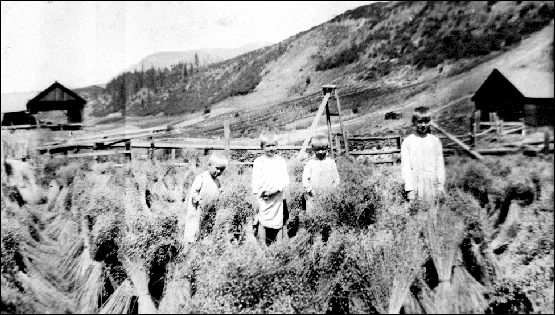
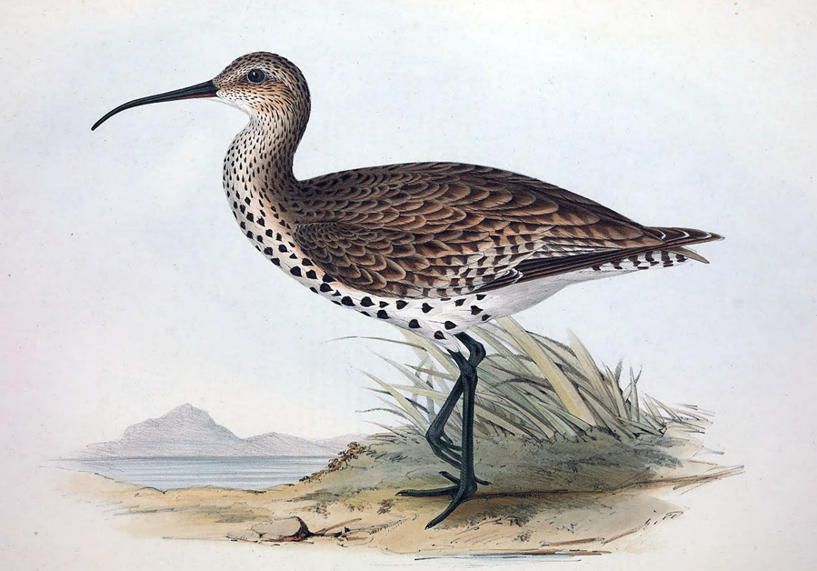


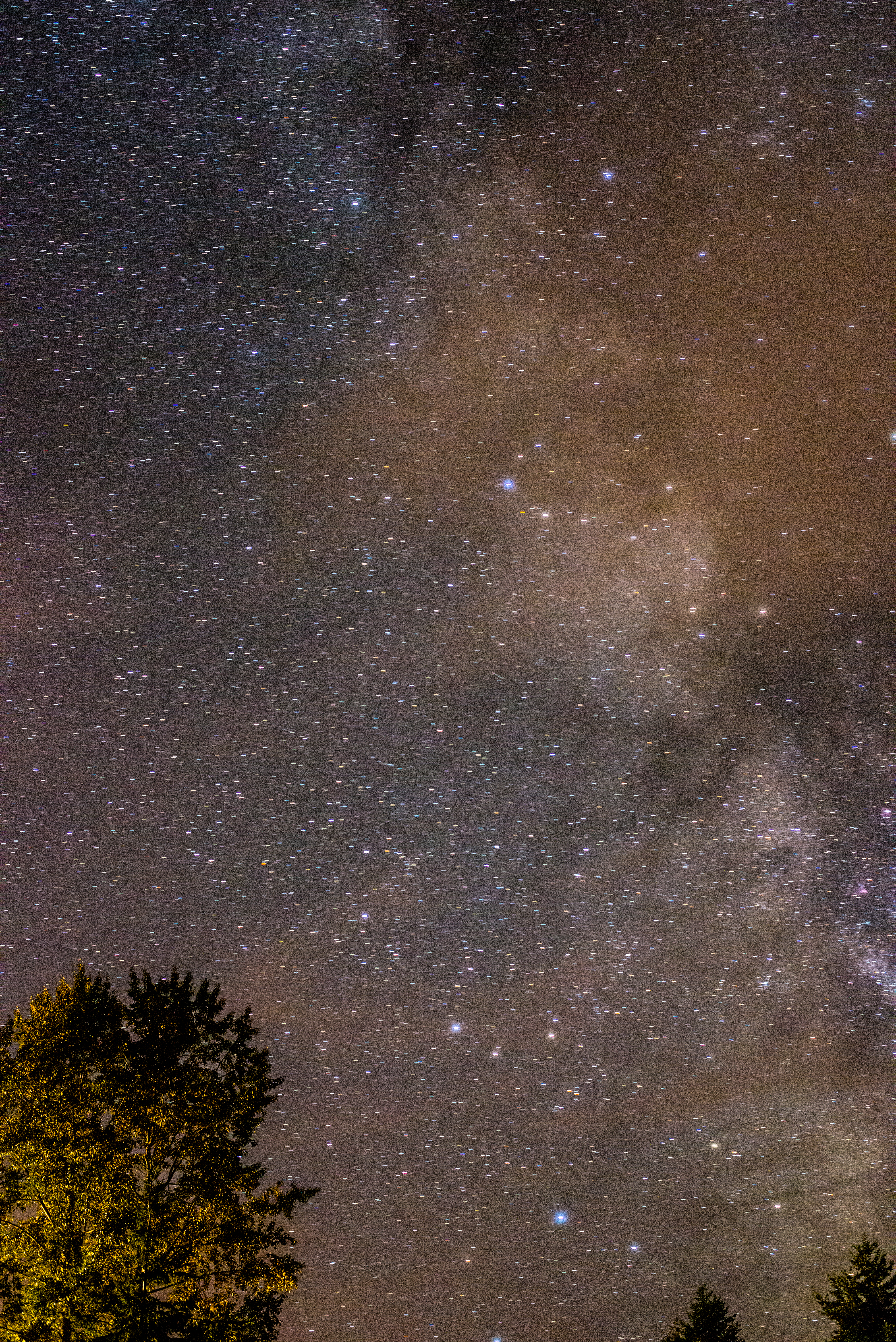


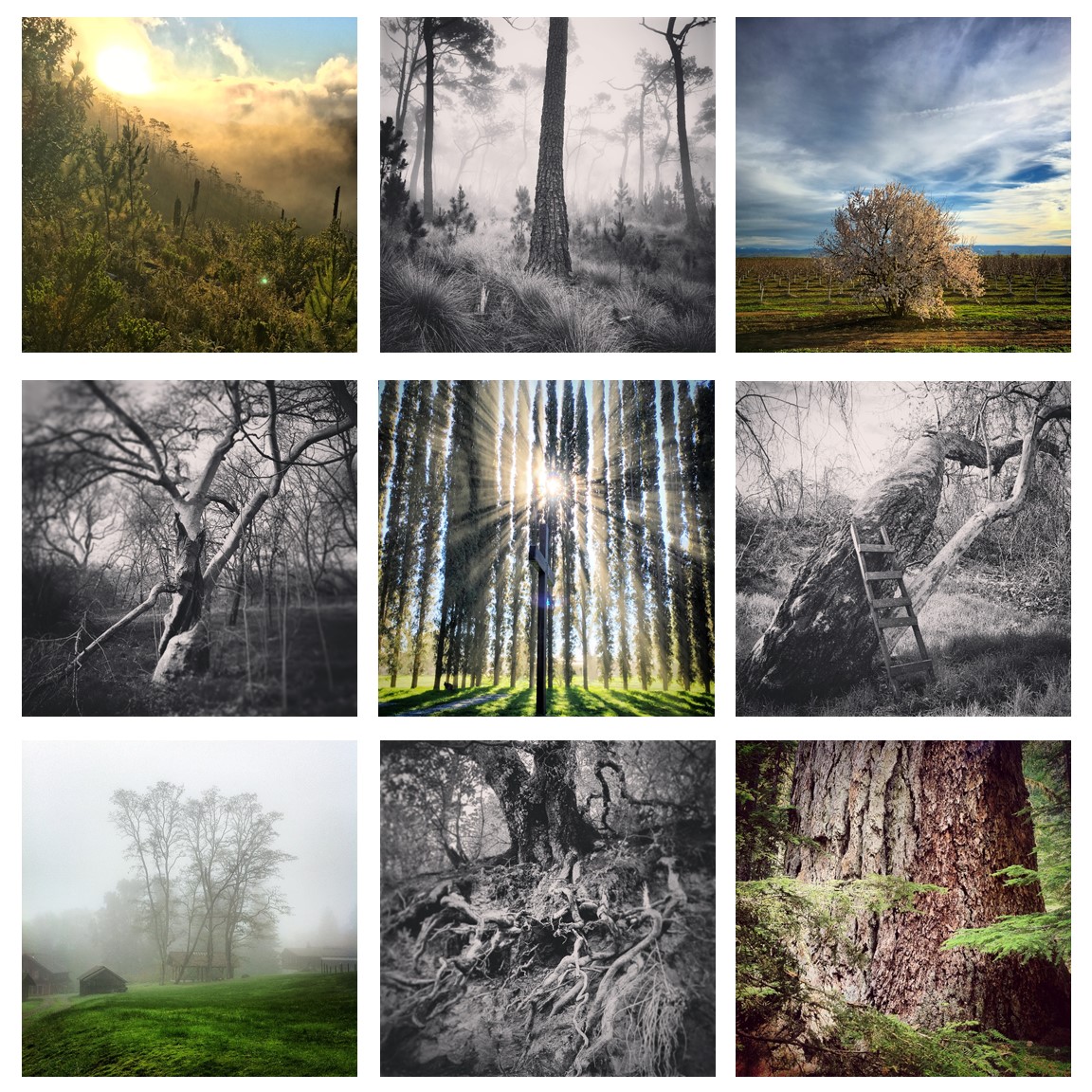


 holyscapes