Homily: Living Symbols

[Homily delivered Feb. 26, 2017 to Saint Margaret Cedar-Cottage Anglican Church.]
img_6588

At 4:13 AM I stumbled in the pale darkness to my choir stall. When I finally looked up through the west facing window of the chapel at Our Lady of Guadalupe Abbey in northwestern Oregon, a glowing full moon was setting through a light haze. The monks began to chant the early morning Divine Office of Vigils, a ritual that unfolds day after day, month after month, and year after year in monasteries all over the world.

This month-long immersive retreat in 2014, inspired the questions that would become my PhD dissertation research, which I completed over a six month period in 2015 and 2016. I am now in writing the dissertation, and should be done in the next 2, 3, 4 or 5 months. I wanted to better understand the relationship between the 1,500 year old monastic tradition, contemporary environmental discourses and the land. And I wanted to better describe for the emerging Spiritual Ecology literature the ways that theological ideas and spiritual symbols populate monastic spirituality of place and creation.

Exodus 24:12-18

In the readings this morning, we are gifted several land-based symbols. God says to Moses in Exodus: “Come up to me on the mountain.” Liberated from Egypt, God is now eager to build a relationship with his people and Moses’s ascent of Mount Sinai to receive the Law mirrors our own spiritual journeys. A thick cloud covered the mountain for six days before Moses was finally called into God’s presence, like so much of my own spiritual life, lived in darkness, with small rays of light.

Matthew 17:1-19

In the Gospel reading, Jesus too ascends a “high mountain.” There, his disciples witness one of the most perplexing scenes in the New Testament: The Transfiguration. Jesus’s face and garments shone like the sun. And then, certainly conscious of the Hebrew text, the writer says that a bright cloud overshadowed them and they heard a voice say: “This is my Son, the Beloved; with him I am well pleased; listen to him!” Christ, who was fully human and fully God, was revealing in his very person to Peter, James and John his fulfillment of the Law and the Prophets. And presence of the symbols of mountain and cloud were bound up in the authenticity of Jesus’s claims to messianic authority.

2 Peter 1:16-21

Even though it’s not clear that the Apostle Peter is the author of our second reading, the message is clear: “For we did not follow cleverly devised myths when we made known to you the power and coming of our Lord Jesus Christ, but we had been eyewitnesses of his majesty.” Reading Exodus and Matthew, it might feel simple to slip into an easy allegorical hermeneutic, to see everything as a symbol; but the writer of 2 Peter is clear: Stop trying to turn everything into a myth! This reminds me of the quote from Catholic writer Flannery O’Conner who said of the Real Presence in the Eucharist, “If it’s just a symbol, to hell with it.”
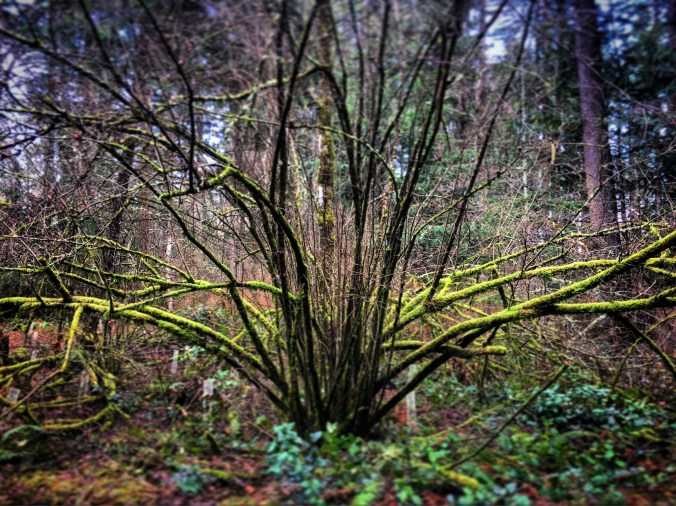
img_6579With these texts in mind, especially questions of religious symbols and religious realities, I want to talk a little bit about my research with monastic communities, and then return to these texts at the end. Monasticism, like Christianity as a whole is steeped in symbols. For example, the Abbas and Ammas of the early monastic tradition experienced the desert as a symbol of purification and sanctification. Saint Anthony fled to the desert to live a life of solitude, spiritual warfare and strict asceticism. The silence and nakedness of the desert landscape was as it were a habitat for the silence and simplicity that led the Desert Fathers and Mothers through the wilderness of their own sin to the simplicity of God’s presence. As Saint Jerome wrote, “The desert loves to strip bare.”

The motifs of the Desert-wilderness and the Paradise-garden are like two poles in Biblical land-based motifs. Pulling the people of Israel between them. Adam and Eve were created in a garden, but driven to the wilderness. The people of Israel were enslaved in the lush Nile Delta, but liberated into a harsh desert. The prophets promised the return of the garden if Israel would flee the wilderness of their idolatry. Christ suffered and resurrected in a garden after spending 40 days in the wilderness. The cloister garden at the center of the medieval monastery embodied also this eschatological liminality between earth and heaven, wilderness and garden.

Mountains too were and continue to be powerful symbols of the spiritual life. From Mount Sinai to Mount Tabor, John of the Cross and the writer of the Cloud of Unknowing, each drawing on the metaphors of ascent and obscurity.

But do you need a desert to practice desert spirituality?

Do you need the fecundity of a spring time garden to understand the resurrection?

I would argue that we do.

For my PhD research, I conducted 50 interviews, some seated and some walking, with monks at four monasteries in the American West. My first stop was to New Camaldoli Hermitage in Big Sur, California. The community was established in 1958 by monks from Italy. The Hermitage is located on 880 acres in the Ventana Wilderness of the Santa Lucia Mountains. Coastal Live Oak dominate the erosive, fire adapted chaparral ecology, and the narrow steep canyons shelter the southernmost reaches of Coastal Redwood. The monks make their living by hosting retreatants and run a small fruitcake and granola business.

The second monastery I visited was New Clairvaux Trappist Abbey, which is located on 600 acres of prime farmland in California’s Central Valley and was founded in 1955. It is located in orchard country, and they grow walnuts and prunes, and recently started a vineyard. They are flanked on one side by Deer Creek, and enjoy a lush tree covered cloister that is shared with flocks of turkey vultures and wild turkeys that are more abundant than the monks themselves. They recently restored a 12th century Cistercian Chapter house as part of an attempt to draw more pilgrims to the site.

Thirdly, I stayed at Our Lady of Guadalupe Trappist Abbey, which was also founded in 1955, in the foothills of the Coastal Range in Western Oregon. When they arrived, they found that the previous owner had clear cut the property and run. They replanted, and today the 1,300 acre property is covered by Douglas fir forests, mostly planted by the monks. Though they began as grain and sheep farmers, today the monastery makes its living through a wine storage warehouse, a bookbindery, a fruitcake business, and a sustainable forestry operation.

For my last stop, I headed to the high pinyon-juniper deserts of New Mexico. At the end of a 13 mile muddy dirt road, surrounded by the Chama River Wilderness, an adobe chapel stands in humble relief against steep painted cliffs. Founded in 1964, Christ in the Desert Abbey is the fastest growing in the Order, with over 40 monks in various stages of formation. The monks primarily live from their bookstore and hospitality, but also grow commercial hops which they sell to homebrewers.

In my interviews, the monastic values of Silence, Solitude and Beauty were consistently described as being upheld and populated by the land. The land was not just a setting for a way of life, but elements which participated in the spiritual practices of contemplative life. To use a monastic term, the land incarnates, gives flesh, to their prayer life.

Thus, the monks live in a world that is steeped in religious symbols through their daily practice of lectio divina, and the chanting of the Psalms. As one monk of Christ in the Desert put it:

“Any monk who has spent his life chanting the Divine Office cannot have any experience and not have it reflect, or give utterance in the Psalmody. The psalmody is a great template to place on the world for understanding it, and its language becomes your own.”

In this mode, the land becomes rich with symbol: a tree growing out of a rock teaches perseverance, a distant train whistle reminds one to pray, a little flower recalls Saint Therese of Lisieux, a swaying Douglas fir tree points to the wood of the cross, a gash in a tree symbolizes Christ’s wounds. In each case, the elements of the land act as symbol within a system of religious symbology. One monk of Christ in the Desert, who wore a cowboy hat most of the time related:

“When the moon rises over that mesa and you see this glowing light halo. It echoes what I read in the Psalms. In the Jewish tradition the Passover takes place at the full moon, their agricultural feasts are linked to the lunar calendar. When they sing their praises, ‘like the sunlight on the top of the temple,’ ‘like the moon at the Passover Feast.’ ‘Like the rising of incense at evening prayer.’ They’re all describing unbelievable beauty. I look up and I’m like that’s what they were talking about.”

The land populates familiar Psalms, scriptures and stories with its elements and thus enriches the monastic experience of both text and land.

Theologically speaking, God’s presence in the land is a kind of real presence that does not just point to, but participates in God. This gives an embodied or in their words, incarnational, quality to their experience of the land. As another example, one monk went for a long walk on a spring day, but a sudden snow storm picked up and he almost lost his way. He related that from then on Psalm 111 that states “Fear of the Lord is the beginning of wisdom” took on a whole new meaning.

In addition, the monks often spoke of their experiences on the land in terms of flashes of insight, or moments of clarity that transcended any specific location or symbolic meaning. One monk called these experiences “charged moments” where a tree or vista one sees frequently, suddenly awakens to God’s presence.

The monks at each community, in their own ways, have sunken deep roots into the lands they live on and care for. Each, in the Benedictine tradition, strive to be “Lovers of the place” as the Trappist adage goes. When I asked one monk if this meant that the landscape was sacred, he paused and said, “I would only say that it is loved.”

I am arguing in my dissertation that monastic perception of landscape can be characterized as what an embodied semiotics. By this I simply mean that symbols and embodied experience reinforce each other in the landscape, and without embodied experience symbols are in danger of losing their meaning.

The motifs of desert and wilderness, the symbols of water, cloud, mountain, doves, bread and wine, the agricultural allegories of Jesus, and the garden, are in this reading, reinforced by consistent contact with these elements and activities in real life.

On the last Sunday before Lent, as we move into the pinnacle of the Christian calendar, it is no coincidence that the resurrection of the body of Jesus is celebrated during the resurrection of the body of the earth. But does this mean that Jesus’s resurrection can be read as just a symbol, an archetype, a metaphor for the undefeated message of Jesus? Certainly Peter and the other Apostles would say no. They did not give up their own lives as martyrs for a metaphor.

For a long time I struggled with believing in the resurrection as a historical reality. But when I began to realize the connection between the land and the paschal mystery, it was the symbols in the land itself that drew me to the possibility of Christ’s resurrection. And that in turn reinforced my ability to see Christ in the entire cosmic reality of death and rebirth active and continual in every part of the universe.

As Peter warns his readers: “You will do well to be attentive to this as to a lamp shining in a dark place, until the day dawns and the morning star rises in your hearts.” For how can we truly believe in the return of the Beloved Son, if we have never been up early enough to see the return of the star we call sun?
img_6568

Sacred Groves

img_6302

Prelude

Imagine the most common of trees, the Christmas (or Solstice) tree, decorated with globes, lights and a star on top. Allow that tree to grow in your mind so that it fills the sky.

The bright star at the very top of the tree merges with the North Star, Polaris.

Now imagine that the gold and silver globes become the sun, the phases of the moon, and the other planets moving through the sky, appearing to pivot around the North Star.

Imagine that the twinkling lights are billions and billions of stars.

The Christmas tree is a microcosm of the macrocosm.

The Norse pagans placed the ash tree at the center of their cosmology.

Its sprawling roots descended into the underworld; its trunk and branches passed through the mortal realm, ascending to heavenly.

The Maya imaged the cosmos as a great Ceiba tree, which also descended to the underworld and ascended through thirteen levels of heaven, each level with its own god.

The sun and moon made their way along the Ceiba’s trunk, and the spirits of the dead moved along its rough bark.

The naturalist and pantheist John Muir used to climb to the top of large pine trees during rain storms. About trees and the universe he mused:

We all travel the Milky Way together, trees and [humans]; but it never occurred to me until th[at] stormy day, while swinging in the wind, that trees are travelers, in the ordinary sense. They make many journeys, not extensive ones, it is true; but our own little journeys, away and back again, are only little more than tree-wavings—many of them not so much.

The Tree of Life

In the beginning, the tree of life emerged as a tiny seedling.

Soon, it branched out into everything we call living: microbes, fungi, plants, trees, animals.

The seeds of humans germinated in the trees.

Our mammalian and primate ancestors made their homes in their bows.

Eventually, our curiosity compelled us down from the safety of their branches and out onto the savanna.

Yet, the trees never left us;

They continued to provision us with gifts on our long walks.

They gave food, fodder, shelter, tools, medicine and stories.

They appeared in our dreams.

It was here, in a forest, that Zoroaster in Persia saw the Saena Tree in a vision emerging from the primeval sea, a tree from whose seeds all other plants would grow.

It was here that Yahweh, Semitic sky god, came to earth and planted a garden of trees, pleasing to the eye and good for food.

It was here that Inanna, Babylonian goddess of beauty and love, nourished the Huluppu tree on the banks of the Euphrates River.

It was here that Kaang, creator god of the Batswana Bushmen, created the first mighty tree and led the first animals and people out from the underworld through its roots and branches.

It was here that the sacred tree gave light to the Iroquois’s island in the sky—before the sun was made, before Sky Woman fell through a hole in the island in the sky, and before the earth was formed on the back of a great turtle.

It was here that the Mayan Tree of Life lifted the sky out from the primordial sea, surrounded by four more trees that hold the sky in place and mark the cardinal directions.

First Visions

It was here, in a forest, that the first whispers of the divine spoke to human consciousness.

It was here that Jacob wrestled with angels and beheld visions.

It was here that Hindu seekers learned the wisdom of gurus.

It was here, seated beneath the Bodhi tree, that Siddhartha Gautama became the Buddha.

It was here that Moses fasted, prayed, and received God’s Law.

It was here that Muhammad sought refuge in mountain caves and spoke the words of the holy Koran.

It was here that Guru Nanak experienced the Oneness of God.

It was here that Nephi of the Book of Mormon communed with angels and beheld the glorious fruit of the Tree of Life.

First Temples

It was here, in a forest, that we built our first temples and worshipped God without priesthoods.

It was here that Asherah, Canaanite goddess of all living things, was worshipped.

It was here, as Sycamore fig, that Isis of Egypt was lavished praise.

It was here, in grove of sacred oak, that the Druids passed on their knowledge, and sacrificed human flesh to the gods.

It was also here, in the forest, that, after civilization blossomed, we looked for inspiration—

Temples of stone with their pillars, columns, and cathedral arches were all made to resemble the trunks of trees, carrying the eye upward to God.

And yet, it would seem that these temples of stone confined God to one place, one people, one faith.

Fall

It was here that we fell from grace.

It was here that Adam and Eve ate the fruit of a misunderstood tree.

It was here that civilization bloomed.

It was here that we logged, burned, mined, clear-cut, developed.

It was here that the old stories were forgotten and new ones were written;

Stories in which creation was no longer sacred, enchanted, animate, subjective.

Return

In an age of climate chaos and heart breaking extinction, it is here, to the forest, that we must return.

Not only as skiers, hikers, campers, birders, hunters, and foresters, but as devotees.

Because it is here that we see the universe in microcosm, where we get our bearings.

It is here that creation awes.

It is here that we experience the divine.

It is here that we can bring our questions.

It is here that we can dwell in mystical solitude.

It is here that we are now—The global forest.

Call

To return to the forest, we must become familiar with it.

I invite you to go to a mountain grove or a city park and take off your shoes.

When you are comfortable and alone, close your eyes.

Begin by focusing on feeling—as a tree might—the sun, the wind, the earth beneath your toes and on your skin.

If you wish, stretch your arms up and out like branches seeking the light.

Imagine drinking in the caramel rays of the sun as nourishment.

Focus on your breath by letting the air pass through your nostrils and fill the arboreal-patterned branches in your lungs.

Feel your lungs slowly fill with oxygen.

Feel them slowly empty as your body expels carbon dioxide.

Focus on the entire process of breathing and how each moment changes.

In and out.

As you breathe in, imagine that the oxygen, conceived in the leaves of trees, is gently birthed from the leaf’s stomata, wafting through space, and entering your lungs.

As you breathe out, imagine that the CO2, re-born in your lungs, is gently wafting through the air and entering the receptive stomata of the leaves.

In and out.

The air becomes us, becomes them.

It is a sacrament; we take it upon us, into us, and they upon themselves.

As we breathe in, the trees breathe out.

As the trees breathe out, we breathe in.

We are their lungs and they are ours.

In and out.

This is not a supernatural idea; it is an ecological reality.

May we dwell in this reality!

The mystic monk and (one time monastery forester) Thomas Merton said:

We are already one. But we imagine that we are not. And what we have to recover is our original unity. What we have to be is what we are.

What we are is not all that different from trees.

And so I offer you this prayer for your walks and sits among the trees.

Forest, Trees. May we sustain you as you sustain us.

Deep Roots, Entwined Branches: Reflections on the Parliament of the World’s Religions

Laying on cured grass just outside of a closed Forest Service campground in the foothills of the Idaho panhandle, cool air condenses into dew on my sleeping bag. I shiver between sleep and wakefulness. The stars keep me company. I watch Cassiopeia slowly swing around the North Star, and around 4:00 am, Orion becomes visible. It is strange that only when we sit still do we realize just how constant is our motion. There are dozens of other constellations whose faces I do not recognize, and whose stories I do not recall. Then, in the east, an almost imperceptible glow begins to put the trees and hilled horizon into dim relief. Venus, Mercury and Jupiter line up to greet the day. Morning is approaching.

I, along with five other members of the Salish Sea Spiritual Ecology Alliance are on our way to the 2015 Parliament of the World’s Religions supported by a small grant from the Sisters of Charity Halifax and we have stopped to camp for the night after a long day of driving.

The Parliament of the World’s Religions was first convened in 1893 in Chicago to coincide with the World’s Fair. This year it is being held in Salt Lake City, Utah the Axis Mundi of my first religious tradition, Mormonism, and the place I lived and taught World Religions for two years before I moved to Vancouver. In 2014, I attended the Society of American Foresters annual conference in the very same venue, and when I heard that the Parliament was coming in 2015, I felt a pang of synchronicity. I studied both forestry and theology in graduate school, and though it was a small coincidence, it felt like Life reassuring me that I was on the right path.

Arriving in Salt Lake City, we found the Salt Palace Convention Center packed with about 10,000 people, representing at least 50 faiths, from 80 countries. The first Parliament excluded Native peoples, Mormons and Atheists, but this year just about every possible belief and practice was present. We began by going through a ‘smudge’ purification ritual officiated by a kindly Paiute elder, and then making an offering of tobacco to the sacred fire. It was good to start the Parliament by acknowledging the Spiritual Ecology of the First Peoples of this land.

The Parliament was a veritable smorgasbord of spiritual and religious diversity: mandalas, labyrinths, spontaneous dance parties, flash mobs, meditation gurus, chanting, even a procession of people dressed like angels. Exhibitors hawked every kind of spiritual ware from prayer beads and Native American jewelry, to sacred texts and icons. It was a cacophonous mosaic of the world’s spiritu-diversity. Overwhelming at first, I settled into the rhythm of the Parliament, and to try and drink from its convention-shaped wisdom.

The mission of the Parliament is “to cultivate harmony among the world’s religious and spiritual communities and foster their engagement with the world and its guiding institutions in order to achieve a just, peaceful and sustainable world.” This mission was on full display throughout the Parliament, as most sessions focused on issues of poverty, cooperation, women’s rights, violence, terrorism, climate change, ecology, and more. I attended dozens of the concurrent sessions –from Pagans respond to the Pope, to Vedic Cosmology. I was even lucky enough presented a few myself.

In ‘Religion and Ecology in the Anthropocene’, I looked to the future religion in an ecological context of human domination. I presented Spiritual Ecology as an emerging and increasingly popular orientation that transcends religious affiliations. Our Panel headed up by Suresh Fernando, Maya Graves-Bacchus and Alysha Jones then defined spiritual ecology and presented the vision and mission of our organization. It was a wonderful conversation! In my second presentation ‘Trees, Forests and the Sacred’, I started with a poem on Sacred Groves, and then rushed through a PowerPoint on the types of sacred trees and forests. Then I invited participants to leave the air-conditioned convention center and spend time with actual trees in Temple Square. We reconvened in front of the LDS Temple and discussed our experiences. It was a very powerful way to bring home the importance of trees in our spiritual lives. My third presentation was as a short guided meditation on cosmology. Wandering through the phases of cosmic evolution, we meditation on the 5 elements focused on each in our bodies and in the earth. But enough about that!

Along with the hundreds of concurrent sessions there were six plenaries sessions spaced throughout the week which addressed Women’s issues; Emerging Leaders; Income Inequality; War, Violence and Hate Speech; Climate Change and Indigenous issues. The speeches and energy in the massive plenary hall was electric, and I was deeply moved by most of the speeches and speakers. The diversity of voices were not there to convince us of their beliefs or doctrines, but to challenge us to live up to our best moral teachings. Not that their beliefs and doctrines did not come through in their talks, or that they needed to check them at the door, but that the Parliament was simply not the place to debate the metaphysical truths of religious belief. It was a place of convergence in common cause, and a space for sharing the unique perspectives each tradition brings to the works of justice, mercy, poverty and ecology.

I was particularly inspired by the number and diversity of women leaders. Eco-feminist Vandana Shiva, writer and Course in Miracles enthusiast Marianne Williamson, Ayurveda teacher Mother Maya Tiwari, theologian Dr. Serene Jones, Indigenous Grandmother Mary Lyons, Rabbi Amy Eilberg, indigenous youth activist Ta’Kaiya Blaney, Primatologist Jane Goodall, writer Karen Armstrong, evangelical climate activist Katherine Hayhoe, religion and ecology scholar Mary Evelyn Tucker and so many more. The Parliament was a welcome place for those who sought to advance the equality of women. There was also a surge of energy focused on the reemergence of the Divine Feminine.

On the role of women, it was stated plainly, the world’s religions have a mixed record with respect to treating women with dignity. Parliament Board member Phyllis Curott reiterated,

“The dignity, safety and equality of women is the global human rights struggle of our time. The world’s religions can no longer contribute to or allow the denigration of half of humanity…Women, and men, of faith and spirit are gathering in Salt Lake City to fix this broken moral compass and call upon the world’s religions to stop the deprivation and violence against women and girls; to stop harmful teachings and practices that justify discrimination and abuse; and to ensure that women are fully involved in decision-making within religions.”

It was humbling to once again realize how much privilege I carry in the world as a white, cis-gendered male, Christian; and to realize that my place of privilege has led to the suffering of bodies that do not look like mine. Speaking of the recent attack on a Gurdwara in Wisconsin where a white supremacist killed six people and wounded four others, Sikh woman Valerie Kaur lamented that:

“100 years after my family has called this country home, and 14 years after 9/11, our bodies are seen as perpetually foreign, and potentially terrorist. Just as black bodies are seen as criminal, brown bodies illegal, trans bodies immoral, indigenous bodies savage, and women’s bodies as property.”

It is always a hard reality to face; that my demographic has caused so much suffering to women, to immigrants, to blacks, to indigenous communities, and to the LGBTQ community. It reminded me of something Jim Wallis said in relation to the violence facing so many African Americans in the US: “If white Christians in America acted more Christian than white when it came to race, black parents would be less fearful for their children.” These are hard words. The Parliament was a call to repentance. I am trying not to internalize guilt, but to channel it into the energy we need to build a better world, and the energy I need to continue to strive to be a better man, a more conscious white person, and the kind of Christian that takes God’s love seriously, for myself and for the other.

There was no illusion that religion is often tangled up with this discrimination, violence, terror and hatred around the globe. Fundamentalism, extremism, patriarchy, terrorism and capitalism were all called out for their negative consequences, faults, flaws and mistakes, but there was very little bitterness, vitriol or blame. For all its faults, religion was overwhelmingly embraced as a force for good in the world, a force that is capable of acting out of a deep and Divine source of love toward those that we might otherwise fear. Each speaker drawing from their own traditions and experiences, in the face of insurmountable problems, was able to expose the center of love and compassion at the core of all our religious and spiritual traditions. They admonished us to access this core with the intention of serving our human siblings and the earth community. Each speaker was grounded in respect, love and hope for the possibilities present in this remarkable gathering.

While the problems we face were certainly front and center, the good we have accomplished was also with us. Discussion of the transition from the UN Millennium Development Goals to the Sustainable Development Goals cited that fact that globally, extreme poverty has been cut in half since 1990. Eboo Patel discussed his work with Interfaith Youth Corps, which works with campus groups around the USA to build interfaith relationships and to make it known just how much interfaith cooperation has succeeded in the past. New Thought Minister Michael Beckwith talked about the potential of moving the economy from a model of Success 1.0 and 2.0 with an emphasis on personal profit, or personal profit tempered by philanthropy; to what he called Success 3.0, which focuses on the impacts our enterprises have on other people and the planet before personal profit. Jane Goodall spoke to the evolutionary origins of violence, and how human beings, unlike chimpanzees face a choice. We can act on those evolutionary impulses or we can transcend them. The Parliament was a pep-rally for actively choosing goodness over evil, forgiveness rather than revenge, and hope rather than despair.

One thing I noticed at the Parliament was that young people were a minority. This really hit home when I sat around the table with old friends from Utah and we realized that though most of us had attended BYU (the LDS owned College in Provo, Utah), most of us had left the Mormon Church. Few had transitioned to other faiths as I had, and most were still carrying the wounds of lost belief, residual guilt, and bitterness. My friends have left for many reasons, but I wished that they could have heard the plenary speeches which called us to forgiveness and hope. Yet, for most young people, the damage has been done, and the thought of returning to the religions of their upbringing is near impossible. I do not blame young people for leaving organized religion, as I said, there is plenty to point fingers at, but it makes me sad none the less. Especially at a time when their voices and creativity are so desperately needed to address these mounting global issues and problems. If religion wants to survive, it must find a way to engage young people in ways that are authentic, meaningful, and hopeful.

Yes religion can be insular, exclusive, moralistic and violent, but at the Parliament of the World’s Religions I realized that we were part of something much greater than a collection of religious institutions in dialogue. We are part of a global Interfaith Movement that is predicated on the assumption that we have something to learn from other religious traditions, and that the problems of the world are a test of how well our traditions serve humanity and the earth. Some predict that religion will go away. I am not convinced of this. Yes, religion will have to change as it always has—as I realized in the wet grass of the Idaho Panhandle, it is only when we sit still do we realize just how constant is our motion. As we continue to dialogue, to seek understanding, to cooperate on global projects to combat climate change, poverty and discrimination, the roots of our faith may deepen, but our branches will become more entwined. This is the religion of the future.

My First Visit to Gethsemani Abbey

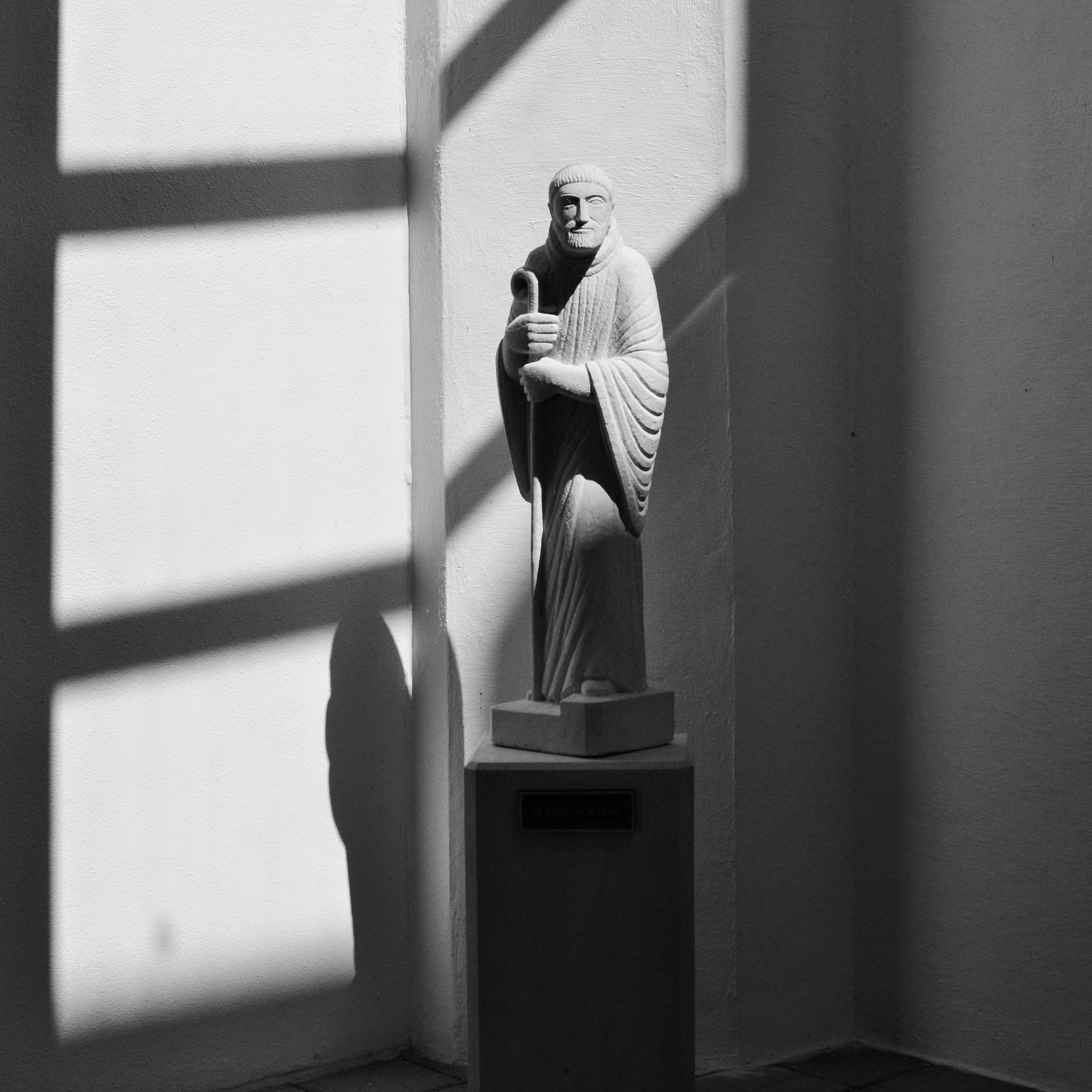
Statue greeting visitors to Gethsemani Abbey.

Statue greeting visitors to Gethsemani Abbey.

I arrived at Gethsemani in the first mega bus of three. The spire of the Abbey church rose suddenly behind a slight grassy hill. Several monks greeted us and led eager groups of about 20 through the cloister, Thomas Merton’s humble grave, and then up the short road to the hermitage where Merton started living full time in August of 1965. The pilgrim crowd, reverently snapping photos in silence, we converged in waves on the cinder block hermitage. It felt something like a flash mob-monastery—all of us interested to some degree in Merton’s spiritual writings, some of us scholars on Merton’s theology, but none willing to take the lead into the actual life of a monk or nun. We were a momentary cloister, a temporary community. Meanwhile the monastery’s average age climbs, and the monks announced this week that they would discontinue producing the cheese they have produced for many decades. Gethsemani Abbey remains a sacred site to many of us, but it is changing, and its long term future is uncertain.

I stood with the others outside the hermitage, drinking coke, listening to a monk tell us stories about Merton’s life here as fire ants, sent forth from their clay monasteries, silently tried to rip my toenails off my sandal-shod feet. We nodded, asked questions, paced through the small rooms, and then wandered outside toward the edges of the clearing to imagine what solitude would be like here. As we made our way back, another group eagerly approached.

At the end of our tour there was still about an hour before the monks were going to chant the mid-day hour, so I decided to head back out to the hermitage to see if I could steal a few moments alone. I passed chatting stragglers, and when I arrived, I went inside, snapped a few photos of the empty rooms, prayed in the small chapel, turned off the lights, picked up a few discarded refreshment cups from the floor, and then sat myself down on the now silent cement porch which had only a few minutes earlier been bustling with pacing pilgrims. A fat lizard scurried across the front of the cool cement porch into a small strip of sun near the edge. She stopped to eye me up and down, putting in a few push-ups before scurrying on. The breeze was cool and it lifted the green leaves of the tulip poplar, maple and oak trees that now surround the monastery. (At the time it was built, judging from some early photos, the area around the hermitage was much more open.)

Monks chanting the noon hour.

Monks chanting the noon hour.

I didn’t have any profound flashes of insight, or visions of Merton banging out drafts of his immortal prose, but I felt a glimmer of the wholeness of solitude, if only for a few precious minutes. I could hear my breath and the wind rising and falling together. I felt peace. I felt God. Then, a hunched figure appear on the meandering path up to the hermitage. My brief solitude at Merton’s hermitage was ended. As he approached I could see large cuffs in his pants, and a few patches. I could somehow tell he was a monk from Gethsemani, no doubt on his way to stay at the hermitage for a few days, as it is still in regular use. I greeted him, and in with a slightly annoyed but honest tone he said, “You must be a straggler?” I said, “Yes, I will get out of your hair” (he didn’t have very much of it). He introduced himself, and told me he had timed his annual week-long stay with the full moon, so as to be able to attend lauds and mass in the mornings without the use of a flash light. I wished him luck, hopped over a few anthills and was on my way down the road back to the cloister, the road that Merton and many other monks and retreatants have taken over the years. The bell rang, and I made it to the monastery chapel in time to hear the soft chant of the monks of Gethsemani. Later I gave a presentation at the Conference on Merton the hermit and the idea of wilderness. It was a beautiful day.

IMG_3027[1]

Merton’s hermitage from the path.

This year I have been lucky enough to visit a couple of sites with sacred significance to me: Dorothy Day’s Catholic Worker house in Manhattan and Aldo Leopold’s shack in Baraboo, Wisconsin. In past years I have also visited the site of the saw mill where John Muir worked in Yosemite Valley, the Sacred Grove where Mormon founder Joseph Smith had his visions, and Walden Pond. Each of these sites brings into full color the significance of place in our encounters with the Divine, with life. Each of us famous or not, inhabits a place. Our bodies know that place better than our minds. So, to inhabit the places where my mentors worked and wrote is like meeting them in person, or more awkwardly, meeting them in place. I think this desire is universal in humanity, based on the number of sacred sites, shrines, national historic sites, etc. that exist throughout the world. But just because we hold a particular cinder block hermitage in New Haven, Kentucky to be sacred, should not meant that everything outside that space is unsacred. As Wendell Berry has written, there are not sacred places and unsacred places in the world, there are only sacred places and desecrated places. May we continue to visit and protect the places that inspire us, and inspire the places we are at home in.

Eulogy for my Grandmother Nancy Lee Holmsen

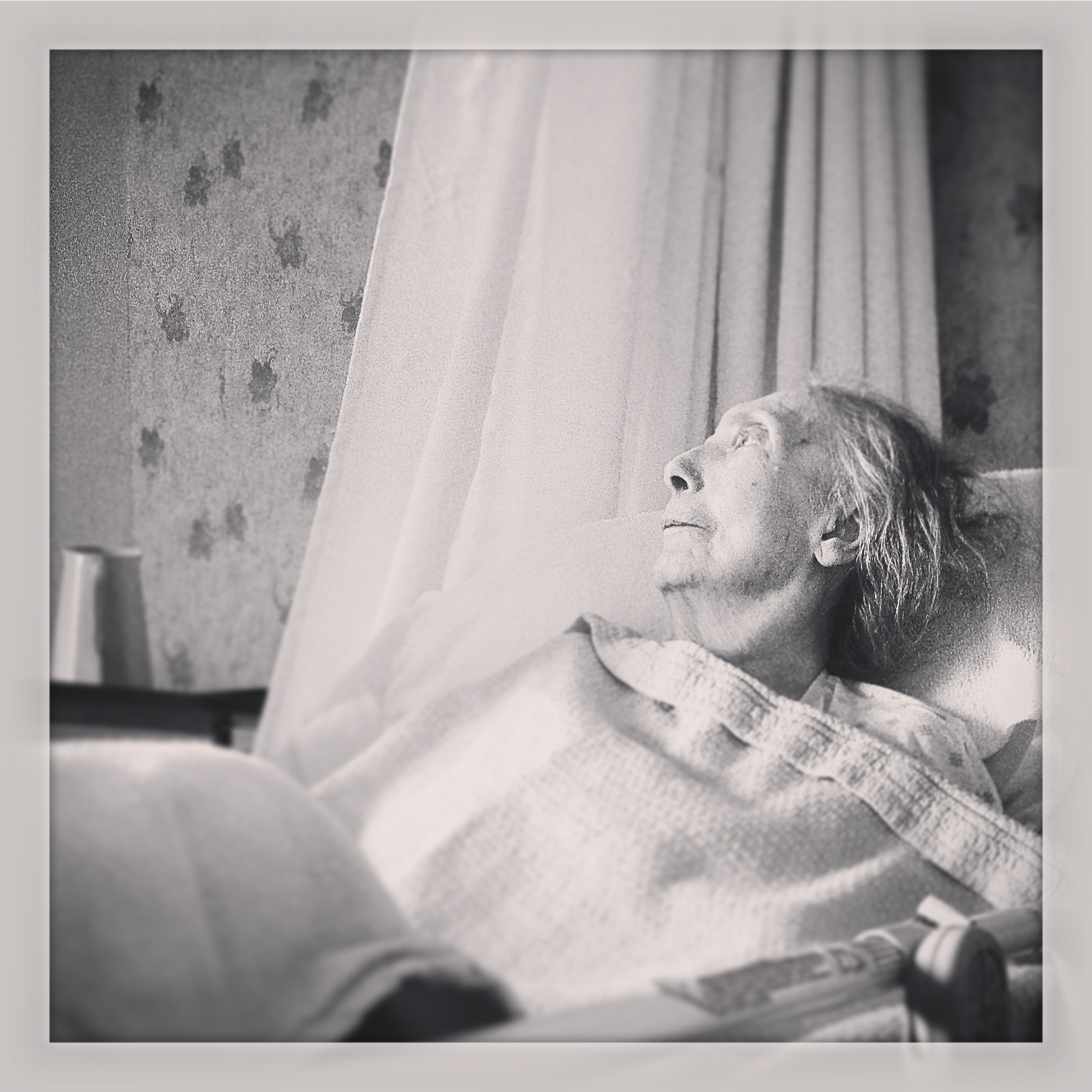
Nancy a few weeks before her death on Jan. 7, 2015.

Nancy a few weeks before her death on Jan. 7, 2015.

When I came to know Grandma Nancy, she had already been deeply wounded by life. My earliest memories of her are filled with explanations for why she could not walk as fast, see as well, or drive. Why part of her forehead was missing. Nancy had faced death several times in her life: Polio, cancer, a brutal car accident, meningitis; and she wanted none of it. She wanted to live!

In a Christian view of the afterlife, we might try to imagine Nancy as a perfect young woman dressed in white. But this would not be the Nancy that I knew. For me perfection is the wholeness brought about by our wounds. More than anyone I know, Nancy bore her woundedness with love, grace and humor. Her love and laughter have been present throughout my life and I will miss her.

Grandma Nancy was a towering figure of my childhood. Grandma’s house was always a place I loved to go. Sometimes, I would stay overnight at grandma’s small apartment and she would cook lamb chops (and after reading some of her journals, it appears that my siblings got a lot more dessert than I did). She would tell me stories about the Salt Lake of the 1940s and 50s. We have a few of her journals, from 1947, 1951, 1953 and 1954. Reading through them was a treat. She was a precocious young woman, taking note of the weather each day and starting each entry with: “Dear Diary.” She had an early crush on a boy named Dick and many, many friends. She called cigarettes “doogies”, saw movies, ate a lot of French fries, did chores, and played canasta. A few excerpts:

  • January 4, 1951: Had oodles of cars following us all night! Ma smelled smoke on me!
  • January 4, 1953: Don and I went to show. Saw ‘Lure of the Wilderness’ at Richey. Baby really was kicking in show. Don’s ma called earlier and we were scared she’d come and catch Don still here.
  • Friday July 30, 1954: Started throwing up terrible. All morning. Guess I’m pregnant again.
  • Tuesday September 28 1954: Went to the hospital with Polio.

She rarely writes about religion or church (except when she writes about not going), but writes passionately about lovers, friends, family and her home on 2nd North. She was a kind friend, a good sister, and a young mother.

Other times spent with Nancy we would just watch TV, or she would teach me how to haggle with Tijuana merchants if the chance ever arrived, (not sure why, but this is a very vivid memory of her). All of us grandkids remember her long natural finger nails which she would turn into eggs that needed cracking on our ticklish scalps. She never missed a birthday or Christmas and her gifts were generous despite her humble income. She loved to celebrate with us and her later journals are a litany of grandchildren milestones, birthdays and time spent with family. She was there for every major milestone in my life, like many of you.

To hear her stories was one thing, but to tell her our own was quite another. Whenever I told her a story, or showed her something I had made, or gave her an update from college, she lent almost comical attention to every detail. “Grandma look what I made!” YOU MADE THIS! NO!?

I love her and she will be sorely missed. However, I want to admit that I could have spent more time with her, cared about her suffering more, listened to her stories again. Nancy’s death has recommitted me to valuing our elders. With their death comes the reminder that we too will one day die. This is scary and sad, but let us also remember that death is part of the precious gift of life. Like leaves on a tree, our bodies flourish for a time and then return to the soil. This is one of our oldest metaphors; earth-lings, shaped from dust, we must all return to our Mother the Earth. We return to the soil, but the Tree of Life lives on. The air we breathe was breathed by Nancy, and now returning to the earth from which she came, the air we breathe is Nancy. It is hard to fully grasp. We want our loved ones to stay forever, we want to live forever ourselves. Why should the living pass back into the non-living?

These are questions humans have asked for thousands of years. And many of our spiritual traditions provide confident answers about what comes next. I am not here promote or to discourage any one of these beautiful beliefs that give us hope of seeing each other again. But I want to say that for me, a mature spirituality is less concerned with explanations for death and suffering, than with how we respond in the face of death and suffering. What will we do with the losses and the wounds that life metes out without respect of race, class or creed? This is for us to work through together, as family and as friends.

For me, though she was not religious, Nancy embodied fully a religious response to suffering and death; one that I hope to emulate to some small degree. She responded with awe, grace, love, hope, joy, humor and peace to life and in death she teaches us to do the same. Despite our wounds, let us follow the example of Nancy’s holy wonder for life, as we do the work of a thousand generations before us of burying our cherished dead. Thank you.

I would now invite us to celebrate Nancy with our stories and memories…

Holy Waiting in a Holy Universe

IMG_0787

Come Lord come,

Alpha: A Holy Flaring Forth! A Big Bang! A Cosmic Christ!

Omega: A Holy alphabet chanting itself into being!

A Universe singing to itself.

Halleluiah! Christ has come!

Adventus means coming. This year, on November 30, we end Ordinary Time in the Liturgical cycle and begin a four Sunday celebration leading up to Christmas. This year I am trying to deepen my experience of Christmas by making a small Advent Wreath on my personal altar and having daily contemplative devotionals leading up to Christmas day. Growing up, the secular rituals of gift giving, and the sentimental retelling of the nativity scene were fun, but this year I am trying to take more seriously what a story about a child born in a barn has to do with my fledgling contemplative spirituality within the Anglican Church.

The exact date of Christ’s birth may be unknown, but the choosing of December 25th as a fit day for celebration comes to us thanks to the Winter Solstice. It is on this day that we celebrate the sun ending its six month droop in the sky, and hence beginning his slow march back toward spring and summer. We celebrate the coming end of long darkness.

Advent then is a time of Holy Waiting for the end of spiritual darkness; of anticipation for Christ’s birth, but also hope for his return. In Trinitarian Christianity the event of Christ’s birth is referred to as the Incarnation. God became flesh in the person of Jesus of Nazareth (Mormons might call this a Condescension; see 1 Nephi 11).

What has humbled me most about this idea is that it means that Christ did not just descend to the earth and then leave when he died 33 years later like some Holy Alien. According to the familiar words of John “In the beginning was the Word, and the word was with God, and the Word was God” (1:1). If Christ is the Word of God then Creation is the alphabet. Another analogy from Paul’s letter to the Colossians: “He [Jesus] is the image of the invisible God, the firstborn of all creation; for in him all things in heaven and on earth were created, things visible and invisible, whether thrones or dominions or rulers or powers—all things have been through him and for him. He himself is before all things, and in him all things hold together” (1:15-17). Jesus as Christ is an Icon (image) of God in Creation. Christ is both the expression of God and the Image of God. Thus, we might say, as many have that the Incarnation began not just with the blessed birth of Jesus, but also with the Great Flaring Forth of the universe 13.8 billion years ago from a single point trillions of degrees hot. This is a tremendously powerful notion for me. At the center of a sometimes silly pastel plastic Nativity scene, is not only our God and our Savior, but a reassurance that we live in a Holy Universe.

This year I have created an Advent Retreat called Holy Waiting in a Holy Universe. I have divided the four weeks of Advent into the traditional four elements (Fire, Air, Water, and Earth), juxtaposing scriptures about each element with scriptures about the Coming of Christ. I hope that each day I will deepen my understanding of what it means to live in an Incarnational Universe. The gifts I give to family and friends will be offerings that remind us that we live in such a universe. Blessings to you and yours during this time of Holy Waiting and please feel free to follow along with me on my Advent retreat!

Download a Pdf of it here: Holy Waiting in a Holy Universe: An Advent Retreat

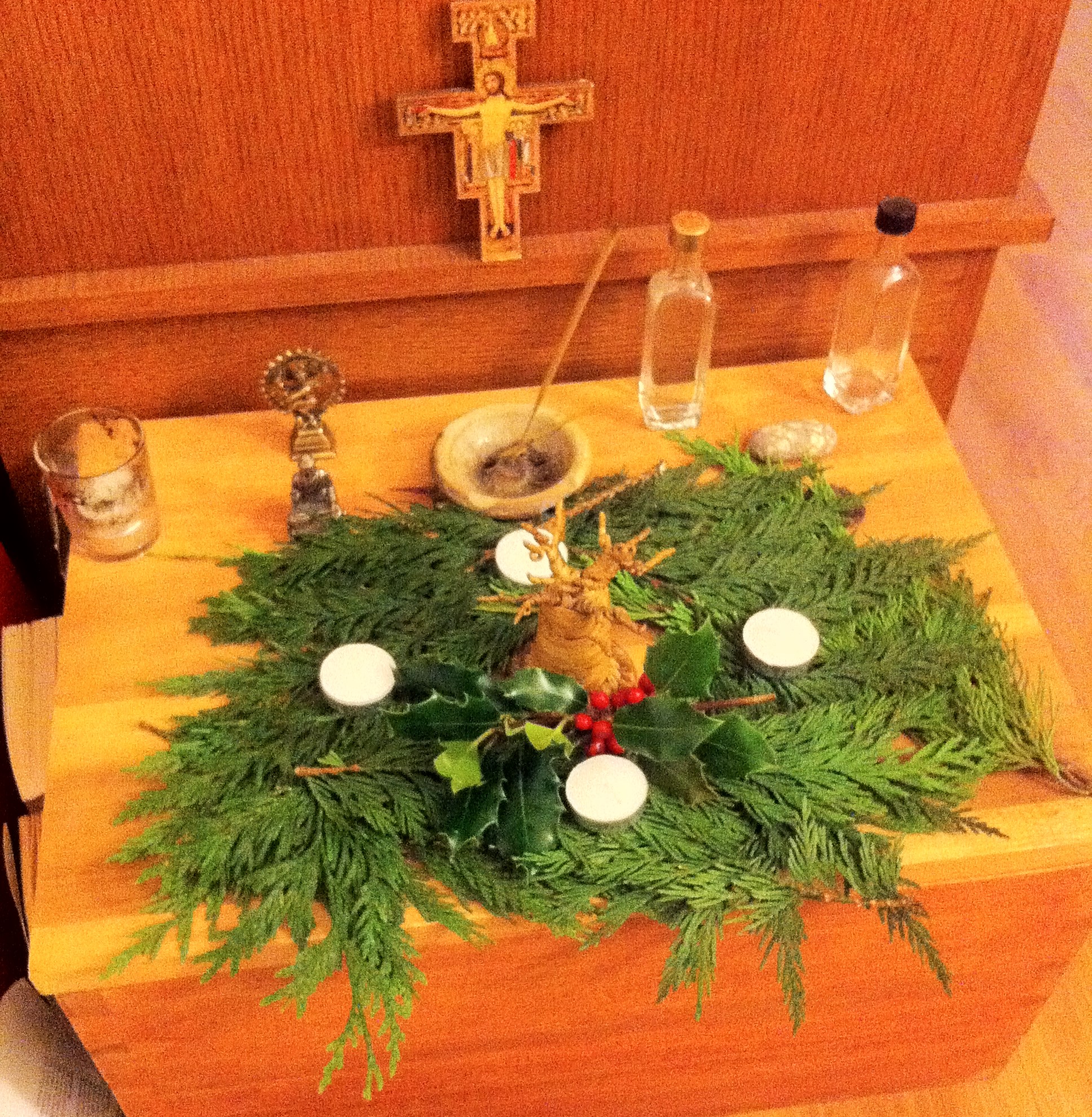
My first advent Wreath!

My first Advent Wreath!

Holy Ground

ShackThere is something about being in a place that our spiritual, historical or literary ancestors have once tread. Ones that walked, worked, wrote or traveled through a place or landscape. The practice of retracing their steps is an ancient human practice, we call pilgrimage. I didn’t go on foot, but between a lovely wedding in Chicago among family and an amazing Religion and Ecology conference in New Haven among friends, I was lucky enough through the grace of some old friends to visit several of these places over the last week. While in Madison, Wisconsin we travelled by car just north of Baraboo to a small shack on the western shore of the Wisconsin River. It was here that Aldo Leopold, Yale Alumnus and ecology saint wrote his famous A Sand County Almanac. The locale is no pristine wilderness, a sandy soiled pine forest that gives way to riparian grasses and shrubs at the river’s edge. But walking the numbered stations of the Leopold Foundation’s pamphlet, like an ecological stations of the cross, those typical trees took on the spirit of the Leopold family, who planted the trees in an act of ecological restoration. The shack as temple in a sacred grove. A temple, not of worship or divinity, but a tangible shrine to one of the early voices to suggest that humanity was not conqueror of Nature, but citizen. As we stood on the sandy river shore in silence, water lapping against the sandy ground, a flock of 15 sand hill cranes passed overhead on their way to their nightly roost. The water was deep blue and the air was chilly when the sun passed behind clouds. There was nothing otherworldly about the experience, but it certainly enriched my love for Leopold and his contribution to the ecology movement.

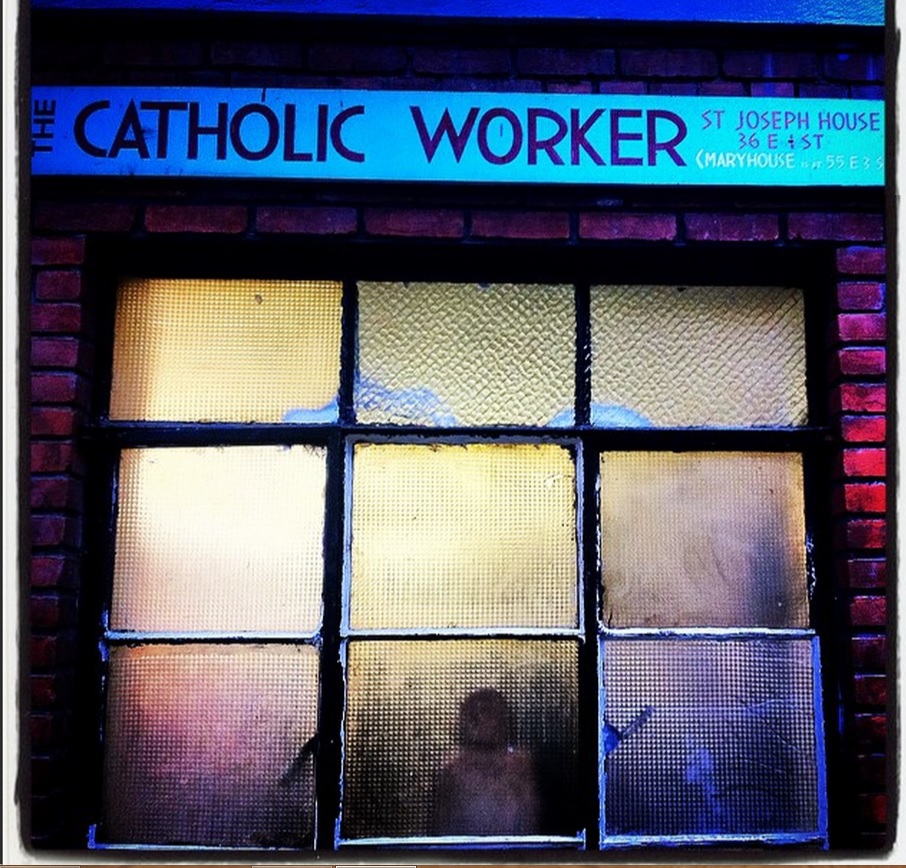
CWOn foot, I seek an inconspicuous corner of 1st Street in East Village, Manhattan. The St. Joseph Catholic Worker House of Hospitality has been in continuous operation since Peter Maurin and Dorothy Day founded them in 1936. When I arrived, a small crew of volunteers that included two Mormon missionaries, were serving a simple soup, and a smiling woman made the rounds topping off coffee mugs. The guests sat mostly in silence, some in quiet conversation. I struck up a short conversation with a volunteer and he immediately offered to let me serve some coffee. We chatted about the project, the place, and Dorothy Day, the movement’s founder, who is currently being reviewed by the Vatican for Canonization. The Catholic Worker Movement is a lot like other homeless shelters, but more than that it was an early socialist attempt to live the Gospel by fulfilling Jesus’s command to feed the hungry, clothe the naked, and visit the sick. They espouse a simple philosophy of Christian pacifism, agrarianism and personalism. They serve daily meals and give free clothing away and house several dozen people on a temporary basis. A drop in the bucket in a city of 8 million, but just looking around I could feel of Dorothy’s spirit, silently fulfilling the most basic of Christian practices.

A young parish priest opened the Rectory door of Corpus Christi Church in Morningside Heights and asked “How can I help you?” I told him I was a reader of Thomas Merton, and asked if I could see the chapel. Without hesitation, he slipped into tour guide mode, opened the door and showed me to the room where Merton first met with Father George Barry Ford. A small hand painted portrait of Merton hung on the north wall. The Priest showed me into the church and guided me toward the back of the chapel to a small baptistery where Merton was baptized. The church was beautiful, built in 1936 in a Baroque Revival style. A little too ornate for my taste, and nothing like the Cathedrals I had visited throughout the day in Manhattan. But the place help a special presence as the place where Thomas Merton worked out his conversation and eventual decision to join the Trappists in Gethsemani Abbey, Kentucky. Merton went on to become one of the most influential Catholics of the 20th century, and his writing is widely read.

I am no expert on these writers, but they have all, Leopold, Day and Merton influenced by thinking, the way I live my life and the subject of my research. Being in the places where these wonderful human beings worked out their own questions, ideas and lives gave me a kind of strength and assurance that I was at least moving in the right direction.


Tower Beach: Wood, Stone, Sea and Slug

I often walk down the over 200 stairs to Tower Beach after a long day of staring at a screen. Yesterday I took my tripod which I recently brought back to BC from my parents house. Crouching on the beach in front of a rock, waiting for the small waves to lap over the top was a kind of meditation.

Between land and sea

photo (2)

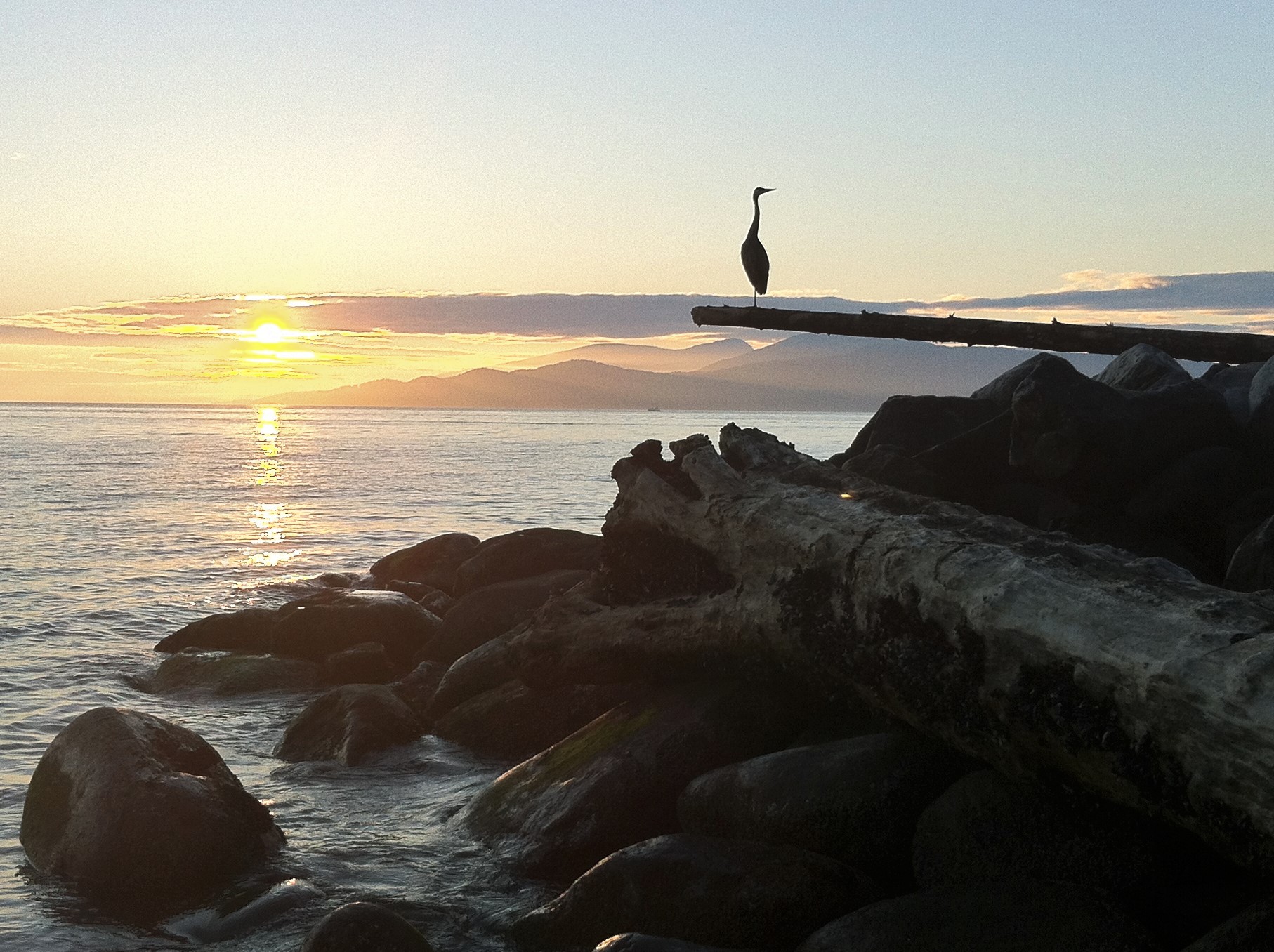
Wreck Beach Sunset with Great Blue Heron


I live on the western most tip of Point Grey in Vancouver. To get to the beach, I take a long stairway through the Pacific Spirit Regional Park that descends the forested sea cliffs. Many days I feel my feet carry me from my desk toward the setting sun and the soft hush of the shore. Each time I emerge from the tree covered stairway onto the rocky beach, it feels as though the sun were setting on the first day of creation; when time was not so worried about passing; the sun seems to perch over the northern mountains for hours. Yesterday I was lucky enough to watch two Great Blue Herons fish the lapping shore. Walking up and down with spells of statue stillness and then lightning strikes of their beaks. The sea gulls hung around awkwardly, hoping for a dropped fish, but also mimicking the Herons along the small waves, their small legs too small keep them above the tiny crests of the waves. I took my shoes off and stood ankle deep in the frigid water. A group of Harbor Seals played off the coast, and one curious seal cruised the shore line keeping an eye on me, perhaps wondering if I was a smelt fisherman. As the sun sunk, four more Herons arrived, flying over my head to roost in the alders. One of the Heron’s I had been watching, finished for the day, came and perched on a protruding log near me. We just watched each other as the sun set. I snapped photos, and she shifted legs lazily. Standing on a smooth rock the rising tide washed over my feet and I watched the sun and the Heron watched me. It was a moment of grace that I had not expected.